

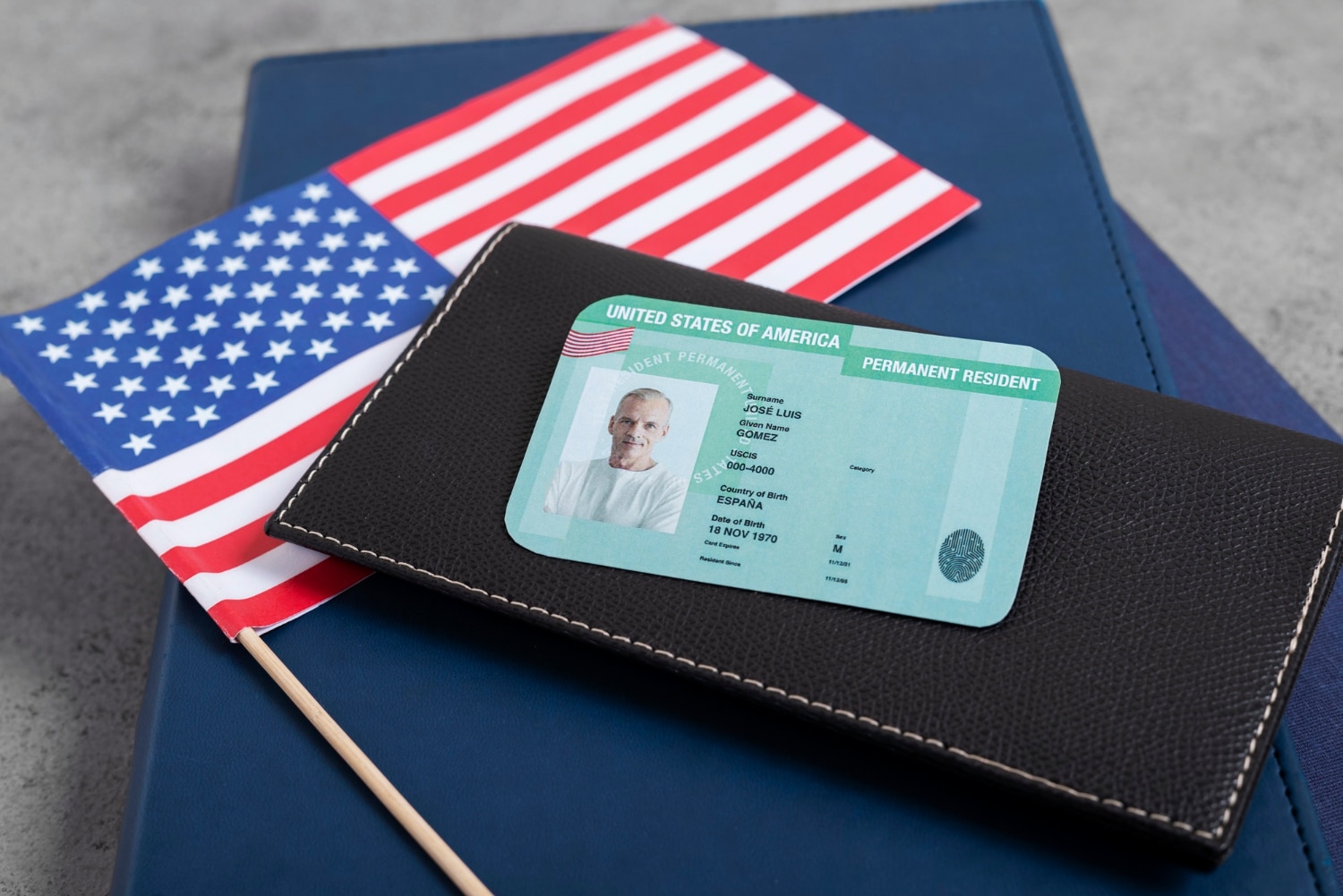
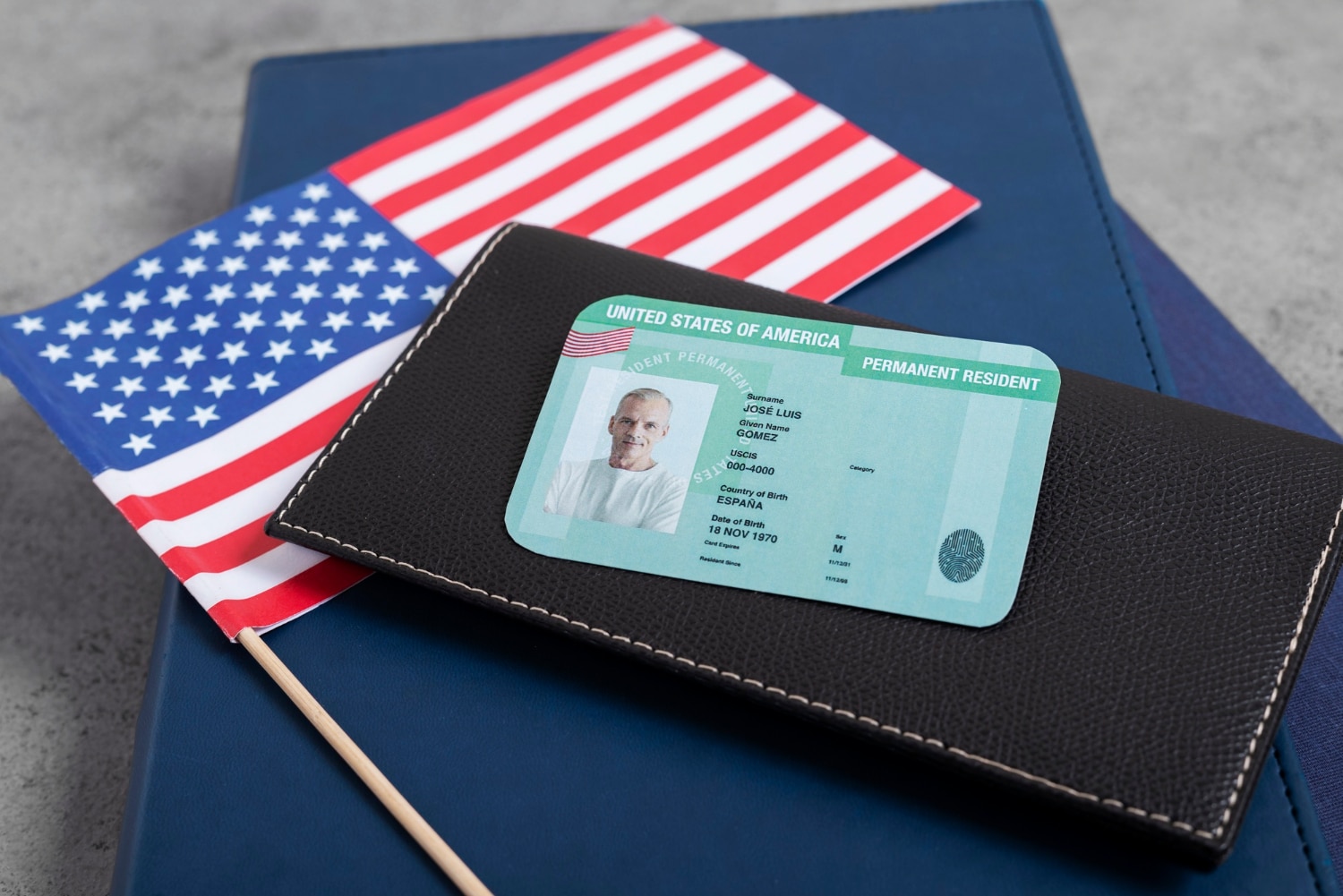
If you wish to move to the US and gain a permanent residence card (known as a ‘green card’) you will need to apply for an Immigrant Visa. The two main categories of immigrant visas are: family-based and employment-based. Here we look at the requirements and application process for an Immigrant Visa.
The Immigrant Visa is a stamp in your passport issued by an American embassy or consulate outside the US. This allows you to enter, live and work in the US. Once you have entered the US, you will be given a permanent resident card (or green card). This serves as an identification card and allows you to enter and exit the US freely and gives the right to work in the country.
Criteria for getting an immigrant visa
Most immigrant visas must be sponsored by a US citizen or permanent resident who is either a relative or a prospective employer of the applicant. The sponsor must file the petition on your behalf with U.S. Citizenship and Immigration Services (USCIS) to initiate the application process.
Applying for an immigrant visa can be a long process depending on your individual circumstances. In addition to the visa allowance for each category (family and employment based) there are limits for certain sub-preferences, some of which are based on formulas that change each year.
Preference categories
There is a specific number of immigrant visas which can be distributed each year and so the preference of your visa can determine the timeframe in which you can expect to receive your visa. Preference categories are divided into family-sponsored immigrants and employment-based immigrants.
Family-sponsored immigrants
Preference relatives are divided into the following four categories:
- First preference (F1) – Unmarried children, 21 years of age and older, of US citizens
- Second preference (F2) – Spouses and unmarried children of permanent residents
- Third preference (F3) – Married children of US citizens
- Fourth preference (F4) – Brothers and sisters of US citizens (if the US citizen is 21 years of age and older)
There is no limit for the amount of immediate relatives that US citizens can sponsor to gain access to permanent residence.
Other immediate family members not mentioned above are also potentially able to qualify such as step-parents and step-children as well as adoptive family members. Although the process is not as straightforward as biological relatives, they can be accepted as immediate family members and details can be found on the USCIS website.
Employment-Based Visas
The US restricts the number of employment based visas issued each year with approximately 140,000 immigrant visas available for applicants (and their spouses and children).
Employment-based immigrant visas are available based on 5 preference categories. If you have the right combination of skills, education, and/or work experience and are otherwise eligible, you may be able to live permanently in the United States.
Employment-based immigrants are divided into the following five groups:
- First preference (EB-1) – People of extraordinary ability in the sciences, arts, education, business, or athletics; outstanding professors and researchers; and certain multinational executives and managers
- Second preference (EB-2) – Professionals holding advanced degrees or who have exceptional ability
- Third preference (EB-3) – Skilled workers, professionals, or other workers
- Fourth preference (EB-4) – Special immigrants – includes religious workers and ministers of religion, employees of certain international organizations and their immediate family members, specially qualified and recommended current and former employees of the US government, and returning residents
- Fifth preference (EB-5) – Immigrant investors – Entrepreneurs who make the necessary investment in a US commercial enterprise or plan to create full-time employment for at least 10 US workers.
Labor Certification
For the second and third preference categories labor certification is required from the U.S. Department of Labor (DOL) before the U.S. employer can file an immigrant petition with USCIS, the employer must generally obtain a labor certification. The labor certification verifies the following:
- There are not enough qualified, able and willing U.S. workers to fill the position at the prevailing wage rate or higher; and
- Hiring a foreign worker will not adversely affect the wages and working conditions of similarly employed U.S. workers.
In these cases, the immigrant petition must include a signed Application for Permanent Employment Certification, approved by DOL, or, for labor certification applications filed on or after June 1, 2023, using DOL’s Foreign Labor Application Gateway (FLAG) system, an approved and signed Permanent Employment Certification Approval (Final Determination).
Certain occupations, referred to as Schedule A occupations, labor certification is not required because DOL has already determined there are not sufficient U.S. workers for those occupations.
Currently, DOL has designated 2 groups of occupations under Schedule A:
- Group I includes professional nurses and physical therapists.
- Group II includes beneficiaries with exceptional ability in the sciences or arts (including college and university teachers) and immigrants of exceptional ability in the performing arts.
Immigrant petitions for these occupations must be accompanied by a completed, uncertified Form ETA-9089, including all applicable appendices, a signed Final Determination, and a valid prevailing wage determination tracking number in Section E, Item 1 of the Form ETA-9089 (application for Schedule A designation).
For more information on labor certifications and the Schedule A and national interest waiver exceptions, see the Second Preference EB-2 and Third Preference EB-3 webpages.
Green card lottery
The Diversity Immigrant Visa (DV) Program awards up to 55,000 immigrant visas each year and makes immigrant visas available to natives of countries with low immigration rates.
To be eligible you must:
- Be a native of a country with a low immigration rate to the United States
- Have graduated from high school or its equivalent or have qualifying work experience
