

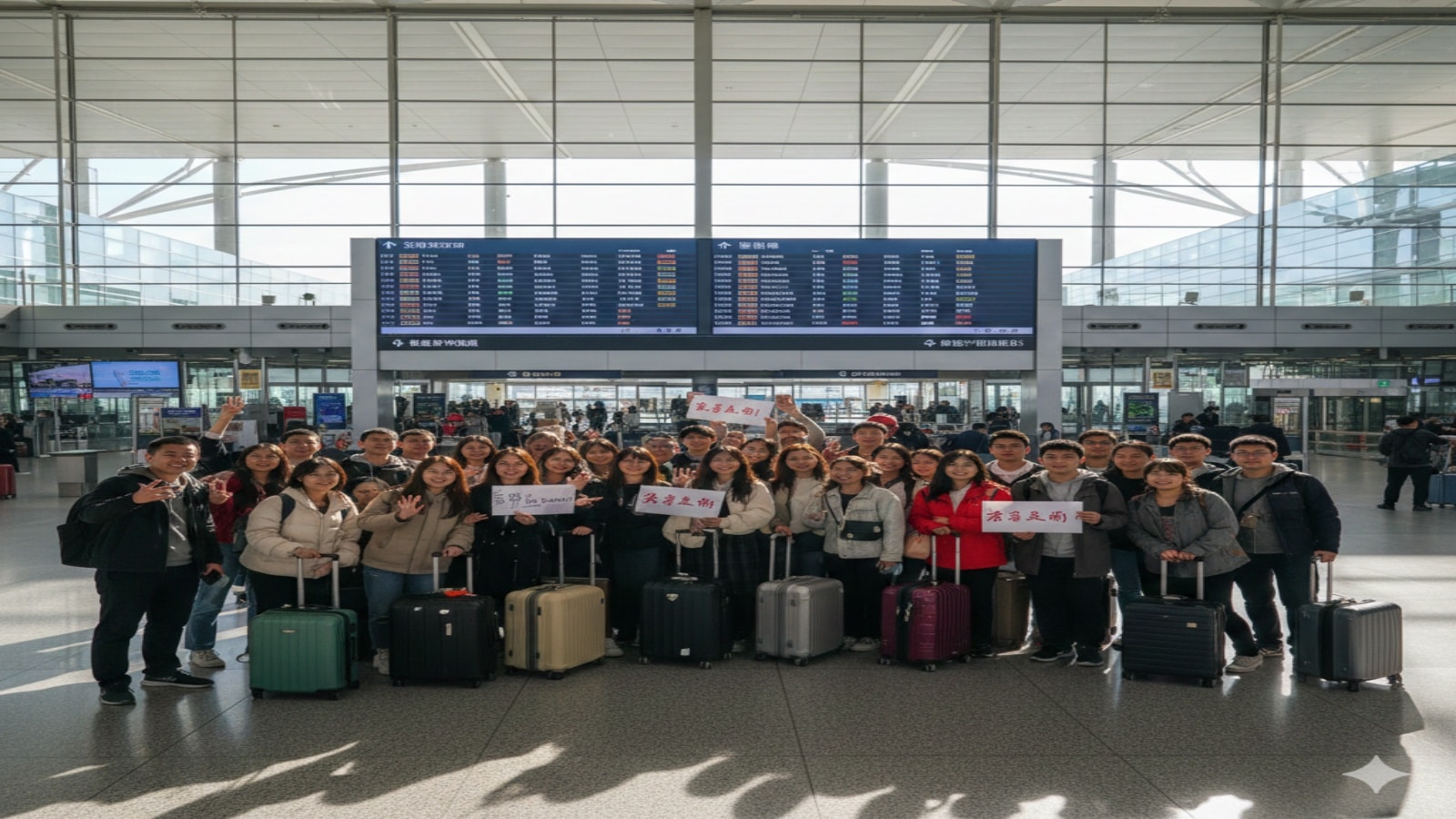
China is facing a surge of returning overseas students as visa and employment opportunities shrink abroad, prompting the government to start a special platform to help them find jobs and start businesses. About 4.95 lakh students returned to China after studying abroad in 2024, a 19.1 per cent increase from the previous year, the Ministry of Education said recently.
Zheng Jinlian, vice-president of the Beijing-based think tank Centre for China and Globalisation, predicted the number of returnees would continue to grow over the next few years, as last year’s increase was part of a rising trend.

“Although the domestic economic situation is not very good, it may still be better than elsewhere,” she was quoted by the Hong Kong-based South China Morning Post.
She noted that countries like the US have tightened visa restrictions, making it challenging for international students to find employment.
A large number of Chinese students have been studying abroad, mainly in the US and Western universities, partly backed by the government and banks with loans and financial assistance.
About 7.43 million Chinese students completed their studies abroad between 1978 and 2024, according to the data published by the Post.
Of that, 6.44 million had returned to China, playing a big part in the country’s progress, especially in the technological arena.
With a big increase in the inflow of its overseas students, China has launched a national-level service platform to help returning overseas students find work and start businesses.
Story continues below this ad
The Ministry of Education has partnered with 50 organisations to provide returnees with entrepreneurial mentors and match them directly with local government and corporate needs.
The measures show the value of overseas returnees is still recognised at the national level, despite recent scepticism in public discourse about the worth of foreign education, Zheng said.
“Overseas students drive innovation and entrepreneurship. They play a vital role across various industries and in the development of our talent pool,” Zheng said.
To tap their talent, the ministry has reportedly identified sectors including artificial intelligence and new materials as having a need for overseas talent.
Story continues below this ad
The latest initiative was unveiled at an event celebrating the 30th anniversary of the “Chunhui” programme – a long-running state effort encouraging overseas students to contribute to national development – in Shanghai last Thursday.
Highlighting the role of foreign-educated returnees, China’s Ministry of Human Resources and Social Security said that as of 2023, more than 70 per cent of the leaders of key national projects and university presidents, as well as most of the directors at top-tier hospitals, were former overseas students who had returned to China.
The mass return of the overseas students has created resentment among the local graduates, as the foreign-educated students are preferred, especially for their technical and English language skills.
Over 12 million students enter the shrinking Chinese job market annually. Recent reports say the unemployment rate in China is stated to be around 19 per cent, and the pressure on local jobs is already high.
Story continues below this ad
At the recent annual central economic work conference, China’s leaders pledged to “formulate an integrated plan to advance the development of education, science and technology, and talent”.
