For decades, the India–Pakistan military equation rested on the old grammar of conventional strength, political signalling and nuclear deterrence. Each crisis tended to circle familiar patterns: an attack, a mobilisation, a calibrated response. But that framework no longer captures the reality taking shape on the ground.
Op Sindoor marked a strategic turning point in the new grammar of response. The most decisive shift in the subcontinent’s security landscape is happening in a space that once felt peripheral, the application of precision mass in an era of unmanned warfare.
Post Op Sindoor, 2025 saw Turkey becoming a major arming partner of Pakistan, especially in Unmanned Aerial Systems and naval vessels. But most significantly, Turkey’s decision to establish a combat drone assembly facility inside Pakistan hardwires a new reality into the region’s battlespace.
Ankara is no longer a distant supplier; it is embedding production capacity within Pakistan’s defence ecosystem. This move goes beyond arms sales. It alters timelines, replenishment cycles, and escalation dynamics in a way that directly affects India’s western front.
Bloomberg’s disclosure on December 5, 2025, only confirmed what regional watchers had long suspected: Turkey is moving from exporter to co-producer, and Pakistan is graduating from buyer to assembly hub. What emerges from this arrangement is not a transactional arms deal but a structural defence partnership that carries hard consequences for India.
The plans to establish this facility are an extension of the momentum that had started in 2021 with the induction of Bayraktar TB2s and Akinci heavy UCAVs in 2023. The initial procurement of the likes has expanded to a plexus of naval refinements, submarine refinements, pilot preparation, combined helicopter missions and embedded UAV advisors.
During Operation Sindoor, Pakistan’s employment of drones and swarms reportedly involved Turkish personnel, some of whom were killed while supporting UAV operations. That episode marked the point at which Turkey’s role moved from licensing to operational hand-holding. The factory now formalises that shift.
For Pakistan, the benefits are immediate and compounding. Local assembly means shorter procurement cycles, cheaper sustainment, and upgrades without Western oversight. A Baykar production line on Pakistani soil also shields Islamabad from sanctions and supply disruptions.
With time, this facility will export drones across regions where regulatory friction is low and demand for affordable, combat-proven platforms is high. Indonesia, the Central Asian republics, Afghanistan, and pockets of Africa are all natural customers. In effect, Pakistan becomes Turkey’s South Asian node, a forward production base plugged into the Bayraktar ecosystem. Pakistan gains not just inventory, but a faster learning curve in unmanned warfare.
Turkey benefits just as much. Its drone diplomacy has already rewritten the global UAV market, from Ukraine’s battlefield successes with TB2s to Azerbaijan’s sweeping gains in the Caucasus. Ankara’s ability to supply, iterate, upgrade, and service drones faster than older, slower defence giants has become its geopolitical currency.
A plant inside Pakistan gives Turkey a footprint in a nuclear-armed state on India’s frontier, a feeder market for future unmanned combat aircraft, and a chance to challenge Chinese dominance inside Pakistan’s defence industry. It also signals an Islamic drone moment. The old China–Pakistan pipeline now has a second artery: a Turkey–Pakistan industrial corridor that will compete, collaborate, and co-shape Pakistan’s unmanned trajectory. It signals a long-term alignment, not opportunistic outreach.
The implications for India are sharper than many acknowledge. The drone threat along the western front is no longer defined by imported platforms. It is defined by a production line across the border that can replenish losses, upgrade payloads, and push out new variants at a pace India cannot ignore.
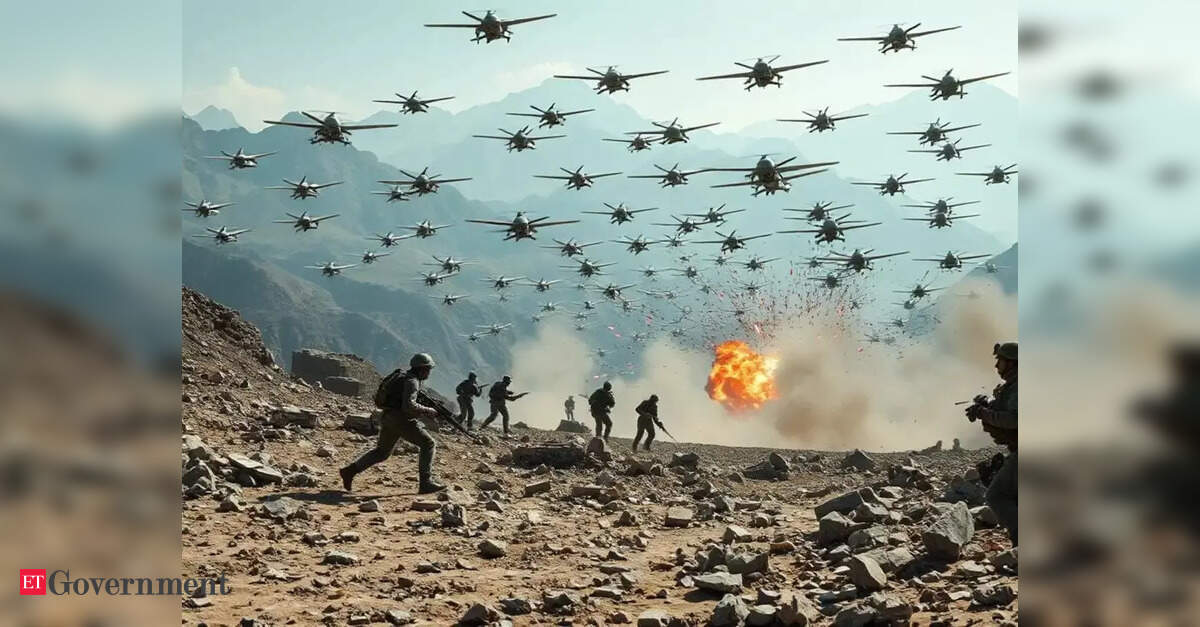
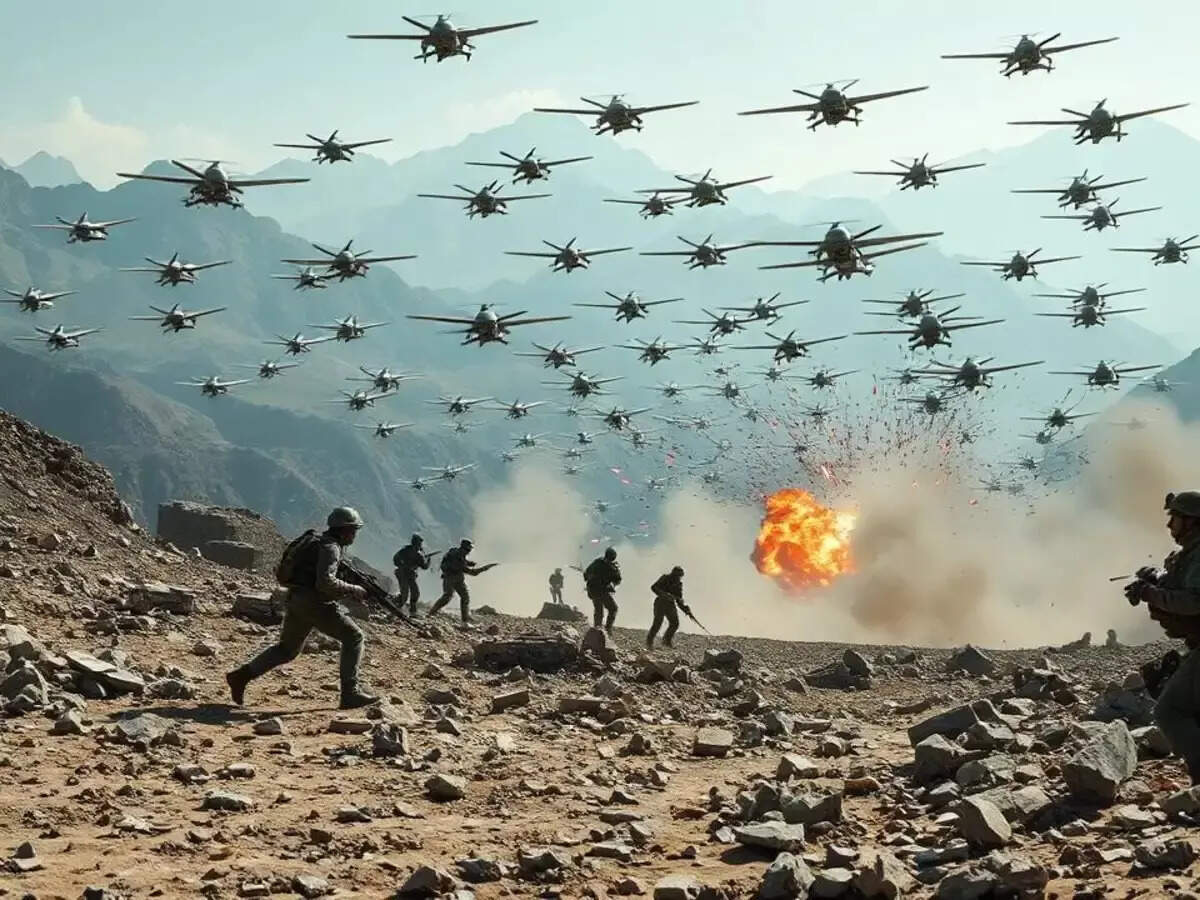
Future crises will involve dense drone swarms, long-endurance ISR orbits, loitering strike packages, and tactical saturation attacks designed to stress air defences. Operation Sindoor already hinted at the shape of things to come: dispersed, unmanned pressure backed by real-time foreign expertise. With Turkey now entrenched inside Pakistan’s defence ecosystem, that pressure will become institutional.
India is not starting from zero. The domestic drone space has broken out of its slow, PSU-centric past. Private firms like Idea Forge, NewSpace Research, Sagar Defence, Asteria, ZMotion, Adani Elbit, and Tata Advanced Systems have built reliable ISR and tactical UAVs that meet frontline standards.
On the combat side, the Nagastra series, Hermes derivatives produced in India, HAL’s CATS Warrior, and DRDO’s TAPAS and Archer programmes give India the beginnings of a deterrent architecture. The gap lies not in capability but in speed and capacity for mass production of cheap disposable systems. Turkey built its drone empire by iterating faster than its adversaries, not by waiting for perfect prototypes. India cannot afford to be complacent.
The real gap lies in production speed and the ability to field large numbers of low-cost, expendable systems. Turkey built its drone advantage by iterating faster than adversaries, not by waiting for perfect designs. India cannot afford development cycles that stretch for years, procurement pipelines that lose urgency between crises, or a mindset that treats emergency procurement as the mainstay.
The next phase of India’s response must be blunt and industrial. Domestic producers need assured orders, technology induction, mass production, faster user trials, long-term procurement commitments, and export push from day one. Engineers and operators must work side by side, not across institutional silos. Unmanned systems have to be treated as a strategic industry, not episodic acquisitions triggered by emergencies. The need is for an integrated drone ecosystem.
Counter-drone systems require the same acceleration. Integrated sensors, directed energy solutions, AI enablement, hardened communication networks, and mass-produced interceptors must scale into thousands, not dozens. The western border is evolving into a persistent UAS belt where endurance, saturation, and attrition will be tested continuously. The side that builds faster, not just smarter, will shape the airspace.
Turkey’s move into Pakistan is not symbolic; it is structural. It binds two militaries through production, supply chains, and operational training. It signals conviction in Pakistan’s role as a drone power and confidence that future conflicts in the region will be shaped by unmanned systems. For India, the message is clear. The battlespace is shifting at machine pace, not bureaucratic pace. The threat is no longer a drone crossing the border. It is the assembly line that builds it, the advisor who trains the operator, and the ecosystem behind it.
If India wants to stay ahead of this curve, it must match not just the platforms but the tempo and technology. The drone wars of the future will not be won by the country with the most imports but by the country that treats unmanned systems as a strategic industry and not an episodic procurement item. Turkey made that bet a decade ago. Pakistan has now made its own. India’s time to decide is running out. The coming contests will be decided by tempo. India must match it or be forced to react to it
(The author is a Lt. General (Retd.); Views expressed are personal)