

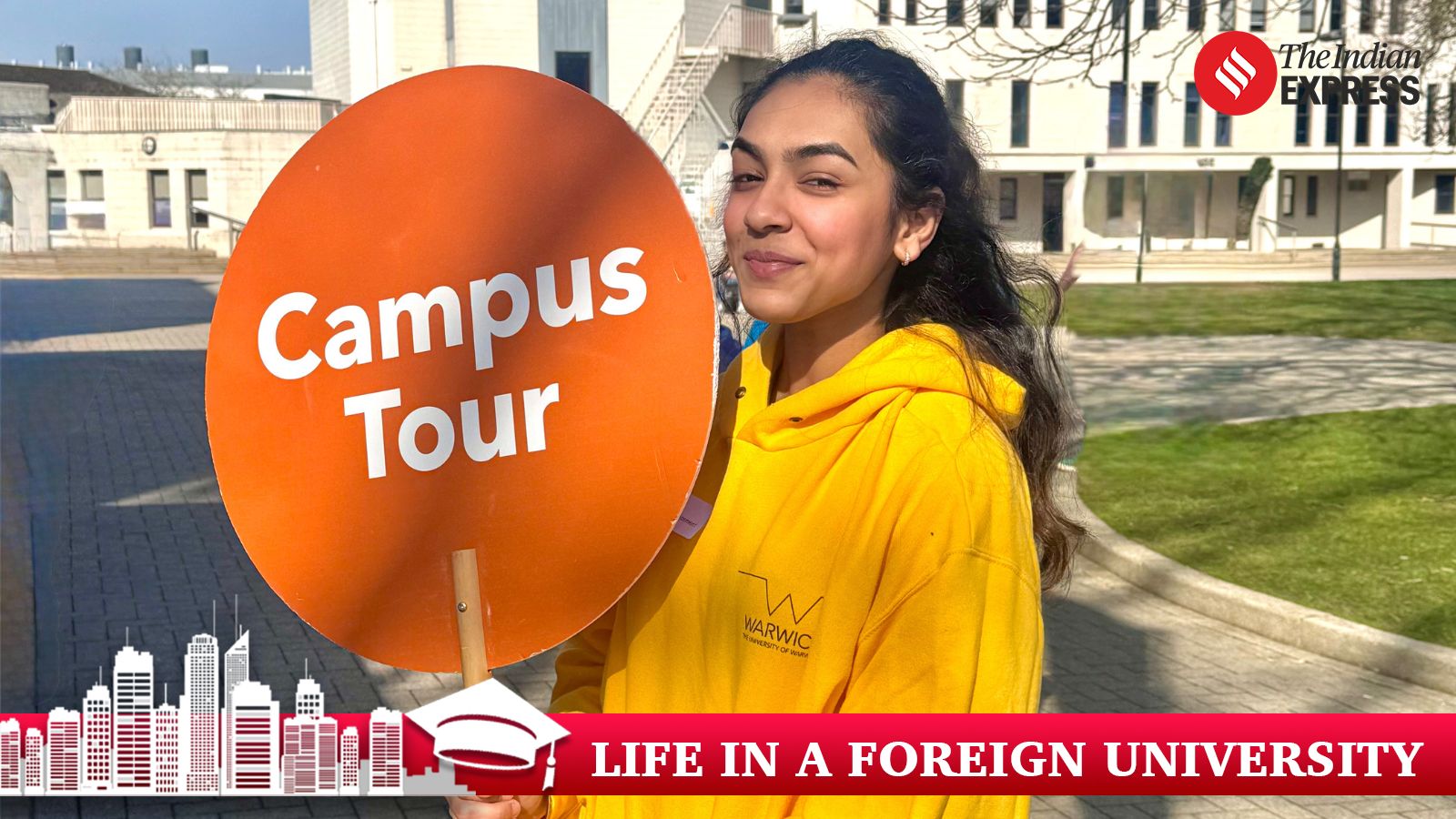
My interest in studying abroad began, quite fittingly, the way many good stories do: with a city dressed up for Christmas. When I visited the UK in 2017, the Regent Street angels made London feel briefly magical. But the deeper pull was academic. Having studied the Cambridge curriculum through IGCSEs and A Levels, the UK felt less like a leap and more like a natural continuation, just with better accents and colder winters.
What shaped my decision to study abroad
That early certainty became more intentional over time. At 19, I am convinced that learning is rarely confined to classrooms; it shows up in awkward first conversations, the confidence built while navigating new systems, and the humility of starting again. Long before applications, I was drawn to experiences beyond grades. In school, I founded ‘Gift A Smile’ to support education access for underprivileged children, authored a book, served as head girl, and was recognised as the ‘student of the year’ by a leading newspaper. I also pursued internships, including one at Deloitte, because I have always been drawn to learning with real-world stakes.
Why I chose Warwick
With that mindset, choosing the UK over the US or Australia became less of a romantic impulse and more of a considered decision. It was closer to home, the academic style felt familiar, and it offered the structure I valued as an 18-year-old. Warwick, in fact, was not my original plan. I had pictured Scotland and assumed Coventry would be “too silent” for someone raised on Mumbai’s constant soundtrack, until an offer-holder event in Mumbai rewrote that assumption.
Warwick was quiet, not silent: purposeful, energetic, and anchored by an inclusive student community, including a reassuring Indian presence. What also appealed to me was the university’s reputation for world-class teaching and excellence in research. Academically, the final nudge came from Warwick Business School, where my Management with Marketing (with placement year) course is ranked first in the UK and strongly geared towards employability. I explored options across countries with the support of a career counsellor and even received a 100 percent scholarship from a leading Indian university, but my heart remained set on the UK.
Landing in Warwick: The first week
When I finally arrived, the theory of “continuation” met the reality of “starting again.” Warwick’s campus is expansive and green, with a lake and geese that behave like local celebrities. In the first week, my step count touched 20,000, and my reference points shifted too, as lecture examples moved from Mumbai and Delhi to London and Birmingham.
The bigger adjustment, though, was language. Back home, switching between English, Hindi, and Gujarati is effortless; here, that shorthand disappears. Even small interactions required decoding, including the famously casual “You okay?”, which I initially treated like a medical check.
Story continues below this ad
Finding my people and living independently
What made the transition easier was how quickly a community forms when everyone is new. In a flat of eight, we had 12 nationalities represented, and the kitchen became our meeting room. We cooked, shared dishes, and laughed through cultural differences. My Indian food was declared too spicy, but they still savoured it. Those early evenings taught me that belonging is often built through small rituals rather than big declarations.
That togetherness extended beyond the flat through One World Warwick, the university’s celebration of diversity. A campus-wide lights procession for Warwick’s 60th anniversary made the whole place feel like a shared home.
Grocery shopping became a masterclass in unfamiliar choices, accommodation taught compromise in small daily ways, and cooking turned from weakness to survival skill. I learnt quickly that being abroad does not magically make you a chef, but it does make you resourceful and surprisingly proud of a well-timed pasta.
Learning the UK way
Academically, fewer contact hours meant more independent learning, and achieving above 70 percent truly felt like an achievement. The freedom is real, but so is the responsibility. There is less handholding and more expectation that you will take intellectual ownership of your work. Support mattered too. When I struggled with accounting, my professor, through office hours, offered patient guidance that improved both my confidence and performance.
Story continues below this ad
That balance of rigour and approachability has shaped my experience of learning here. You are challenged, but you are not left alone with the challenge. It also nudged me to become more comfortable asking questions early, rather than waiting for panic to become motivation.
Life outside lectures
Outside academics, Warwick has become home in small, vivid details, from stargazing by the lakeside with pizza as swans glide past, to weaving through the Faculty of Arts building we nickname “Hogwarts” for its dramatic staircases. The campus is welcoming and modern, bringing together people from diverse backgrounds and fostering a strong sense of belonging.
That sense of belonging is strengthened by the roles I have taken on beyond lectures. I serve as Head of Marketing and Design for the Warwick Women’s Careers Society and the Warwick India Forum, and I also contribute as a student ambassador, student communications influencer, and social media ambassador for Warwick Business School. These responsibilities have made employability skills tangible, from leadership and cross-cultural collaboration to stakeholder management and clear communication under deadlines. They have also opened doors beyond campus.
This summer, I studied luxury in Venice for two weeks, bringing classroom concepts to life in a fitting setting. Through the Warwick India Forum, I also interviewed Barkha Dutt, a moment that felt both surreal and grounding, and a reminder that consistent involvement creates unexpected opportunities.
Story continues below this ad
Work, research, and coming full circle
The campus ecosystem has made opportunities feel accessible because curiosity is often met with openness. Alongside my degree, I work part-time as a student community experience representative, supporting engagement initiatives and events, in addition to ad hoc ambassador work for open days and offer-holder events. Academically, I experienced this accessibility firsthand when I approached a professor to ask whether I could support ongoing marketing research. The answer was a simple yes. That small moment stayed with me: at Warwick, initiative is encouraged and rewarded with real responsibility.
Studying abroad has made me more independent, reflective, and less interested in comparing timelines. In a way, I have come full circle. What began under the Regent Street angels as a sense of wonder has, at Warwick, become a sense of direction: navigating a bigger world with steadier footing and writing my pages more deliberately than before.
(This letter is part of a series by The Indian Express where we bring to you the experiences of students at different foreign universities. From scholarships and loans to food and cultural experiences — students tell us how life is different in those countries and things they are learning other than academics)
