As India and Malta mark sixty years of diplomatic relations, the bilateral relationship stands at a moment of quiet maturity—shaped by shared histories, convergent diplomatic instincts, and a steadily expanding economic and people-to-people engagement.
From India’s early recognition of Malta’s independence in the mid-1960s to contemporary cooperation across trade, multilateral diplomacy, climate action, and mobility, the partnership reflects both continuity and adaptation in a changing global order.
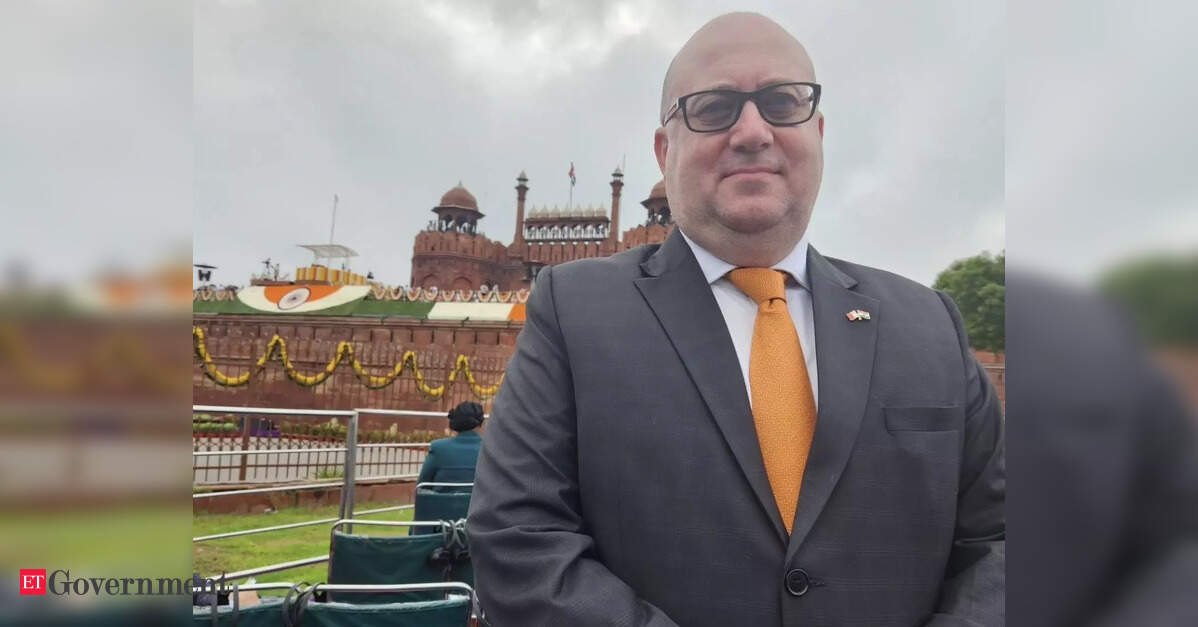
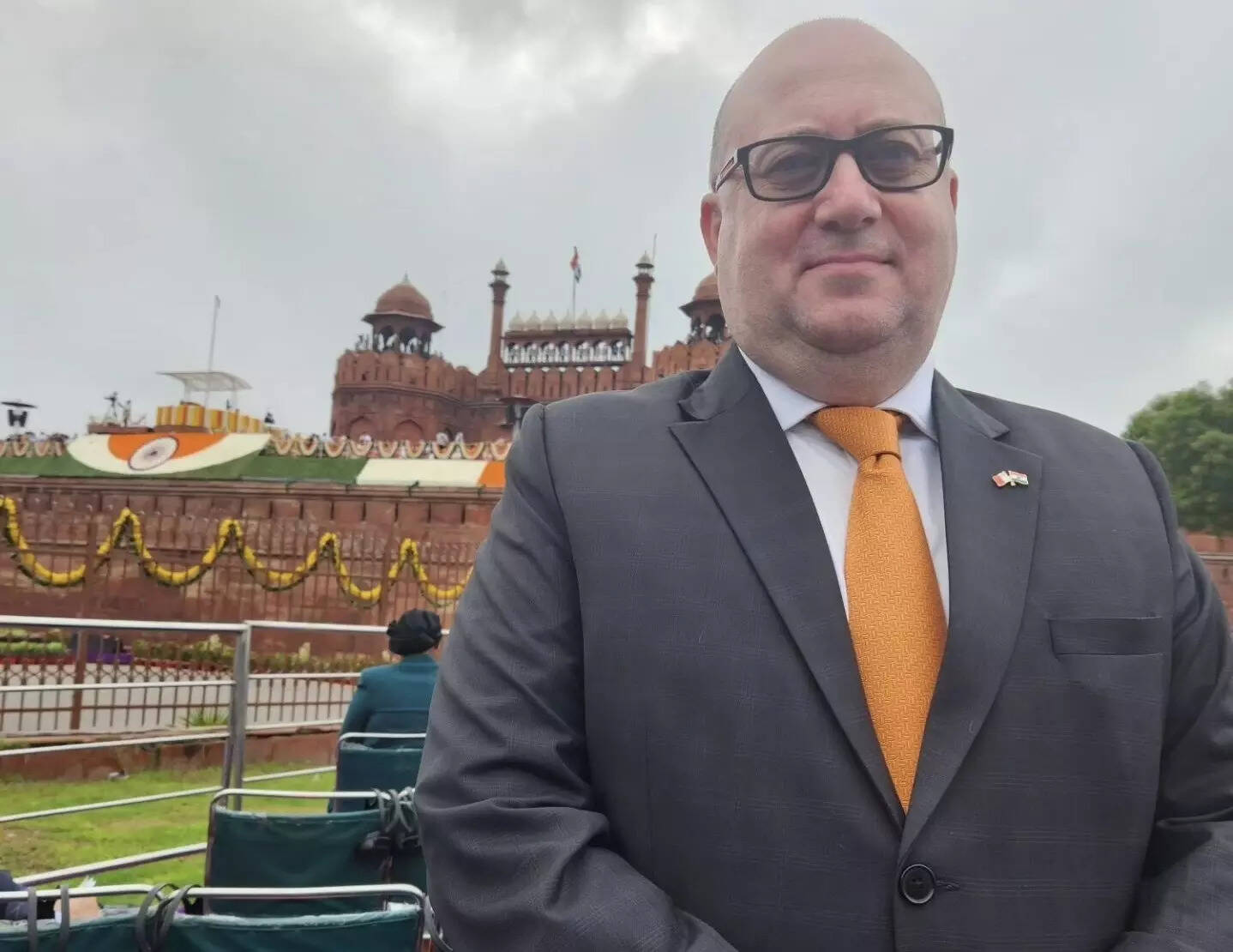
In this conversation with Anoop Verma, His Excellency Reuben Gauci, High Commissioner of Malta to India, reflects on the evolution of India–Malta ties over six decades. He speaks about the historical roots of the relationship, Malta’s experience within the Non-Aligned Movement, and the enduring relevance of non-intervention and multilateralism.
The discussion also explores the growing economic footprint of Indian companies in Malta, Malta’s role as a strategic gateway to the European Union, emerging areas of sectoral complementarity, and the expanding Indian diaspora that now forms the largest expatriate community in Malta.
Blending diplomatic insight with personal reflection drawn from his five years in India, the High Commissioner offers a nuanced perspective on how a small Mediterranean nation and a rising global power have built a relationship that is pragmatic, resilient and future-oriented.
Edited excerpts:
This year marks 60 years of India–Malta diplomatic relations. India was among the first countries to recognise Malta soon after its independence in 1964, with formal ties established in 1965. How would you characterise this six-decade journey, and which milestones best capture its evolution?
India recognised Malta’s independence almost immediately. Malta became independent on 21 September 1964, and diplomatic relations were established on 10 March 1965—less than six months later. This year, therefore, marks sixty years of uninterrupted diplomatic engagement.
We have commemorated this milestone through receptions and lectures delivered across Indian universities, not only in New Delhi but in several parts of the country. One of the most significant milestones has been the establishment and strengthening of resident diplomatic missions. Malta opened its High Commission in New Delhi in 2007, while India reopened its High Commission in Malta in 2017, after a gap since the 1990s. Diplomatic presence matters immensely.
Another major milestone is the growing Indian diaspora in Malta. When I arrived in India in September 2020, the Indian community in Malta numbered around 9,000. Today, it is close to 18,000, making Indians the largest expatriate community in Malta, in a country of just half a million people. This reflects the strength of Malta’s economy and the contribution of Indian professionals and workers.
Trade is also a diplomatic milestone. Today, there are over 112 Indian-owned companies operating in Malta. Indian pharmaceutical firms, in particular, use Malta as a regulatory and testing base to access the entire European Union market. Products certified in one EU member state can be marketed across all 27 countries. Malta has effectively become a gateway for Indian industry into Europe.
Beyond contemporary ties, our relationship goes back much further. Maltese Jesuit missionaries arrived in India in 1925 and have worked among tribal communities in eastern India for a century now. Indian soldiers and traders were present in Malta as early as the late nineteenth century, after the opening of the Suez Canal in 1869. So while our diplomatic relations are sixty years old, people-to-people connections predate them by decades.
Before Malta joined the European Union, both countries worked closely in forums such as the Non-Aligned Movement and the G-77. Today, both emphasise non-interventionist foreign policies. How do these shared instincts translate into present-day cooperation at multilateral platforms?
Malta was a proud member of the Non-Aligned Movement, which was led by India. Neutrality and non-intervention were foundational principles of our foreign policy, especially during the Cold War. These principles have not disappeared with our EU membership.
Malta and India continue to cooperate closely at the United Nations. Malta served as a non-permanent member of the UN Security Council in the 1980s and again in 2023–24, with India’s support. India, in turn, received Malta’s support during its own term. This reciprocity reflects enduring trust.
We also share a strong commitment to peace promotion, climate action, and multilateralism. In 2024, Malta joined the International Solar Alliance, an initiative led by India and France. For a small country like Malta, multilateralism is essential. It allows us to have a voice, safeguard our independence, and contribute meaningfully to global governance. India’s belief in multilateralism resonates deeply with us.
How has the enhanced resident diplomatic presence on both sides changed the relationship?
The presence of High Commissions has transformed engagement. It allows constant dialogue, faster problem-solving, and deeper economic and cultural cooperation. With a rapidly growing Indian diaspora in Malta and increasing business activity, India’s High Commission in Valletta has become indispensable. The same applies to Malta’s mission in New Delhi, which now plays a much more active role than ever before.
Bilateral trade has crossed US$400 million. Which sectors are driving this, and where do you see future opportunities?
Trade is currently driven largely by Indian exports—particularly pharmaceutical inputs and components. Malta functions as a regulatory gateway rather than a manufacturing hub.
The next frontier, however, should be Maltese investment in India. Given the size of the Indian market, India is not merely a gateway—it is a destination in its own right. We would like to see Maltese companies producing in India, for India. The conclusion of an India–EU free trade agreement would significantly accelerate this process.
Malta is often described as a strategic gateway to Europe. What advantages does it offer Indian companies?
Malta offers regulatory certainty, EU market access, strong investment protection, and English as a working language. Corporate tax mechanisms can reduce effective tax rates to as low as 5 per cent in certain sectors.
We are especially keen to attract investment in semiconductors, micro-electronics, pharmaceuticals, aviation leasing, maritime services, and high-end manufacturing. Malta already hosts global players in micro-electronics and offers generous incentives in these sectors.
Indian pharmaceutical firms have invested significantly in Malta. What lessons does this offer for other sectors?
The lesson is simple: regulatory trust matters. Indian pharmaceutical firms use Malta for EU certification, not mass production. This model can be replicated in fintech, digital services, aviation leasing, and green technologies. High-value, knowledge-intensive sectors are where Malta and India complement each other best.
How effective are double taxation avoidance and cooperation agreements?
Their effectiveness is evident in the presence of over 112 Indian companies operating in Malta and the rapid growth of the Indian diaspora. These agreements work well, though they can always be improved. Malta’s economy is increasingly driven by science-based, high-end sectors, making cooperation in research and technology particularly important.
Tourism is a natural connector. How can both countries enhance cooperation here?
Malta already hosts nearly three million tourists annually—six times its population. Given our size, our focus is now on high-value tourism rather than volume. Malta must be viewed not like a large country, but like a city-state, comparable to Venice or Barcelona.
India represents a growing market, but engagement must be targeted and sustainable. Connectivity, niche tourism, and cultural exchange will be key rather than mass promotion.
Where do you see the strongest complementarities in sectors such as maritime services and digital industries?
Malta is the sixth-largest ship registry in the world and a major aviation registry. Maritime services are a natural area of cooperation, given India’s maritime heritage and growing port and shipping ecosystem.
In digital sectors such as i-gaming, Malta is a global leader. While regulatory frameworks in India are still evolving, this sector could eventually become a major area of Maltese investment in India if legal clarity emerges.
Finally, on a personal note, what experiences in India stand out for you?
India has become a second home for me over the past five years. I witnessed the country during the most difficult phase of the COVID-19 pandemic and saw extraordinary resilience and compassion.
Some of my most meaningful experiences have been visits to tribal communities where Maltese missionaries have worked for decades. Supporting occupational therapy for children with special needs in these communities has been deeply moving.
From cultural festivals like the Hornbill Festival in Nagaland to academic exchanges and economic initiatives, my time in India has been overwhelming in the most positive sense. It reflects the depth and warmth of the India–Malta relationship.