India’s entry into the era of bullet trains marks far more than the introduction of a faster mode of transport; it represents a structural shift in how the country imagines connectivity, productivity, and technological ambition.
High-speed rail is a statement of intent that India is prepared to compress distance at a continental scale, integrate regional economies with precision, and deploy complex infrastructure with global standards of safety and efficiency. It signals confidence in long-term planning, institutional coordination, and engineering depth.
It is within this larger national aspiration that the Mumbai–Ahmedabad High Speed Rail project reached a critical milestone on 2 January 2026, with the successful breakthrough of the first mountain tunnel in Maharashtra—an achievement that reflects both technical maturity and policy resolve.
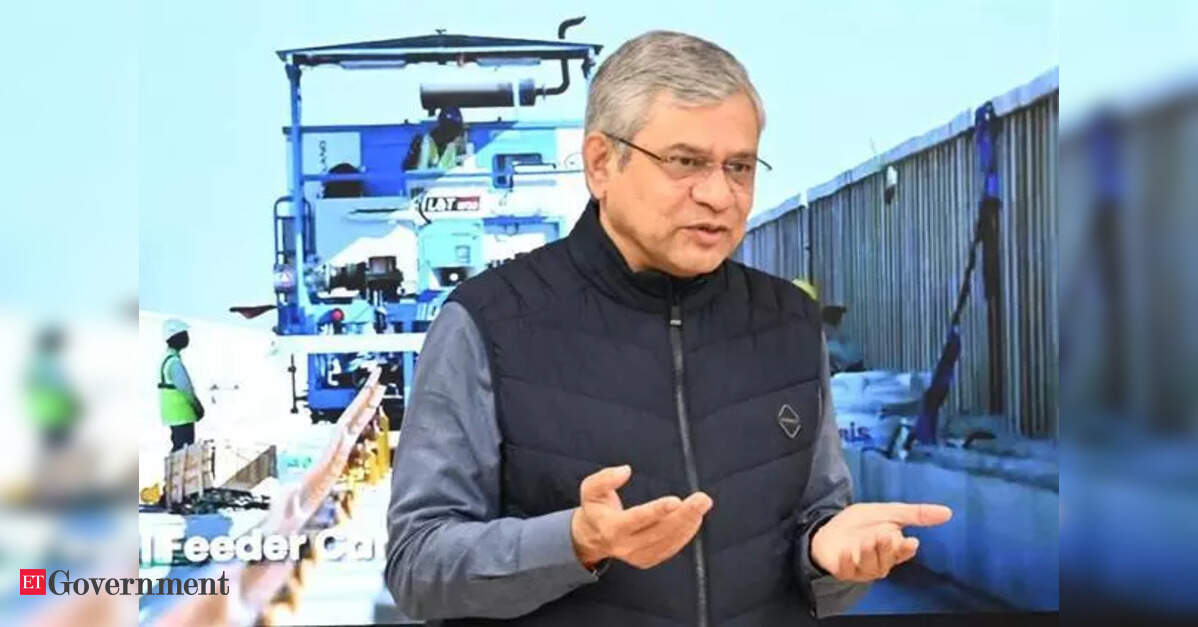
The milestone was announced by Ashwini Vaishnaw, Union Minister for Railways, Information & Broadcasting, and Electronics & Information Technology, who confirmed the completion of Mountain Tunnel-5 in Palghar district, located between the Virar and Boisar bullet train stations.
Measuring approximately 1.5 kilometres, this tunnel is the first mountain tunnel in Maharashtra to be fully excavated for the high-speed rail corridor, marking a decisive step forward in one of India’s most ambitious infrastructure projects.
The tunnel was constructed using the drill-and-blast method, with excavation carried out simultaneously from both ends. This approach allowed engineers to respond dynamically to varying geological conditions while maintaining strict quality and safety benchmarks. The tunnelling process incorporated advanced support systems, including shotcrete, rock bolts and lattice girders, alongside continuous monitoring mechanisms.
Special emphasis was placed on worker safety through effective ventilation, fire prevention measures, and well-planned access and exit routes, underlining the project’s adherence to international tunnelling standards.
This breakthrough builds on earlier progress achieved in September 2025, when the first underground tunnel of nearly five kilometres between Thane and the Bandra Kurla Complex was completed. Together, these developments highlight steady momentum across the corridor’s most complex engineering segments.
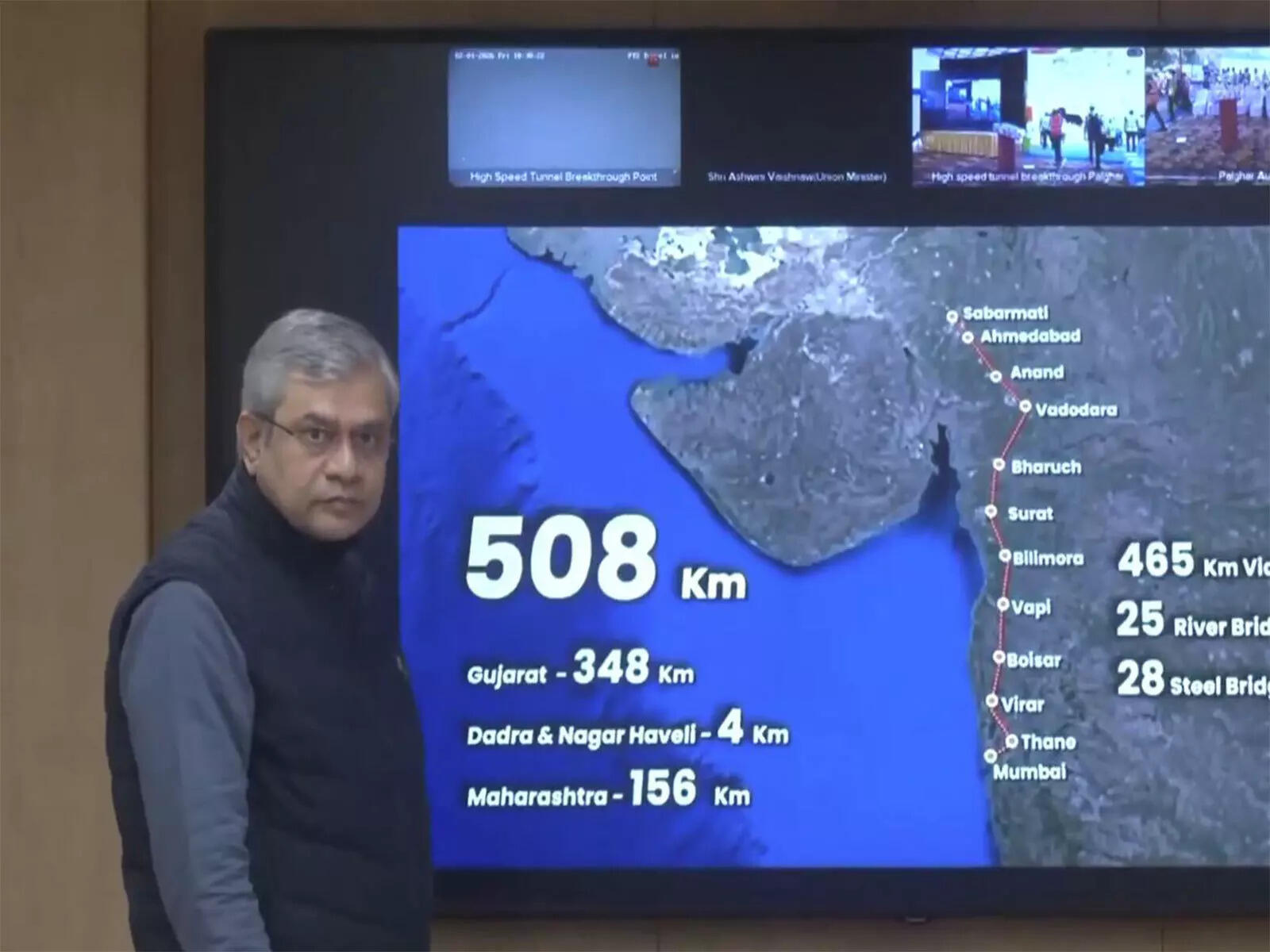
The Mumbai–Ahmedabad High Speed Rail corridor spans approximately 508 kilometres, traversing Gujarat, Dadra and Nagar Haveli, and Maharashtra. Of the total 27.4 kilometres of tunnelling required along the route, around 21 kilometres are underground, while the remaining sections comprise surface and mountain tunnels.
In Maharashtra alone, seven mountain tunnels are under construction, covering a cumulative length of about 6.05 kilometres, supplemented by an additional 350-metre tunnel in Gujarat.
Beyond engineering milestones, the project carries significant economic and social implications. Once operational, the bullet train is expected to reduce travel time between Mumbai and Ahmedabad to under two hours, fundamentally altering mobility patterns across western India.
The corridor connects major urban and industrial centres including Sabarmati, Ahmedabad, Anand, Vadodara, Bharuch, Surat, Bilimora, Vapi, Boisar, Virar, Thane and Mumbai, creating a high-velocity economic spine capable of supporting industrial growth, services expansion, and labour mobility at an unprecedented scale.
The Minister has emphasised that the project is already generating substantial employment during the construction phase and will continue to do so during operations and maintenance. More importantly, high-speed rail is expected to catalyse investment along the corridor, encourage the development of new industrial clusters, and enhance regional competitiveness.
From an environmental perspective, the project aligns with India’s sustainability objectives, with estimates indicating that high-speed rail travel could reduce carbon dioxide emissions by up to 95 percent compared to equivalent road transport.
Crucially, the government has consistently positioned the bullet train not as an elite transport experiment, but as a mass-oriented mobility solution tailored to the needs of India’s expanding middle class. The emphasis on affordability, reliability, and safety reflects a broader policy understanding that transformative infrastructure must be inclusive to be effective.
The completion of the first mountain tunnel in Maharashtra is therefore not an isolated construction achievement. It is a tangible marker of India’s transition towards next-generation infrastructure—where speed, scale, sustainability and institutional capability converge.
As the Mumbai–Ahmedabad High Speed Rail project advances, it stands as a symbol of how India intends to move people, ideas and economic energy across its landscape in the decades ahead.