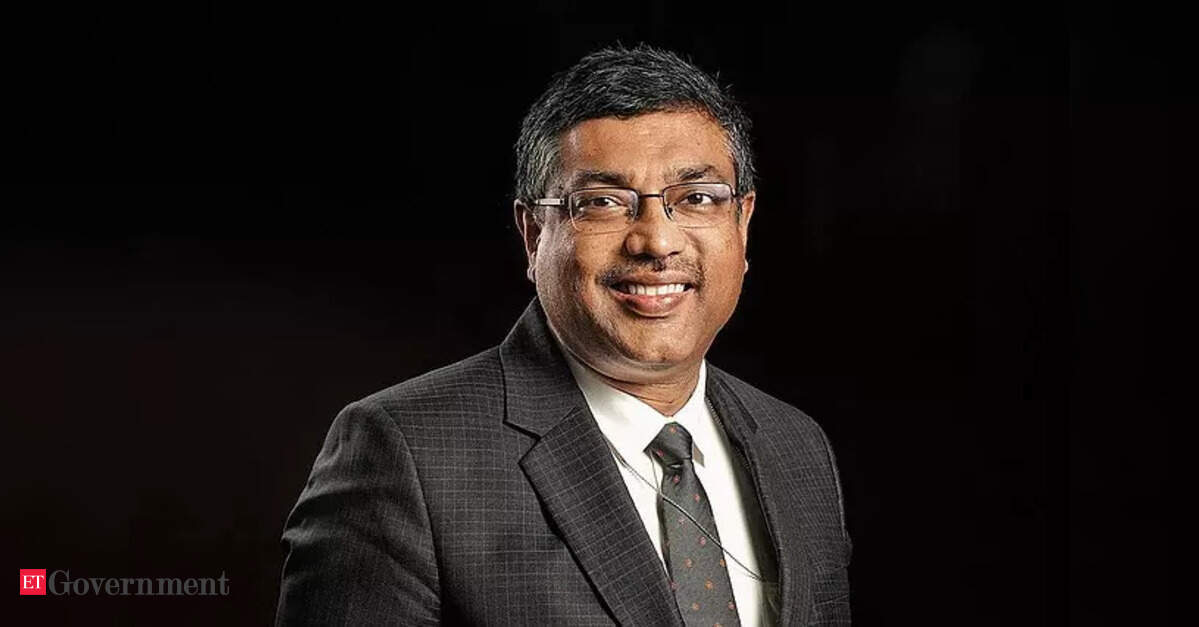
S. Krishnan, Secretary, Ministry of Electronics and Information Technology (MeitY), stands at the intersection of policy, technology, and institutional reform at a moment when India’s digital trajectory is entering a decisive phase.
This convergence is reflected in MeitY’s stewardship of the India AI Impact Summit 2026, an initiative that signals India’s intent to move the global artificial intelligence conversation beyond abstract frameworks towards measurable outcomes, inclusion, and real-world deployment. From foundational digital public infrastructure and electronics manufacturing to artificial intelligence, semiconductors, cyber resilience, and data governance, MeitY today occupies a central role in shaping how the Indian state engages with technology as an instrument of sovereignty, inclusion, and economic transformation.
In this conversation with Anoop Verma, Krishnan reflects on the responsibilities of the ministry in an era marked by technological acceleration and geopolitical flux. Drawing on the conceptual and institutional thinking underpinning the India AI Impact Summit, he offers an assessment of how India is balancing scale with trust in its digital systems, ambition with realism in AI and semiconductor policy, and speed with institutional depth in regulatory design. The discussion moves beyond headline initiatives to examine the logic of policy sequencing, the importance of domestic capabilities, and the challenges of aligning innovation with public purpose.Rather than viewing technology as an end in itself, Krishnan situates it firmly within the framework of governance outcomes—citizen-centric services, resilient digital ecosystems, and long-term strategic capacity. The interview provides insight into how MeitY is navigating complexity across sectors while anchoring its approach in accountability, interoperability, and national interest, offering a clear window into the thinking shaping India’s digital future.
Edited excerpts:
The India AI Impact Summit 2026 is being hosted by MeitY in New Delhi in February 2026 with a focus on “impact” rather than just policy announcements or safety discourse. How does this shift in framing reflect India’s evolving role in the global AI landscape?
India’s decision to frame the India AI Impact Summit 2026 around impact—moving beyond policy pronouncements or purely safety-centric discussions—signals a clear evolution in how the country sees its role in the global AI architecture. Rather than only participating in high-level debates, India is now shaping a practical, outcomes-oriented agenda that prioritises demonstrable benefits for people, economies, and societies.
This approach aligns with India’s broader national strategy of deploying AI as a transformative technology that supports inclusive growth, innovation, and sustainable development. The government’s AI policy emphasises building a robust ecosystem that balances openness to innovation with sovereign capacity in data, compute, and models, while ensuring that technology serves every section of society.
By foregrounding impact, the summit reflects a shift from abstract frameworks to actionable deliverables, where discussions feed into tangible global cooperation through shared repositories, playbooks, and concrete recommendations for leaders. It also mirrors India’s engagement in multilateral forums, where the emphasis has consistently been on practical cooperation, inclusive data use, and ethical deployment rather than prescriptive, one-size-fits-all regulation.
Importantly, hosting the summit in the Global South for the first time underscores India’s aspiration to reshape the global AI narrative in a manner that is more representative and context-aware. This includes showcasing home-grown AI applications with global potential, particularly for developing countries, and advancing a human-centred, inclusive vision of AI that bridges technological opportunity with societal needs.
The summit’s guiding principles—the three sutras of people, planet, and progress—and the seven chakras frame its agenda across themes such as inclusion, resilience, safe AI, and economic development. Could you explain how these conceptual pillars were chosen and how they will shape summit deliberations and outcomes?
The three sutras of people, planet, and progress were chosen to reflect India’s long-standing view that technology must ultimately serve human well-being, environmental sustainability, and broad-based economic advancement. These principles provide a simple yet robust normative anchor for the summit, ensuring that AI discussions remain grounded in societal outcomes rather than technology alone.
The seven chakras translate these high-level sutras into concrete domains of action. Together, they offer a full-stack view of AI—from human capital and inclusion to safety, resilience, science, access to resources, and development impact. This structure ensures comprehensive coverage of both opportunities and risks, while allowing focused and actionable deliberations within each thematic area.
The conceptual framework of the summit has emerged through a deeply inclusive and consultative process. The themes and working group structures were shaped over several months through five rounds of public consultations, global outreach sessions held in cities such as Paris, Berlin, Oslo, New York, Geneva, Bangkok, and Tokyo, and regional consultations across India to capture grassroots perspectives.
At the national level, public consultations hosted on the MyGov platform received over 600 citizen submissions, complemented by open stakeholder consultations involving more than 500 organisations across industry, academia, civil society, and the research ecosystem. Multiple structured brainstorming sessions were also held in India and internationally to refine the thematic focus and ensure global relevance.
This participatory process ensures that the sutras and chakras are informed by real-world experience and diverse development contexts. As a result, working group deliberations are designed to produce tangible outputs such as shared platforms, repositories, playbooks, and guiding principles, which will inform a leaders’ declaration advancing inclusive, responsible, and sustainable AI at the global level.
India is the first Global South nation hosting this summit. What strategic outcomes does MeitY seek in positioning India as a convener for multilateral dialogue on responsible and inclusive AI, particularly across the Global South?
India’s role as the first Global South host of the AI Impact Summit reflects its unique position in the global AI ecosystem—as a large emerging economy, a major digital market, and an increasingly significant contributor to AI innovation and deployment. MeitY views this convening role as an opportunity to ensure that global AI conversations better reflect the realities, priorities, and constraints of developing and emerging economies.
Across multilateral forums such as the G20 and GPAI, India has consistently advocated inclusive participation, democratised access to AI resources, and context-aware deployment that does not privilege a narrow group of countries or actors. Hosting the summit enables India to translate these positions into a structured, action-oriented platform that amplifies Global South perspectives while remaining open, collaborative, and globally relevant.
Strategically, MeitY seeks to position India as a bridge-builder—connecting advanced AI ecosystems with developing economies and linking frontier innovation with real-world developmental challenges. This includes sharing insights from India’s own experience in building digital public infrastructure and scalable AI use cases that can be adapted across diverse socio-economic contexts.
In terms of measurable outcomes, the summit is designed to deliver practical outputs across all seven thematic working groups. These include shared repositories of AI solutions and case studies to improve access and replicability, playbooks documenting best practices and adaptable use cases, and common reference frameworks and policy notes that establish a shared language on responsible and inclusive AI.
Collectively, these outcomes are intended to move beyond declarations towards sustained collaboration, enabling countries—particularly in the Global South—to adopt, adapt, and scale AI responsibly in ways that deliver tangible economic and social impact.
With nearly 100 global CEOs and approximately 20 heads of state and ministers expected to attend, what are the key priorities for India in shaping international cooperation on AI governance, ethics, and scalable deployment?
India’s priority at the summit is to shape international cooperation that is practical, inclusive, and development-oriented, while remaining firmly anchored in shared values of trust and transparency. With leaders from government, industry, and the research ecosystem present, the summit offers a unique opportunity to align policy intent with deployment realities.
Rather than advocating fragmented or prescriptive approaches to AI governance, India is promoting collaborative frameworks that recognise varying national capacities and development contexts. This includes enabling all countries to access the tools, capabilities, and institutional knowledge required to govern AI effectively and ethically.
The seven thematic working groups provide the structure for this engagement, addressing priorities ranging from human capital and inclusion to safe and trusted AI, resilience, science, and democratising access to AI resources. Together, they emphasise sustainability, equitable access to research infrastructure, and reduced concentration of foundational AI capabilities.
For industry leaders, India’s focus is on encouraging scalable and responsible deployment, particularly in sectors such as healthcare, agriculture, education, and manufacturing, where AI can deliver measurable development outcomes. The summit seeks to bridge innovation with adoption through shared playbooks, interoperable platforms, and replicable models that can travel across borders and contexts.
Through this convergence, India aims to move global cooperation on AI from alignment on principles to coordination on action, ensuring that governance frameworks, ethical norms, and deployment strategies evolve together.
How is MeitY integrating the perspectives of international partners across governments, industry, academia, and civil society into the summit’s design to bridge global divides in AI capacity and opportunity?
MeitY has adopted a broadly consultative and inclusive approach to the design of the India AI Impact summit, ensuring that voices from governments, industry, academia, and civil society are embedded into the summit’s architecture from the outset. This reflects the belief that sustainable and equitable AI outcomes require contributions from all stakeholder groups.
A central component of this engagement has been the organisation of nearly 300 pre-summit events worldwide. These events have brought together diverse stakeholders to share insights, solutions, and challenges related to AI deployment and governance. The findings from these engagements are documented in post-event reports and shared with the working groups to inform deliberations.
Each of the seven working groups is also conducting structured stakeholder consultations involving industry, research institutions, civil society organisations, and technical communities. These ensure that outputs are evidence-based and grounded in practical experience across varied development and regulatory contexts.
In addition, MeitY is establishing expert engagement groups led by recognised thought leaders from industry, academia, and policy research to provide focused, expertise-driven inputs into Summit outcomes. Open calls for feedback through public platforms further enable global participation, while partner-organised sessions during the main summit will enrich discussions and amplify diverse perspectives.
The summit will showcase multiple flagship initiatives including Udaan Global AI Pitch Fest, YuvaAI Global Youth Challenge, AI by HER, Global Innovation Challenge, a Research Symposium, and an AI Expo. How were these chosen to reflect India’s strategic priorities in AI impact and inclusion?
The flagship initiatives at the India AI Impact Summit 2026 have been curated to closely mirror India’s broader strategic priorities in artificial intelligence, particularly those relating to inclusion, talent development, equitable access, and real-world impact, as articulated through the IndiaAI Mission and the Summit’s thematic framework anchored in the Three Sutras and Seven Chakras.
Initiatives such as the Udaan Global AI Pitch Fest and the Global Innovation Challenge have been designed to surface high-potential AI startups and scalable solutions that align with inclusive development goals. These platforms enable innovators from diverse geographies to present their work to policymakers, investors, and global peers, thereby linking innovation with pathways to adoption.
The YuvaAI Global Youth Challenge reflects India’s emphasis on human capital and future-ready skills, encouraging young people to develop AI solutions for social good and fostering early engagement with responsible AI innovation across communities worldwide. AI by HER underscores India’s commitment to social empowerment and gender inclusion by promoting women-led AI innovations that address societal challenges and expand participation in the AI economy.
The research symposium on AI and its impact provides an interdisciplinary forum for researchers, practitioners, and policymakers from India and the Global South to exchange evidence, methodologies, and frontier research. In parallel, the AI expo serves as a showcase for AI applications developed by governments, enterprises, startups, and international partners, highlighting solutions across sectors such as healthcare, education, sustainability, and governance.
Collectively, these initiatives reflect not only India’s domestic priorities of inclusive growth, talent development, and equitable access to AI resources, but also the intent to co-engage global stakeholders in shaping solutions that are scalable, context-aware, and socially impactful. Their design is informed by stakeholder consultations and thematic inputs, ensuring that inclusion, resilience, safety, and shared innovation are embedded in both participation and outcomes.
What mechanisms will be used to evaluate and scale promising solutions emerging from Global Impact Challenges, such as AI for All, AI by HER, and YuvaAI, to ensure real-world public and social impact?
MeitY has conceptualised the global impact challenges as outcome-oriented pipelines rather than one-off competitions. From the outset, the focus has been on identifying solutions that combine social relevance with technical robustness, responsible AI practices, and clearly articulated pathways to scale.
Across challenges such as AI for All, AI by HER, and YuvaAI, submissions are assessed through multi-stage evaluation processes. These evaluations consider the significance of the problem being addressed, the appropriateness and responsible use of AI, inclusion and equity dimensions, technical and operational feasibility, readiness for deployment, and the clarity of measurable impact, particularly for underserved communities and Global South contexts.
Shortlisted solutions are reviewed by diverse, multidisciplinary jury panels comprising AI experts, sector specialists, investors, and ecosystem leaders. This ensures that selection balances innovation with deployability, and ambition with real-world constraints. Several challenges also incorporate structured mentorship, bootcamps, and expert-led guidance, enabling teams to refine their solutions, strengthen sustainability models, and prepare for scale.
A critical mechanism for translating innovation into impact is direct exposure to decision-makers and enablers. Finalists are showcased at the India AI Impact Summit, where they engage with policymakers, public sector institutions, investors, multilateral organisations, and industry partners. This creates concrete opportunities for pilots, partnerships, funding, and adoption within public and social systems.
Beyond the summit, high-potential solutions are linked to broader ecosystem pathways, including government programmes, innovation platforms, and international collaborations emerging from the working groups. In this manner, successful innovations are not only recognised but embedded into ongoing policy, deployment, and collaboration frameworks.
As the summit is explicitly positioned around impact and measurable outcomes, what are the key metrics and evaluation frameworks that MeitY plans to deploy to assess progress against its summit goals?
Given the summit’s role as a global convening platform, success is assessed primarily through the quality, durability, and usability of its outcomes rather than through narrow quantitative indicators alone.
One key dimension is the depth of engagement and inclusivity achieved through the summit process. Deliberations have been designed to meaningfully incorporate diverse geographies, development contexts, and stakeholder perspectives, particularly from the Global South. This is reflected in the breadth of contributions feeding into the working groups and in the extent to which final outputs capture varied national and sectoral realities.
Another focus area is the actionability of outcomes. Working group deliverables are intentionally structured to translate shared principles into practical tools, such as frameworks, playbooks, and collaborative mechanisms, that countries and institutions can realistically adopt or adapt within their own ecosystems.
Equally important is continuity beyond the summit itself. A key measure of impact is whether Summit-enabled collaborations lead to sustained partnerships, follow-on initiatives, and real-world pilots across public and social sectors. In this sense, the summit is positioned as a catalytic moment within a longer cooperation cycle rather than an end point.
Post-Summit, how will MeitY ensure that the partnerships, commitments, and innovations catalysed at the event lead to sustained implementation beyond declarations in governance, industry, and citizen applications?
MeitY views the India AI Impact Summit as a catalyst for ongoing and sustained action. To ensure continuity beyond declarations, the emphasis is on institutionalising partnerships, embedding accountability, and enabling continuous collaboration across governments, industry, and civil society.
Outcomes from the summit, including working group recommendations, shared playbooks, and showcased innovations, are systematically integrated into follow-on programmes and initiatives. This approach ensures that practical tools and frameworks find pathways into national and international policy, regulatory, and operational contexts.
In parallel, MeitY is establishing structured post-summit engagement channels, including continued coordination with working group members, Expert engagement groups, and partner institutions. These mechanisms support monitoring of progress, facilitate knowledge exchange, and enable the scaling of high-impact solutions highlighted during the summit.
For innovations emerging from global impact challenges and other flagship initiatives, MeitY is promoting direct linkages with government programmes, industry consortia, and international collaborations. This ensures that promising solutions have viable pathways for deployment, funding, and replication across diverse contexts.
The leaders’ declaration provides an overarching framework for collective accountability. By aligning commitments with concrete follow-on activities, MeitY aims to transform the summit from a forum for ideas into a sustained engine of collaborative action, ensuring that the benefits of AI materialise in governance, industry applications, and citizen-facing services, particularly in underserved regions.
How is MeitY planning to track the translation of Summit initiatives into measurable improvements in AI education, multilingual AI access, governance efficiency, health outcomes, and climate resilience?
MeitY’s approach to tracking the translation of summit initiatives into measurable sectoral improvements is anchored in real-world deployment and observable impact. While the India AI Impact Summit is designed to catalyse outcomes across domains such as education, inclusive access, governance, health, and sustainability, the emphasis is on embedding these priorities within ongoing programmes and application trajectories rather than treating them as stand-alone interventions.
India’s AI strategy under the IndiaAI Mission underscores the importance of AI driving inclusive and transformative outcomes, including expanded AI literacy and skills development, greater access to multilingual technologies, and the application of AI to social and developmental challenges. This reflects a commitment to ensuring that AI’s benefits are experienced in everyday contexts, whether through improved education, service delivery, or economic opportunity.
For summit-linked initiatives, MeitY and its partners are anchoring impact visibility to tangible deployment pathways. Global Impact Challenges such as AI for All, AI by HER, and YuvaAI are structured to surface pilot-ready or deployable solutions that can be adopted by public systems, private partners, or research ecosystems. Through partnerships, mentoring support, and ecosystem linkages, these initiatives include built-in mechanisms for post-summit scaling and monitoring of solutions with demonstrated real-world potential.
By grounding summit outcomes in concrete outputs such as repositories, playbooks, frameworks, and partnership commitments, and aligning them clearly with the principles of people, planet, and progress, MeitY is orienting impact tracking around adoption, use, and sustained relevance in real-world settings.