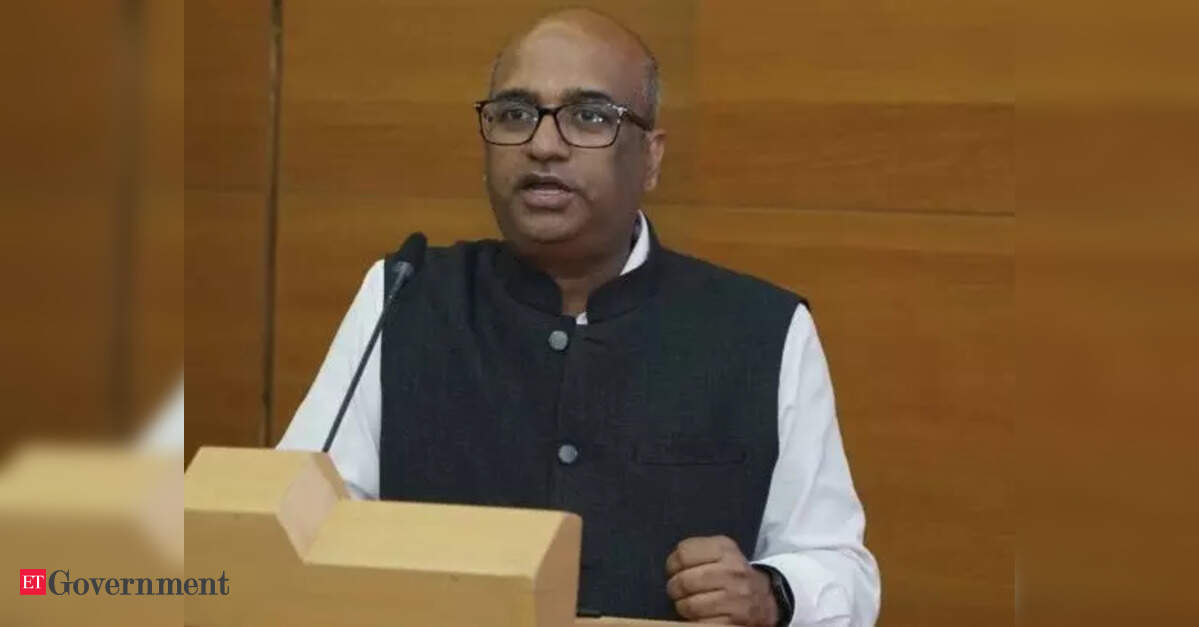
At the Regional AI Impact Conference held in Jaipur on January 6, 2025, ETGovernment spoke with Abhishek Singh, Additional Secretary, Ministry of Electronics and Information Technology, CEO of the IndiaAI Mission and Director General of National Informatics Centre.
The conversation explores the strategic rationale behind India’s regional AI Impact Conferences, the significance of Rajasthan as a testbed for applied AI in governance, and the centrality of human capital in building an inclusive, trusted, and nationally scalable AI ecosystem.
Singh situates the Jaipur conference within India’s broader AI roadmap, outlining how state-led innovation, institutional capacity, and large-scale skilling will collectively shape the country’s AI future in the run-up to the global AI Impact Summit scheduled for 2026.
Edited excerpts:
The Jaipur conference marked an important regional milestone for the AI Impact Summit. How do you see its significance?
The AI Impact Summit to be hosted by India in February 2026 in Delhi is a global platform, but its strength will come from strong regional participation. These regional conferences are designed to involve states, entrepreneurs, academic institutions and local stakeholders. The discussions and inputs emerging from Jaipur will directly contribute to shaping the agenda of the main summit, particularly around empowering people, democratising AI, expanding access to services and ensuring responsible and safe use of AI.India has announced an ambitious AI mission. Where does Rajasthan fit into this national vision?
Rajasthan has consistently been at the forefront of digital governance. It was among the early states to establish a dedicated IT framework and has delivered large-scale citizen-centric initiatives such as Bhamashah and Jan Aadhaar. With this foundation, Rajasthan is well positioned to accelerate AI adoption across healthcare, agriculture, education and public service delivery. What the state does in AI can become a model for wider adoption across India.
How important is the role of states in driving AI adoption on the ground?
States are critical because real-world AI applications are implemented at the state and district levels. Whether it is healthcare delivery, agriculture advisories or education outcomes, states determine how technology translates into citizen impact. Active participation from states like Rajasthan will help scale AI-based solutions faster and make them more relevant to local needs.
Skilling and human capital often come up in AI discussions. How is India preparing its youth for the AI economy?
Human capital is India’s biggest strength. Under the IndiaAI Mission, we are working closely with academic institutions, data labs, ITIs and polytechnics to train youth in data science and AI-related skills. The focus is on creating a pipeline of skilled professionals who can participate meaningfully in the emerging AI and data economy.
What message would you like to give to the youth of Rajasthan from this platform?
AI is here to stay. To remain relevant in the job market and to grow professionally, acquiring AI skills is essential. Those who invest in learning AI today will be better positioned to improve their income levels, create value and contribute to the next phase of India’s digital and economic growth.