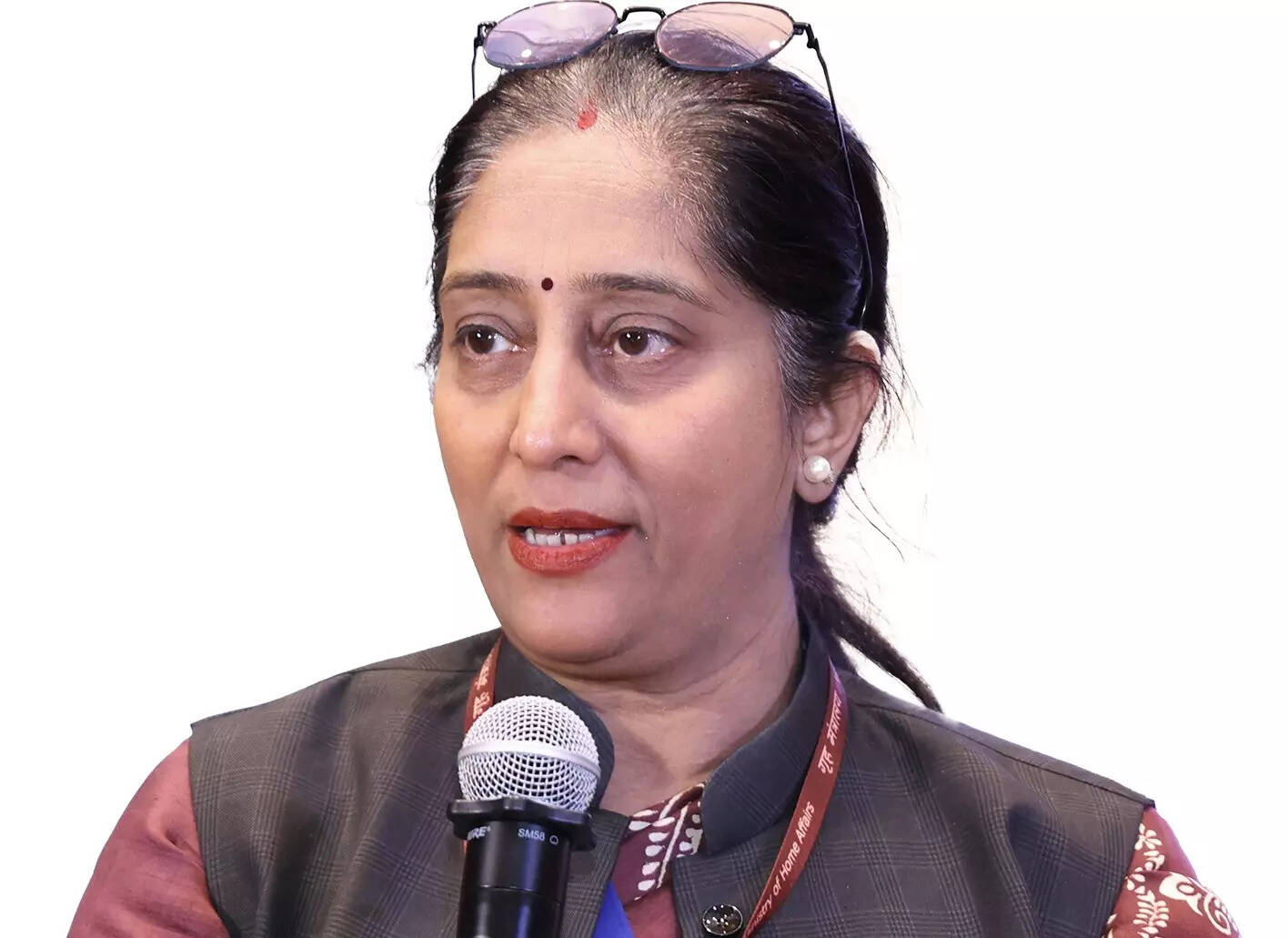
In a significant dialogue at the Rajasthan DigiFest and Regional AI Impact Summit, Kavita Bhatia, Scientist G and Group Coordinator at the Ministry of Electronics & IT (MeitY), shared a roadmap for India’s technological future.
She highlights why regional summits are the “jan bhagidari” (public participation) engine necessary to transition AI from a concept in the Global North to a practical utility for the Global South.
In this interview, she breaks down the transformative IndiaAI Mission, addressing how a proactive “intelligence layer” can redefine governance, why AI is a creator of new job categories rather than just a disruptor, and how India’s massive scale makes it the ultimate testing ground for global AI solutions.
Edited excerpts:
You are visiting Rajasthan at a time when DigiFest and a regional AI summit are drawing wide attention. How do you view this event, and why are such regional AI summits important for India?
First of all, I would like to thank the Rajasthan government for organising this regional summit in combination with DigiFest and the IT event. Since morning, this has been discussed repeatedly, and I truly believe it is a very effective idea to combine these platforms. When events like DigiFest and AI summits are brought together, participation becomes much broader. Most importantly, it brings together not just policymakers but also the real users of AI—startups, students, innovators, and young professionals who are actively working on making AI useful for society.This makes the event especially significant for Rajasthan. It is also very timely because the main Global AI Impact Summit is scheduled from 15th to 20th February. These regional summits play a crucial role in ensuring wide public participation, or jan bhagidari. Our intention is to make people aware of what India is doing in the field of artificial intelligence and to convey clearly that India is not lagging behind anyone globally.
Since morning, many speakers have pointed out that AI development has largely been concentrated in the Global North. What we are witnessing now is a shift. This is among the first major AI-focused initiatives being held in the Global South. India is uniquely positioned to host and lead such efforts. With a population of over 1.4 billion people, if AI solutions can be developed and implemented successfully in India, they can be adapted for almost any country in the world. If we are able to derive benefits from AI at this scale, it becomes much easier for other nations—especially developing economies—to follow similar models.
That is why regional summits like this one in Rajasthan are extremely important. They connect national missions with local innovation ecosystems and ensure that AI adoption is inclusive, grounded, and impactful.
How can artificial intelligence support startups, governance, and state economies, particularly in a state like Rajasthan?
AI has the potential to bring new jobs and foster innovation across sectors. Traditionally, governments have been largely reactive in nature. Citizens approach departments for services, benefits, or schemes, and the government responds. However, today, vast amounts of data are being collected across departments. The challenge is that one department often does not know what data another department holds.
If a state applies AI from a governance perspective and builds intelligence layers on top of existing data, the system can become proactive rather than reactive. A very good example discussed earlier was UPI. With digital payments, it is possible to understand who is using digital platforms, when and where transactions are happening, and how services are being accessed. That intelligence allows targeted interventions. For instance, if a credit scheme is introduced, the government already knows whom to reach.
Similarly, in government welfare schemes, citizens often have to approach authorities themselves, stating their eligibility and requesting benefits. With AI-enabled systems, the government already has the data. It knows who belongs to which category. Instead of waiting, the government can proactively send messages informing eligible citizens about new schemes and guiding them on how to avail benefits.
This shift can bring a major transformation in governance. For startups, AI opens doors to innovation, new business models, and problem-solving at scale. Rajasthan, with over 7,300 startups, has already aligned its approach with this vision by launching targeted startup schemes and applying AI to deliver services more efficiently to citizens. This is a very practical and forward-looking way of integrating AI into the state’s economic and governance framework.
There are widespread concerns that AI could lead to job losses. How do you address these fears, and how should people understand AI in a broader sense?
I do not believe that viewing AI solely through the lens of job loss is the right approach. Whenever a new technology emerges, there are always certain disruptions. Some roles become redundant, but at the same time, many new roles are created. This has happened with every major technological shift in history.
India has traditionally been a strong coding nation. With the introduction of AI-powered tools, code development can become significantly faster. For example, a project that earlier required ten people working for six months might now be completed in four months using AI-assisted development, while still involving human expertise. This improves productivity and allows organisations to deliver more value in less time.
AI should be seen as a tool that enhances human capability. It increases productivity, improves knowledge access, and gives professionals a competitive edge. Like all technologies, it comes with both advantages and challenges, but the net impact can be strongly positive if managed well.
Importantly, AI is also creating entirely new categories of jobs. Until recently, very few people spoke about data labelling, data curation, or data structuring. Today, these are essential roles. AI systems rely heavily on large volumes of well-labelled and structured data. Without this, AI cannot function effectively. As a result, new employment opportunities are emerging in data preparation, validation, and management, creating fresh avenues for the workforce.
The IndiaAI Mission is often described as a cornerstone of India’s AI strategy. Could you explain the mission and its key objectives?
The IndiaAI Mission has been created with a clear objective: to democratise access to AI resources across the country. When we began conceptualising this mission, we tried to understand what is fundamentally required for AI development. We identified three major needs—high-end computing power, large and usable datasets, and skilled human resources. Electricity and power availability were not a concern, but the other three areas needed focused intervention.
The mission is structured around seven critical pillars. The first pillar is compute. At one point, India had only around 656 GPUs available for advanced AI work, which severely limited access. The mission addresses this gap by expanding access to high-end computing resources so innovators and researchers are not constrained by infrastructure.
The second pillar focuses on data. India is one of the richest countries in terms of data, but much of it is not readily usable for AI. To address this, a data repository has been created that brings together government and private data in a structured manner. This repository, known as AI Kosh, ensures that data can be effectively used for training AI systems.
The third pillar is the development of foundation models. Currently, many AI applications in India rely on foundation models developed in Western countries and trained on Western datasets. These models often lack an understanding of India’s cultural diversity and socio-economic complexity. By building foundation models trained on Indian data, we can ensure AI systems that truly understand local contexts and challenges.
Beyond infrastructure and data, how does the IndiaAI Mission support skills, applications, startups, and ethical AI?
The fourth pillar of the mission is skilling. While India already has high skill penetration, continuous upskilling is essential. We are offering AI-related courses not only for STEM students but also for professionals and learners from other disciplines, ensuring broad-based participation in the AI ecosystem.
The fifth pillar focuses on application development. We work closely with government departments and state governments to identify real-world problems. Once a problem is identified, we determine what kind of data is required, help extract and structure that data—even if it exists in physical or unstructured formats—and then build AI applications on top of it.
The sixth pillar is startup support. Startups are central to innovation, but funding gaps often exist at the pre-seed and seed stages. Under the IndiaAI Mission, startups are supported throughout their journey, including early-stage funding. While the financial support may be modest, it provides critical encouragement at a stage where startups need it the most.
The seventh pillar cuts across all others and focuses on safe, trusted, and ethical AI. AI applications must not pose risks to citizens or society. We are working closely with academic institutions to develop tools and frameworks that ensure AI systems are ethical, transparent, and trustworthy.
All seven pillars are designed to work together. Whenever someone develops an AI application under this mission, it is expected to align with the principles of safety, trust, and inclusivity. This integrated approach ensures that AI in India is not only innovative but also responsible and people-centric.