 “>
“>The India AI Impact Summit 2026 marks a decisive shift in the global artificial intelligence conversation—from abstract capability and headline-grabbing model breakthroughs to real-world deployment, governance, and outcomes at scale.
Conceived as a platform to demonstrate how AI can be embedded into public systems, industry, and social sectors, the summit brings together heads of government, global technology leaders, frontier AI researchers, startups, and policymakers in New Delhi. Its emphasis on deployment infrastructure, use-case maturity, responsible AI frameworks, and population-scale implementation reflects India’s ambition to shape not just how AI is built, but how it is applied in service of economic growth, inclusion, and public value.
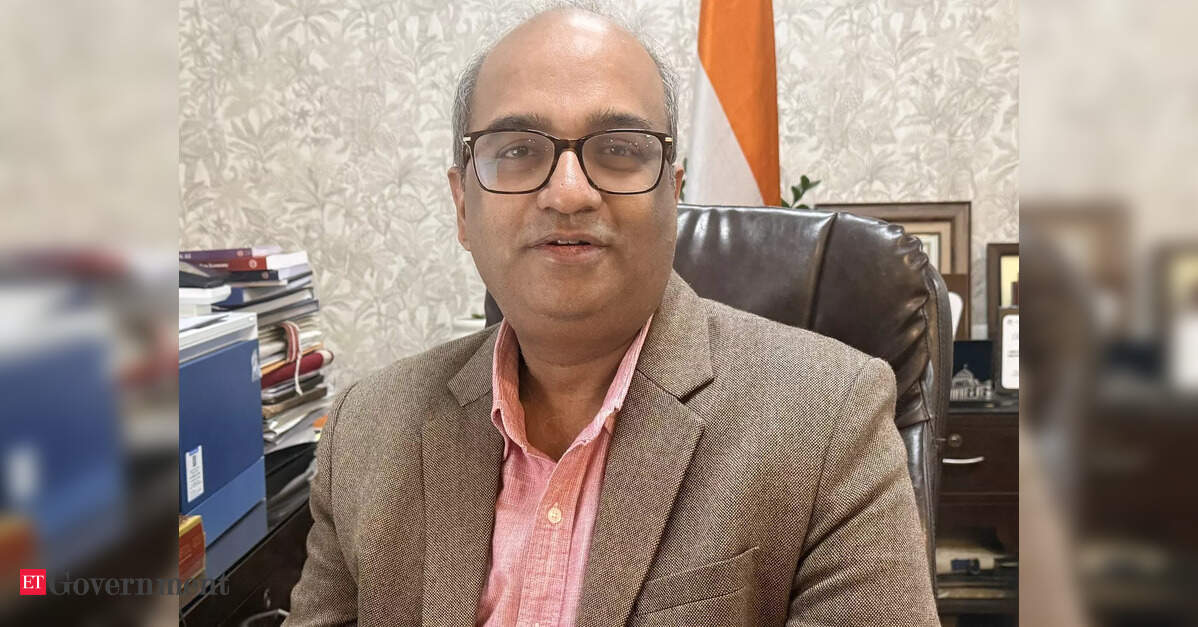
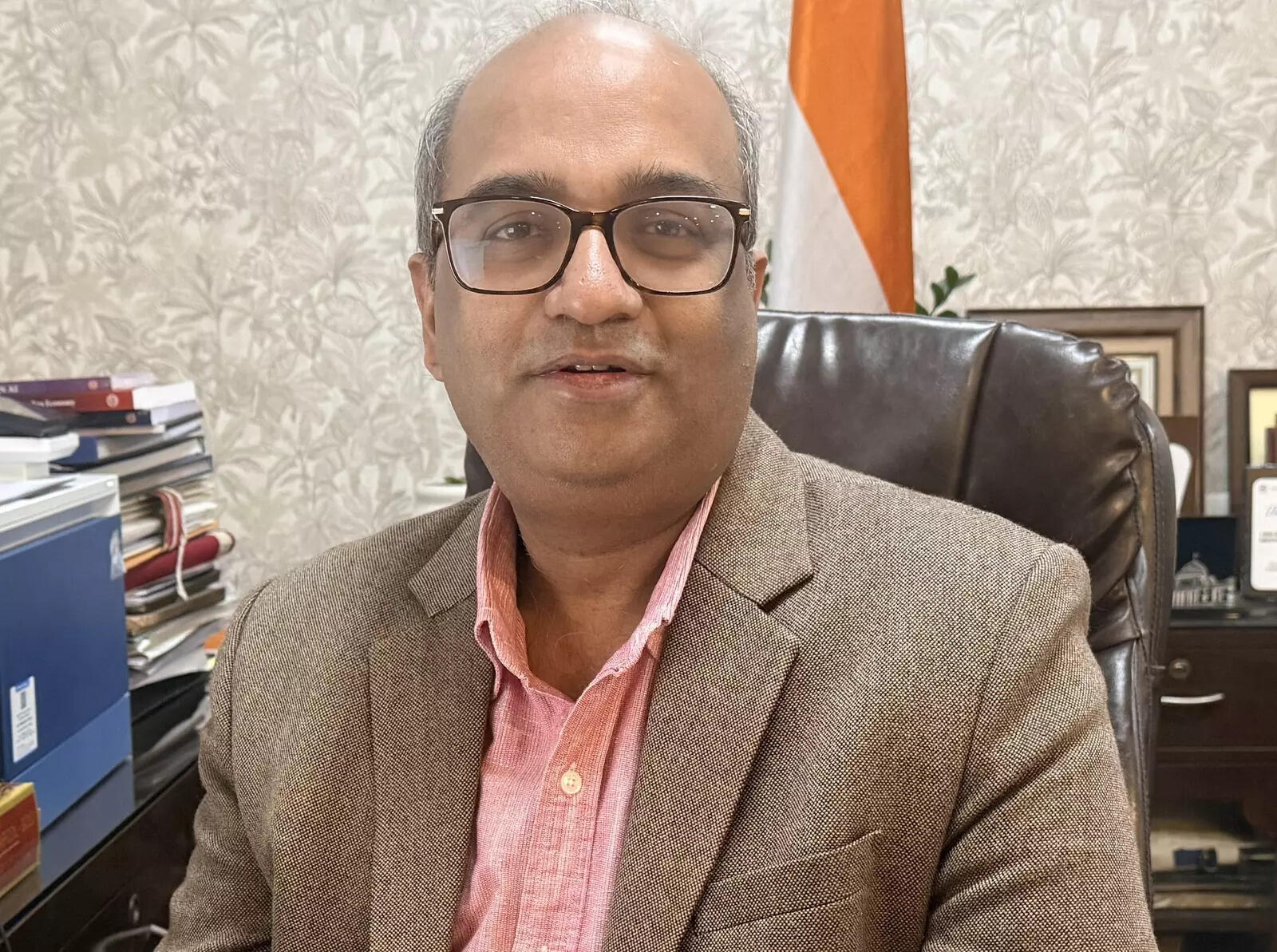
At the heart of this effort is Abhishek Singh, Additional Secretary, Ministry of Electronics and Information Technology (MeitY), CEO of the IndiaAI Mission, and Director General of the National Informatics Centre (NIC).
Straddling policy formulation and technology execution, Singh oversees India’s push to democratise access to AI compute, data, and models, while integrating AI into digital public infrastructure, government platforms, and critical sectors such as healthcare, agriculture, education, and justice. His role places him at the intersection of frontier innovation, responsible governance, and large-scale implementation—an intersection that defines India’s distinctive AI pathway.
In this interview with Anoop Verma, Singh reflects on the strategic intent behind the IndiaAI Impact Summit, the technological and institutional foundations being built to support India’s AI ambitions, and how the country seeks to position itself as both a global AI deployment leader and a trusted provider of AI-driven public solutions for the world, particularly the Global South.
Edited excerpts:
India AI Impact Summit 2026 is being positioned as a platform for measurable outcomes rather than symbolic signalling. From your perspective as CEO of the IndiaAI Mission, what makes this summit technologically consequential for India’s AI ecosystem?
AI in 2026 is at a clear inflection point globally. Large investments have already been made, frontier models have reached remarkable capability levels, and now the world is asking a more fundamental question: how does AI deliver real value at scale? Big technology companies are increasingly focused on monetisation, deployment, and tangible outcomes rather than just model performance.
What makes the India AI Impact Summit distinctive is that it does not focus only on showcasing cutting-edge research. It demonstrates how AI can be deployed at population scale to generate measurable benefits across sectors. Whether it is productivity gains in manufacturing, efficiency improvements in retail and MSMEs, or AI for social good in healthcare, education, and agriculture, the summit shows how AI translates into real outcomes.
India is also presenting an alternative development model for AI. Through our approach of enabling access to compute, datasets, algorithms, models, and application-building frameworks, we are showing how countries of the Global South can become partners in AI development, not merely consumers of AI technologies built elsewhere.
Equally important is India’s leadership in AI governance. We have issued AI governance guidelines that balance innovation with responsibility and address issues such as deepfake detection, content labelling for AI-generated material, and safeguards against misuse. India’s framework for labelling AI-generated content is attracting global attention. Much like digital public infrastructure demonstrated how technology can be deployed for public services, India is now showing how responsible AI can be embedded into governance and daily life.
Unlike earlier global AI forums, this summit places strong emphasis on deployment infrastructure and use cases. What concrete technological milestones and ecosystem shifts do you expect it to catalyse over the coming years?
Globally, frontier AI labs are understandably focused on developing ever more powerful models and pushing towards artificial general intelligence. However, the real value from AI will come from use cases and deployment.
One area where India will demonstrate clear leadership is agentic AI. Across enterprises, governments, and institutions, AI agents capable of executing defined tasks can significantly improve productivity and efficiency. India has the scale, diversity of use cases, and digital infrastructure needed to deploy agentic AI in real-world settings at scale.
The summit will highlight how agent-based systems can solve operational challenges in governance, industry, and service delivery. This focus on applied AI, rather than purely theoretical advances, will shape India’s AI trajectory over the next phase.
Wearing both hats as DG of NIC and CEO of the IndiaAI Mission, how do you see the summit accelerating the translation of cutting-edge AI research into real-world digital public systems and government platforms?
A significant proportion of government work is rule-based, repetitive, and process-driven. These are precisely the types of functions where AI can be deployed most effectively. Whether it is processing scholarships, pensions, loans, or handling public grievances, AI can simplify workflows, reduce delays, and improve citizen experience.
Language technology is another transformative enabler. India’s linguistic diversity has historically been a barrier to service access. By building multilingual and voice-enabled AI services, we can ensure that citizens who are not tech-savvy or comfortable with typing can still access government services easily.
NIC is already working on deploying AI across judicial systems, agriculture, healthcare, and education. When these applications are integrated with India’s digital public infrastructure, services become more affordable, accessible, and inclusive. The summit will highlight this synergy between IndiaAI Mission initiatives and NIC’s implementation capabilities.
With global technology leaders, frontier labs, startups, researchers, and policymakers converging in Delhi, what forms of collaboration do you believe will define the summit’s long-term impact?
This is one of the largest AI summits held in recent years, both in terms of participation and diversity. Heads of government, ministers, global CEOs, leading researchers, and top academic minds will all be present. Leaders from companies such as Nvidia, Google, OpenAI, Anthropic, Qualcomm, Intel, and Schneider Electric, along with leading academics from institutions like Stanford, will be in Delhi.
The global AI ecosystem views India as a unique opportunity to demonstrate population-scale deployment. While frontier model developers see India as a large market, our objective is to ensure that India also builds its own capabilities—its own applications, services, and foundation models.
The Stanford AI Index recently ranked India as the third-largest AI ecosystem globally, after the US and China. Two years ago, we were ranked seventh. This progress reflects the combined efforts of researchers, startups, and industry. The summit is an opportunity to learn from the best in the world, collaborate where appropriate, and ultimately move beyond catch-up towards leadership.
IndiaAI Mission is deploying large-scale AI compute infrastructure and foundational models. Could you describe the current state of this infrastructure, particularly GPU capacity, foundational models, and language diversity?
One of the key gaps limiting Indian researchers and startups from competing globally has been access to compute. Under the IndiaAI Mission, we have made GPUs available at significantly reduced costs—around ₹65 per GPU hour—making high-performance computing accessible to a much wider community.
We are also supporting the development of approximately twelve foundational models, some of which will be launched ahead of the summit. Alongside this, the Bhashini initiative has enabled speech-to-speech and speech-to-text APIs, directly addressing India’s linguistic diversity and improving access to services.
In addition, we continue to organise hackathons and innovation challenges across healthcare, education, and agriculture. These solutions are designed not only to demonstrate innovation but also to be scaled and deployed nationally.
The summit features flagship challenges such as AI for All, AI for Her, and YUVAi. From a technology standpoint, what kinds of innovations do you expect these to spotlight?
These challenges were designed to broaden the AI conversation beyond a small group of frontier labs. Innovation in AI is happening at multiple levels across the world, and we wanted to identify and showcase impactful solutions wherever they emerge.
AI for All is open to startups and researchers globally. AI for Her specifically encourages women-led innovation. YUVAi targets students and young innovators below the age of 21. We received participation from 136 countries, with a remarkable diversity of solutions.
The jury is currently evaluating the top 100 submissions, which will be showcased at the summit. These solutions demonstrate the disruptive potential of AI across industry, governance, and social sectors.
One track of the summit is a dedicated research symposium. How do you see this catalysing new research collaborations, particularly in safe, trustworthy, and multilingual AI?
The research symposium is designed to inspire and energise India’s research community. Leading global researchers will present their work, offering young Indian researchers exposure to cutting-edge ideas and methodologies.
We are also hosting a Global South research symposium, where researchers from developing countries will present papers and posters. This creates a platform for collaboration beyond traditional Western research hubs.
The symposium will trace the evolution of AI—from machine learning and deep learning to generative AI, agentic AI, and eventually physical AI. It is an opportunity to align research priorities with real-world deployment challenges.
Democratising access to AI resources is a core objective of the IndiaAI Mission. What technological enablers are being prepared ahead of the summit to support global adoption and adaptation?
We are positioning India as a global use-case capital for AI. Applications in healthcare include AI-based diagnostics for tuberculosis, diabetic retinopathy, and cataracts. In agriculture, AI-driven advisory services are being developed for farmers. In education, personalised learning plans and AI tutors are being deployed.
Beyond this, AI applications in manufacturing, supply chains, logistics, financial services, fraud detection, auditing, and resource planning are being showcased. As AI adoption increases globally, Indian IT companies, startups, and researchers will be well positioned to provide AI transformation services.
With robotics and physical AI emerging as the next frontier, India’s strong base of AI talent gives it a strategic advantage as a global AI services provider.
How do you see the outcomes of the summit influencing India’s national AI roadmap, particularly in generative AI, responsible automation, and public services?
As AI evolves, foundation models will need to be supported by large-scale inferencing infrastructure. This will require massive compute capacity and robust deployment frameworks. AI adoption will improve efficiency and productivity across sectors, from agriculture and manufacturing to services and governance. As incomes rise and services improve, AI will play a key role in India’s transition towards a Viksit Bharat.
Skilling and talent development are central to the mission. What platforms and programmes are being deployed, and how will these be highlighted at the summit?
India’s AI talent base is strong, but sustaining this advantage requires continuous investment in skilling and reskilling. Platforms such as FutureSkills Prime, iGOT Karmayogi, and YUVAi are enabling students, professionals, and government officials to acquire AI skills.
The YUVAi programme alone has already reached nearly 100,000 students within two weeks of launch, and we expect over one million learners by the time of the summit. We are also establishing data labs, offering fellowships across disciplines, and supporting AI research at undergraduate, postgraduate, and doctoral levels.
This ecosystem-wide approach—from schools to working professionals—ensures that India’s AI talent pipeline continues to grow alongside adoption.
Finally, how do you intend to measure the success of the IndiaAI Impact Summit 2026?
The primary objective of the summit is to demonstrate how India can deploy AI responsibly, at scale, and for public benefit. Success will be reflected in increased global investment in Indian AI startups, expanded opportunities for Indian IT and research institutions, and deeper international collaboration. Ultimately, we believe the summit will position India as a major global provider of AI solutions and services, ensuring that the AI revolution contributes meaningfully to inclusive growth and national development.