As Uttar Pradesh sharpens its focus on decentralised growth and Tier-II city-led expansion, Lucknow is emerging as a key node in the state’s IT and convention-led urban strategy.
From a ₹3,000-crore International Convention and Exhibition Centre to sweeping reforms in IT City land pricing and housing delivery, the UP Housing & Development Board is repositioning itself beyond its traditional mandate.
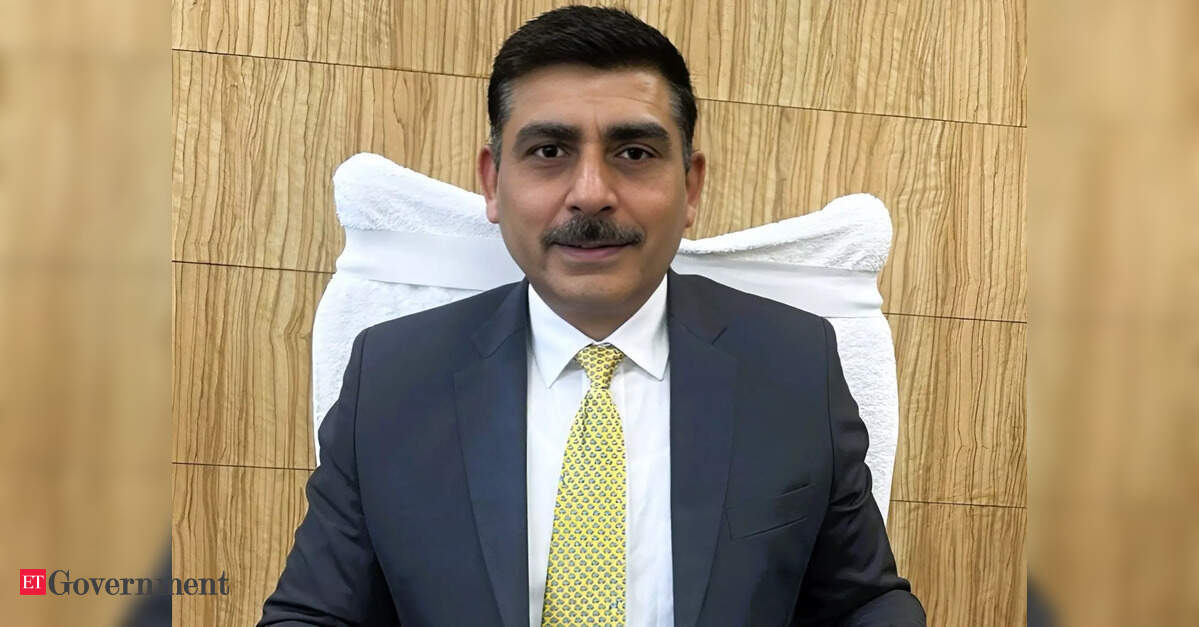
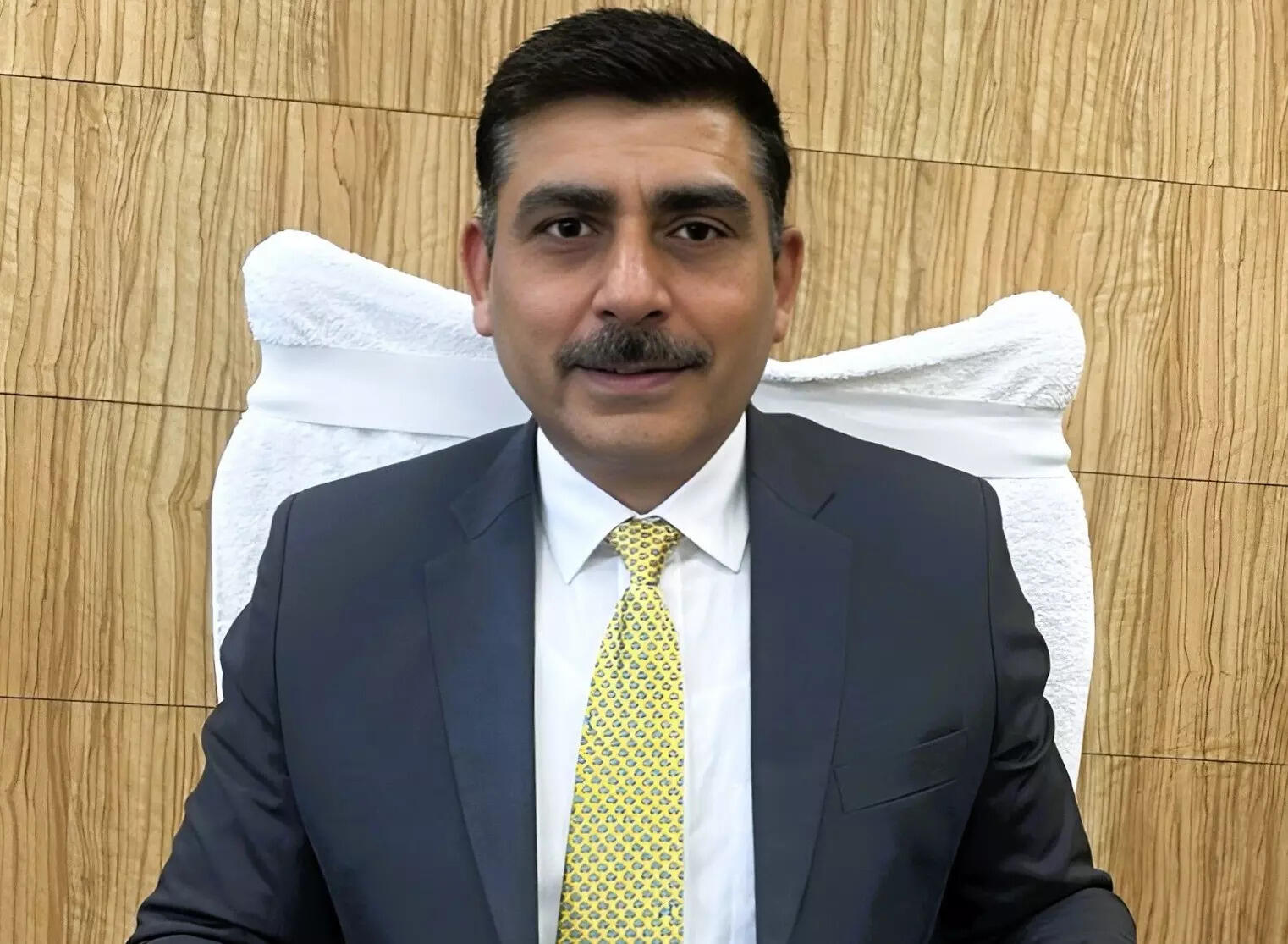
Dr Balkar Singh, Secretary, Housing & Urban Planning, Government of Uttar Pradesh and Commissioner, UP Housing & Development Board, spoke to ETGovernment’s Arpit Gupta about the state’s evolving urban priorities and the push to make Lucknow a competitive economic hub.
Edited excerpts:
Uttar Pradesh Housing & Development Board has traditionally been seen as a housing-driven state agency. Why is it now pushing aggressively into IT and commercial infrastructure?
The state’s development priorities have evolved. Today, infrastructure, housing, employment and urban economic activity have to move together. While the UP Housing & Development Board continues to focus on EWS, LIG, and affordable housing, we are also creating enabling infrastructure for economic growth—particularly IT, conventions and allied services.
Lucknow, for instance, is no longer just an administrative capital. It has the potential to emerge as a convention, exhibition and IT destination, and public agencies must play a catalytic role in that transition.
The International Convention and Exhibition Centre (ICEC) in Lucknow is being positioned as a landmark project. How big is this initiative?
It is among the most ambitious projects undertaken by the state. The ICEC will have a seating capacity of 10,000 people in a single hall, making it the largest such facility in India—and possibly among the largest globally.
The total investment is close to ₹3,000 crore, including land cost, development, parking and allied infrastructure. Given the scale of public investment, it was logical to plan a full ecosystem around it—hotels, IT plots, sports facilities and green spaces—so that the asset is optimally utilised.
You recently revised IT City plots’ pricing in Lucknow. What prompted that decision?
We had invited bids for plots ranging from 2.5 acres to 21 acres, with a total IT City land bank of over 220 acres in the area. When we initially offered plots, we classified them as institutional land and priced them at 1.5 times residential rates. However, despite multiple attempts, we did not receive adequate responses.
We then engaged with stakeholders and studied pricing models in Noida, Greater Noida, and Yamuna Expressway Authority areas, where IT land is typically priced at 40–60% of residential land rates, not higher. Investors clearly told us that while Lucknow has potential, it is still an emerging IT destination. Pricing had to reflect that reality.
What changes were made to make the policy more competitive? Has investor response improved after these changes?
We introduced three major interventions. First, IT City plots’ rates were brought down to be equal to residential land rates instead of being 1.5 times higher. Second, for large plots above 15 acres, the rate was reduced further to 90% of residential rates, since internal infrastructure development in such cases is largely undertaken by the investor. Third, we eased payment conditions by allowing developers to take possession after paying just 25% of the bid amount, compared to 50% earlier. Together, these changes significantly improve project viability and accelerate on-ground development.
As a result, the response has improved visibly. Several large IT players have shown interest and are actively seeking clarifications. Interest from major global IT firms is encouraging. The actual bidding will take place at the end of January, which will give a clear picture.
You have also allowed auctions to proceed even with a single bidder. Isn’t that risky?
This provision has been built transparently into the policy to avoid ambiguity later. In IT infrastructure, you do not always get multiple bidders for large, specialised plots. We retain single bids for 20–25 days to allow additional participants. If no one else comes forward, we still proceed—because delaying strategic projects hurts the ecosystem. Since the rule is pre-declared, it ensures fairness and eliminates allegations of favouritism.
Why should IT companies choose Lucknow over established hubs like Noida or Bengaluru?
There are three strong reasons. First is human capital. A large number of IT professionals working in Bengaluru, Hyderabad and the NCR are originally from Uttar Pradesh. Many would prefer to work closer to home if suitable opportunities are available.
Second is the cost advantage. Living and operating costs in Lucknow are significantly lower, enabling companies to access skilled manpower at more competitive salary levels. Third is the education ecosystem. Institutions such as IIT Kanpur, IIIT Lucknow, IIIT Prayagraj, BHU, and several private institutes provide a steady talent pipeline. Multiple industry reports indicate that the next phase of IT growth will come from Tier-II cities.
Beyond IT, the Housing Board is also expanding aggressively across Tier-II and district headquarters. What is the strategy here?
The state has invested heavily in expressways and highways—Purvanchal, Bundelkhand, Yamuna, Ganga, and upcoming corridors like the Dehradun Expressway. Our mandate is to create land banks along these growth corridors. We are developing planned townships at district headquarters—Chitrakoot, Banda, Pratapgarh, Ghazipur, Mau, and upcoming ones in Basti and Sant Kabir Nagar. This reduces migration pressure on large cities while providing affordable, planned housing closer to employment nodes.
Ayodhya is obviously a major focus area. What kind of development is being planned there?
Ayodhya is being developed as a greenfield township spread over 1,800 acres. We already have possession of about 1,400 acres, and the remainder will be acquired shortly. The plan includes residential plots, hotels, dharamshalas, ashrams and villas to cater to the high floating population. We are also developing 110 villas of 200 sq metres (3 BHK), priced significantly lower than private developers, while ensuring superior construction quality.
Land acquisition is often contentious. How is land pooling helping you move faster?
Land pooling has been a game changer. Instead of outright acquisition, farmers contribute land and receive 25% developed land in return. In most cases, the value of this developed land is substantially higher than cash compensation. Our Sumitra Vihar scheme near Jail Road in Lucknow is the first fully land-pooled township in Uttar Pradesh, where we have already allotted over 1,250 plots to landowners. We have also pooled nearly 100 acres in Ayodhya. Importantly, land transfer happens without stamp duty, since it is between the farmer and a government agency.
The Housing Board had a large stock of unsold flats at one point. What went wrong? How are you addressing this overhang?
Between 2010 and 2014, there was a nationwide rush towards high-rise construction. Land acquisition challenges, upcoming legislation and market optimism led both public agencies and private developers to overbuild—without accurate demand assessment. As a result, we were left with nearly 12,000 unsold flats across cities like Lucknow, Ghaziabad, Kanpur, Prayagraj and Saharanpur.
Now, we have adopted a market-driven correction strategy. Initially, we offered a 5% discount for full payment within 60 days, which reduced inventory to about 8,000 units. Subsequently, the Board approved deeper incentives, including a 15% discount for full payment within 60 days and a 10% discount for payment within 90 days, along with flexible instalment options.
We also allowed immediate possession—after 25% payment for government employees and 50% for others. In addition, a special 20% discount was introduced for serving and retired defence and paramilitary personnel, along with extended payment timelines recognising their service conditions. Unlike under-construction private projects, buyers could physically inspect completed flats and book them online.
What has been the outcome so far?
As of now, we have sold 1,820 units, realising nearly ₹850 crore. The scheme is valid till 31 January, and we are considering extending it till 31 March. Our objective is to liquidate nearly 80% of the remaining inventory, while making housing genuinely affordable.
Have broader policy reforms accompanied these measures?
Yes. The Cabinet has approved uniform costing guidelines for government housing agencies. Earlier, interest rates and cost escalations varied widely. Now, interest rates have been standardised at MCLR plus 1%, arbitrary annual cost escalations have been curtailed, and price increases are capped at 5–7%, reflecting genuine cost changes. These reforms significantly improve transparency and predictability for buyers.
How does sustainability feature in your future housing plans?
Green housing is no longer optional. Our projects emphasise adequate green cover, open spaces, natural light and ventilation, environment-friendly materials such as fly ash bricks and energy-efficient layouts. We are strengthening our horticulture and landscaping capacity through specialist hiring, deputation and outsourcing. In upcoming villa projects, including those in Ayodhya, we aim to match—and in some areas exceed—private developer standards.
How do these initiatives tie into Uttar Pradesh’s $1 trillion economy goal?
Infrastructure is the foundation of economic growth. Affordable housing, IT infrastructure, transport connectivity, sustainable planning—these are not isolated initiatives. Together, they enable investment, employment, and urban productivity. Through these reforms, the Housing & Development Board is contributing meaningfully to Uttar Pradesh’s ambition of becoming a $1 trillion economy.