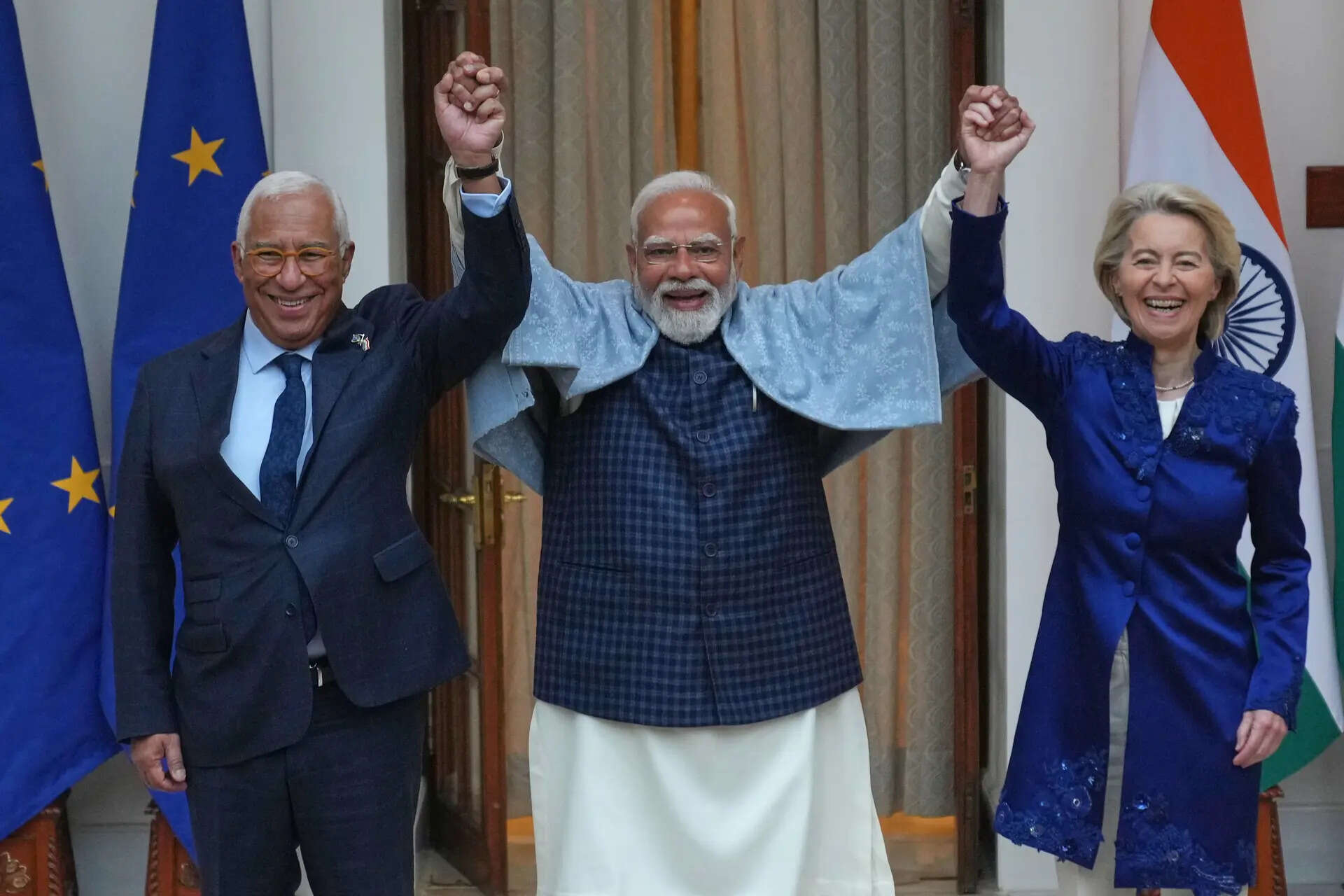
The free trade agreement signed between India and the European Union on 27th January is aptly described as the “mother-of-all-trades”. First of all, the trade deal was concluded technically between the two entities, namely India and the European Union. In reality, the trade deal was meant for facilitating Indian products accessing 27 external markets.
Similarly, the 27 European countries can have free access to the Indian market which every country is eager to capture because of the growing collective buying power of 140 persons. Importantly, the trade deal was concluded at a time the multilateral trade agreement led by the World Trade Organization is increasingly challenged, ironically by the very country, namely the US which played a major role in setting up of the WTO by expanding scope of international trade agenda.
The India-EU free trade agreement cannot be called another bilateral trade agreement on par with the other seven trade agreements signed by India recently.
For all practical purposes, it is a multilateral agreement concluded among the 28 countries contributing 25% of the world GDP. The only difference was in terms of the way negotiations were going on during the last two decades. While one set of interests were put on the table by India, the 27 European countries negotiated interests of their economies collectively as the one entity, namely European Union.
Main Features
The FTA facilitates 99% of the Indian products accessing 27 countries either with zero duty or drastic cut in import duty.
More importantly, labor-intensive products like textiles, apparels, leather goods, footwear, handicrafts, toys and gems & jewellery from India get duty-free access to 27 countries comprising the European Union. Similarly, chemicals, marine products will also have easy access. This will give a tremendous boost to the small-scale and cottage industries, especially export-hubs such as Ludhiana, Tiruppur, and Surat.
As for the European Union, 92.1% of the products get easy access to the Indian market with a drastic cut in import duty. Luxury cars, machinery, pharmaceuticals, chocolates, wine etc will have easy access to the Indian market.
Strategic Move
The mother-of-all deals between India and the European Union got concluded at a time when both sides have been getting blackmailed by Donald Trump through imposition of tariffs. India attracts 25% additional tariff mainly on account of importing crude oil from Russia, thus making the total of 50% on products destined to the US.
The European countries are being threatened through imposition of tariffs for opposing Trump’s attempt to takeover Greenland. Almost all experts and international institutions have been predicting dismal performance of world economies including India. As it is, the world economy is expected to improve performance in 2026.
India has not only maintained its track record of being the fastest growing economy, the estimated GDP growth rate is expected to be between 6.8% to 7.2%, surpassing the earlier expectations by the government and RBI. Similarly, the IMF and World Bank also revised their growth estimates upwards.
Now that one-third of the world market has decided to facilitate easy exchange of goods among themselves, the economic performance of the 28 countries is to get a further boost. Quite possibly, other economies may also show interests in having a strategic deal with this newly empowered trade bloc.
Manpower Mobility
One of the major concessions offered by the EU side is free mobility of Indian professionals to the European countries. The opportunity has come in the background of tough posture by Trump by enhancing H-1B visa fee. This would certainly provide opportunities to Indian professionals, especially IT engineers. The fact that the European countries have started facing manpower shortage should be music to skilled manpower from India.
Access to Luxury Products and Domestic Competition
Facilitating import of popular brands like BMW or Mercedes almost at a factory price would encourage horizontal expansion of quality life in India. With over 110% import duty these products used to be a privilege of the neo-rich in India. Now that the FTA lowered the duty to 10%, even upper middle class who used to contend with local SUVs can think of enhancing their lifestyle.
Incidentally, free import of luxury cars from the EU is bound to compel the domestic car manufacturers to improve the quality of their products. The effect will be the same as post-globalization which made our manufacturers offer quality products.
What about Indo-US Trade Fact?
The effective conclusion of the India-EU FTA may force Donald Trump to re-think and come out of his tantrums so that the Indo-US Trade deal may be concluded earlier than expected. Even if Trump fails to understand, people of the US may soon start realizing the harm caused by their President.
(Dr Jagdish Shettigar is a former Member of the Prime Minister’s Economic Advisory Council; Views expressed are personal)