

The survey further notes that “a key issue is the uneven distribution of schools as 54 per cent of schools offer only foundational-preparatory education, while just 17.1 per cent provide secondary education in rural areas,” it noted.

Story continues below this ad
Read | Economic Survey flags learning outcomes, higher education quality as next big education challenges
In the previous year’s Union Budget, the government promised that in the next 5 years, 75000 more seats will be added in the medical colleges, and the government will give a boost to the infrastructure of IITs set up after 2014.
While the education sector pitched for a 6 per cent of Gross Domestic Product (GDP) allocation to the public education system, the minister in 2025 allocated Rs 1,28,650.05 crore, marking a 6.65 per cent increase from 2024. In 2024, the education sector was allocated Rs 1.12 lakh crore, which was a 13 per cent increase from 2023.
Read | Education Budget 2026 Expectations
In 2025, the government also increased the allocation from the University Grants Commission (UGC) to the National Council of Education Research and Training (NCERT), and other bodies under the Ministry of Education.

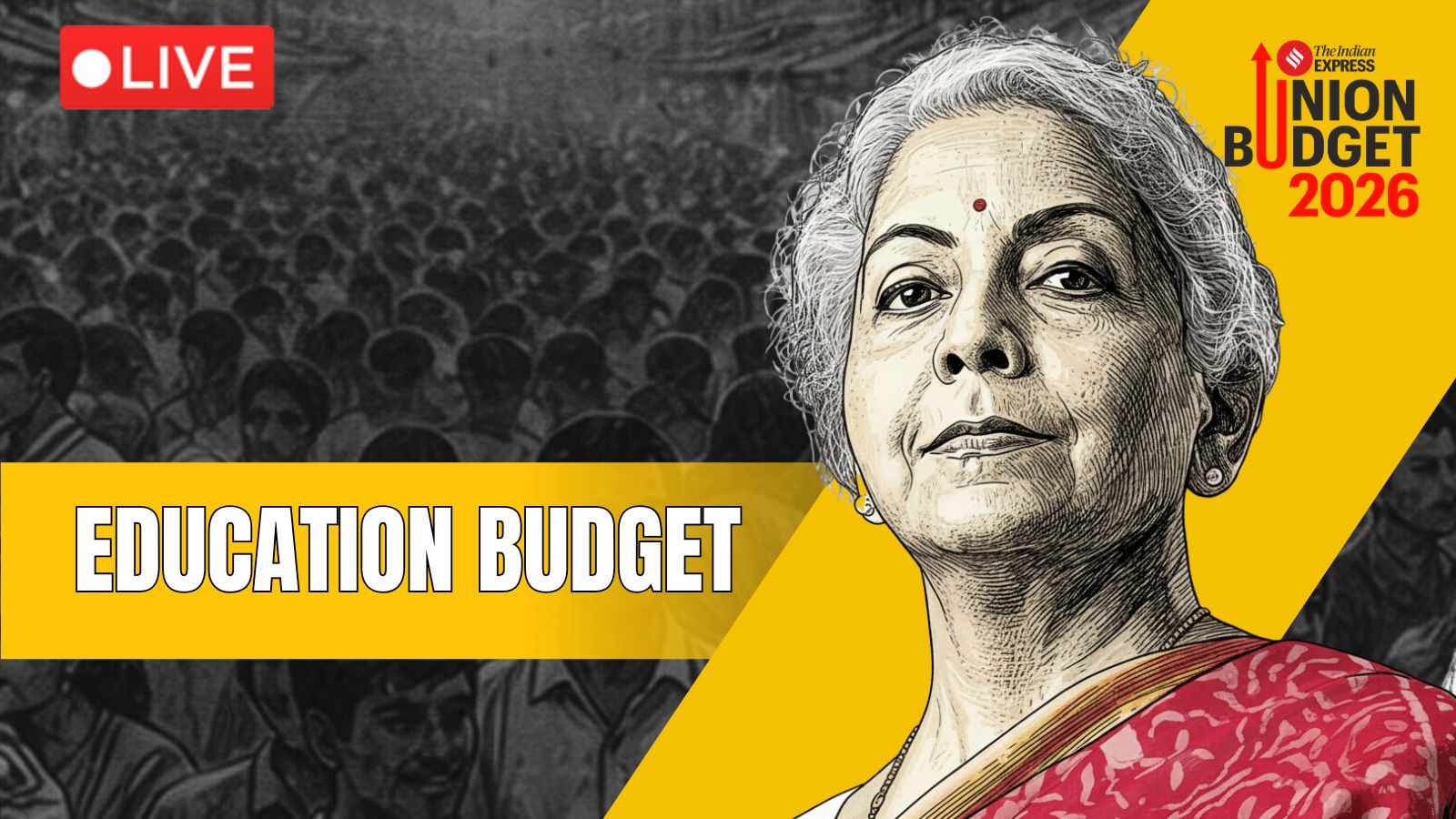
The Union Finance Minister Nirmala Sitharaman on Sunday, February 1, will present the budget for the 2026-2027 financial year (Image designed by Angshuman Maity)
On higher education, the Economic Survey acknowledges the rapid expansion of institutions and student enrollment over the past decade, but flags concerns around quality, faculty shortages and uneven research capacity. It calls for greater institutional autonomy, stronger academic leadership and deeper integration of research and innovation to make Indian universities globally competitive.
The Survey also highlights the importance of experience-based and skill-oriented learning, noting that traditional classroom-led models often fail to connect theory with application. Greater emphasis on vocational education, internships and industry collaboration is seen as essential to improve employability and align education with labour market needs.
