

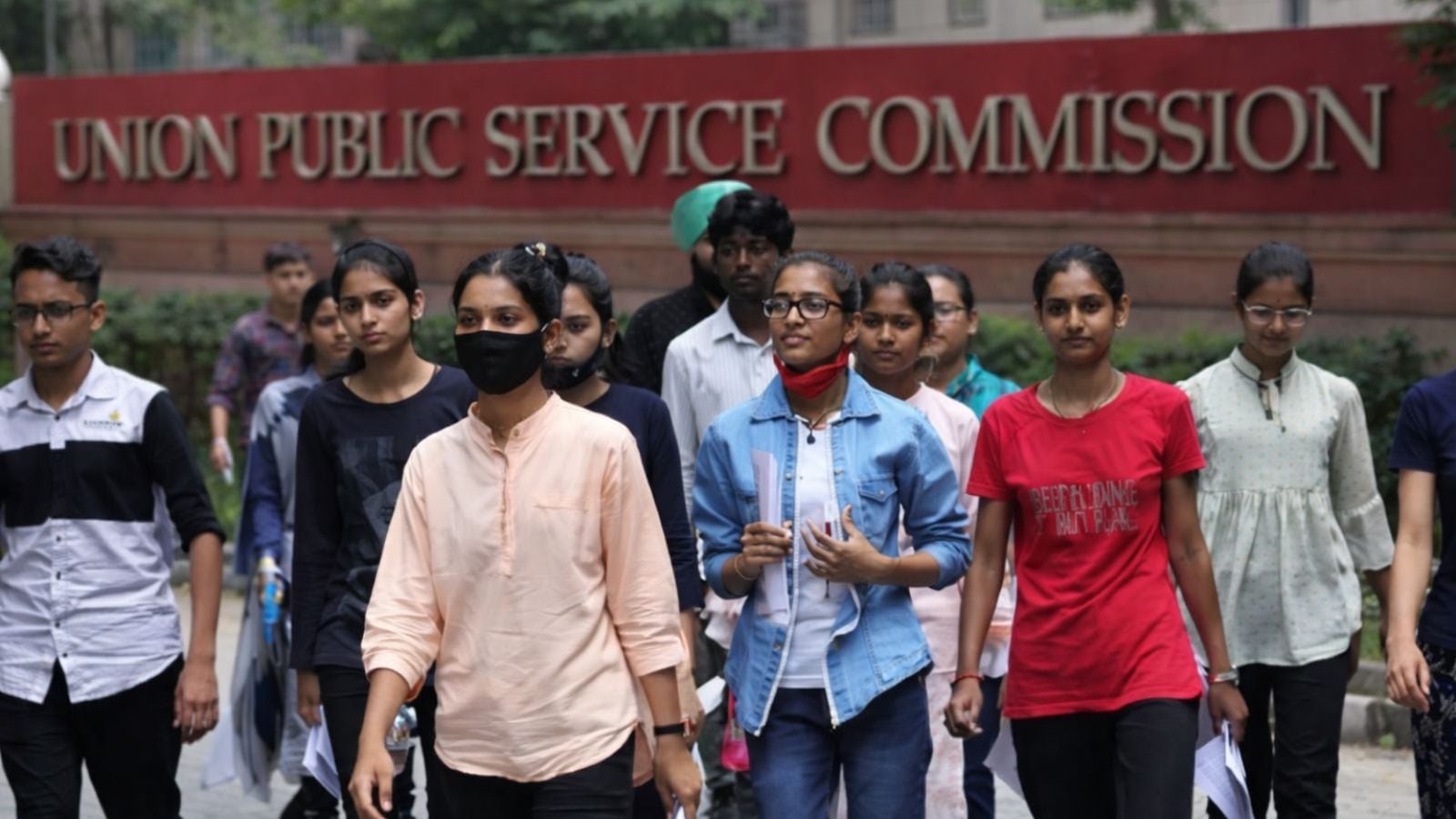
The UPSC has revised attempt limits and eligibility for candidates already accepted into the civil services. In line with previous years, where the Commission specified certain restrictions for candidates inducted into the civil services — this year, in its CSE Prelims 2026 notification, the UPSC has notified specific and expanded restrictions for the Indian Administrative, Police and Foreign Services.
On Wednesday, the Union Public Service Commission issued the detailed recruitment notification for the UPSC Civil Services Examination (CSE) 2026. Eligible candidates can apply online through the official UPSC portal at upsc.gov.in, with the last date for submission of applications set being February 24. The pan-India examination will be conducted to recruit candidates into the Indian Administrative Service (IAS), Indian Police Service (IPS), Indian Foreign Service (IFS), Indian Revenue Service (IRS), and other Group A and Group B services. According to the notification, a total of 933 vacancies will be filled through CSE 2026, compared with 979 vacancies notified last year and 1,105 posts filled in the year prior to that.
Who will be barred from appearing in CSE 2026 after IAS, IPS or IFS appointment?
Along with the notification, UPSC has detailed added-eligibility restrictions, with IPS emerging as a key focus group. As per the 2026 notice, a candidate appointed to the IAS or IFS, on the basis of an earlier examination and continuing as a member of that service, will not be eligible to appear in CSE 2026.
If such appointment to IAS or IFS takes place after the CSE 2026 preliminary examination but before the mains, the candidate will not be allowed to appear in the mains even if they have qualified prelims. If the appointment happens after the mains examination has begun but before results are declared, the candidate will not be considered for appointment to any service based on CSE 2026. Note that certain restrictions were in place in earlier years as well, however, extended limitations have been notified for the IPS.
For the Indian Police Service, the UPSC has now spelt out a clearer restriction: A candidate who has been selected or appointed to the IPS on the basis of an earlier examination will not be eligible to opt for or be allocated the IPS again on the basis of the CSE 2026 result.
Story continues below this ad
Notably, this IPS-specific bar is a sharper articulation compared to previous notifications.
Can candidates allocated to IPS or other Group A services appear again in CSE 2027?
The commission has also laid down a detailed framework for candidates allocated to IPS or any Central Service Group A through CSE 2026 who wish to appear again in CSE 2027. Such candidates will be allowed to appear in CSE 2027 only if they are granted a “one-time exemption from joining training” by the concerned authority.
They can defer joining only the foundation course. If they neither join training nor take exemption, their service allocation under CSE 2026 will be cancelled, the notice clarifies.
If recommended again in CSE 2027, candidates will have the option to accept either the service allocated in 2026 or 2027, with the other allocation standing cancelled.
Story continues below this ad
However, they will not be permitted to appear in CSE 2028 or any later examination unless they resign from the allocated service. Seniority will be decided based on the service ultimately joined and will not be diminished.
What is the ‘one-time opportunity’?
The notification also provides a one-time opportunity for candidates already allocated to any service based on CSE 2025 or earlier. Such candidates can appear in either CSE 2026 or CSE 2027 to use their remaining attempt without resigning from service. However, for appearing in CSE 2028 or beyond, resignation from the allocated service will be mandatory.
Compared to the 2025 notification, which largely focused on IAS and IFS with less granular detail, the 2026 rules introduce clearer and stricter provisions for IPS, marking a significant update in how repeat attempts and service allocations are regulated.
