

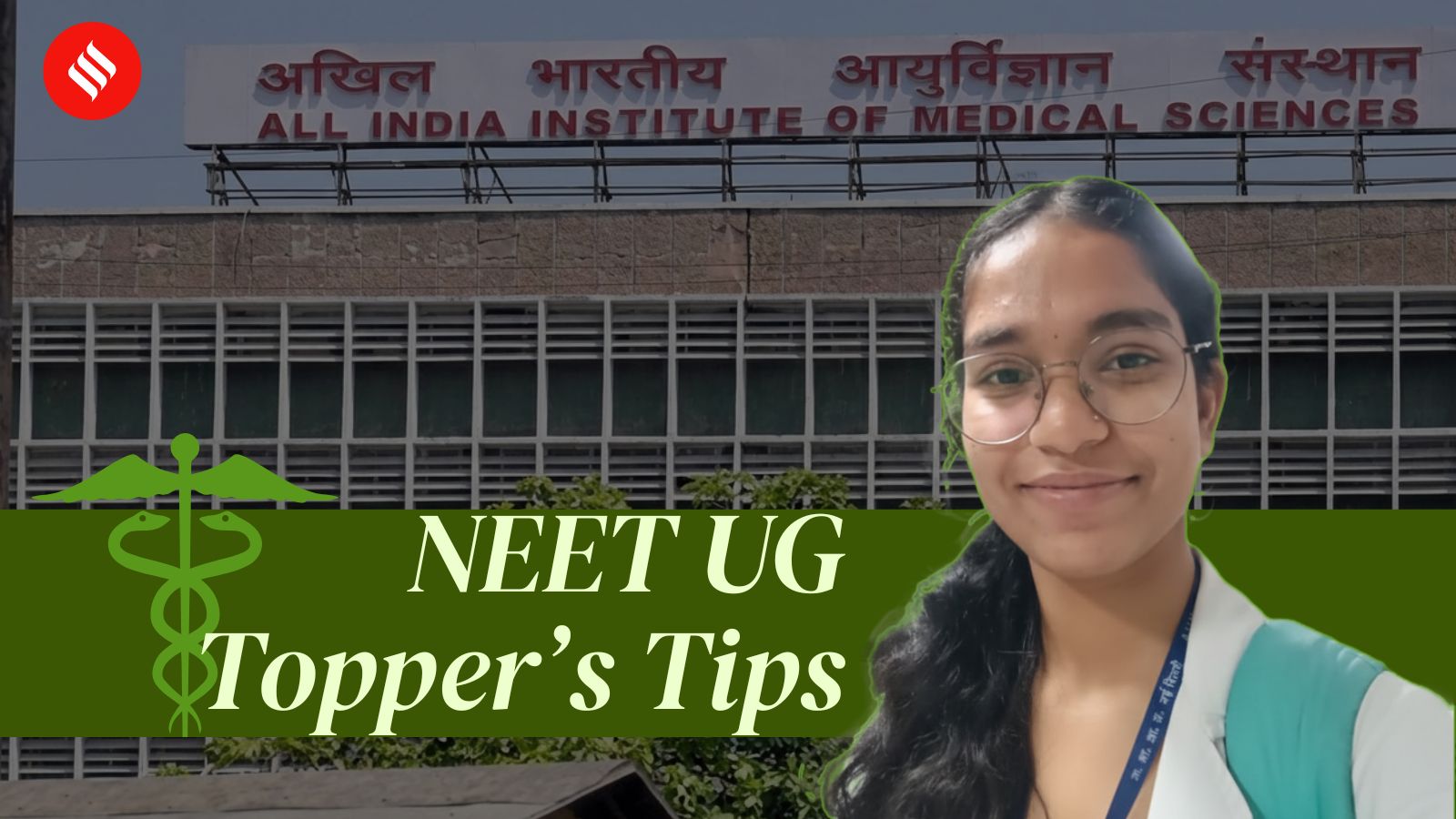
“Practice as many questions as possible, analyse your mistakes, and don’t ignore your health,” — these were the three non-negotiables that shaped her NEET UG preparation of Vaishnavi Rathod. The approach helped her score 700 marks in the NEET UG in her first attempt, securing admission to AIIMS New Delhi for MBBS at the age of 18. Hailing from Yavatmal, Maharashtra, Vaishnavi says consistency mattered more than chasing perfect study sessions during her preparation phase.

Speaking to indianexpress.com, Vaishnavi shared how structured revision, test-based learning and realistic expectations helped her stay on track for the National Eligibility cum Entrance Test (NEET) preparation.
Early motivation and academic background
Vaishnavi’s decision to pursue medicine was rooted in both personal aspiration and growing academic interest. “My main motivation for MBBS was to complete the dream of my father who always wanted me to be a doctor,” she says. Alongside this, she developed a strong interest in biology after opting for PCMB in school. While she considered engineering entrance exams as well, her priority remained clear. “NEET was my main goal,” she says.
Also Read| NEET UG 2026: List of important of formula for MBBS, BDS entrance
She studied at Jai Hind College, Chandrapur, Maharashtra, scoring 94 per cent in Class 10 and 92 per cent in Class 12. Despite this, she kept backup options in place. “JEE and MHT-CET were my backup plans,” she says, adding that having alternatives helped reduce pressure.
When did NEET preparation begin?
Vaishnavi began her NEET coaching in 2021 when she was in Class 11. Her daily routine revolved largely around coaching and revision. Mornings were spent revising briefly before classes, followed by long coaching hours. After returning home, she took a short break of 30 to 45 minutes before resuming studies. Evenings were dedicated to revising classes and solving questions, while nights involved light reading and analysing previously solved problems.
Story continues below this ad
Not every day was equally productive, she admits. “My study hours fluctuated. Some days I was productive, some days not. But consistency is the key, and you have to get back after that,” she says.
Rather than tracking time strictly, Vaishnavi focused on outcomes. “My self-study varied from two to six hours a day,” she recalls, adding that weekends involved longer hours. However, she believes hours alone do not define progress.
It depends on the person. I focused more on the topic covered and questions solved rather than the number of hours.
Core preparation principles
Question practice formed the foundation of her preparation. “Practice as many questions as possible,” she says. Analysing errors was equally critical. “I made a mistake-book and regularly analysed where I was going wrong,” she adds.
Health, she says, is often underestimated during preparation.
Do not ignore your health. Sleep adequately. Take care of hygiene, food and sleep habits.
Revision strategy closer to the exam
As the exam approached, Vaishnavi’s revision became more targeted. For biology and inorganic chemistry, she relied heavily on NCERT, revising it multiple times and focusing on underlined portions. Physical Chemistry was revised mainly through notes, with NCERT used for theoretical sections, while Organic Chemistry involved both notes and NCERT. For physics, she depended largely on her notes, referring to NCERT where required.
Story continues below this ad
Once mock tests began, revision was guided by performance. “I analysed my weak areas and revised only those specific topics or chapters,” she says.
Tackling difficulties, stress, mental health
Memorisation-heavy sections, particularly in biology and inorganic chemistry, were challenging. “I overcame this by reading multiple times and solving more questions,” she says.
During mocks, she adopted a clear time-management strategy. “If a question was taking too much time, I kept it for review and moved on,” she explains. This allowed her to complete the paper efficiently and return later with a calmer mindset, an approach she says helped in the final exam as well.
Calling mental health an often-ignored issue in competitive exams, Vaishnavi admits she struggled at times. “There were days when I used to cry,” she says. Talking to her mother, writing down her thoughts, and watching videos helped her cope. She encourages aspirants to seek support when needed and not hesitate to consider professional help if stress feels unmanageable.
Story continues below this ad
What lies ahead
Vaishnavi scored AIR 230 in NEET and is currently pursuing MBBS at AIIMS New Delhi, with her course set to conclude in 2028. She plans to pursue post-graduation after MBBS and is exploring specialisation options.
When shortlisting colleges, she prioritised academics, campus, research exposure and distance from home. Despite the difficulty of moving away, she chose AIIMS Delhi for academic reasons. “It’s amazing here now,” she says.
