As India intensifies its push to emerge as a global hub for Artificial Intelligence and semiconductor manufacturing, states are increasingly shaping the contours of this transformation. At the India AI Impact Summit 2026, Odisha presented a calibrated and execution-driven roadmap that seeks to move beyond policy announcements toward ecosystem-building.
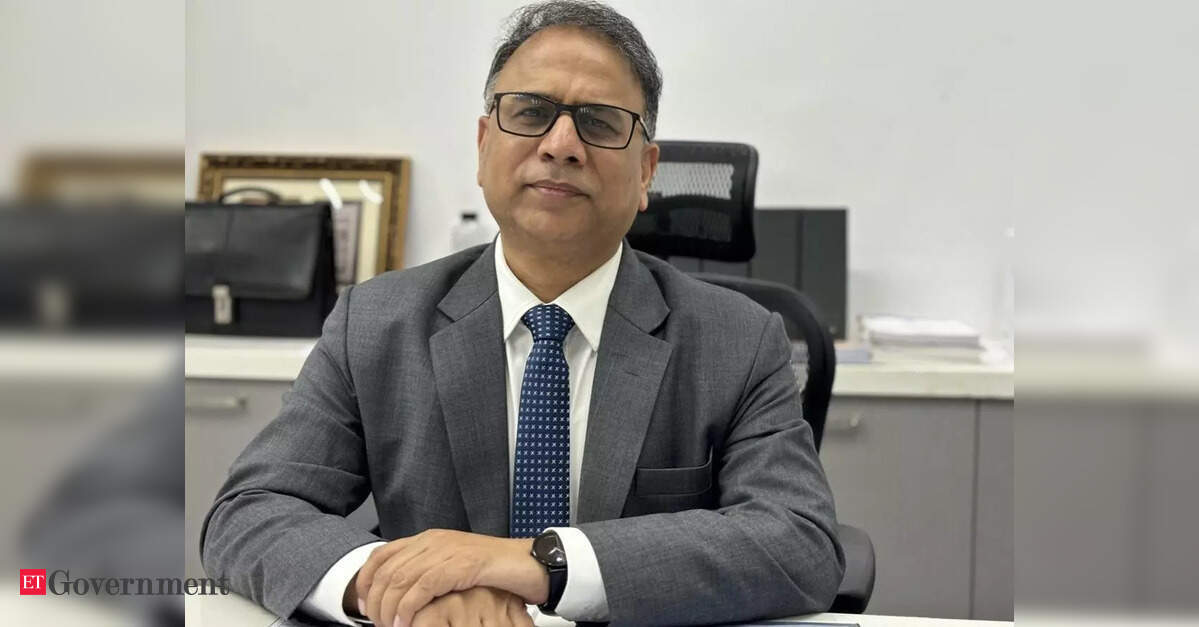
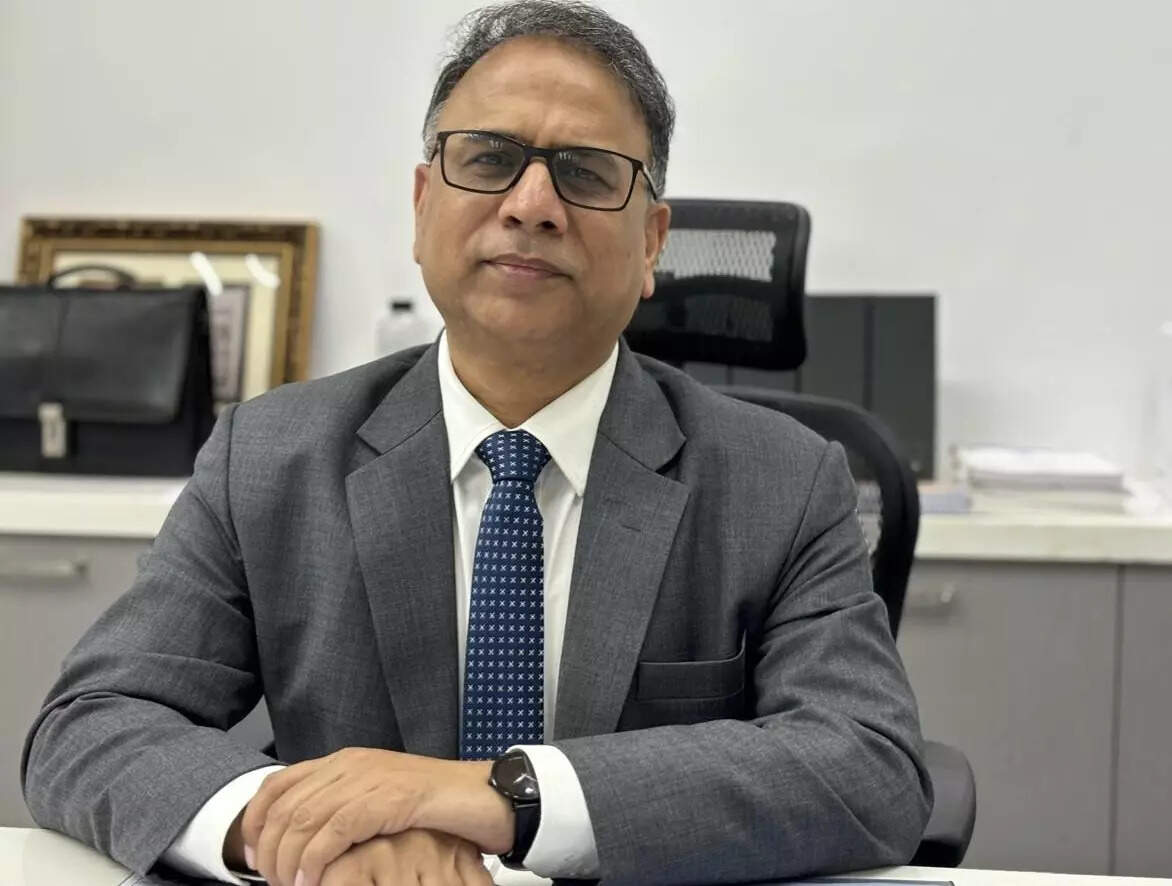
In this conversation with Adarsh Som, Vishal Kumar Dev, Additional Chief Secretary, Department of Electronics and IT, Government of Odisha, and Kaustuva Dipta Pany, Joint Secretary, Department of Electronics and IT, outline how the state’s revamped IT, Semiconductor, and GCC policies are being aligned with industry expectations. They discuss Odisha’s ambition to build a growth-centric AI ecosystem, strengthen semiconductor and fabless capabilities, embed AI across healthcare, agriculture and education, expand vernacular AI through the Odia Bhasha Daan initiative, and institutionalise capacity-building for students as well as government officials.
The dialogue reflects a broader strategic shift: from incentive-led positioning to ecosystem-led leadership, with a clear emphasis on democratising technology and ensuring that AI-driven growth translates into tangible public value.
Edited excerpts:
How Odisha IT Policy 2025 and Odisha Electronics Policy 2025 aims to position the state as a national leader in semiconductor and AI-driven manufacturing?
Vishal Kumar Dev: Odisha brought out the policy for the semiconductor sector back in 2021, while our IT policy was rolled out in 2022. Over time we realised certain gaps between what the policy covered and what the industry’s temperament. The policies, the way the state offered then, were not in tune with the industry expectations. Hence, we had extensive discussions and consultations with the industry.Considering the industry’s outlook, the Government of Odisha significantly revamped the IT Policy and Semiconductor Manufacturing and Fabless Policy. Also, we consulted the India Electronics and Semiconductor Association (IESA) and assessed their concerns to a large extent, including those in the policy reforms.
Another example could be Odisha Global Capability Centre (GCC) Policy 2025. Relocating a company to Bhubaneswar, especially the senior folks is not an easy task. Therefore, the policy provides for a relocation allowance and encourages internships to ensure the flow of good talent in the industry. These provisions were not a part of the policy earlier.
Kaustuva Dipta Pany: Policies also offer first-time recruitment assistance as well. So, our approach was to have policies that offer the best possible. We studied policies of other states and adopted their positive points and strengthened our policy offering.
Vishal Kumar Dev: However, it is not just the incentives where the state’s focus lies but in creating a growth-centric thriving ecosystem for the technology sector. And, to ensure this, we are also supporting skilling and training programs besides internships, especially under the semiconductor policy for students taking up a course and a specialisation in semiconductors in the final year.
Through your AI Policy, what outcomes do you envision for the healthcare, education, and agriculture sectors?
Vishal Kumar Dev: The first key objective of the policy is to develop a thriving AI ecosystem in Odisha. We look ahead to attract more companies, startups, research institutions, to do their AI work in Odisha. Meanwhile, the state government is committed to facilitate and support them by offering incentives, state-of-art infrastructure, and any other kind of support needed.
Second is, how we can enable the percolation of the benefits of AI to the citizens. Therefore, the Government of Odisha is actively working on sectors like healthcare, agriculture, and education. LLMs play a key role here as we need to get the locals on digital platforms, offering them services in the Odia language. However, a significant challenge that we faced was the availability of data sets in the Odia language, as Odia is a low-resource language. So, the creation of adequate data sets to train AI models is crucial.
In this regard, the Department of Electronics and IT, Government of Odisha, created the Odia Bhasha Daan project with BHASHINI aimed at enriching AI models for the Odia language through voluntary contributions. Therefore, we gathered literature and other resources in the Odia language and made it into machine-readable text. This contributed to the development and training of AI models under the India AI Mission.
Kaustuva Dipta Pany: To empower local artisans and secure the authenticity of their craft, we are leveraging AI solutions. (Showing a small painting by a local artisan) This painting is a work of a local artisan, a craft authentic to Odisha’s culture, like Sambalpuri sarees. Odisha AI Mission has recently joined hands with Sarvam AI to modernise the Sambalpuri saree business and other local crafts. We are deploying voice-enabled AI for rural artisans to access market information in Odia language, creating digital archives for design preservation, and improving supply chain efficiency via AI-driven platforms to increase global reach.
We have already begun and we are heading to fulfill the vision of our Chief Minister, as he said, Odisha will not merely adopt technology, but become a leader and a harbinger of AI applications.
Disaster Management is among major concerns for Odisha. How are you leveraging AI solutions in this regard?
Vishal Kumar Dev: Indeed, Disaster Management is among the major concerns for Odisha. It is, of course, important for every state, however in our case, we get hit by natural disasters frequently. Hence, it is a critical area where AI applications can be of great significance to us.
We are focusing on improving early warning systems by integrating AI models with geospatial technology. This is being tailored to suit our needs considering the unique challenges of the state.
The Economic Survey report of Odisha says, the AI curriculum coverage to be expanded from 35% of schools today to 90% by 2036, 15% of STEM graduates specialising in AI and emerging technologies by 2029, rising to 55% into 2036. What is the roadmap to achieve these numbers?
Vishal Kumar Dev: The state government established a special purpose vehicle (SPV) in 2011 called Odisha Knowledge Corporation Ltd. (OKCL). Through OKCL, we launched a program for all students across institutions ranging from higher education institutions to schools. The program covers about 12000 primary schools, secondary schools, senior-secondary, and higher education institutions.
Dedicated chapters on AI to be included in the curriculum, under the project. The students should be given exposure to AI technology through project work and assignments at all levels, from schools to universities. On priority, we started it in government schools. This initiative aims to resolve the challenge of accessibility and awareness that students face.
Now, we are in talks with the Board of Education in Odisha and once that has been finalised, then it will be implemented across the education institutions. In some universities and colleges, we have started these adhoc AI innovation labs.
The idea is not to wait for the curriculum to change, but to ensure that some knowledge on AI and new technologies should be imparted to students be it through chapters, assignments or projects or through AI Innovation labs.
When we speak of implementing AI-powered solutions in governance, does the Government of Odisha have programs to train government officials to build their capacities in AI?
Vishal Kumar Dev: It is of utmost importance that our officials are versed with AI solutions to not only reap the benefits of the technology but also leverage it to improve governance.
To ensure this, we have tied up with Wadhani Foundation. A few rounds of training programs have already been conducted at the state level. We are now in the process of taking these programs to districts to empower officials at the district level. Later it will be implemented at the block level, and so on. The idea is to take the training programs from top to bottom.
All government manpower and employees should be trained and aware of how AI can be utilised for improving their own work and for providing benefits to citizens.
Countries like the United States and China spend around 7 to 8% of their overall GDP in research and development, while for India, the number is only 0.6% of the GDP. Where are we heading? Are we actually working on developing the capacities of the youth, or are we just working on the surface level?
Vishal Kumar Dev: India AI Impact Summit is a great example of the efforts of the Central government and states to push India’s technology growth and take it to the next level. The kind of response the Summit has received, the way we are positioning ourselves, I am optimistic that it will translate into something tangible and concrete.
Kaustuva Dipta Pany: Core public utility is rooted in the democratisation of technology and last-mile inclusion, ensuring that the benefit of India’s digital prowess reaches every citizen, particularly those in rural, tribal, and low-literacy communities.