 “>
“>At the India AI Impact Summit—a platform that convened global policymakers, technology firms, investors and India’s states to shape the country’s AI trajectory—Odisha presented a structured and execution-oriented vision for artificial intelligence.
Its pavilion highlighted AI as an operational instrument of governance, anchored in live use-cases, Odia-first language initiatives, sovereign compute ambitions and a clearly defined institutional framework designed for scale.
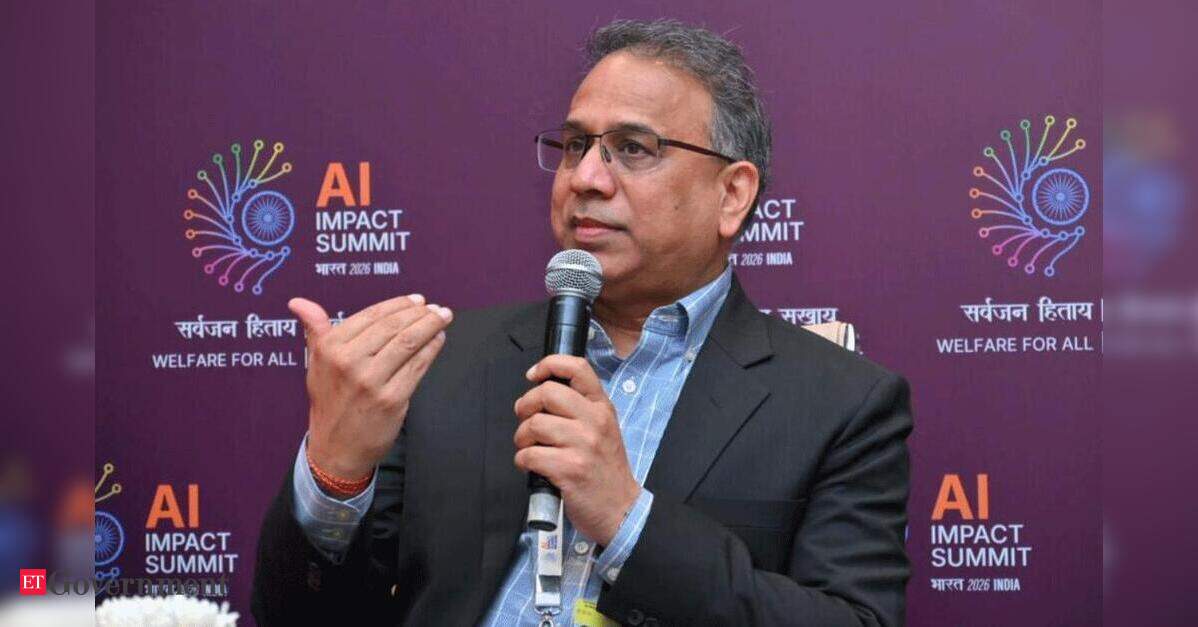
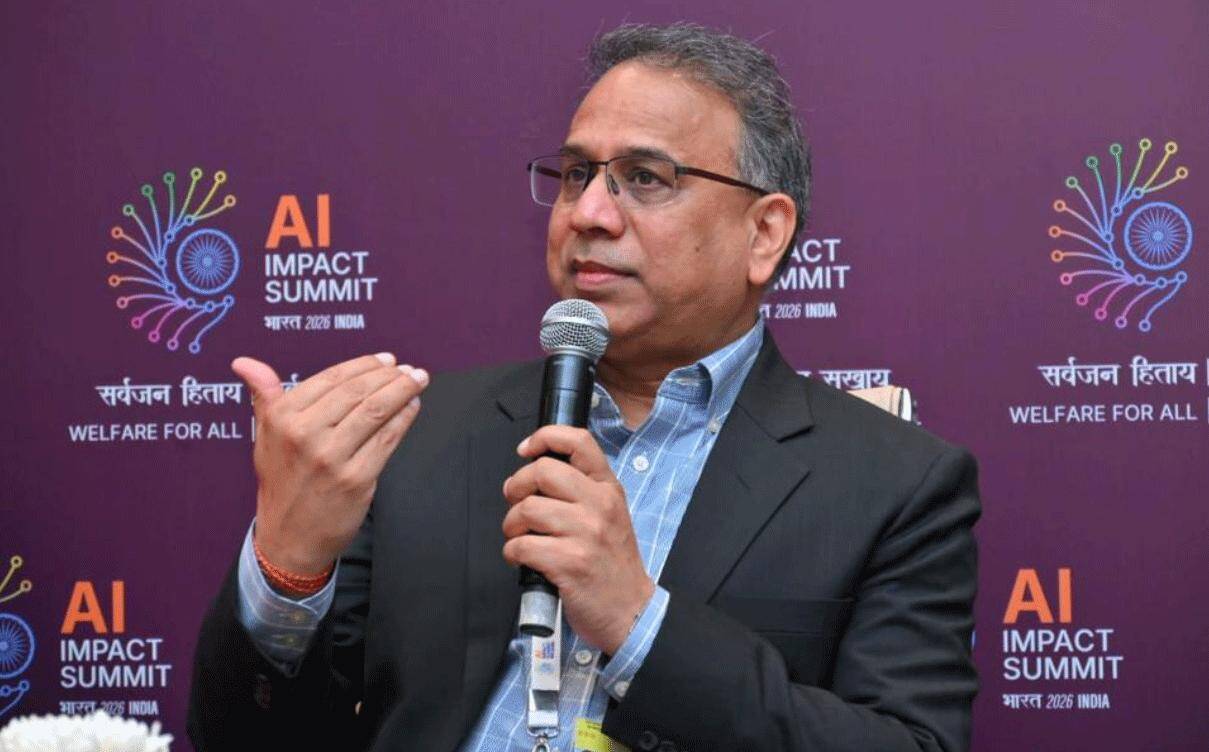
In this conversation with Anoop Verma, Vishal Kumar Dev, Additional Chief Secretary, Department of Electronics and IT, Government of Odisha, explains how the state is systematically embedding AI into administrative systems, strengthening linguistic inclusion, and building the foundations of a sovereign digital ecosystem. He outlines why Odisha treats AI not as a standalone technology programme, but as foundational public infrastructure—intended to enhance state capacity, drive inclusive growth, and position the state as a significant node within India’s evolving sovereign AI architecture.
Edited excerpts:
At the India AI Impact Summit 2026, Odisha projected itself as an implementation-driven AI state. What distinguishes Odisha’s AI roadmap from the many AI policies being announced across the country?
What differentiates Odisha is that we do not treat Artificial Intelligence as a standalone technology policy. Our Artificial Intelligence Policy 2025 positions AI as foundational public infrastructure—much like power, roads, or digital connectivity. It is designed as a core utility to strengthen state capacity and deepen last-mile inclusion.
We have consciously adopted an Odia-first, voice-enabled approach, ensuring that AI applications in healthcare, education, agriculture, disaster management, and governance are accessible in the language people actually use. A major focus has been on moving Odia from being a low-resource language in the digital ecosystem to a high-resource one, so that population-scale systems can serve citizens meaningfully.
Equally important is execution. The policy contains time-bound targets on connectivity, data centre capacity, curriculum integration, and skilling of officials. It is anchored by an AI Mission under the Hon’ble Minister, supported by an AI Taskforce and a dedicated AI Cell. That combination—an inclusive vision backed by a delivery architecture—is what makes us implementation-driven rather than declaratory.
You have spoken about “institutionalising AI through governance, budgets, and execution frameworks.” How exactly have you structured this architecture?
We realised early that AI cannot remain at the level of pilots and presentations. To ensure continuity and scale, we established the Odisha AI Mission with a two-tier governance structure reporting to both the Minister for Electronics & IT and the Chief Secretary.
At the strategic level, the AI Taskforce—chaired by the Principal Secretary—brings together senior officials, industry leaders, and academic institutions to define measurable milestones. Operationally, a dedicated AI Cell within OCAC serves as the technical backbone. It secures compute, standardises datasets, oversees skilling, and connects departments with credible solution providers.
Crucially, we follow a disciplined funnel: ideation, demo, proof-of-concept, pilot, and scale. Each stage is time-bound and benchmarked. Only solutions that demonstrate measurable outcomes proceed to department-wide or state-wide roll-out with formal budgets and system integration. This institutional discipline is what converts experimentation into population-scale adoption.
The Chief Minister has emphasised a shift from technology adopter to technology creator. What concrete steps are being taken to build indigenous AI capability?
Technology creation begins with data and contextual relevance. We are building large repositories of open-source, machine-readable datasets—contributing to national platforms such as AIKosh and advancing initiatives like Odisha State Data Policy and large scale crowd sourcing of sector specific Odia language data.
We are now in the final phase of operationalising a model-agnostic Governance AI Assistant that will serve as a secure, integrated gateway to leading AI capabilities across platforms. The objective is to embed AI directly into everyday administrative workflows through a single, trusted interface. As the various government departments begin to experience tangible gains in efficiency and decision support, adoption is expected to scale naturally from within the system.
We are also investing in human capital to ensure that AI capability is widely distributed and sustainably embedded across the system. Structured capacity-building initiatives are being rolled out for civil servants, alongside foundational and advanced AI learning pathways for high school and university students. Indigenous capability is not just about developing models; it is about strengthening institutional capacity, nurturing local talent, and building long-term ecosystem depth.
Governance systems often struggle at the last mile. How are you ensuring AI remains citizen-centric?
We begin with problem discovery and user-journey mapping before any deployment. Technology follows governance design—not the other way around. Every use-case goes through a structured pipeline and is tested for usability under real field conditions, especially in Odia-language contexts. We prioritise voice-enabled, low-literacy-friendly systems that integrate seamlessly into existing workflows rather than complicating them. The objective is simple: AI should feel like quieter, faster governance—not additional bureaucracy. Whether in health, agriculture, urban management, or disaster response, the measure of success is citizen experience.
Odisha has uploaded over 1,600 Odia literary datasets to AIKosh. How does this strengthen multilingual AI in India?
Odia has historically been a low-resource language in digital ecosystems. We decided to treat linguistic preservation as digital infrastructure. More than 1,600 literary works have been converted into AI-ready datasets and uploaded to AIKosh, aligning with national initiatives such as BHASHINI. Beyond literature, we are curating administrative terminology and domain-specific vocabularies. Our collaboration with institutions such as Odisha University of Agriculture and Technology is helping structure agricultural knowledge into high-quality Odia datasets. This ensures AI applications are linguistically inclusive and contextually grounded, especially for rural livelihoods.
Odisha is positioning itself as a data centre and GCC hub. What structural advantages does the state offer?
Odisha’s competitive advantage lies in the convergence of power surplus, coastal connectivity, and policy incentives. As a power-surplus state, we provide grid stability critical for 24/7 data operations. With a 6.8 GW renewable pipeline and waivers on wheeling charges for green energy, we align with global ESG mandates.
We are developing specialised GCC corridors beyond Bhubaneswar, supported by concessional land rates and plug-and-play infrastructure such as Info Valley SEZ. The upcoming undersea cable landing station in Puri is particularly transformative—it reduces latency and strengthens international bandwidth access.
Our MoU with Sarvam.ai for a sovereign AI hub integrates compute, research, talent, start-ups, and enterprise use-cases within a single ecosystem. This integrated approach positions Odisha as a digital anchor on India’s eastern seaboard.
How are you attracting Global Capability Centres and high-skill AI employment?
We combine fiscal incentives with deep skilling pipelines. Odisha supports industry-recognised certifications in AI, data analytics, and emerging technologies. Through partnerships with IIT Bhubaneswar, IIIT Bhubaneswar, and 25 institutions offering VLSI training, we are creating industry-ready professionals. Our collaboration with the Global Finance & Technology Network to build a digital finance hub further integrates AI talent with global demand. The strategy is to embed Odisha into global technology value chains rather than operate at the margins.
How do you see Odisha’s role in India’s broader AI supply chain?
We envision Odisha as a foundational infrastructure node. Through our partnership with Sarvam.ai, we aim to evolve into a compute-surplus state—much as we are already a power-surplus state. By integrating compute, curated data, research, and government use-cases, we can support model development and deployment at national scale. Our contribution of Odia datasets further strengthens inclusive AI development. In short, Odisha seeks to be both infrastructure backbone and application laboratory.
Talent is central to this shift. What skilling initiatives are underway?
We describe our transition as moving from a “Mine Economy” to a “Mind Economy.” Under the O-Chip programme, we provide access to high-end EDA tools and a centralised FabLab. Partnerships with ITEES Singapore and IIT Bhubaneswar aim to create 5,000–6,000 high-end chip design jobs over seven years.
The “Odisha for AI” programme demystifies AI for wider audiences. In collaboration with NUS-AIDF, we have launched a five-month hybrid Certificate in FinTech & InsurTech to skill 7,000 youth in AI-driven finance. Our World Skill Center and ESDM parks further support advanced manufacturing and systems design. The emphasis is on nurturing IP creators, not merely employees.
How would you position Odisha within India’s evolving AI landscape?
Odisha must deliver across three dimensions: innovation hub, governance laboratory, and infrastructure node. We are already implementing AI use-cases in agro-advisories, literacy, drainage management, and disease diagnosis. These interventions can serve as replicable models for eastern India.
Simultaneously, we are leveraging AI for governance productivity—using personalised voice calls to collect feedback on government schemes and improve delivery. And as an energy-surplus state with favourable climatic conditions, we are building sovereign compute capacity that can serve national requirements.
In essence, Odisha seeks not merely to participate in India’s AI journey—but to anchor it in inclusivity, infrastructure, and execution discipline.