The global health landscape is undergoing a profound transformation. Non-communicable diseases (NCDs) account for over 43 million deaths annually, according to the World Health Organisation (WHO).
The global population aged 60 and above is projected to reach 2.1 billion by 2050, while one in eight people worldwide lives with a mental health condition.
These trends are exerting sustained pressure on health systems, particularly in low and middle-income countries, where access, affordability and long-term care remain persistent challenges. The imperative for preventive, sustainable and person-centred healthcare has never been clearer.
In this evolving context, traditional medicine is gaining renewed global recognition—not as an alternative, but as an essential component of resilient and integrative health systems. Its emphasis on prevention, lifestyle modification, community participation and holistic wellbeing aligns closely with contemporary public health priorities.
According to a 2019 WHO report, the ‘Traditional, Complementary and Integrative Medicine (TCIM) is used in 170 countries’. Furthermore, WHO’s third global survey on TCIM found that 67% of respondents reported that 40-99% of their populations were using TCIM.
Institutionalising Preventive Health and Wellness
Under the visionary leadership of Hon’ble Prime Minister Shri Narendra Modi, India’s response to the global health transition is both strategic and implementation-driven. The Union Budget 2026 reinforces this direction by allocating ₹4,408 crore to the Ministry of Ayush, with strengthened support for the National Ayush Mission (NAM)—the backbone of last-mile Ayush healthcare delivery.
Under the guidance of Hon’ble Minister Shri Prataprao Jadhav, over the past decade, NAM has enabled the establishment of integrated Ayush hospitals, upgraded hundreds of hospitals and thousands of dispensaries, and co-located services across primary, community, and district health centres, embedding traditional medicine within the public health system.
The scale of outreach is evident: 12,500 Ayushman Arogya Mandirs (Ayush) have served over 46.59 crore beneficiaries, supported by expanded medicine supply, educational institutions, and community-based initiatives such as Ayush Grams. Together, these measures signal a clear policy resolve — strengthening civilisational knowledge systems through institutional depth, scientific rigour, and equitable healthcare access at scale.
The workforce measures announced in the Union Budget for the health and wellness sector signal a structural shift toward integrative, person-centred care. The expansion and upgradation of Allied Health Professional (AHP) institutions—adding 100,000 AHPs—and the training of 1.5 lakh multi-skilled caregivers with competencies in wellness, yoga, and assistive technologies strengthen the capacity for preventive and rehabilitative care.
The proposed Regional Medical Hubs, integrating modern medicine with Ayush centres, research, diagnostics, and rehabilitation, position India as a destination for medical value tourism while generating skilled employment. Together, these steps align clinical services with India’s globally recognised strengths in yoga and other Ayush systems, reinforcing a holistic, workforce-ready health ecosystem.
From Clinical Excellence to Quality Assurance: Building a Robust Ayush Ecosystem
The announcement of three new All India Institutes of Ayurveda (AIIAs) by the Union Government marks a significant expansion of tertiary care capacity, advanced education, and high-quality research in traditional medicine.
The scale of demand for such institutions is already evident— in the year 2024-2025 alone, AIIA, New Delhi, have recorded over 4.38 lakh outpatient registrations, with nearly 2,000 patients seeking care daily across 46 speciality clinics spanning Panchakarma, Kayachikitsa, Kaumarbhritya, Shalakya, Shalya Tantra, Stri Roga & Prasuti Tantra, Swasthavritta, and integrated Ayush services.
The AIIA at Goa is also a fast-emerging centre of research, with unique initiatives such as ‘Prayas’, the Integrated Neuro-Rehabilitation Centre, which is among the first multidisciplinary Ayush-led facilities of its kind and delivers holistic neuro-rehabilitation for children by integrating Ayurveda, Yoga, physiotherapy, speech therapy, occupational therapy, and modern paediatrics.
The institute registered 3,99,312 outpatient visits during the same period, with an average daily footfall of 738 patients. This reflects a maturing healthcare ecosystem in which traditional systems deliver specialised, structured, and high-volume clinical care.
Complementing this expansion, the announcement of the upgrading of Ayush pharmacies and Drug Testing Laboratories strengthens quality assurance and global competitiveness, backed by a comprehensive regulatory and pharmacovigilance architecture.
Under the scheme, the Ministry of Ayush has established a nationwide, three-tier Pharmacovigilance Programme for Ayurveda, Siddha, Unani and Homoeopathy drugs—spanning a National Centre, intermediary hubs, and 97 peripheral centres—to monitor drug safety, curb misleading advertisements, and protect consumers. So far, the effort has supported over 3,500 awareness programmes, benefiting more than 3.18 lakh people across the country.
Regulatory supervision is further strengthened through a dedicated Ayush Vertical at Central Drugs Standard Control Organisation (CDSCO) and State Licensing Authorities (SLAs) to ensure compliance with prescribed safety and manufacturing norms.
Positioning India as the Global Knowledge Hub for Traditional Medicine
Enhanced support to the WHO Global Traditional Medicine Centre (GTMC) in Jamnagar positions India at the heart of global traditional medicine innovation and research. As WHO global outposted centre dedicated to traditional, complementary and integrative medicine, GTMC serves as an international knowledge hub for evidence generation, standards-setting, training, and policy leadership.
Its mandate spans research and digital innovation, health systems integration, biodiversity, and capacity building, while fostering collaboration among countries, academic institutions, and regulatory bodies. Anchored in India and backed by sustained WHO partnerships, GTMC is set to make India a global nucleus for traditional medicine R&D, advancing credible, science-based solutions and shaping internationally harmonised norms for safety, quality, and equitable access.
India’s domestic investments are complemented by expanding global engagement. At the recently concluded Second WHO Global Summit on Traditional Medicine, jointly organised by WHO and the Government of India in New Delhi, the adoption of the Delhi Declaration on safety, research and equitable access underscored international consensus around evidence-based integration of traditional systems into conventional healthcare frameworks.
Marking a major milestone for global health, the Summit drew over 16,000 online registrations and brought together 800 delegates from more than 100 countries, including ministers from over 20 nations. With a strong line-up of 160 speakers, the global traditional medicine community deliberated on how traditional medicine can strengthen health systems by advancing safe, evidence-based and affordable care for all.
Trade, Mobility and Wellness Diplomacy: Taking Ayush to the World
Economic diplomacy is further reinforcing this trajectory. The India–EU Free Trade Agreement opens new pathways for Indian traditional medicine services across EU Member States, including opportunities for qualified practitioners to provide services in countries without specific regulatory frameworks for traditional medicine.
The India–New Zealand Free Trade Agreement, concluded in December 2025, establishes a dedicated Health and Traditional Medicine Annex—the first of its kind—creating structured mobility and professional collaboration pathways, including for Ayush practitioners and Yoga instructors.
At the same time, initiatives such as the Ayush Visa and institutional partnerships with the India Tourism Development Corporation (ITDC) are strengthening India’s position as a global wellness and medical value travel destination. Taken together—budgetary commitment, institutional strengthening, regulatory standardisation, trade agreements, mobility frameworks and multilateral collaboration—these initiatives reflect a coherent national strategy.
Traditional medicine in India is transitioning from a revered heritage to a globally integrated, evidence-based and standards-driven significant component of the healthcare system.
India’s experience demonstrates that traditional and Conventional science are not competing paradigms; they are complementary instruments in addressing 21st century health challenges. By aligning policy vision with institutional capacity and global partnerships, India is not merely preserving its medical heritage—it is contributing meaningfully to the architecture of future global health systems.
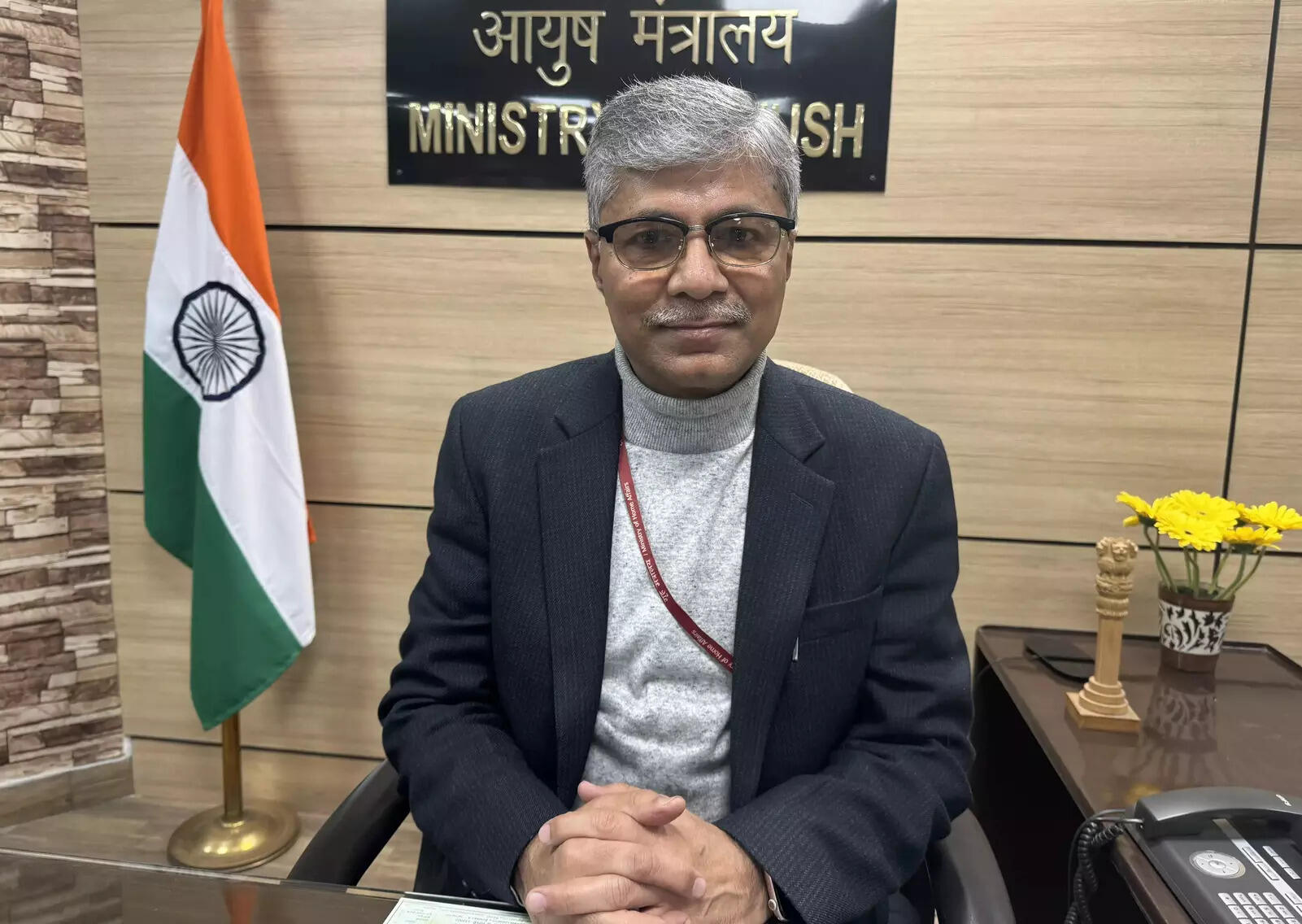
(The author is Secretary, Ministry of Ayush; Views expressed are personal)