 “>
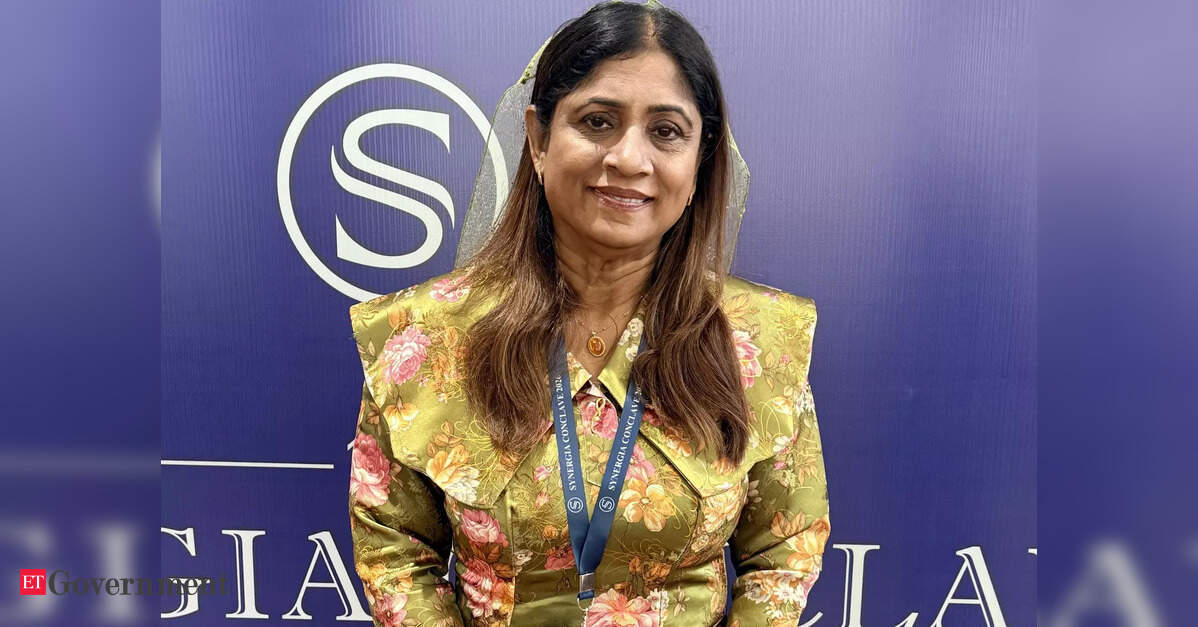
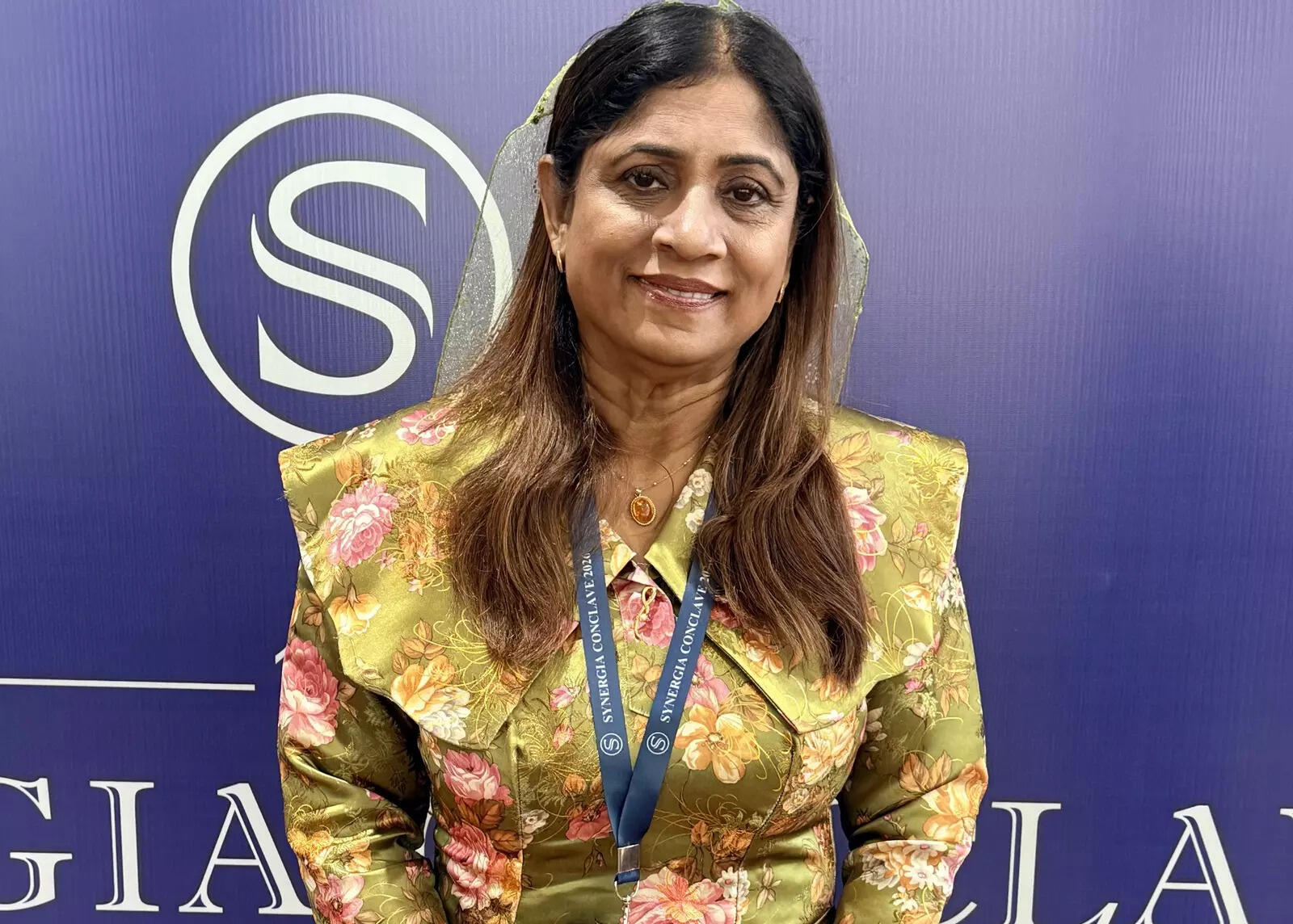
“>Mariya Ahmed Didi, who served as the first woman Defence Minister of the Maldives from November 2018 to November 2023, played a significant role in shaping the island nation’s defence and strategic engagement with regional partners, particularly India.
During her tenure, India–Maldives defence cooperation deepened through capacity-building initiatives, maritime security collaboration and strategic dialogue in the Indian Ocean region. Speaking to Anoop Verma, Didi reflects on the evolving trajectory of India–Maldives relations, the importance of trust and interdependence in foreign policy, and the need for closer regional cooperation in an increasingly volatile geopolitical environment.
The conversation took place on the sidelines of the 10th Synergia Conclave, a three-day strategic affairs forum being held at the Manekshaw Centre Auditorium in New Delhi, where policymakers, diplomats and security experts are discussing global security challenges and emerging geopolitical realities.
Edited excerpts:
How do you see the current state of relations between India and the Maldives, and what can both countries do to further strengthen their geopolitical and economic connections?
The Maldives has traditionally relied on building partnerships that are based on reliability, predictability and trust. These qualities have defined our approach to international relations. We have always believed that partnerships with other countries do not undermine our sovereignty. In fact, for a country like the Maldives, cooperation is essential.
Independence does not mean isolation. The Maldives relies heavily on imports for food, fuel and other essentials, and our tourism industry depends on visitors from other countries. Therefore, our independence is closely tied to interdependence with the global community. In such a world, it becomes important that nations behave as trustworthy and dependable partners. Good neighbourly relations, mutual respect and reliability are fundamental principles that should guide the relationship between India and the Maldives.
At a time when the world is witnessing multiple geopolitical conflicts—from the Middle East to other regions—how can India and the Maldives work together to ensure stability in the Indian Ocean region?
This is a moment when countries like India and the Maldives must work even more closely together. India has always been the Maldives’ first responder in times of crisis, and that role has been greatly appreciated. However, given the current geopolitical turbulence, the two countries should engage in deeper discussions about possible future scenarios and how they can respond collectively.
For a country like the Maldives, global instability can have immediate consequences. We depend on fuel imports, fishing and tourism, and even our basic needs such as electricity rely on international supply chains. Tourism, which is central to our economy, is also affected by disruptions in international aviation routes, especially through the Middle East. These realities make it essential for the Maldives to engage constructively with international partners, including India, to navigate these uncertain times.
During your tenure as Defence Minister, how was your experience working with India’s defence establishment? Do you see scope for expanding defence collaboration?
The defence relationship between India and the Maldives has been excellent and very productive. The cooperation between the two countries has always been conducted in a manner that respects the sovereignty and interests of both sides.
At the same time, maintaining a strong defence partnership with India has never meant that the Maldives must distance itself from other partners. Small countries often engage with multiple partners in different areas, including defence cooperation, training and capacity building.
Being close friends with your nearest neighbour—especially one that has consistently supported you—does not mean that such cooperation comes at the expense of relations with other countries. The defence partnership between India and the Maldives has always been constructive and mutually beneficial.
Are there opportunities for greater economic cooperation, including Indian investment in the Maldives or Maldivian investment in India?
Indian investment is already significant in the Maldives, particularly in sectors such as tourism and hospitality. Indian companies have played an important role in the development of resort infrastructure, and there is also strong interest from Indian investors in other sectors.
At the same time, the number of Indian tourists visiting the Maldives has grown substantially. Even on the flight I took to Delhi, the aircraft was completely full of tourists returning from the Maldives. This demonstrates the strong people-to-people and economic ties between the two countries.
India’s economic growth over the past decade has had positive spillover effects across the region, including in neighbouring countries like the Maldives. While there was a brief period of strain in relations, it is encouraging that this phase now appears to be behind us. The focus should now be on rebuilding trust and strengthening cooperation in areas that benefit both nations.
Given the strategic importance of the Indian Ocean, do you see scope for deeper maritime or naval cooperation between India and the Maldives, such as joint patrols or collaborative security initiatives?
The Indian Ocean region is critically important for global trade. A large proportion of the world’s maritime commerce passes through these waters, and the Maldives sits at a strategic location along these routes. As Asia continues to grow economically, the security of these maritime lanes becomes even more important. Countries in the region must therefore cooperate to ensure that shipping routes remain safe and stable. If India and the Maldives can work together to strengthen maritime security arrangements, it would contribute significantly to safeguarding the flow of energy supplies and global trade passing through the region.
As an experienced political leader, what do you think both countries should do to ensure that India–Maldives relations continue to grow stronger?
To be candid, the period of discomfort that we experienced in bilateral relations was unfortunate, and it should not have happened. It is important to recognise that foreign policy cannot be conducted through slogans or short-term political rhetoric. In today’s interdependent world, countries rely on each other economically and strategically.
The Maldives depends on imports and external partnerships for its economic stability and development. Therefore, maintaining trust and reliability in international relationships is essential. Both countries should work toward strengthening that trust and demonstrating to each other—and to the world—that they are dependable partners.
Finally, what are your thoughts on the current global conflicts, particularly the tensions involving Iran and the wider Middle East?
The current global situation is deeply worrying. Conflicts tend to escalate once they begin, and it becomes very difficult to predict how far they may spread. Many diplomats and analysts around the world are pessimistic about the situation because once tensions reach a certain level, they can trigger wider regional instability.
Iran, for example, is a resilient country with a long civilizational history. Despite decades of sanctions, it continues to endure and develop. When a nation with such resilience is placed under extreme pressure, it can lead to unpredictable consequences. International relations depend on mutual respect between nations and their leaders. When that respect begins to erode, it creates a dangerous environment for global stability.
We all hope the current global conflicts will de-escalate soon. In times like these, cooperation between nations becomes more important than ever.
With India’s free trade agreement with Europe progressing, do you see any potential implications for the Maldives?
India’s trade agreements with other regions can create opportunities for neighbouring countries as well. For example, if regional trade arrangements could help remove tariffs on Maldivian canned tuna exports to Europe, that would be extremely beneficial for our economy.
There were earlier discussions on such arrangements, and hopefully those conversations can resume in the future. Expanding regional trade opportunities would benefit not only the Maldives but the wider Indian Ocean region as well.