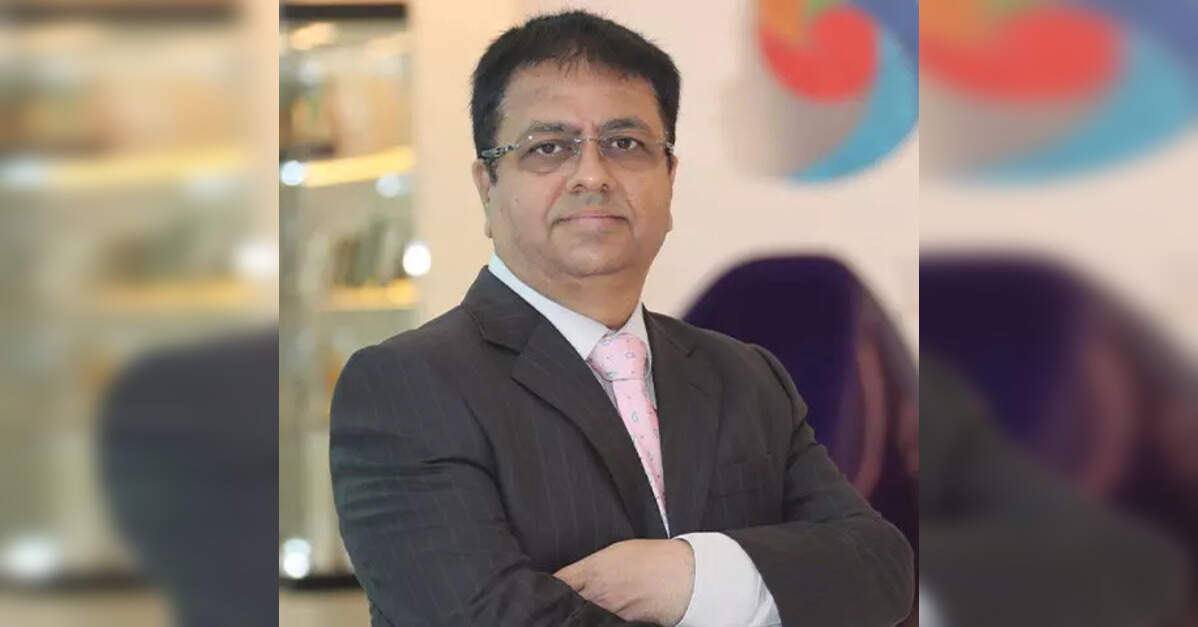
India’s education system is entering a phase of rapid transformation as technology, policy reforms and urban expansion reshape how and where students learn. In an interaction, Atul Temurnikar, Chairman and Co-Founder of Global Schools Group, discusses the group’s plans to explore new schools in Uttar Pradesh following discussions during Chief Minister Yogi Adityanath’s Singapore outreach visit, the opportunities created by the National Education Policy 2020, and how artificial intelligence will reshape learning by pushing schools to focus on data literacy, decision-making and critical thinking rather than rote knowledge.Q: You recently met Uttar Pradesh Chief Minister Yogi Adityanath during his overseas visit. Could you share what the discussion was about and whether you are considering opening schools in the state?
Atul Temurnikar: The meeting happened during the Chief Minister’s Invest-UP outreach visit in Singapore. There was a community interaction organised with the support of the Indian Embassy and other organisations, attended by nearly 1,500 members of the Indian diaspora.
The venue happened to be one of our schools, so the Chief Minister also visited the campus to understand how new-generation schools operate. We briefed him about the model we follow, particularly our focus on integrating skills and technology into the curriculum. That aligned closely with the direction of the National Education Policy.
He was very positive about the approach and invited us to explore opportunities in Uttar Pradesh. With projects like the upcoming Noida International Airport, new urban clusters and satellite towns will emerge over the next decade. As communities grow, the demand for quality schools will naturally follow.
So we see this as the right time to engage with the state and evaluate opportunities for expanding our presence there.
Q: You already have schools in India, including one in Noida. Will the new schools follow the same model or something different, similar to your international campuses?
Atul Temurnikar: The core curriculum will continue to be Central Board of Secondary Education, as that remains the most familiar and widely accepted system for Indian families.
However, depending on the location, especially if there are international communities or business clusters, we may introduce international curricula as well.
Where we intend to differentiate is through the integration of competency-based skills and technology-enabled learning pathways. The aim is to ensure students develop practical capabilities alongside academic knowledge.
Q: How do you view the impact of the National Education Policy 2020 on the future of school education in India?
Atul Temurnikar: The NEP is a significant step forward because it emphasises holistic and skills-based education rather than purely textbook-driven learning.
We had informal discussions with policymakers around 2016–17 when the policy was being conceptualised. One of the key aspects was ensuring that India’s education framework aligns with global practices.
What NEP has done well is bring together different aspects of learning, age-appropriate pedagogy, skills development and flexibility in assessments. It also involved extensive consultation with states, which helped build consensus.
There are still challenges, especially around assessment structures and implementation at the state level, but the direction is positive.
Q: India spends around 3–4% of GDP on education. What more can be done to improve investment and outcomes?
Atul Temurnikar: Funding alone does not guarantee better outcomes. Even in countries like the United States, large education budgets do not always translate proportionally into better results.
What is important is the balance between public and private participation. One model India could consider is something similar to charter schools in the US, where the government funds education on a per-student basis but allows private organisations to run the schools.
We experimented with a similar model in Gujarat when we were invited to manage a tribal school near Tilakwada. The school was funded by the state government while we handled management and governance.
Over 15 years, the institution achieved remarkable results, including a 100% pass rate and strong performance in fields like agriculture and archery. The key difference was governance—ensuring quality teachers, consistent classes and minimal dropouts. If India adopts such PPP models more widely, it could significantly improve the performance of government schools.
Q: Artificial intelligence is rapidly transforming industries. How do you see AI impacting education?
Atul Temurnikar: AI will certainly change how people access information. Tools like AI assistants could eventually replace traditional web browsers as the primary way people interact with information.
For students, access to knowledge will become easier than ever. The challenge will shift from accessing information to interpreting it and making sound decisions based on it. That means education systems must focus more on data literacy, critical thinking and ethical use of AI. Issues like plagiarism, misuse of AI tools and over-dependence on technology will need careful management.
At the same time, AI will not eliminate education itself. What it will do is transform certain professions and require new skill sets.
Q: What other major challenges do you see emerging for schools in the coming years?
Atul Temurnikar: One major concern is digital addiction among children. Twenty years ago, schools focused on issues like drug abuse awareness. Today, the challenge is excessive device usage and social media dependency.
Schools will increasingly need to address digital wellbeing, mental health and responsible technology use. We are also seeing the need to help students become more socially engaged because technology often encourages isolation.
Q: Finally, how do you see Indian education evolving over the next decade?
Atul Temurnikar: One area that will gain importance is data-driven student development. Schools will begin to track a student’s progress not just academically but across multiple dimensions—skills, interests, behaviour and overall development.
Using technology, we can analyse this data over time and identify the most suitable learning pathways for each student. The idea is to help students discover their strengths early and guide them accordingly.
Instead of focusing only on exams or career outcomes, the aim will be to ensure every child finds the right balance of interests, skills and opportunities.