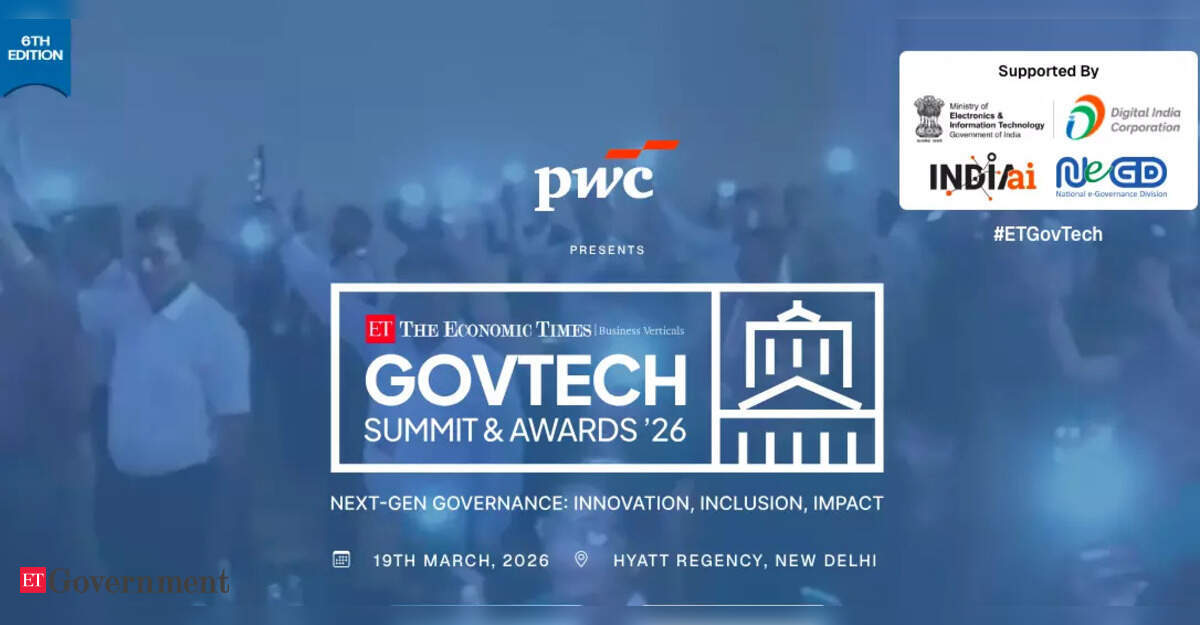
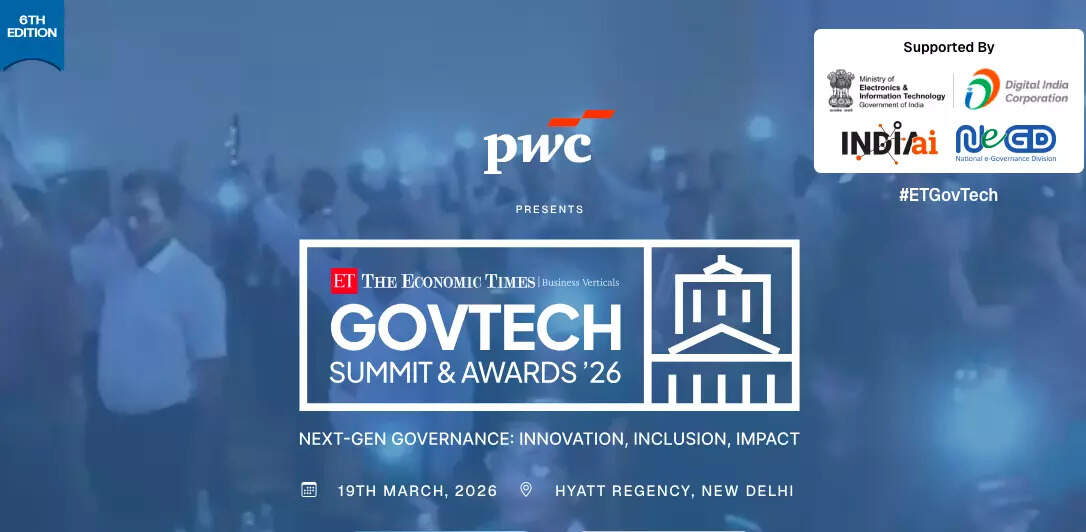
New Delhi is set to host one of the most consequential conversations on the future of governance as the GovTech Summit & Awards 2026 unfolds today at the Hyatt Regency.
Anchored in the theme “Next-Gen Governance: Innovation, Inclusion, Impact,” the summit brings together senior policymakers, technology leaders, and institutional stakeholders to examine how digital transformation is reshaping the architecture of public service delivery in India.
At a time when India is accelerating its journey towards Viksit Bharat 2047, the summit is positioned as a strategic platform to align policy, technology, and governance frameworks. The focus is not merely on digitisation, but on building intelligent, resilient, and citizen-centric systems that can operate at national scale.
The inaugural session sets the tone with a distinguished lineup of senior government leaders who are currently shaping India’s digital and regulatory landscape.
S. Krishnan, Secretary, Ministry of Electronics and Information Technology, is expected to outline the government’s broader vision for India’s digital ecosystem, including artificial intelligence, electronics manufacturing, and digital public infrastructure.
Complementing this perspective, Anil Kumar Lahoti, Chairman, Telecom Regulatory Authority of India, addresses the evolving regulatory landscape in an era defined by 5G, emerging 6G technologies, and converged communications networks.
Dr. Ashish Kumar Bhutani, Secretary, Ministry of Cooperation, highlights the role of technology in modernising cooperative institutions. Dr. Rajendra Kumar, Secretary, Department of Border Management, Ministry of Home Affairs, reflects on how digital systems are strengthening national security and border infrastructure.
Nidhi Khare, Secretary, Department of Consumer Affairs, brings insights into consumer protection in an increasingly digital marketplace.
As the day progresses, the summit moves from vision to implementation. A central panel on “Reinventing Governance: AI, Data and the Future of Public Service Delivery” brings together key institutional leaders, including Abhishek Singh, Additional Secretary, MeitY and CEO of the IndiaAI Mission; Bhuvnesh Kumar, CEO of UIDAI; D. Thara, Additional Secretary, Ministry of Housing and Urban Affairs; and Arvind Kumar, Director General, STPI.
The discussion is expected to explore how artificial intelligence, data governance, and digital platforms are transforming service delivery across sectors—from identity systems to urban governance and administrative reforms.
The focus on urban transformation continues with deliberations on intelligent infrastructure ecosystems, where policymakers examine how data-driven systems are enabling more efficient, responsive, and sustainable cities. Leaders such as Dr. Sunil Kumar Barnwal of the National Health Authority and Dr. Madan Mohan Tripathi of NIELIT are expected to bring cross-sectoral perspectives on integrating health, digital skills, and infrastructure into a unified governance framework.
A key highlight of the afternoon is the special address by Raj Bhushan Choudhary, Minister of State in the Ministry of Jal Shakti, who is set to discuss technology-led innovations in water resource management—an area of critical importance for India’s sustainability and rural development agenda.
This is followed by a high-level discussion on next-generation connectivity, featuring senior officials such as Vinay Thakur, Special Director General, BISAG-N; Anand Khare, Director General, Department of Telecommunications; and Dr. Rajkumar Upadhyay, CEO, C-DOT. The session is expected to examine how 5G, 6G, and geospatial technologies are enabling integrated planning frameworks such as PM GatiShakti and redefining public service delivery infrastructure.
The summit also addresses emerging risks in the digital era. A dedicated panel on AI-era threats, featuring senior cybersecurity and governance experts including Dr. Sanjay Bahl, Director General, CERT-In, focuses on ransomware, deepfakes, and the evolving cyber risk landscape. The discussion is expected to underline the need for robust institutional safeguards, regulatory preparedness, and international cooperation in securing digital ecosystems.
Beyond discussions, the GovTech Summit & Awards 2026 is also a platform for recognition. The awards segment honours government departments and initiatives that have demonstrated measurable impact, innovation, and scalability in governance. These recognitions serve not only as acknowledgements of excellence but also as benchmarks for replication across states and sectors.
As the summit unfolds, it reflects a broader shift in governance paradigms—from siloed administrative processes to integrated, technology-driven ecosystems. The emphasis is on leveraging AI, data, connectivity, and digital infrastructure not as isolated tools, but as foundational elements of governance itself.
In bringing together policymakers, technologists, and institutional leaders, the GovTech Summit & Awards 2026 is expected to contribute to a deeper understanding of how India can build governance systems that are not only efficient and secure, but also inclusive and future-ready.