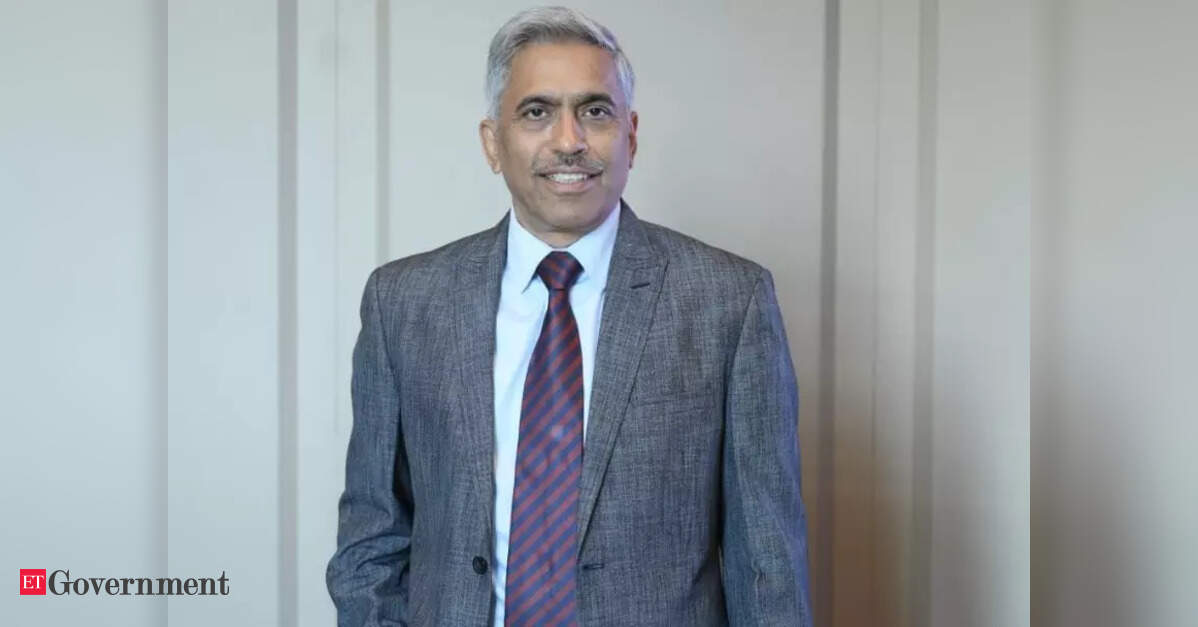

Madhya Pradesh is preparing to integrate artificial intelligence (AI) across governance and decision-making, following the successful completion of large-scale pilot projects across various departments, said Sanjay Dubey, Additional Chief Secretary, Science and Technology, Government of Madhya Pradesh.
In a conversation with Sudhanshu Mishra at the AI Impact Summit in Bhopal, Dubey stated that the state’s AI strategy relies on three key enablers: government-owned and trusted datasets, access to compute infrastructure supported by the Centre, and the development of AI talent across government, academia, and industry.
The focus, he stressed, is on responsible and citizen-centric use of AI rather than technology adoption for its own sake.
Edited excerpts:
You have spoken about AI as a governance enabler. How does Madhya Pradesh’s AI vision differ from the national IndiaAI roadmap, and where does the state want to lead rather than follow?
Madhya Pradesh is uniquely positioned because we already have strong foundational capabilities. The state has in-house teams for developing websites, databases and applications, and a very large volume of secure and trusted data available across departments.
This includes structured datasets as well as image and video data generated through IDMS solutions and drone-based surveys across urban areas, agriculture and infrastructure. Since this data is hosted and managed by the state government itself, it allows us to undertake AI analytics securely and reliably.
Along with data, we now have access to compute power through GPUs with support from the Government of India. The third pillar is talent—almost every government officer has been exposed to AI usage, and we are working closely with academia and industry to build AI capacity from the student level onwards. Our approach is to build responsible, bias-free and collaborative AI systems aligned with national efforts but driven by state governance priorities.
Several AI use cases were showcased at the summit. What is the state’s roadmap for moving from pilots to full-scale deployment?
We have already moved well beyond the proof-of-concept stage. These were not small pilots, but large-scale implementations that helped us consolidate and validate AI applications across departments.
Because departmental datasets are already housed within the state’s science and technology ecosystem, it was easier to execute these projects using our own teams. The consolidation phase is now complete, and we are moving towards scaling these solutions and institutionalising AI within governance. The objective is to make decision-making more productive, pre-emptive and proactive.
Which sectors will see the earliest and largest AI deployment in Madhya Pradesh?
Agriculture will be one of the biggest areas of AI deployment. The state has a robust agri-AI stack, a functional Centre of Excellence in agri-technology supported by the state and central governments, and partnerships with institutions such as NIT.
We also have rich datasets in the form of language, images and video, which makes scaling AI applications in agriculture easier. At the same time, health and education will also see significant AI adoption. In health, for instance, the state has developed an AI model that can predict potential malnutrition cases with around 94% accuracy, enabling early intervention.
How will Madhya Pradesh measure the success of AI in governance?
Economic outcomes are not the primary metric for us. What matters most is citizen service and the quality of governance. We will assess how close we are to citizen expectations, how quickly the government can respond to emerging situations, and how proactively and pre-emptively challenges can be addressed—whether in disaster management, disease surveillance or productivity enhancement. If AI helps us take more informed, 360-degree decisions, that itself is a major outcome.
How does the proposed AI City fit into the state’s broader AI strategy?
The AI City is being envisioned as a future-ready urban and education hub. It will integrate advanced connectivity, intelligent transportation, IoT-enabled water and sewage systems, and a net-zero environmental design. The objective is to create an ecosystem where industry, startups and academic institutions can work together, supported by government-provided infrastructure.
An expression of interest has already been floated, and there is strong interest from industry players. The AI City will serve as a platform to demonstrate how advanced technology-driven urban development can also be sustainable and self-sufficient.