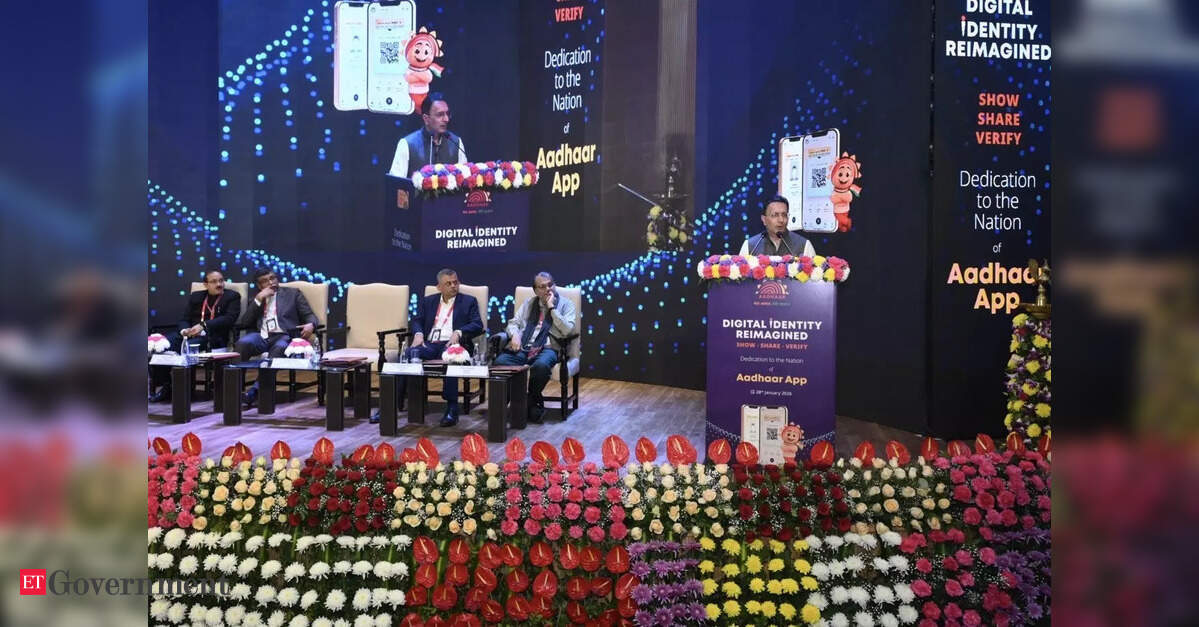
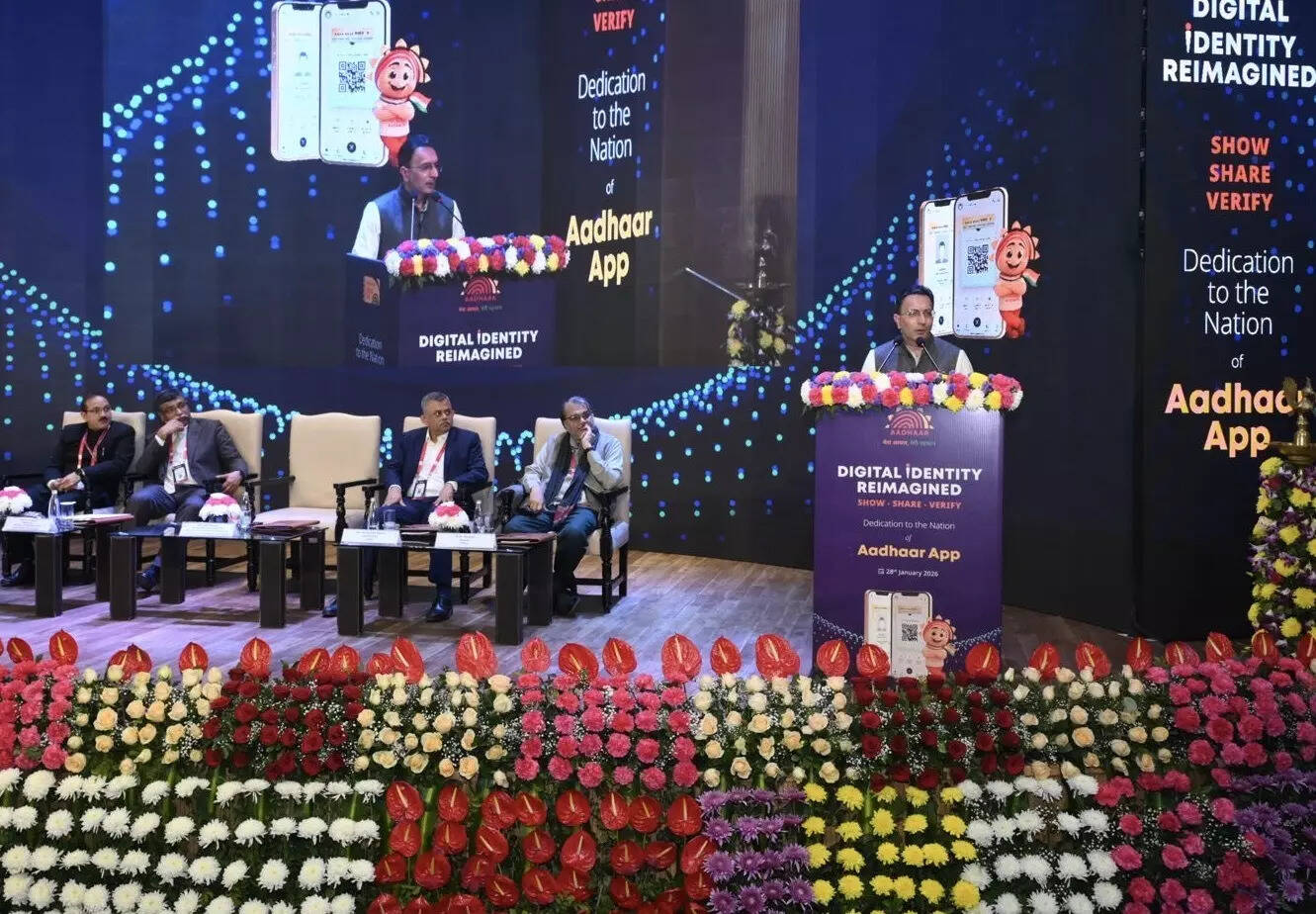
On January 28, the Unique Identification Authority of India (UIDAI) formally dedicated the full version of the new Aadhaar mobile application to the nation, marking a decisive moment in the evolution of India’s digital identity architecture.
The app was unveiled by the Minister of State for Commerce and Industry and Electronics & Information Technology, Jitin Prasada, who described Aadhaar as a continuing “digital governance showpiece” and underscored the government’s intent to make service delivery increasingly seamless, resident-centric, and trust-based.
This launch represents a substantive transition from earlier iterations such as mAadhaar to a consolidated, next-generation platform that reimagines identity verification by placing people—not institutions—at the core of digital design.
Developed by UIDAI, the new Aadhaar App offers Aadhaar Number Holders a secure, privacy-first mechanism to carry, show, share, and verify their identity in a controlled and consent-driven manner.
Conceptual Context and Rationale
At India’s scale, digital identity is not merely a technological instrument; it is a foundational layer of governance. With over 1.3 billion residents enrolled since Aadhaar’s introduction in 2009, the system underpins everything from financial inclusion and telecom onboarding to welfare delivery and public service access.
Yet, the everyday use of Aadhaar has long been burdened by physical document dependence, photocopy circulation, and fragmented verification practices—each introducing friction, inefficiency, and privacy risk.
The new Aadhaar App emerges as a structural response to these challenges. As Minister Jitin Prasada observed at the launch, Aadhaar today stands at the intersection of public trust, good governance, and citizen empowerment. The app embodies this philosophy by returning control, consent, and convenience decisively to residents themselves.
This shift is also philosophical. As Neelkanth Mishra, Chairman, UIDAI, reflected, the transition “from paper to paperless is a great step forward,” reaffirming UIDAI’s commitment to keeping people at the centre of innovation rather than treating identity as a static credential.
Offline Verification as a Design Pivot
A defining innovation of the new app is the operationalisation of offline verification through QR-based credential exchange and digitally signed verifiable credentials. Offline verification, in this context, does not imply the absence of internet connectivity but rather the absence of direct, real-time queries to UIDAI’s Central Identities Data Repository (CIDR).
UIDAI CEO Bhuvnesh Kumar has clarified this distinction succinctly: when a service provider directly accesses UIDAI’s database, it constitutes online authentication; when identity is verified through credentials generated by the app without hitting the central database, it becomes offline verification. This architectural choice reduces infrastructure load, limits data exposure, and significantly enhances privacy.
Crucially, the app enables selective credential sharing. As Bhuvnesh Kumar explained during the launch, residents can share only the specific identity attributes required for a given use case through customised QR codes generated by requesting entities. Aadhaar numbers are not stored by verifiers, and only digitally signed credentials are exchanged. This ensures that data minimisation is not merely a policy aspiration but a functional reality, aligned closely with the principles of the Digital Personal Data Protection (DPDP) Act.
Functional Architecture and Use-Case Expansion
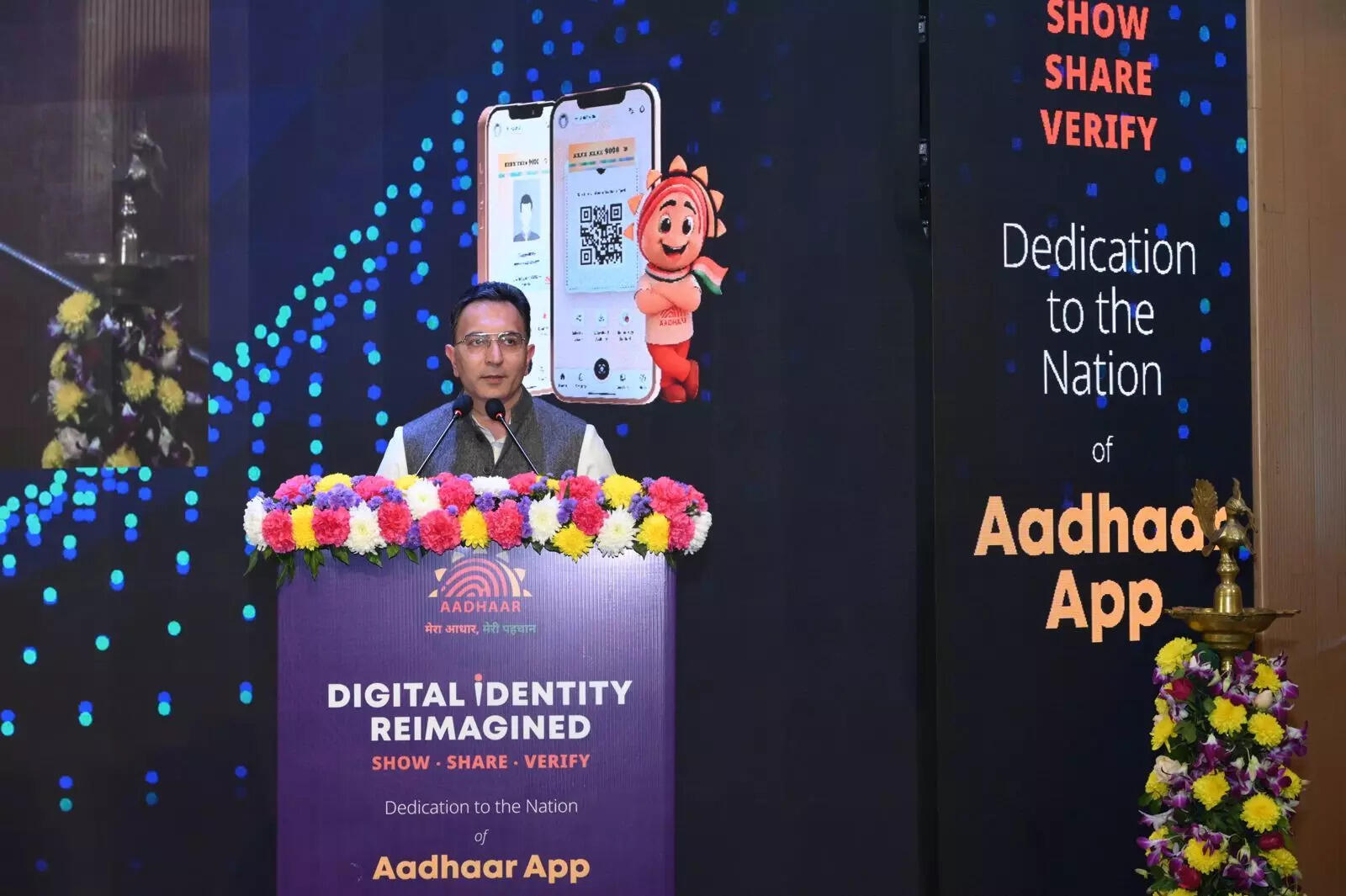
The new Aadhaar App substantially expands the functional scope of identity verification across real-world scenarios. Designed for ease of use across the full spectrum of users, it supports hotel check-ins via Offline Verification Seeking Entity (OVSE) QR code scanning, optional face verification for proof of presence, age verification for cinema ticket bookings, hospital admissions for visitors and attendants, and verification of gig workers and service partners.
In his address, S. Krishnan, Secretary, Ministry of Electronics and Information Technology, emphasised that the app promotes data minimisation, enhanced security, and selective information sharing by default. This design philosophy reflects a conscious move away from blanket data disclosure toward purpose-limited identity interactions.
The app also integrates advanced functionalities that were previously fragmented or unavailable. These include face verification for presence authentication, biometric lock and unlock in a single click, real-time viewing of authentication history, and a QR-based contact card that allows users to share essential contact details without exposing their Aadhaar number itself. This contact card feature subtly expands Aadhaar’s usability beyond formal KYC into everyday digital interactions.
A notable administrative innovation is the ability to manage up to five Aadhaar profiles on a single device, enabling what UIDAI describes as the “One Family – One App” concept. This feature addresses practical household realities, particularly for dependents, elderly family members, or individuals requiring assistance in digital processes.
The app also consolidates core update services. In addition to address updates, residents can now update their registered mobile number directly through the app, with UIDAI signalling that more demographic and service update functionalities will be introduced in future iterations. This significantly reduces reliance on physical enrolment centres and embeds traceability and auditability into routine Aadhaar maintenance.
Governance, Compliance, and Regulatory Alignment
From a regulatory perspective, the app’s launch aligns closely with recent amendments to Aadhaar regulations that formally recognise offline verification as a mechanism distinct from online authentication. This recognition is critical for scaling verifiable credentials across regulated sectors such as banking and telecom.
UIDAI has also clarified that Aadhaar issued through the app qualifies as Aadhaar “in the form and manner issued by UIDAI,” thereby meeting Reserve Bank of India norms for officially valid documents in KYC processes. This assurance integrates the app seamlessly into India’s financial and compliance ecosystem.
Equally important is the app’s alignment with emerging data governance norms. By embedding consent, purpose limitation, and minimal disclosure at the design level—and by ensuring that verifiers are registered entities within the UIDAI framework—the app introduces accountability and traceability into identity exchanges that were previously informal or opaque.
Core Functional Architecture and Key Features
The new Aadhaar app embodies several major functional domains:
Integrated Identity Management: At its core, the app offers a secure, digital repository of the user’s Aadhaar profile, accessible through robust authentication mechanisms such as face verification and PIN protection. Compared to the legacy mAadhaar app — which primarily facilitated card display, basic QR-based sharing, and biometric locks — the new app’s authentication flows are modernised to support both OTP and biometric/face-based methods with improved encryption and user experience.
Offline Verification: A defining innovation is the offline Aadhaar verification capability. This allows users to prove their identity without divulging the full Aadhaar number or biometric data to the verifier. Users can share a QR code or password-protected file containing only the necessary attributes (e.g., name, age) without revealing sensitive information. This mechanism mitigates the persistent problem of unauthorized storage or misuse of Aadhaar photocopies in day-to-day transactions.
Selective Data Sharing: The app enables masking or selective sharing of personal details. For example, when verifying identity for services such as hotel check-ins or institutional entry, users can choose which attributes to disclose while keeping non-essential data protected. This reflects an architecture prioritising data minimisation — a cornerstone of privacy engineering.
Profile Management: Users can now manage multiple Aadhaar profiles (up to five) on a single device in a family context, facilitating oversight and administrative convenience for dependents or household members.
Update Services: The app consolidates mobile number and address updates — two of the most common demographic changes — into a digital workflow that eradicates the need for physical enrolment centre visits. While some update categories may still be subject to additional verification, the digital trail and in-app process significantly reduce friction.
Audit Trails and Logs: The application maintains usage logs and Aadhaar activity history, allowing users to review when and how their Aadhaar details were accessed or shared. Such logging feeds into greater transparency and accountability.
Contact Card QR: A novel “contact card” QR feature enables secure sharing of essential contact information — not just the Aadhaar number — enhancing usability in contexts beyond formal identity verification.
Download and Initial Setup Process
The process for accessing the new Aadhaar app has been designed for broad accessibility across Android and iOS platforms:
- Download: Users can install the official “Aadhaar” app from the Google Play Store (Android) or Apple App Store (iOS), ensuring they select the application published by UIDAI to avoid unofficial or look-alike versions.
- Registration: During the initial launch, users select their preferred interface language, enter their 12-digit Aadhaar number, and authenticate using an OTP sent to the Aadhaar-linked mobile number (or through biometric/face recognition where available).
- PIN/Passcode: A security PIN (typically six digits) is created to protect access to the app’s dashboard and sensitive features.
- Profile Onboarding: After authentication, users can view their Aadhaar profile, generate QR codes, access verification features, and proceed to update services as required.
Analytical Assessment
Taken together, the new Aadhaar App signals a maturation of India’s digital public infrastructure. It reframes Aadhaar not simply as an identifier but as a resident-controlled digital identity platform capable of supporting complex governance and market interactions without compromising privacy or trust.
From a privacy and data governance perspective, selective sharing and offline verification are aligned with the broader objectives of India’s impending data protection frameworks, which emphasise user consent, minimal disclosure, and purpose limitation. By digitally signing QR credentials and enforcing verifier registration within the UIDAI ecosystem, the app embeds accountability and traceability in identity exchanges.
In analytical terms, this initiative reinforces Aadhaar’s role not merely as an identifier, but as a user-centric digital identity platform designed for the complexities of 21st-century governance and commerce.
(Anoop Verma is Editor-News, ETGovernment)