

3 min readNew DelhiUpdated: Feb 5, 2026 05:45 PM IST
Indian Institute of Technology Gandhinagar (IITGN) has launched its AI Resilience and Command (ARC) Centre to boost its data-driven climate-risk management in the country. The centre, located at IIT Gandhinagar Research Park, aims to strengthen its data-driven decision-making for urban resilience
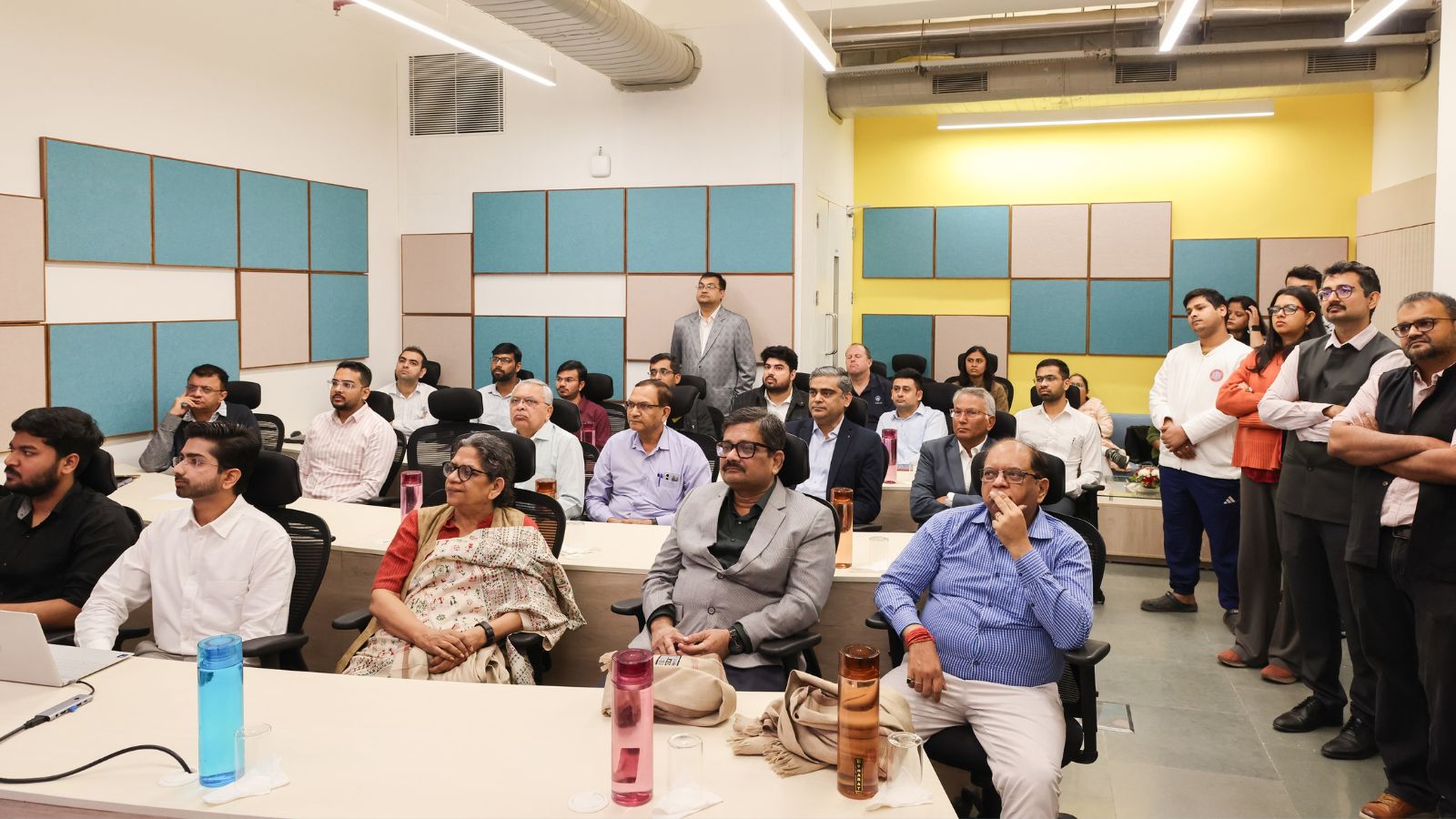
This vision for ARC AI Resilience Command Centre is to connect the dots from ‘Rain to Resilience’ by integrating flood forecasting, mobility impacts and operational decision support into a single physics-guided AI framework. The inaugural ceremony was attended by several senior government officials who also participated in the lamp lighting ceremony and shared their reflections on urban resilience and governance.

The guests included Dr Sangeeta Singh, Vigilance Commissioner of Gujarat; PC Vyas, Secretary, Water Resources Department, Government of Gujarat; PR Patelia, Secretary, Roads and Buildings Department; and MD Patel, Special Secretary, Water Resources Department.
By enabling anticipatory and coordinated responses, this AI-powered Centre will directly contribute to safer Indian cities, protect livelihoods and enable sustainable urban growth while advancing the broader vision of Viksit Bharat 2047.
The research team showcased how the ARC Centre would combine physics-consistent modelling and Artificial Intelligence to support real-time flood assessment, scenario analysis and decision support for urban systems. The session was supported by teams from the AICoE project and AIResQ ClimSols Pvt. Ltd.
The decision-support tools deployed at the centre are powered by AIResQ ClimSols Pvt. Ltd., an IIT Gandhinagar-incubated deep-tech company. These tools enable faster simulations, real-time flood prediction and ‘what-if’ scenario exploration, while maintaining a strong scientific foundation, mentions the press release.
Dr Vivek Kapadia, former Secretary, Government of Gujarat, and Professor of Practice at IIT Gandhinagar, spoke about the need for structured, technology-driven approaches to decision-making, drawing from his administrative and academic experience. Emphasising the role of scientific methods and automation in improving efficiency, he said, “We need to move towards data-backed and structurally sound decision-making instead of relying on ad hoc approaches. With the use of advanced computational tools and automation, processes that earlier took months can now be completed much faster.”
Story continues below this ad
Highlighting the importance of responsible deployment of technology, Kapadia noted that such tools should empower institutions and people alike. “This is not just an ambition; it is a collective dream—to build systems that are robust, inclusive, and capable of supporting better governance and development,” he added.
© IE Online Media Services Pvt Ltd
