
Artificial intelligence, digital public infrastructure and cybersecurity are no longer peripheral themes in governance—they are central to the architecture of national resilience. At a time when India is moving decisively from digital enablement to digital statecraft, the Ministry of Home Affairs stands at a critical intersection of technology, security and institutional capacity.
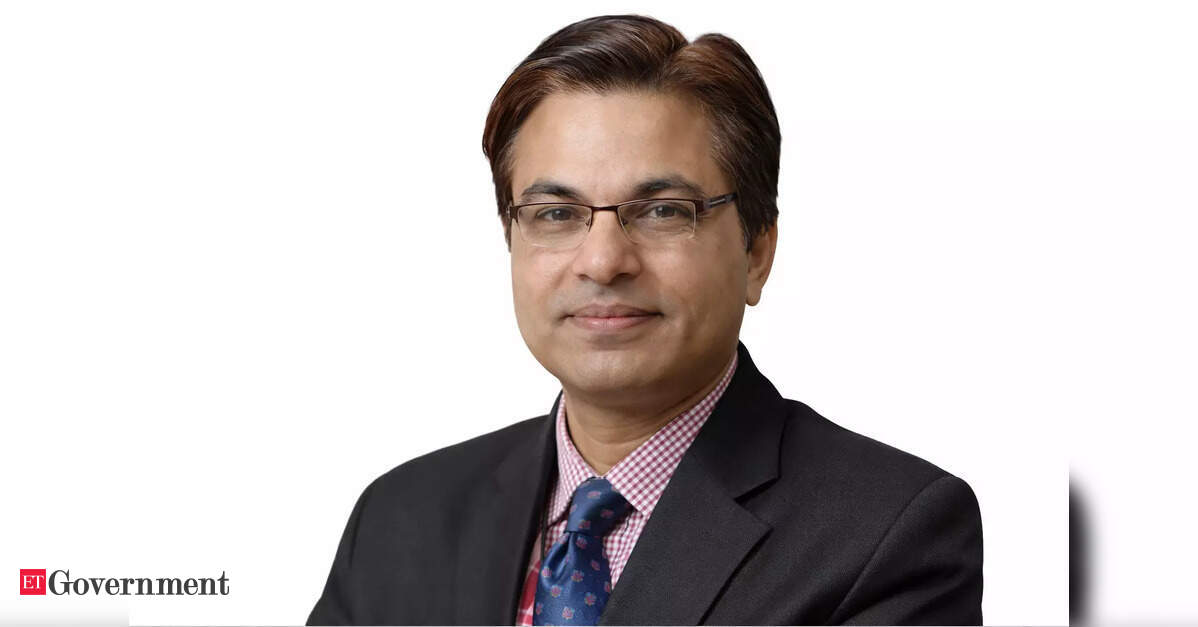
In this conversation with Anoop Verma, Dr. Rajendra Kumar, Secretary (BM-I, BM-II & FFR), Ministry of Home Affairs, Government of India, reflects on how AI is reshaping governance outcomes, strengthening internal security frameworks and reinforcing sovereign decision-making. He discusses the evolution of digital public infrastructure in the AI era, the imperatives of cybersecurity preparedness amid hybrid threats, the need for institutional safeguards in algorithmic governance, and the balance between innovation, accountability and national interest.
Dr. Kumar’s perspective situates technology not merely as a tool of efficiency, but as an instrument of strategic statecraft—one that must be guided by constitutional values, institutional resilience and a citizen-centric vision aligned with Viksit Bharat @2047.
Edited excerpts:
India is moving from digital enablement to digital statecraft. How do you see artificial intelligence reshaping governance outcomes rather than just administrative efficiency?
India’s transition from digital enablement to digital statecraft represents a structural shift in how the Government of India conceives, designs and delivers public policy. Technology is no longer seen merely as a back-office efficiency tool; it is now a strategic instrument of governance and national capability, aligned with the vision of Viksit Bharat @2047.
Artificial intelligence allows the Government to move from reactive governance to anticipatory, adaptive and proactive governance. By leveraging data intelligently, it becomes possible to forecast needs, target interventions more precisely and dynamically recalibrate policy design.
To reinforce this shift, the Government must focus on building indigenous compute capacity, creating high-quality datasets and establishing responsible AI frameworks. The objective is to ensure that AI strengthens sovereign decision-making rather than becoming an opaque layer of automation in service delivery processes.
Governments globally are experimenting with AI in service delivery, forecasting and regulation. What distinguishes India’s approach, especially in balancing innovation with democratic accountability?
India’s approach to AI governance is shaped by three interlinked characteristics.
First, population-scale governance. AI deployment in India must function across extraordinary scale, diversity and informality. That requires systems that are robust, explainable and inclusive, and capable of operating with offline or low-tech fallbacks. This imperative is central to the inclusive growth agenda of Viksit Bharat.
Second, Public Digital Infrastructure as the foundation. Unlike platform-centric or purely market-driven models, India has invested in open, interoperable and modular DPI that acts as a public good. The Government now needs to build a full AI stack as a DPI, enabling rapid development and deployment of AI use cases across sectors.
Third, democratic accountability by design. India’s constitutional commitments to due process, judicial review, parliamentary oversight and fundamental rights necessitate strong guardrails around AI deployment, particularly in areas such as health, education, public service delivery, security and regulatory enforcement.
Digital public infrastructure has become a cornerstone of India’s governance model. How can DPI evolve in the AI era without centralising power or excluding marginal users?
In the AI era, DPI should evolve from being merely a delivery framework to becoming a shared governance framework. That means moving away from overly centralised systems towards federated architectures. There must be a clear separation between identity, data and decision-making, along with consent-based data sharing.
Open standards are critical to promote competition, innovation and domestic capacity, while avoiding vendor lock-in. At the same time, inclusive design must remain a priority. Continued investment in multilingual and voice-based interfaces, assisted digital services and equitable access is essential to ensure that AI-enabled DPI narrows rather than widens India’s existing digital and socio-economic divides.
As AI systems begin to influence public decision-making, what institutional safeguards are necessary to ensure transparency, auditability and public trust?
As AI systems increasingly shape public decision-making, institutional safeguards must evolve accordingly. Transparency is fundamental. Citizens should have clarity on where and how AI is being used.
Strong audit mechanisms are equally important. Independent audits, impact assessments and version control systems help ensure that AI systems remain safe, reliable and accountable. Human oversight must be built into the system, with clearly defined points for review and override of algorithmic outputs.
Accessible grievance redressal mechanisms are also crucial. Citizens must have the ability to challenge decisions that are influenced by AI systems.
Cybersecurity is no longer a purely technical issue but a question of national resilience. How should governments rethink cyber preparedness in an age of AI-enabled threats and hybrid warfare?
Governments need to shift towards resilience-based preparedness. This includes continuous threat intelligence and predictive analytics, strong coordination across critical sectors such as defence, telecom, energy, finance and civil administration, and regular stress-testing of digital public infrastructure.
It is also important to build capacity within government institutions by developing in-house skilled professionals. Institutional continuity and memory are vital, and excessive reliance on external vendors can weaken that continuity. Ultimately, cybersecurity is not only about preventing attacks. It is about ensuring resilience and continuity of governance even under extreme stress, whether from cyber incidents or natural disasters.
India’s digital inclusion efforts have focused on scale and access. What should be the next phase to ensure meaningful inclusion, especially for women, rural communities and informal workers?
In line with the goals of Viksit Bharat @2047, the next phase must move beyond access and focus on meaningful, empowered participation. AI systems need to reflect women’s work patterns, informal livelihoods and rural realities. There must be a shift from device ownership to capability-building, including digital literacy, financial literacy and AI awareness. Strengthening community intermediaries such as self-help groups, local entrepreneurs and start-up ecosystems is also critical. Frontline workers can act as trusted digital bridges, ensuring that technology translates into real empowerment.
With the rise of algorithmic governance, how can the state prevent digital exclusion caused by language barriers, data bias or unequal digital literacy?
Algorithmic governance can unintentionally exclude citizens due to language barriers, biased datasets or uneven digital literacy. To address this, systems must provide multilingual and voice-based interfaces across Indian languages. Datasets should be diverse and representative to reduce bias. In addition, assisted or hybrid service models, where human support complements automated systems, can help ensure that no citizen is left behind.
Data is increasingly described as a strategic asset. How should governments strike a balance between data sovereignty, cross-border data flows and innovation-led growth?
Data sovereignty should be understood as sovereign control combined with calibrated openness. Governments must protect sensitive, personal and strategic data. At the same time, they should enable trusted cross-border data flows through adequacy frameworks and bilateral or multilateral agreements. It is equally important to foster domestic data ecosystems that support innovation, research, start-ups and MSMEs. The objective is to align sovereignty with growth rather than treating them as opposing goals.
India is emerging as a voice in global technology governance forums. What principles should guide India’s engagement on AI norms, cyber rules and digital cooperation?
India’s engagement in global technology governance should be guided by democratic legitimacy and a commitment to human-centric AI that prioritises transparency, accountability and safety. Developmental equity must remain central, especially given India’s position between advanced economies and the Global South. India can play a bridging role in shaping global AI, cyber and digital cooperation norms that are ethical, inclusive and practically implementable. India should also advocate civilian primacy in cyberspace.
How can public institutions build internal capacity to govern fast-moving technologies without becoming dependent on external vendors or opaque systems?
Governing fast-moving technologies requires sustained institutional capacity. Public institutions must invest in building in-house technical and specialist services, rather than relying excessively on vendors. Continuous learning frameworks are essential. Capacity building cannot be a one-time training exercise. Open-source adoption, modular and outcome-oriented procurement practices, and strong institutional memory can significantly reduce dependence on specific vendors or individuals. There is also a need to set up large-scale AI data centres to support long-term capability and self-reliance.
As private technology platforms play a growing role in public life, where should the line be drawn between collaboration and regulation?
Collaboration with private technology platforms is necessary for innovation and scale. However, regulation becomes essential wherever public interest, constitutional rights or national security are at stake. The line must also be drawn where market concentration harms competition or where accountability and public trust are weakened. The objective is not to stifle innovation, but to ensure that it operates within a framework that protects democratic values and national interests.
What does a “citizen-centric AI state” look like in practical terms, and how far is India from achieving that vision?
A citizen-centric AI state is one in which systems are built around citizen needs rather than departmental silos. Decisions are explainable and open to review or challenge. Technology strengthens dignity, choice and trust. India has already laid strong foundations through its digital public infrastructure, constitutional safeguards and the IndiaAI Mission. At this stage, achieving the vision of a citizen-centric AI state is less about technology and more about institutional culture, capacity building and sustained trust in public systems.