 “>
“>As Goa seeks to balance its enduring identity as India’s premier tourism destination with an ambitious push into high-value digital innovation, the state is charting a calibrated transition toward a knowledge-driven economy.
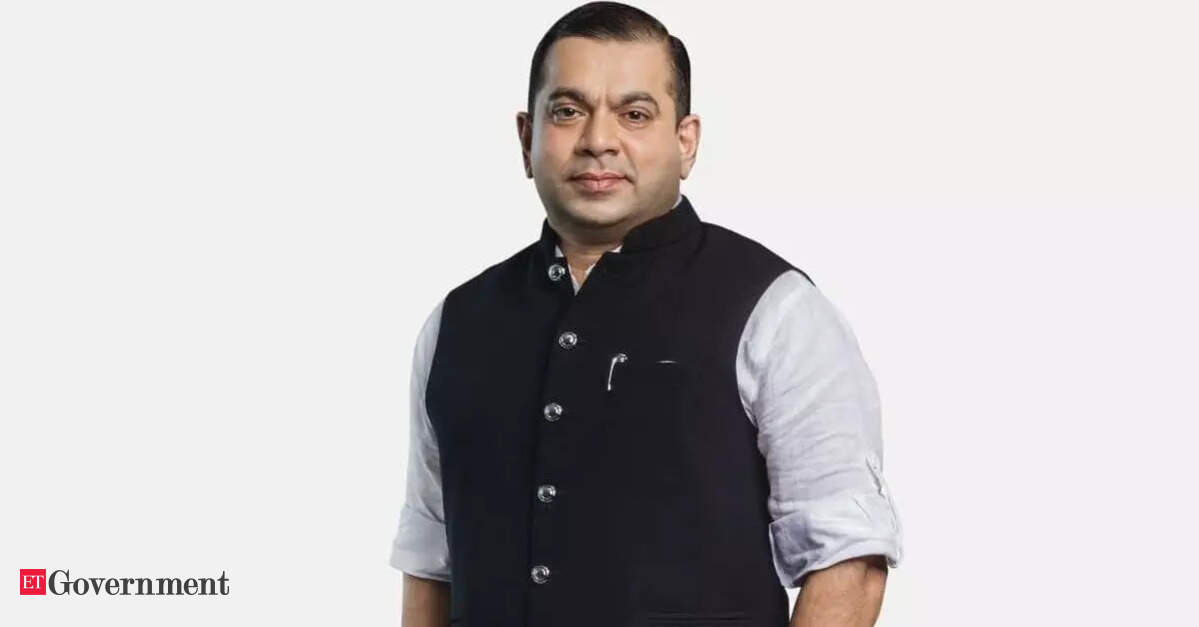
At the India AI Impact Summit 2026 in New Delhi, Rohan Ashok Khaunte, Minister for Tourism, IT, Electronics & Communications, Printing & Stationery, Government of Goa, outlined how the state is leveraging the national IndiaAI Mission to build capabilities in artificial intelligence, deep-tech, electronics manufacturing and digital governance—while preserving Goa’s cultural fabric.
In this conversation with Anoop Verma, Khaunte speaks about the Goa AI Mission 2027, Global Capability Centres, the Electronics Manufacturing Cluster at Tuem, satellite connectivity initiatives, AI-driven governance tools, and his broader vision of creating high-value, research-led employment in the state. He also addresses Goa’s evolving tourism strategy and his call for a structured policy conversation on regulating social media usage among minors.
Edited excerpts:
Goa is positioning itself as an emerging hub for AI and deep-tech under the national IndiaAI Mission. What strategic goals does the state hope to advance through its participation at the India AI Impact Summit 2026?
Goa has traditionally been known as a tourism destination. However, post-COVID, the narrative began to evolve. “Work from home” became “Work from Goa,” and gradually Goa started being seen as a serious destination for technology, research and innovation. In recent years, several enterprises—especially in research, development, innovation and the creative industries—have established operations in the state. Informally, Goa has already begun to emerge as a creative capital.
As Industry 4.0 and Artificial Intelligence become central to global discourse, we as a government must remain in tune with technological change. AI is not just a buzzword; it is transforming governance, industry and service delivery. That is why we launched the Goa AI Mission 2027. The mission focuses on three pillars: skilling and upskilling the workforce; enabling startups and companies—particularly in media tech, tourism tech, health tech and agritech—to scale; and establishing an AI Innovation Fund to support capital requirements.
The India AI Impact Summit gives us an opportunity to engage directly with industry leaders, understand their expectations, and explore collaboration. For a small state like Goa, collaboration is key. We aim to create new verticals, prevent brain drain, and ensure that our talented youth find meaningful opportunities within the state.
You have spoken about the Goa AI Mission with a target horizon of 2027. How does this align with the national IndiaAI Mission?
Today, the entire world is looking to invest in India. Under the leadership of the Prime Minister and the vision of Viksit Bharat 2047, technology, trade and tourism are central pillars.
If Goa can secure even a small share of the large-scale investments coming into India, it will significantly strengthen our economic base. Our focus is on skilling, building infrastructure, and integrating AI into governance. For example, we have recently introduced an AI-driven conversational chatbot to improve both G2C and B2B services.
Unlike larger states with abundant land and scale advantages, Goa must operate differently. Our key metrics are revenue per square metre and employment per square metre. We aim to attract high-value companies rather than pursue volume-driven expansion. The Summit is both a learning platform and a partnership opportunity for us.
Given Goa’s small but dynamic economy, how can platforms like this Summit help attract investment and partnerships?
Goa has already begun positioning itself through its IT and Startup Policies introduced in 2017. Post-COVID, the state witnessed a significant inflow of startups and creative professionals. Today, approximately 734 startups are registered with DPIIT in Goa, nearly 50 percent of which are women-led. We have consciously supported women entrepreneurs and strengthened the startup ecosystem.
Companies entering Goa have recognised the quality of talent available here—particularly English-speaking, highly literate professionals. While scaling and reskilling remain priorities, the foundational talent base is strong. Our policies are not government-driven in isolation; they are developed collaboratively with industry and academia. We do not seek mass industrialisation—we seek the best, high-quality enterprises that align with our long-term vision.
Goa recently signed an MoU with Starlink to enhance connectivity. What opportunities do you see from satellite internet partnerships?
Goa is geographically compact but diverse, with nearly 65 percent rural and 35 percent urban areas. While urban connectivity is strong, last-mile connectivity in villages requires strengthening. Satellite-based solutions like Starlink can enhance disaster management, coastal security, healthcare, education, agritech and port operations. However, implementation will depend on central approvals regarding spectrum and regulatory frameworks. In the future, satellite-based connectivity may become more viable than conventional cable infrastructure, particularly in geographically challenging areas.
The Electronics Manufacturing Cluster (EMC) at Tuem aims to attract advanced manufacturing. How is this ecosystem evolving?
The EMC at Tuem was conceptualised during my earlier tenure under the leadership of late Manohar Parrikar. Infrastructure is now in place, and companies in drone manufacturing, anti-drone systems and defence-related electronics are setting up operations. This ecosystem will follow a hybrid model—anchor industries alongside micro-enterprises that enable local participation. Priority is being given to employment for residents in the surrounding areas. Several AI-linked hardware and defence-tech companies are expected to commence production within the next year to eighteen months.
How is Goa building an AI talent pipeline?
We are aligning academic curricula with industry requirements. Universities and colleges are introducing specialised courses tailored to incoming industries. We are also encouraging companies to commit to apprenticeship programmes, enabling students to be industry-ready by the time facilities become operational. Skilling and reskilling will be sector-specific—health tech, media tech, tourism tech and other verticals will have customised training approaches. The objective is to create a targeted talent pool aligned with industry demand.
How is technology transforming tourism in Goa?
Technology is increasingly central to tourism management. From AI chatbots to digital helplines and the Goa Online platform, we are integrating services for greater convenience and safety. We have also launched app-based aggregators such as “Let’s Goa” to create a marketplace model for tourists. Today’s travellers—Gen Z, solo women travellers, digital nomads—have very different expectations. Technology allows us to cater to these evolving needs. Our goal is to enhance safety, convenience and experiential richness through digital tools.
What is your long-term vision for Goa by 2030 in AI, electronics and digital communications?
Goa has a population of roughly 1.5 million. We cannot compromise our cultural identity through unplanned expansion. Unlike large metropolitan hubs, our strategy is value-driven rather than volume-driven. We aim to create high-paying, knowledge-based jobs in areas such as R&D, creativity and deep-tech. Digital nomads, designers, innovators and GCCs are part of this future vision. We are actively exploring the establishment of Global Capability Centres with a strong emphasis on research, development and AI-driven innovation. Tourism and technology will remain twin pillars of our economy. Our objective is to transform Goa into a knowledge-driven economy while preserving its culture, heritage and identity.
How is Goa redefining its tourism narrative?
We are moving from “Sun, Sand and Sea” to a more diversified tourism model. We are adding spiritual tourism, sports tourism and digital nomad tourism to the mix. Our focus is on quality over quantity. We want tourists to stay longer—six nights instead of four for domestic travellers, and eleven to twelve nights for international visitors. Infrastructure projects such as digital museums, coastal circuits, rural tourism initiatives and women-led homestay policies are strengthening this transformation. Goa’s future lies in balancing tourism excellence with high-value technology-driven growth—preserving our cultural soul while building a knowledge economy.
You have recently spoken about regulating social media usage for children below 16. What prompted this initiative, and how do you see it evolving?
Digital addiction among children below 16 is a growing concern. We are examining social, psychological and cybersecurity risks associated with unregulated access to social media. Goa is forming a task force comprising government representatives, academia, PTAs and industry stakeholders to draft a policy framework. Since this is a central subject, we will engage with the Union IT Ministry for broader alignment. If demographic dividend is to remain an asset rather than a liability, responsible digital governance is essential.
What specific concerns is Goa addressing, and how does the state plan to approach regulation for children below 16 while aligning with national policy?
There are three primary risks we must address. The first is social risk, including cyberbullying and unhealthy online exposure. The second is psychological risk, where peer pressure and online validation create anxiety and emotional stress among adolescents. The third is cybersecurity risk, including identity theft, cloning and digital manipulation—risks that minors are often unable to fully comprehend.
If we fail to intervene, what should be a demographic dividend could gradually turn into a demographic liability. Therefore, Goa has initiated the process of forming a task force comprising representatives from government, academia, parent-teacher associations and industry stakeholders. The objective is to prepare a policy framework exploring ways to regulate or restrict social media access for children below 16.
We recognise that this is primarily a central subject. But states must begin the conversation. Countries like Australia have already taken steps in this direction, and some Indian states have initiated studies. Goa will engage with the Union IT Ministry to align our recommendations with national policy. The goal is not prohibition for its own sake, but responsible digital governance—ensuring that technology empowers rather than harms our youth.