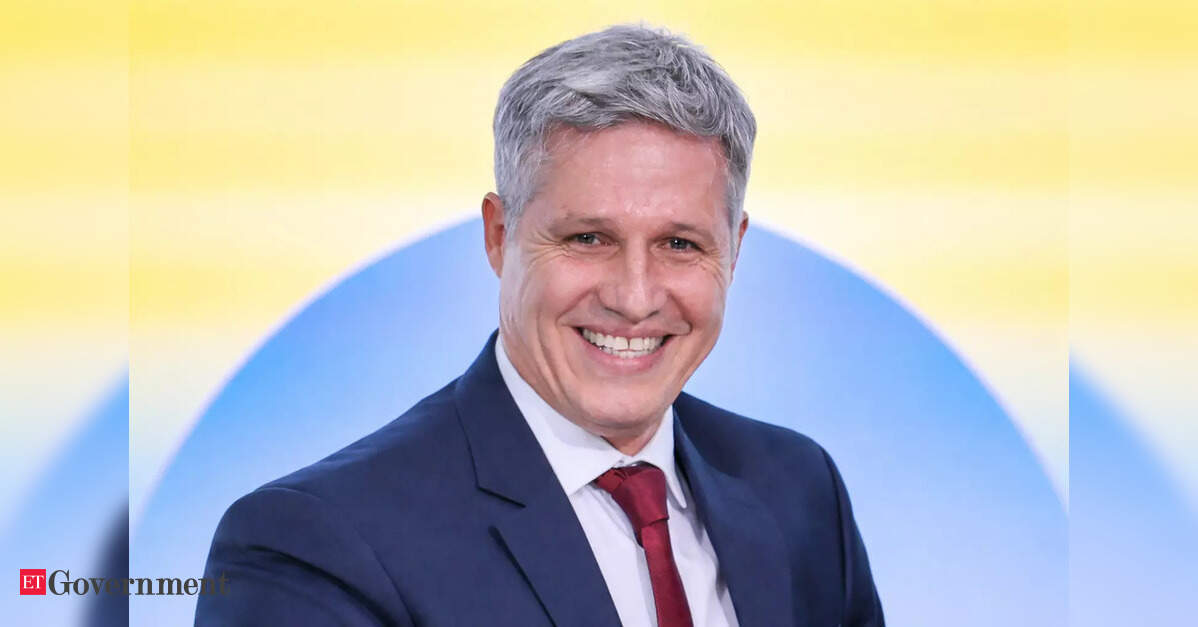
As Brazil deepens its strategic engagement with India during the state visit of President Luiz Inácio Lula da Silva, agricultural cooperation has assumed renewed strategic significance in the bilateral relationship.
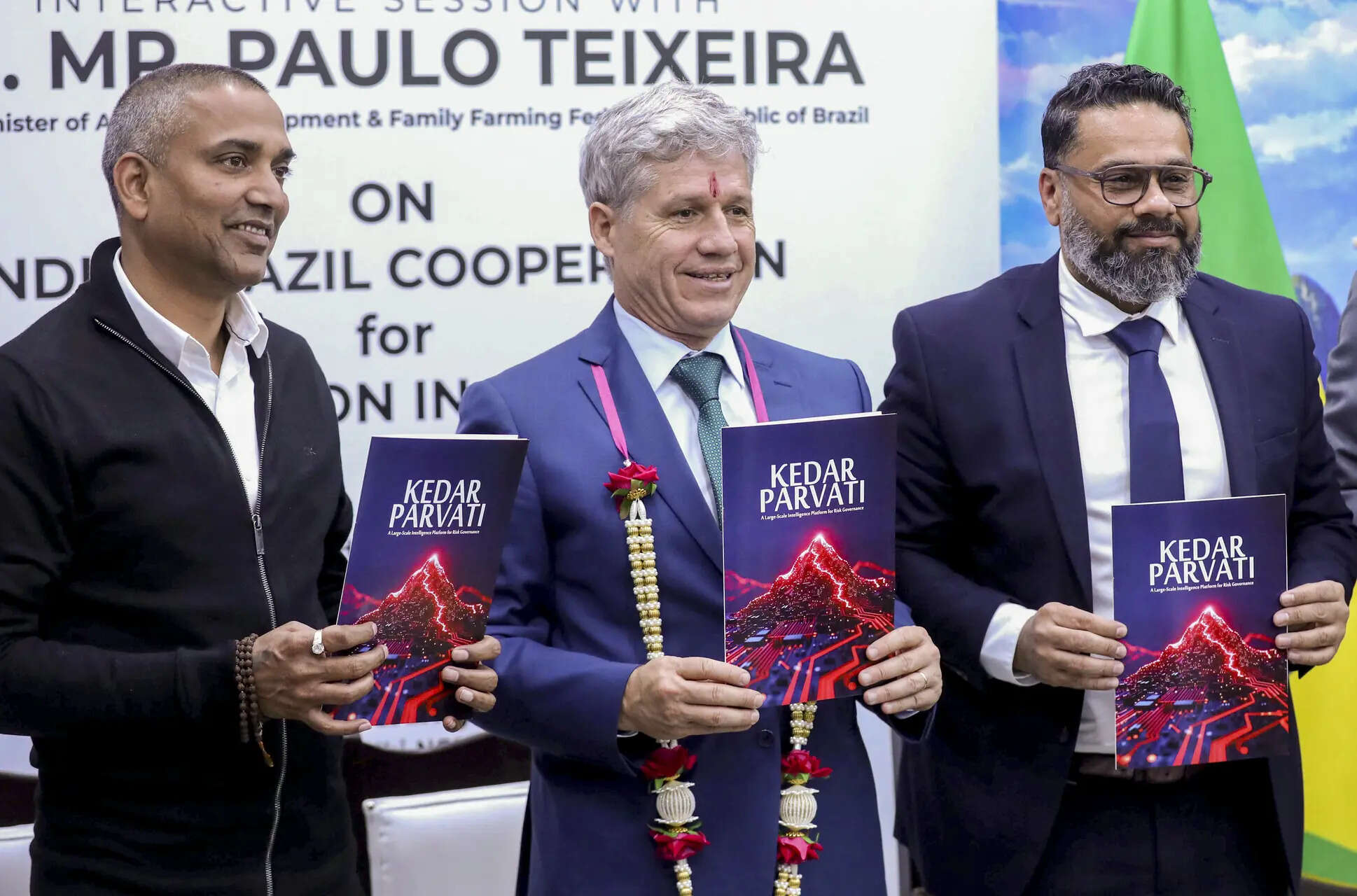
Against this backdrop, Paulo Teixeira, Minister of Agrarian Development and Family Farming, Government of Brazil, visited Leads Connect in Noida, where the company inaugurated its AI-Enabled Integrated Command Centre for Risk Intelligence (ICCRI) and unveiled KEDAR–PARVATI, an AI-powered large-scale intelligence platform designed for agricultural and climate risk management.
The launch, held in the presence of a high-level Brazilian delegation, underscored the growing convergence between India and Brazil in leveraging advanced technologies to strengthen food security, rural livelihoods, and climate resilience. As two major agricultural economies navigating global supply-chain pressures and environmental volatility, both countries are increasingly aligning policy frameworks with digital innovation to build sustainable, data-driven farming ecosystems.
In this interview conducted by Anoop Verma on the sidelines of the inauguration, Minister Teixeira reflects on Brazil’s evolving rural development model under President Lula, the balance between export-oriented agribusiness and family farming, and the transformative role of Artificial Intelligence in risk intelligence, value-chain stability, and inclusive agricultural growth.
Edited Excerpts:
As Minister of Agrarian Development and Family Farming, how are you redefining Brazil’s rural development model under President Lula’s renewed emphasis on social inclusion and food sovereignty?
President Lula’s central priority is clear: food security and food sovereignty for every Brazilian family. Our rural development model is built on ensuring that families—especially small and vulnerable farmers—have access to food, income, and dignity. Family farming is not only an economic activity; it is a social and developmental pillar. We are strengthening public policies that guarantee access to credit, technical assistance, markets, and institutional procurement, so that rural families can produce sustainably while ensuring food availability for the nation.Brazil is both an agricultural superpower and home to millions of family farmers. How do you balance export-driven agribusiness with inclusive rural farming?
Brazil’s agribusiness sector and family farming sector perform complementary roles. Large-scale agribusiness is heavily export-oriented and plays a crucial role in foreign trade and global food supply chains. Family farmers, on the other hand, are responsible for a diverse range of products that supply the domestic market and ensure food security.
President Lula’s approach recognises both sectors. We support agribusiness in maintaining Brazil’s global competitiveness, while simultaneously strengthening family farming through targeted public policies. Inclusive rural development means ensuring that smallholders are integrated into value chains and have access to technology and markets without losing their local and community focus.
President Luiz Inácio Lula da Silva is currently on a state visit to India. How do you see agricultural cooperation emerging as a strategic pillar in India–Brazil relations?
India and Brazil share many similarities as large agricultural economies with diverse production systems. India has strong capabilities in agricultural machinery, technical expertise, and emerging digital technologies. Brazil has advanced experience in tropical agriculture, biotechnology, livestock genetics, and plantation science.
There is significant potential for technology exchange and joint innovation. For example, Brazilian companies are working with Indian partners in livestock genetics, including embryo technology. This is a mutually beneficial relationship—India and Brazil can combine their comparative advantages to strengthen food production, sustainability, and market integration in both countries.
India is making a major push in Artificial Intelligence, including applications in agriculture. You witnessed the AI-enabled platforms at Leads Connect, including the launch of KEDAR–PARVATI. How do you see India–Brazil collaboration in AI for agriculture?
Artificial Intelligence represents a very important stage in global agricultural development. Brazil and India can benefit greatly from exchanging knowledge and technological expertise in this field. The demonstration at Leads Connect showed how AI can integrate satellite intelligence, financial risk modelling, and advanced analytics into one unified system. Such platforms can improve crop monitoring, climate risk forecasting, and financial inclusion for farmers. If we collaborate, sharing data, research, and technical capacity, both countries can accelerate innovation and build more resilient agricultural systems.
The KEDAR–PARVATI platform integrates satellite intelligence, financial risk modelling, and AI-driven analytics. How do you see such systems contributing to climate-resilient farming and value chain stability in Brazil?
Systems like this are important because agriculture today depends heavily on accurate information. Climate variability, market fluctuations, and financial risks all affect farmers’ livelihoods. If we can absorb and adapt these technologies into our agricultural ecosystem, we can enhance risk management and improve decision-making.
Brazil already has strong agricultural research institutions and data systems. Integrating advanced AI platforms can strengthen early-warning systems, improve planning, and support sustainable value chains. Technology must serve farmers, reduce vulnerability, and stabilise production and markets.
During your visit to India, are you engaging with Indian ministries and institutions? What are your expectations from these meetings?
We are holding meetings with Indian counterparts, including agricultural and technology institutions. Our objective is to propose structured cooperation frameworks between India and Brazil in agricultural research, technology exchange, and innovation partnerships. We are particularly interested in expanding collaboration in areas such as tropical agriculture, sustainable value chains, digital advisory systems, and family farming development. We believe this visit can lay the groundwork for long-term institutional cooperation.