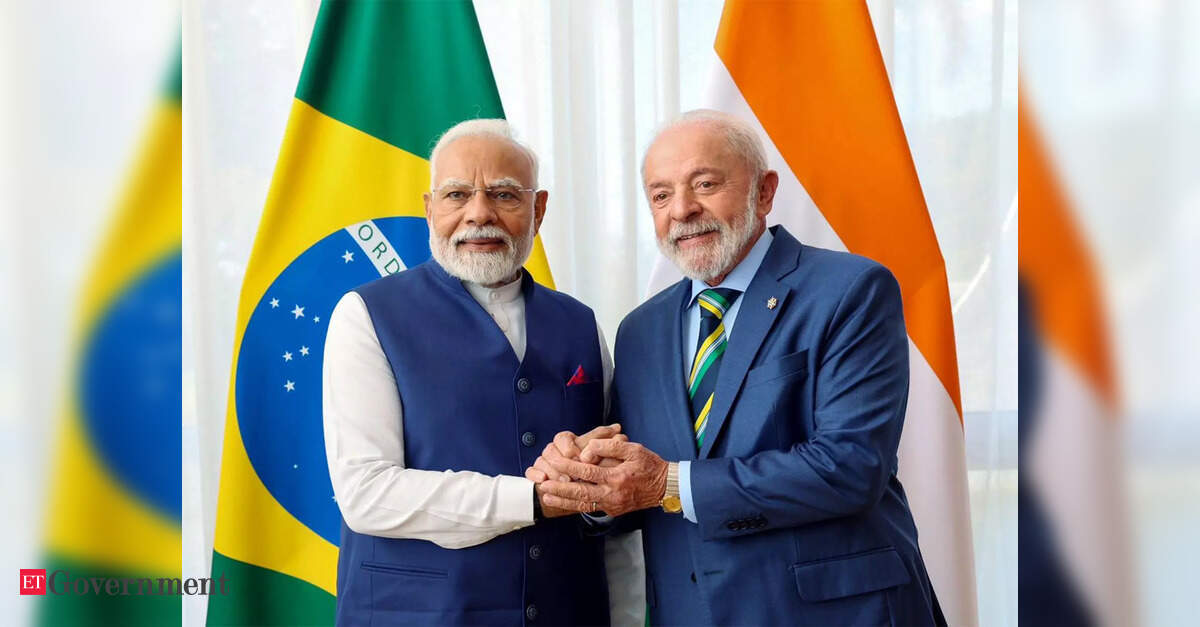
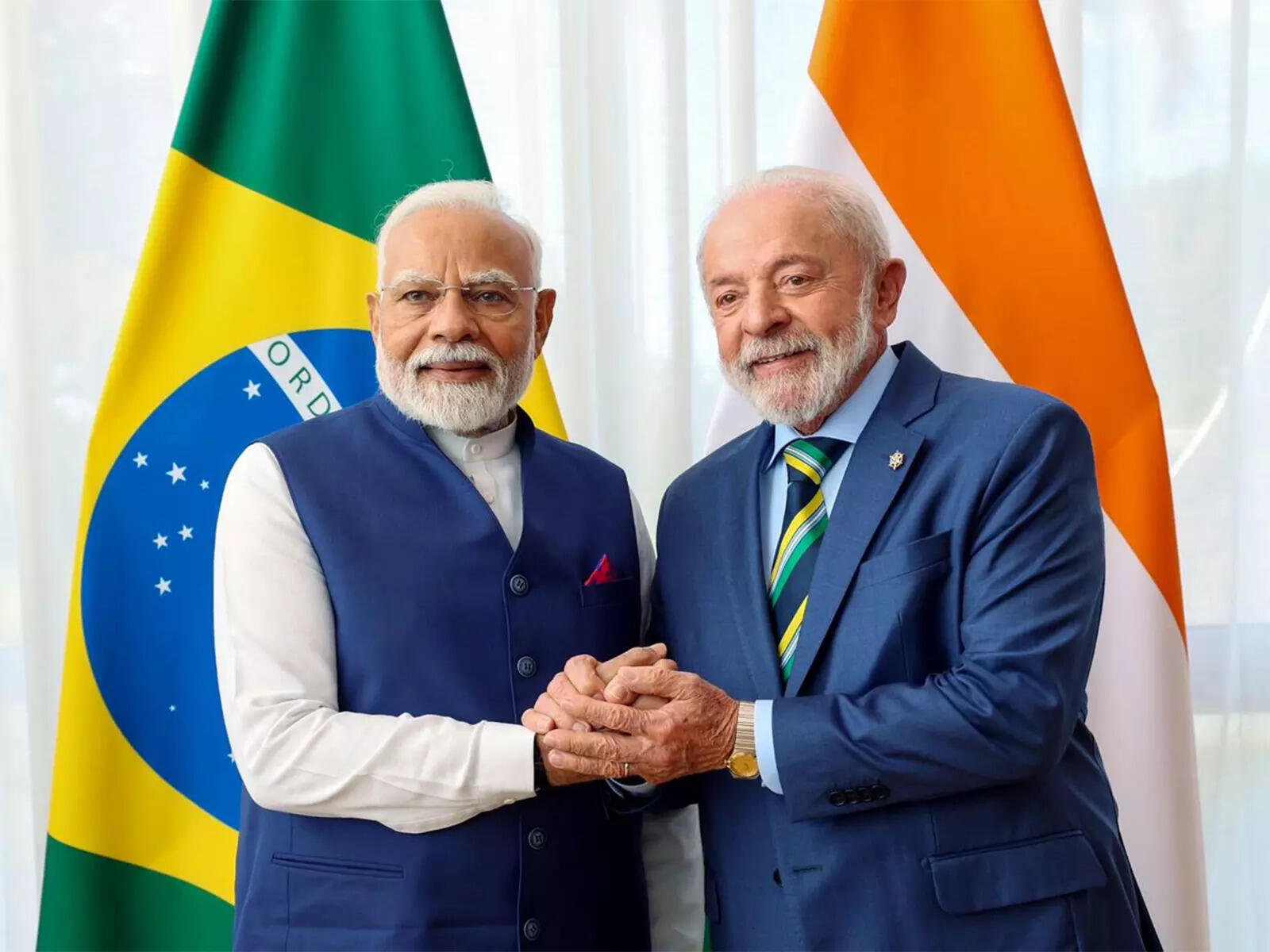
India and Brazil on Saturday signed a series of agreements spanning digital technology, critical minerals, defence, health and trade, signalling a major expansion of their 20-year-old Strategic Partnership and setting the stage for deeper economic and geopolitical coordination.
Addressing the media after delegation-level talks, Prime Minister Narendra Modi and Brazilian President Luiz Inácio Lula da Silva underscored their commitment to strengthening supply chains, accelerating energy transition cooperation and amplifying the voice of the Global South in global governance.
Digital partnership and emerging technologies
Among the key outcomes was a Joint Declaration on Digital Partnership for the Future, covering cooperation in digital public infrastructure (DPI), artificial intelligence, supercomputing, semiconductors and blockchain.
Brazil is working towards establishing a Centre of Excellence for Digital Public Infrastructure, with both sides emphasising that technology must be inclusive and serve shared development goals.
Critical minerals and industrial supply chains
The two countries signed an MoU on rare earths and critical minerals, as well as another on cooperation in mining for the steel supply chain. The agreements aim to build resilient and diversified supply chains for strategic sectors, including renewable energy and advanced manufacturing.
Both leaders described the critical minerals pact as a major step towards strengthening long-term industrial security and reducing vulnerabilities in global supply chains.
Energy transition and biofuels
Energy cooperation emerged as a central pillar of the talks. The two sides agreed to deepen collaboration in hydrocarbons, renewable energy, ethanol blending and sustainable aviation fuel.
Brazil’s active role in the Global Biofuel Alliance was highlighted as reflecting a shared vision for advancing biofuels in the global climate and energy agenda.
Health and pharmaceutical collaboration
India and Brazil also moved to expand cooperation in pharmaceuticals and healthcare. An MoU between Brazil’s health regulator, ANVISA, and India’s Central Drugs Standard Control Organisation (CDSCO) aims to strengthen regulatory alignment and facilitate greater access to affordable, high-quality medicines.
The partnership will focus on vaccines — including tuberculosis — oncology treatments, immunosuppressants and medicines for rare and neglected diseases. Cooperation in smart hospital systems and the expansion of Ayurveda and traditional medicine in Brazil were also discussed.
Both countries reiterated their long-standing coordination at the World Health Organisation in defending equitable access to generic medicines.
Agriculture and food security
In agriculture, the two nations agreed to collaborate on climate-resilient farming, precision agriculture, biofertilisers and integrated farming systems. A Centre of Excellence in Brazil focusing on oilseeds, pulses and integrated farming is expected to support food security objectives.
Defence cooperation
Defence ties are set to deepen further. Brazil’s aeronautical industry has expanded its presence in India, and a trilateral arrangement involving Mazagon Dock and the Indian and Brazilian navies will support maintenance activities for Scorpene-class submarines and other vessels.
Both leaders reaffirmed that growing defence cooperation reflects mutual trust and strategic convergence.
Trade momentum and new targets
Bilateral trade crossed $15 billion in 2025 for the first time, marking a 25 per cent increase over 2024. The two sides reiterated their earlier target of $20 billion by 2030, while also signalling that the goal could be revised upward to $30 billion.
An MoU on e-certificates of origin under the India–Mercosur Preferential Trade Agreement was signed to facilitate trade. Both leaders also expressed support for expanding the India–Mercosur trade framework.
To boost people-to-people ties, the validity of tourism and business visas will be extended from five to ten years. The Brazil–India Economic Forum, bringing together around 600 private-sector representatives, is expected to identify new investment and trade opportunities.
Taking forward the Global South agenda
On the geopolitical front, India and Brazil reaffirmed their commitment to multilateralism and reform of global institutions, particularly the United Nations Security Council. Both countries reiterated their support for expanding permanent and non-permanent membership to represent the Global South better.
The leaders also stressed the need for dialogue and diplomacy in resolving global conflicts, condemned terrorism, and called for strengthening global governance mechanisms to reflect contemporary realities.
Describing India and Brazil as partners with similar developmental challenges and complementary strengths, both leaders said closer coordination would help prevent renewed global polarisation and reinforce the role of developing nations in shaping a more balanced international order.