 “>
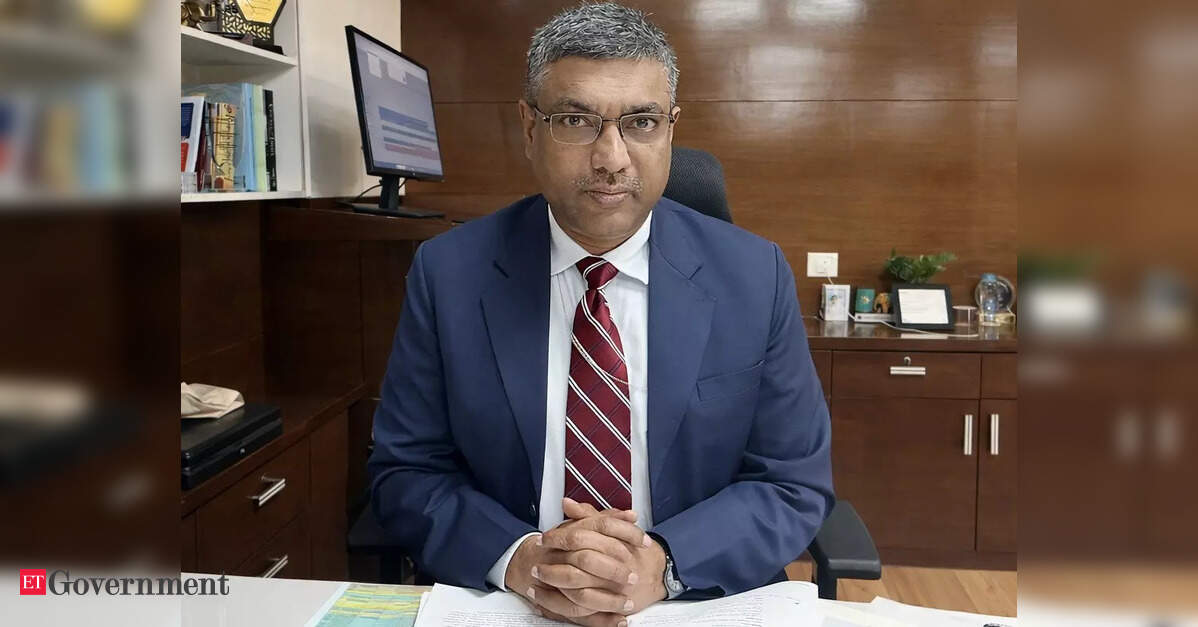
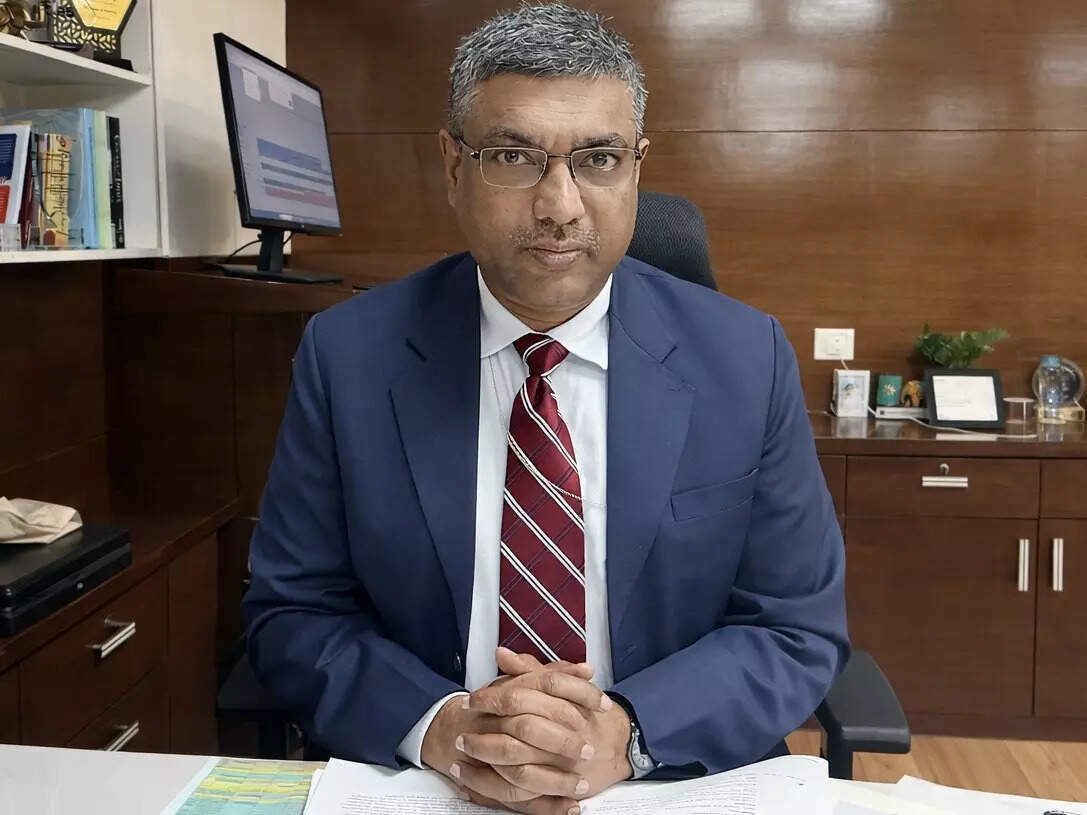
“>As India consolidates its position in the global artificial intelligence landscape, the recently concluded India AI Impact Summit 2026 marked a pivotal moment in the country’s technological statecraft. Held from 16 to 20 February in New Delhi, the Summit brought together policymakers, industry leaders, multilateral institutions, researchers, and youth from across the world to deliberate on sovereign AI, digital public infrastructure, responsible innovation, and global cooperation.At the centre of this ambitious exercise was S. Krishnan, Secretary, Ministry of Electronics and Information Technology, Government of India, who has been steering the policy architecture of the IndiaAI Mission and the broader digital transformation agenda. In this conversation with Anoop Verma, he reflects on the Summit’s concrete outcomes — from the endorsement of a widely supported global declaration to investment commitments in compute and data centres — and outlines how India intends to translate high-level deliberations into executable policy.
He also articulates India’s strategic positioning in a rapidly evolving AI ecosystem shaped by geopolitical competition, underscores the country’s strengths in compute, models, data and use-case innovation, and explains why he believes the Summit’s most enduring legacy lies in the democratisation of AI — bringing youth, students and citizens into a conversation that was once confined to closed rooms of experts and CEOs.
Edited excerpts:
The India AI Impact Summit 2026 brought together global policymakers, technology leaders, and multilateral stakeholders. From the Government of India’s perspective, what are the three most concrete outcomes of the Summit?
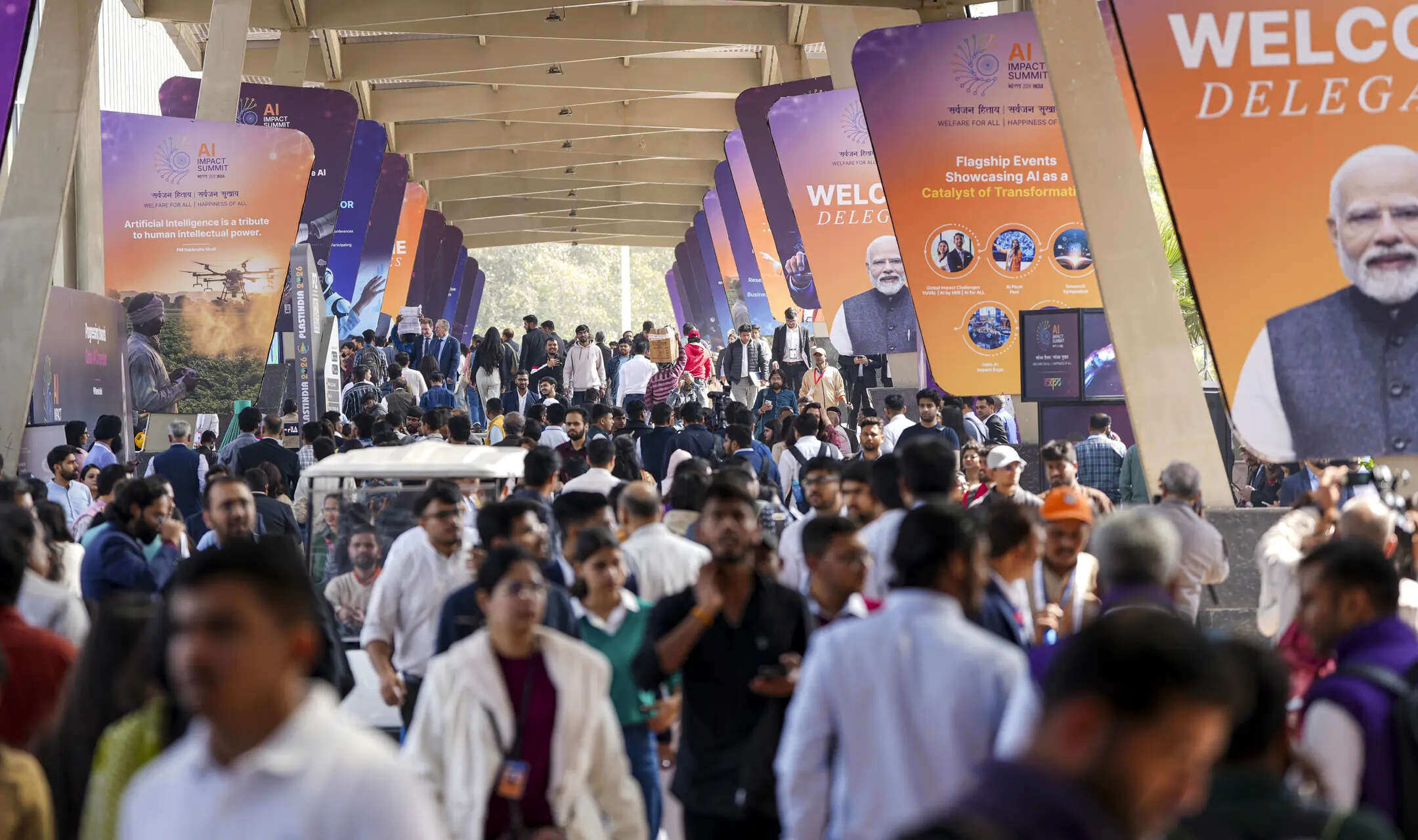
The first and most concrete outcome was the endorsement of the Summit Declaration by 89 countries and international organisations. This is significant for two reasons: the total number of signatories was far higher than in previous instances, and several countries that had earlier not agreed to sign such declarations chose to do so this time. The fact that major powers — including the United States, China, the United Kingdom, France and Brazil — endorsed the declaration marks a substantial achievement.Second, the Summit produced concrete outputs through working groups and compendia. These included guidelines on safety, use-case compendia, and the concept of a global commons for AI. These are practical resources that countries can rely upon as they build their own AI ecosystems. Third — and perhaps most important — was the scale and inclusiveness of participation. Youth, students and participants from across India had the opportunity to directly engage with and listen to some of the best global minds in AI. That level of outreach was unprecedented.
Several global AI pioneers and world leaders participated in the deliberations. Did the Summit result in any structured bilateral or multilateral AI cooperation frameworks that India will now pursue?
There were extensive exchanges and a broad consensus on several key issues. The Declaration itself creates a strong foundation for future cooperation. In addition, the semiconductor and reliable supply chain partnership signed with the United States adds India to a group of countries committed to building resilient AI and semiconductor ecosystems. Without semiconductors, there can be no AI, so this is a critical development. On the sidelines, numerous bilateral meetings, joint statements and memoranda were signed with various countries. These will form the basis for deeper collaboration going forward.
India has consistently framed AI as sovereign digital infrastructure, akin to highways or electricity. Did the Summit advance India’s roadmap for sovereign compute, foundational models, and national AI cloud capacity?
Compute and data centre capacity are fundamental. India currently faces a shortage relative to the volume of data generated domestically. If adequate capacity is not built within the country, data will inevitably be stored elsewhere. Compute infrastructure must work alongside data centres. Investments in this space were announced both prior to and during the Summit, and more are expected. Expanding data centre and compute capacity will be a crucial component of India’s sovereign AI strategy.
How does MeitY intend to translate the Summit’s deliberations into executable policy within the IndiaAI Mission framework? Are there defined milestones or timelines emerging from the event?
There is a clearly identified list of follow-up actions. We will proceed in a time-bound manner, providing funding support where necessary under the IndiaAI Mission framework. The Prime Minister instructed senior officers across ministries to visit the Summit Expo and identify areas where AI can be applied within their respective domains. That exercise itself will yield actionable pathways.
We are also examining orchestration-layer models such as the AI framework demonstrated in the Amul cattle use case. Building a structured orchestration layer could enable scalable adoption across sectors. Follow-up will also include implementation of working group recommendations, grounding investment announcements, and operationalising Declaration commitments.
The Summit witnessed strong participation from Global South countries. Is India positioning itself as a coordinating platform for AI capacity-building among developing nations?
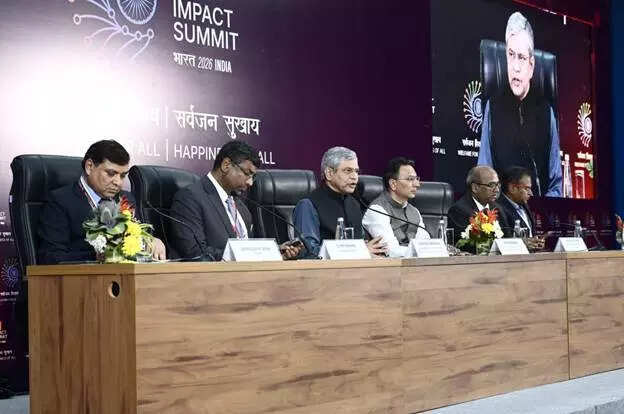
India has already taken leadership in AI capacity-building. During the UN General Assembly process, India volunteered an institution to anchor a network of Centres of Excellence in AI. IIT Madras hosted the subsequent meeting, and further meetings have taken place, including in Dakar, Senegal. This network-building effort was also discussed at the Summit and will remain a key pillar of India’s international engagement.
Digital Public Infrastructure has been India’s strategic differentiator. How will AI be embedded into DPI layers such as identity, payments, health, agriculture, and language technologies following the Summit?
DPI generates vast transactional data. By analysing and leveraging this data, AI can create new applications and enhance efficiency. AI can function as an intelligent layer riding atop DPI systems — making them more effective, faster, and capable of delivering better insights for governance and service delivery.
Discussions around responsible AI and governance were central themes. Is India considering a principles-based AI regulatory architecture, or will it rely on sectoral guidelines and executive frameworks?
Our current focus is on enabling innovation. Immediate regulation is not considered necessary in the Indian context. Existing frameworks are adequate for now. As and when the need arises, we will step in with appropriate regulatory measures. For the present, innovation must be given sufficient space.
With the global AI landscape increasingly shaped by the US–China technology rivalry and the evolving EU AI Act, how does India envision its strategic positioning?
 “>
“>AI fundamentally requires three inputs: compute, models and data. India now possesses all three. We have built significant compute capacity under the IndiaAI Mission, more is coming online, indigenous models are emerging, and India has large and diverse datasets. India’s comparative advantage lies in use-case development. With our STEM talent pool, this moment can resemble the Y2K era — where India became indispensable to the global digital economy. India has the potential to become the “use-case capital of the world,” playing to its strengths rather than replicating other models.
What progress has been made on AI skilling and workforce development?
Skilling is occurring at multiple levels. IT professionals are being reskilled through collaborations such as the NASSCOM FutureSkills Prime programme. Graduates entering the job market are being supported to acquire AI competencies. At the higher education level, the Ministry of Education is working on broad AI curriculum integration. At the school level, AI learning has been introduced from early classes. The objective is to build a fully AI-ready workforce.
Were there investment commitments—either domestic or international—announced or discussed during the Summit for AI data centres, semiconductor capacity, or advanced research ecosystems?
A significant investment appetite is visible. Microsoft, Google, AWS and others announced or reaffirmed investments. Indian conglomerates including Reliance, Adani and Tata have also indicated substantial investments across the AI stack. Telecom operators are investing as well. Collectively, this represents a strong vote of confidence in India’s AI and digital infrastructure ecosystem.
All the states and UTs actively participated. How does MeitY plan to harmonise state-level AI strategies with national objectives?
AI-related legislative and policy frameworks will be anchored at the national level, consistent with the Constitutional framework. However, it is encouraging that states are proactively launching AI initiatives. We are supporting them through AI Centres of Excellence, compute resources, datasets and AI tools. There is strong coordination and no structural disharmony.
Looking ahead to Viksit Bharat 2047, what institutional reforms—whether in skilling, research funding, public procurement, or regulatory architecture—are now being prioritised as a direct consequence of the Summit?
The Summit clarified both global developments and India’s own potential. India’s greatest asset is talent and skill. Capital constraints are being addressed through growing investment flows. We must build technological capability while judiciously leveraging foreign technology where necessary to accelerate domestic development.
If you were to define the legacy of the India AI Impact Summit 2026 in one strategic sentence, what would it be?
The Summit truly democratised AI. Unlike earlier global AI gatherings confined to small rooms of CEOs and experts, this Summit brought students, youth and common citizens into the conversation — giving them direct access to the world’s leading AI thinkers. That inclusive outreach is its defining legacy.