

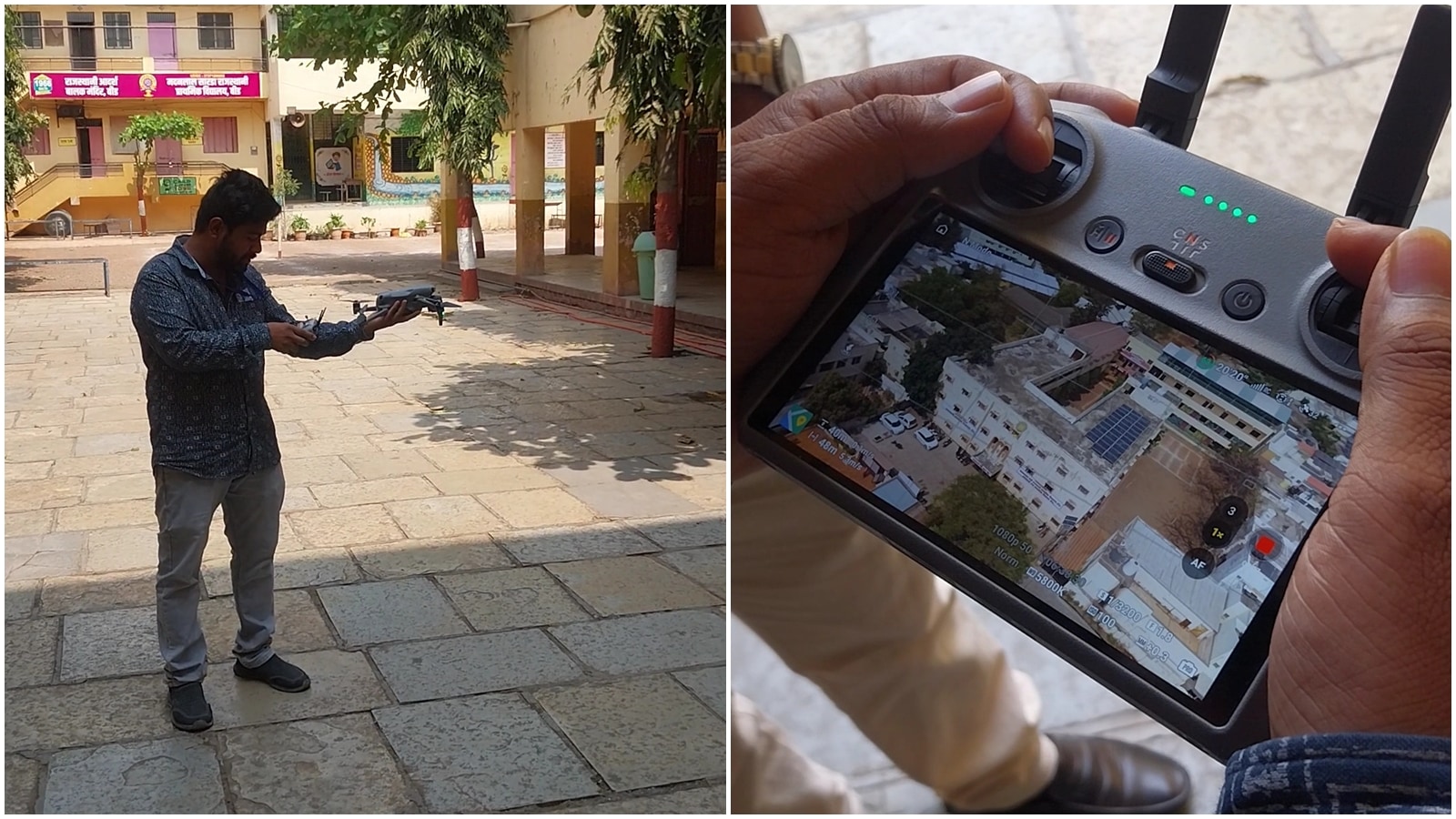
Behind the drone footage of people scurrying away from an exam centre in Chausala village of Maharashtra’s Beed district a fortnight ago, lies a story. Of a region’s attempt to shed its image as the ground zero of mass-copying attempts in the state, and of the deployment of drones as the latest measure to check them.
February 10 was the first day of Class 12 Maharashtra State Board exams, the paper was English, and the drone captured people attempting to pass answer chits through windows at the Chausala centre, before they rushed away on noticing the whirring device above. After a probe, an FIR was registered against 17 people, including the staff at the exam centre, who were replaced.

In the past three years, 44% or nearly half of all copying cases during Class 12 and Class 10 Maharashtra State Board exams have been reported from the board’s Chhatrapati Sambhajinagar division, which covers Beed along with Chhatrapati Sambhajinagar, Jalna, Parbhani and Hingoli districts – comprising almost the entire Marathwada region.
While Parbhani topped in the number of copying cases in this period, Beed has reported more organised attempts.
To counter this, the Beed district administration implemented several measures ahead of the 2026 state board exams including, for the first time, drone surveillance. District School Education Department officials say they signed up with a service provider for two drones with a range of 15-km each, along with professionals to operate them, to be used on exam days.
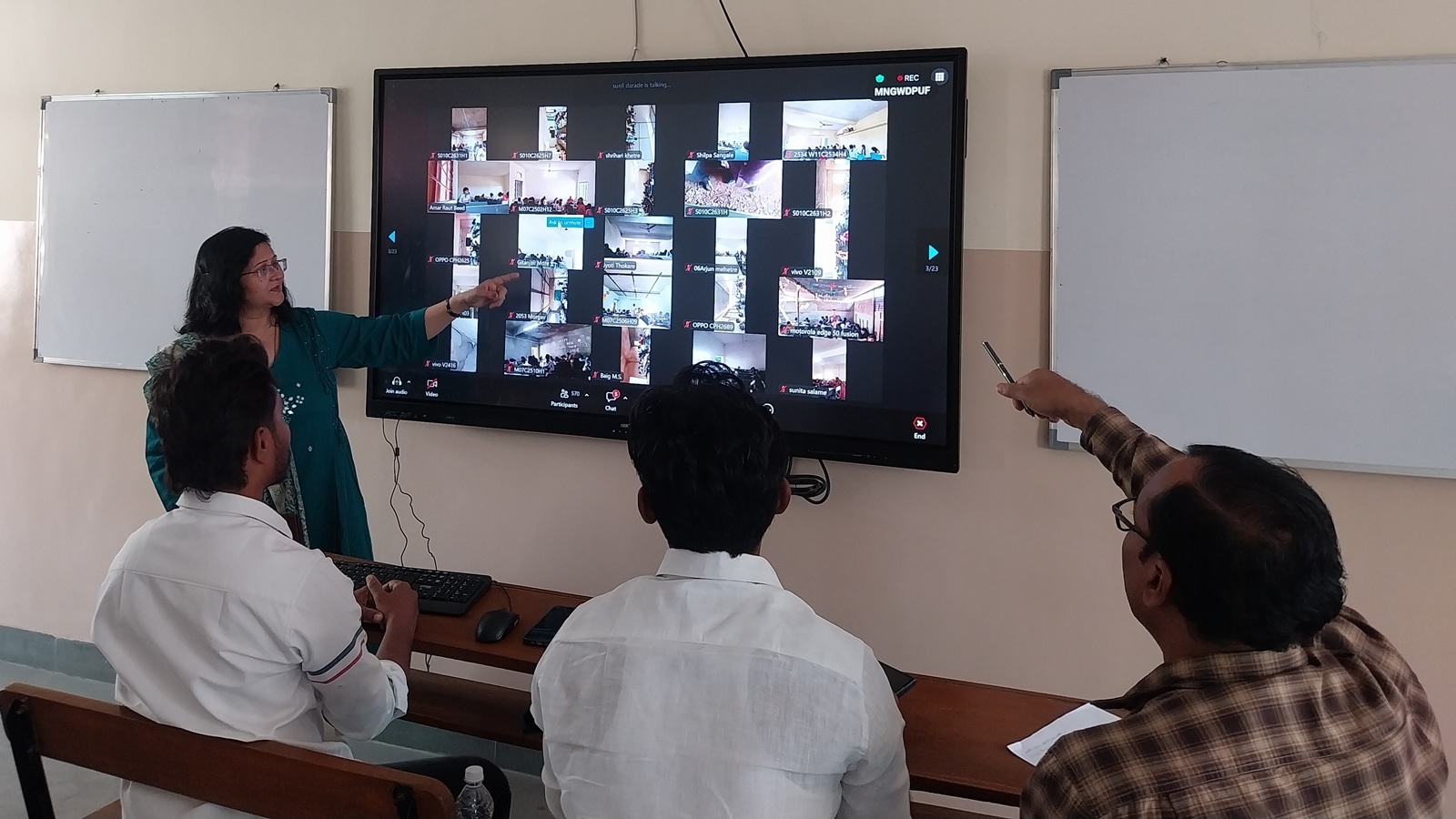 Inside the drone surveillance centre where officers of Maharashtra State Board of Secondary School Certificate monitor video footage of an exam centre captured by a drone. (Express photo by Pallavi Smart)
“The devices discourage people from coming near exam centres,” says District Collector Vivek Johnson, who heads the district vigilance committee for the exams. While the focus is on “sensitive” centres known for cheating attempts, there is also random checking of exam centres based on inputs from officials.
Officials say this is particularly true of exam centres in rural parts, which are often located in the midst of large fields, making it easier for outsiders to approach them – like the exam centre at Chausala.
Story continues below this ad
Beed zilla parishad Chief Executive Officer Jithin Rahman says: “Often, people climb up buildings or do similar things to pass chits. Now, as a drone camera captures them, we immediately dispatch teams for a detailed investigation.”
While the Maharashtra government first considered deploying drones to check copying ahead of last year’s state board exams, Beed and Chhatrapati Sambhaninagar are the first districts to implement the same.
Priyarani Patil, Education Officer (Secondary) at Beed, who is overseeing the anti-copying measures taken by the district administration, says that drones also minimise the chance of news about inspections leaking to the exam centre, which would happen in the case of flying squads. “Drones with a good range give us the edge of a surprise element,” Patil says.
While another precautionary measure are CCTV cameras, required in all exam centres as per a state board directive, in the case of Beed, their footage is being live-streamed.
Story continues below this ad
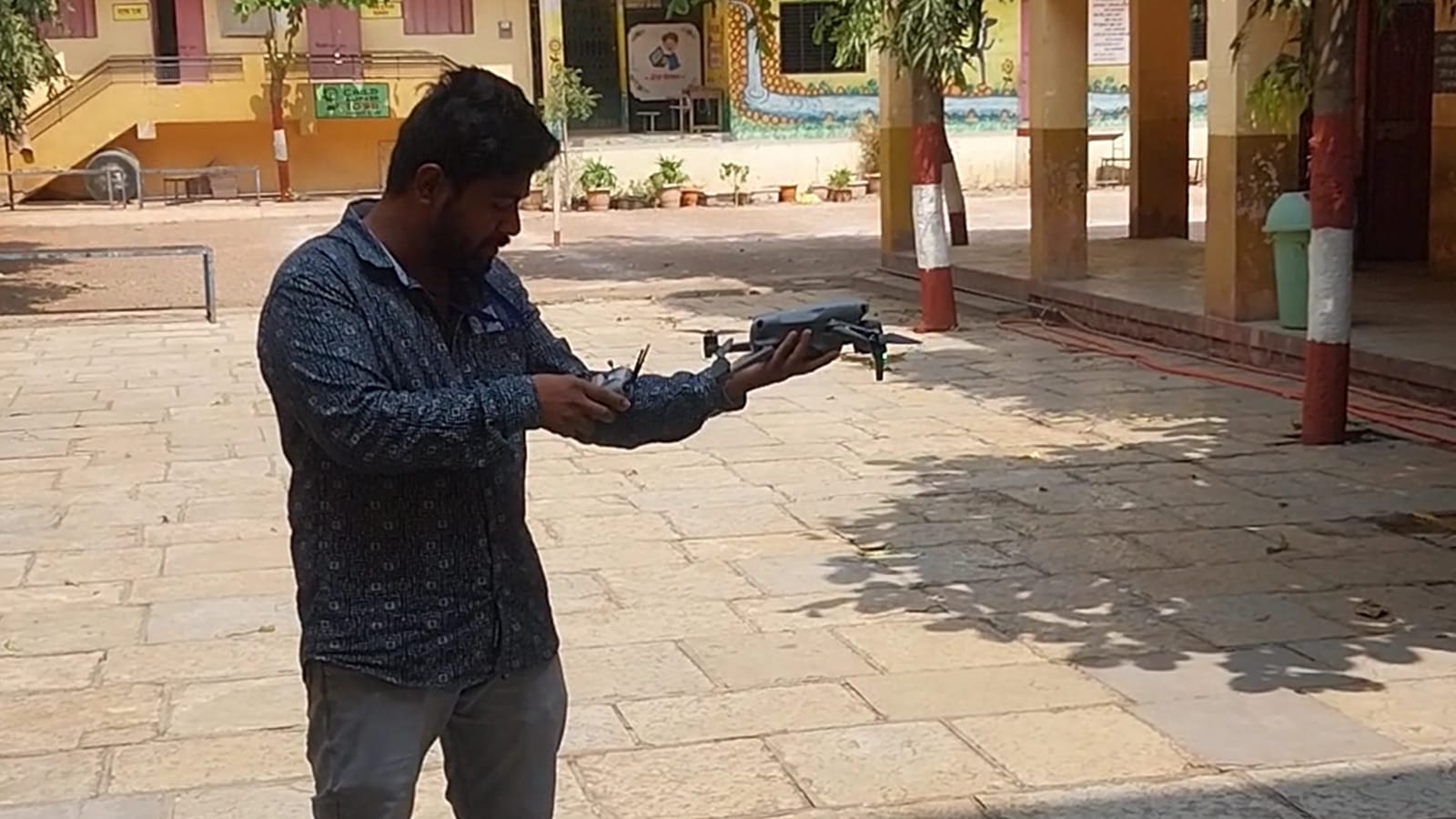 An officer operates a drone outside an exam centre in Beed on the first day of the SSC (Class 10) exam in Maharashtra on February 20. (Express photo by Pallavi Smart)
Overseeing the control room in Beed city which constantly monitors the footage coming from approximately 1,000 centres, Patil says the measure has proved a game-changer. “We can detect any suspicious activity real-time, such as a disconnected view, or an incorrect camera angle. A call is immediately made to the head of the centre to correct the same.”
Patil estimates that 95% of the exam centres in Beed this time have CCTVs. Where technical limitations make livestream access difficult, monitoring is being done over Zoom calls to invigilators.
Milind Turukmare, a Development Officer in Beed’s School Education Department, says: “The 11 talukas under Beed district have been divided into four groups, and officials appointed to monitor video footage on Zoom windows of every group.”
While residents in Beed welcome the measures, experts point to the deep-rooted reasons behind copying which also need to be countered. A majority of the population in the drought-prone, underdeveloped district, for example, comprises sugarcane field workers, with children often skipping school to work along with parents.
Story continues below this ad
An official from the School Education Department cites instances of parents physically opposing strict vigil during board exams in Beed, or bribing invigilators. The official recalls one case of angry parents stoning an exam centre.
The aggressive political rivalry in the district is also a factor, according to a local activist. “Most schools and colleges are run by trusts linked to influential political families, each wanting to run down the other (by tipping off officials on cheating).”
A schoolteacher says that given the reputation Beed has come to acquire, over the years, schools and junior colleges in the district have been luring students promising “good results”. This has further skewed cheating numbers against the district, the teacher says.
