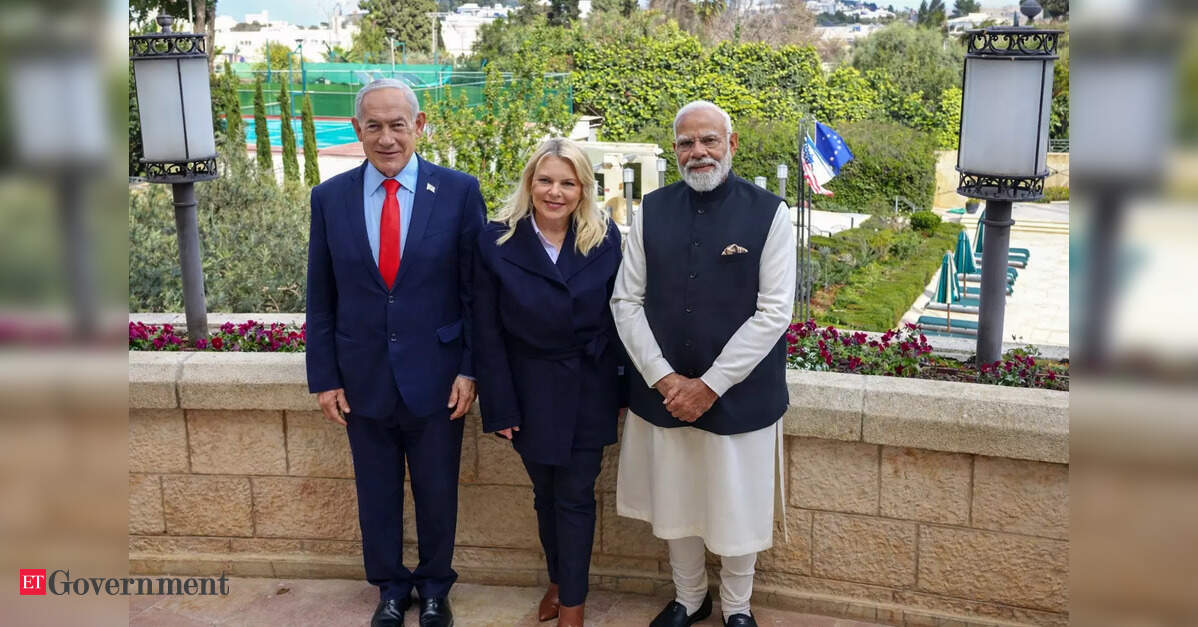
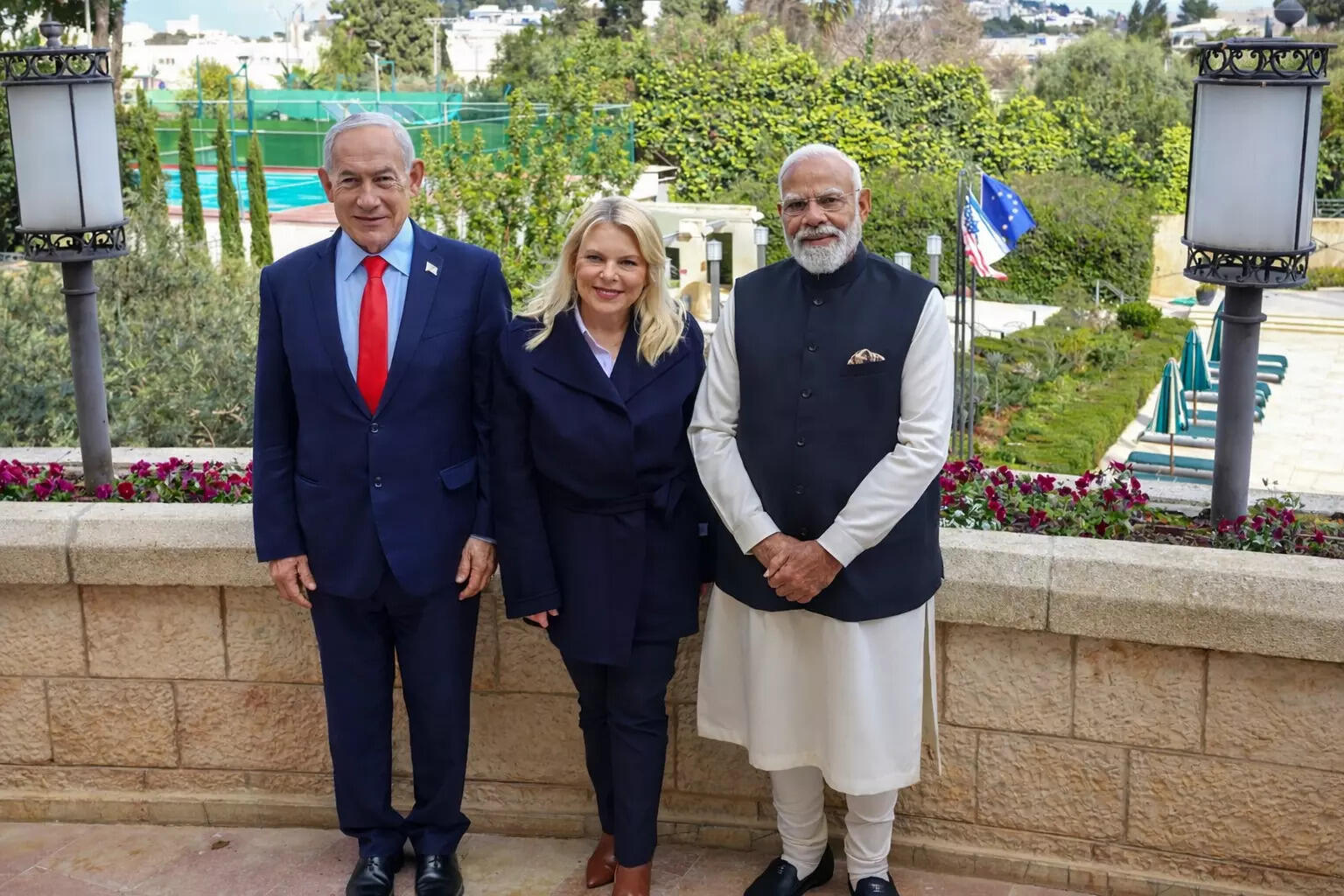
Prime Minister Narendra Modi’s state visit to Israel on 25–26 February represents a culmination of decades of incremental rapprochement between New Delhi and Jerusalem, but also a strategic deepening of ties at a time of profound geopolitical flux in West Asia and beyond.
What was once a relationship constrained by Cold War alignments, energy dependencies and ideological caution has, over the past three decades, evolved into a multi-layered partnership encompassing defence, technology, agriculture, economic cooperation and shared concerns about terrorism and regional instability.
The contours of this visit — the first by an Indian prime minister since 2017 and the first occasion on which an Indian leader has formally addressed the Israeli Parliament, the Knesset — illustrate how both countries now see each other not merely as transactional partners but as strategic interlocutors in an uncertain era.
Modi framed his address to the Knesset as a message of longstanding friendship: “It is a privilege and an honour for me to stand before this distinguished House … I bring with me the greetings of 1.4 billion Indians and a message of friendship, respect and partnership,” he said, underscoring both civilisational continuity and contemporary diplomatic purpose.
He reminded lawmakers of the historical coincidence that he was “born on the same day that India formally recognized Israel — September 17, 1950,” weaving personal narrative with the evolution of bilateral ties.
At the heart of Modi’s remarks, however, was a reiteration of shared security priorities. “We feel your pain,” he said of Israeli victims of terrorism, invoking both the October 7 Hamas attacks and India’s own experience with the Mumbai attacks. “No cause can justify the murder of civilians. Nothing can justify terrorism.”
In emphasizing India’s “consistent and uncompromising policy of zero tolerance for terrorism,” Modi did not shy away from the shared strategic lexicon that undergirds much of the military and intelligence cooperation between the two countries.
Israeli Prime Minister Benjamin Netanyahu’s response was equally vivid in its endorsement of the relationship. In welcoming Modi to the Knesset he referred to the Indian leader as “not just my friend but my brother,” hailing India as “a gigantic power” whose alliance with Israel is “an enormous multiplier” of capabilities.
Netanyahu’s remarks, delivered in the parliamentary chamber itself, conveyed both personal warmth and a geopolitical calculation about the value Israel places on its partnership with India.
Geopolitical and Security Dimensions
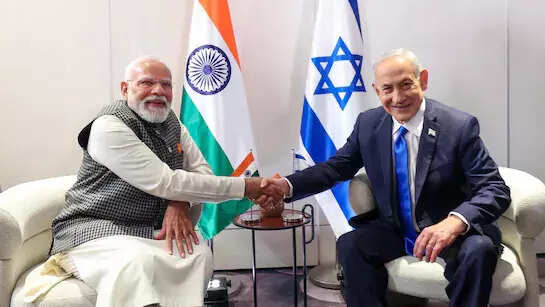
For India, the strategic benefits of deepening ties with Israel are grounded in geopolitical reality. West Asia is undergoing a period of realignment: traditional power structures are strained by ongoing conflict, shifting US policies, evolving Gulf diplomacy and the reverberations of the Gaza war.
In this context, Israel represents both an entrée into advanced security and intelligence ecosystems and a node in broader frameworks such as the I2U2 grouping and emerging corridors of cooperation that span South Asia, the Middle East and Europe.
Delhi’s engagement with Israel thus serves its long-term aim of being an independent, consequential actor in regional security without becoming tethered to any single bloc. Importantly, India has balanced this rapprochement with continued support for diplomatic resolutions to the Palestinian question, including a ceasefire plan in Gaza — a posture that speaks to the complexity of its external environment.
The explicit celebration of shared counter-terrorism interests on this visit reflects a core pillar of bilateral cooperation since the 1990s. Israel became one of India’s largest suppliers of advanced military equipment by the early 21st century, and today the defence relationship encompasses not just procurement but joint development and production of systems such as surface-to-air missiles and unmanned aerial vehicles.
Deliberations during this visit, and in the agreements signed, underscored further collaboration on technology transfer, co-production arrangements, and shared exercises — all of which contribute to India’s aim of diversifying its defence ecosystem away from historical dependencies and internalising cutting-edge capabilities.
Technology, Innovation, Agriculture and Economic Integration
Beyond geopolitics and defence, Modi’s visit focused on cooperation in technology and innovation — an area where Israeli strength in R&D and India’s scale and digital infrastructure can generate mutual gains. Agreements signed during the visit span artificial intelligence, cybersecurity, agriculture, education and commerce, with an emphasis on joint research and development and interoperability of digital systems.
A particularly high-profile initiative discussed is the potential linkage between India’s Unified Payments Interface (UPI) and Israel’s fast payment systems, which would facilitate real-time transactional connectivity across two dynamic economies. This reflects not merely economic cooperation but the export of India’s digital public infrastructure model into new contexts.
In agriculture and water management — core sectors of Israel’s global reputation — India stands to benefit materially. Israel’s technologies in drip irrigation, precision agriculture and water reuse have been disseminated through longstanding Centres of Excellence in Indian states, improving yields and sustainability. The formalisation of institutional links in agricultural innovation and training during this visit reinforces this trajectory and speaks to the complementarities between Israeli technologies and India’s vast agrarian base.
Reciprocal Gains for Israel
Israel’s gains from the partnership are equally clear. India represents one of its largest markets for technological and defence exports, and the expansion of trade — including renewed discussions on a free trade agreement — offers Israeli firms access to one of the world’s fastest-growing consumer and industrial markets.
Moreover, India’s diplomatic support, including during challenging periods such as the Gaza war, provides Israel with political cover in international fora where its policies have faced criticism. The warm reception Modi received — including the award of the Medal of the Knesset, a new honour recognising significant contributions to bilateral ties — signals an official appreciation of India’s role as a strategic partner.
Furthermore, cooperation in areas such as manpower mobility and scientific exchange expands Israel’s access to skilled labour and talent, supplementing its own demographic and economic imperatives. The joint emphasis on innovation ecosystems, academic linkages and investment frameworks advances this reciprocal integration.
Toward a Mature Partnership
Prime Minister Modi’s 2026 visit to Israel should be read as more than ceremonial. It reflects the maturation of a bilateral relationship that began tentatively in the latter half of the 20th century and has, through successive phases, evolved into a strategic partnership with depth and breadth.
The visit’s symbolism — addressing the Knesset, being honoured with a high parliamentary medal, and receiving effusive praise from Israel’s leadership — underscores the political trust that now underpins this cooperation. At the same time, the architecture of agreements signed — in defence, technology, agriculture and economic cooperation — reveals a pragmatic logic grounded in mutual complementarities.
As Modi himself framed it, “Let us ensure that the friendship between India and Israel remains a source of strength in an uncertain world.” The test of this partnership will lie not merely in high-profile visits and speeches, but in the sustained implementation of the joint initiatives that emerged from them, and in the ability of both nations to translate strategic affinity into lasting developmental and security outcomes.
If India and Israel can operationalise their shared visions in ways that respond to domestic needs and global challenges alike, their partnership may come to exemplify how middle powers in the 21st century can co-create influence without succumbing to binary geopolitical alignments.