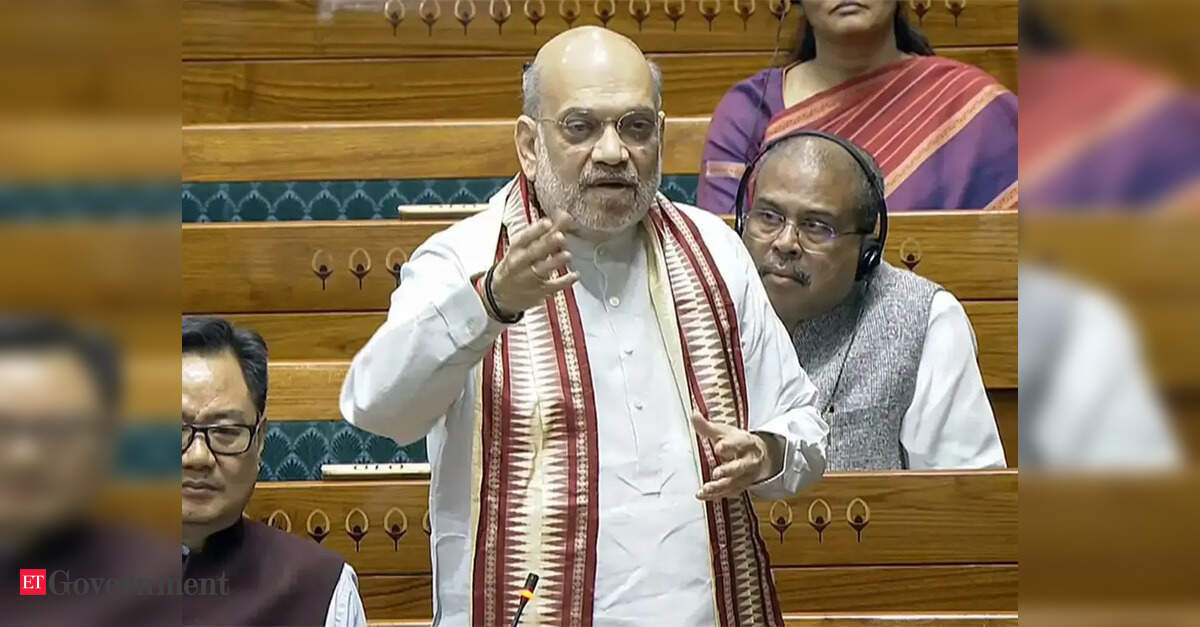
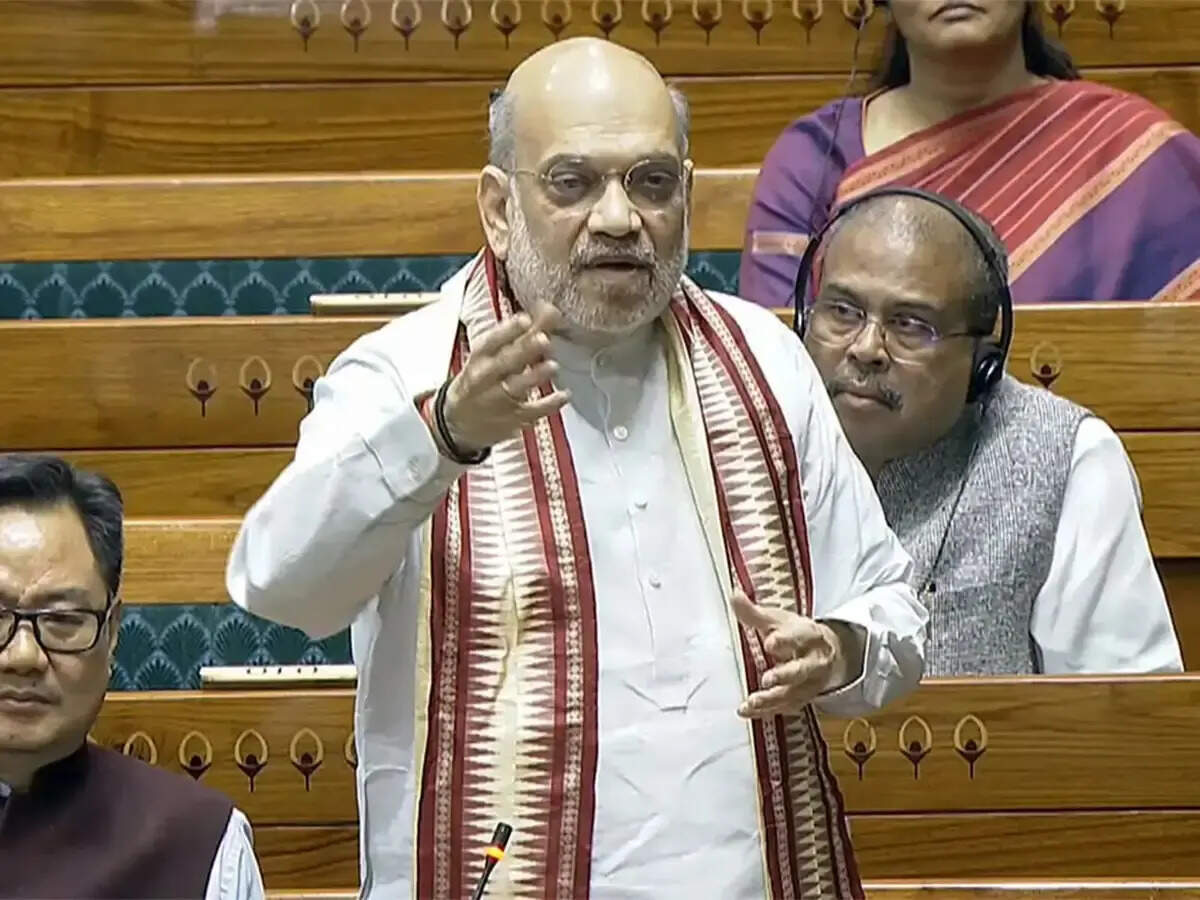
In what marks a potentially decisive moment in India’s internal security trajectory, Union Home Minister Amit Shah has declared the country “Naxal-free” in operational terms, pointing to the near-total dismantling of Maoist insurgency networks that once spanned vast swathes of central and eastern India.
The transformation—from 126 Naxal-affected districts in 2014 to just two by early 2026—signals not merely a tactical success, but a structural shift in the Indian state’s capacity to manage and neutralize insurgent violence.
Yet, as policy analysts and security practitioners caution, this declaration represents not an endpoint, but a transition—from high-intensity counterinsurgency to sustained strategic vigilance.
The Arc of Decline: From Expansion to Containment
At its peak in the late 2000s, Left-Wing Extremism (LWE), often referred to as the “Red Corridor,” stretched across multiple states including Chhattisgarh, Jharkhand, Odisha, Maharashtra, Andhra Pradesh, and parts of Bihar and West Bengal. The insurgency drew strength from a combination of structural deprivation, difficult terrain, and weak state presence.
The Bastar region of Chhattisgarh, in particular, emerged as the epicentre of Maoist operations—serving as both a logistical hub and ideological stronghold. Over the past decade, however, the Indian state has executed a calibrated, multi-dimensional strategy combining kinetic operations with governance expansion. This has resulted in a steady erosion of Maoist capabilities, leadership structures, recruitment pipelines, and territorial control.
As Amit Shah stated in Parliament, “The shadow of red terror is lifting, and Bastar is moving on the path of development.” This framing reflects the government’s dual emphasis on security dominance and developmental integration.
The Strategy: Security, Development, and Governance Convergence
The decline of Maoist insurgency cannot be attributed solely to enhanced security operations, although these have been central. Instead, it reflects a convergence of three reinforcing pillars:
First, intelligence-led security operations.
Central Armed Police Forces, in coordination with state police units, have adopted more precise, technology-enabled operations. The establishment of forward operating bases, improved road connectivity, and the use of UAVs and satellite imagery have significantly reduced the operational space available to insurgents.
Second, infrastructure and state penetration.
Previously inaccessible areas—particularly in Bastar—have seen rapid expansion of roads, telecommunications, banking infrastructure, and welfare delivery mechanisms. This has undermined the Maoist narrative of state absence.
Third, targeted development interventions.
Schemes focused on tribal welfare, livelihood generation, and direct benefit transfers have gradually shifted local perceptions. The aspirational pull of integration has, in many areas, overtaken the coercive influence of insurgent groups.
Security experts have repeatedly emphasized that this “clear, hold, and develop” model has been critical in breaking the cyclical nature of insurgency.
Bastar: From Insurgency Epicentre to Development Frontier
The transformation of Bastar is central to the narrative of a “Naxal-free” India. Once synonymous with ambushes, landmines, and parallel governance structures, the region is now being repositioned as a development frontier.
Road connectivity projects, mobile towers, schools, and health centres have begun to alter the socio-economic landscape. Local governance institutions are gradually asserting themselves, while security camps have transitioned from defensive enclaves to nodes of stability.
Amit Shah has repeatedly underscored this shift, noting that the region is no longer defined by insurgency but by opportunity. His assertion that Bastar is “on the path of development” reflects a broader state strategy of narrative transformation—replacing fear with participation.
Institutional and Political Consensus
The success against Left-Wing Extremism has also benefited from a rare degree of institutional continuity and bipartisan alignment. Successive governments, both at the Centre and in states, have maintained the strategic focus on LWE as a critical internal security challenge.
Senior security officials and policymakers have highlighted that sustained political will—combined with bureaucratic and operational coordination—has been essential in achieving long-term gains.
Officials within the Ministry of Home Affairs have emphasized that the reduction in affected districts is not merely a statistical achievement but a reflection of restored state legitimacy in previously contested regions.
The Residual Challenge: From Eradication to Prevention
Despite the dramatic decline, analysts caution against premature declarations of total victory. Residual Maoist presence persists in limited pockets, particularly in dense forested areas where geography continues to offer tactical advantages.
India is clearly transitioning from operational success to strategic vigilance. The key risks include: Reconstitution of insurgent networks in remote areas, ideological persistence among marginalized communities and potential spillover effects from local grievances or governance deficits.
In this context, the challenge shifts from eliminating insurgency to preventing its resurgence.
The Way Forward: Consolidating Gains
India’s experience with Left-Wing Extremism offers a broader lesson in counterinsurgency doctrine: durable success requires not just force, but legitimacy.
Going forward, three imperatives will shape the sustainability of current gains: Deepening governance and institutional presence in former conflict zones, ensuring that development is inclusive, participatory, and locally anchored, and maintaining intelligence and security readiness to pre-empt regrouping.
As Amit Shah has articulated, the objective is not merely to defeat Maoism militarily, but to ensure that it loses relevance socially and politically.
A Strategic Inflection Point
The declaration of a “Naxal-free” India marks a significant inflection point in the country’s internal security narrative. It reflects the culmination of a decade-long effort that combined state capacity, political resolve, and developmental outreach.
Yet, the deeper significance lies not in the end of an insurgency, but in the transformation of the state’s relationship with its most vulnerable regions. If sustained with discipline and foresight, this moment could represent not just the decline of Maoism, but the consolidation of a more integrated, resilient, and responsive Indian state.