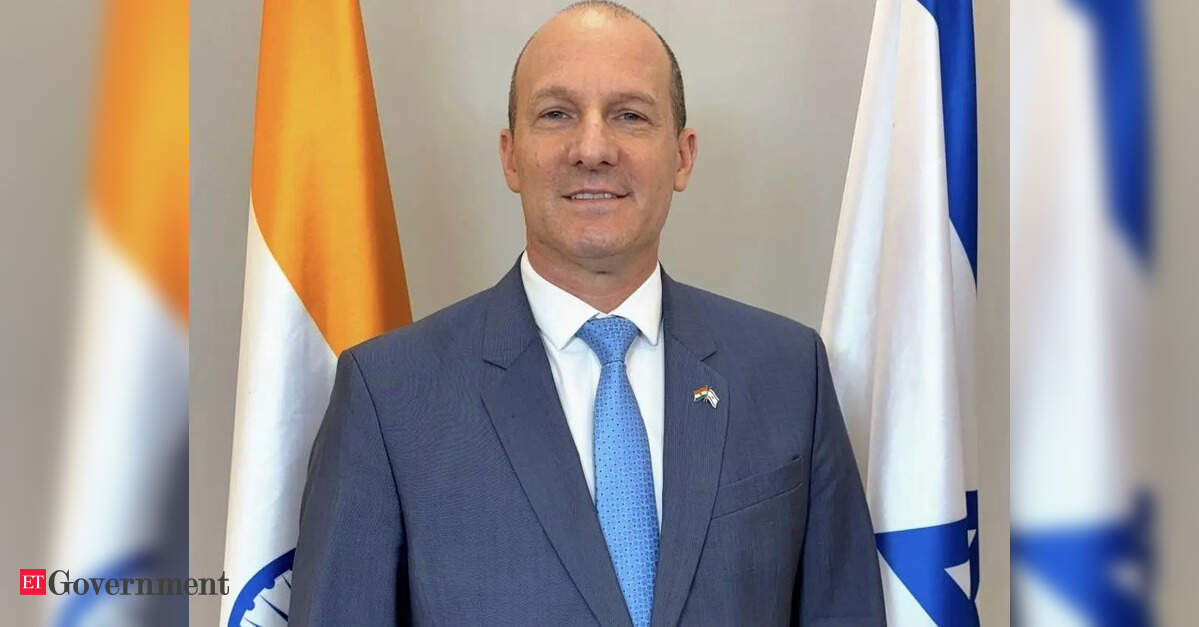

At a time when geopolitical tensions in West Asia are reshaping global energy flows, trade routes, and strategic alignments, Ambassador Reuven Azar shares Israel’s perspective on the evolving conflict with Iran and its wider regional implications.
In this conversation with Anoop Verma, he provides a detailed account of Israel’s military objectives, the shifting balance of power, and the role of the United States in sustaining strategic pressure on Tehran.
Addressing concerns emerging in India over rising energy prices and economic disruptions, Ambassador Azar places the current crisis within a longer strategic horizon, arguing that the costs of inaction would have been far greater. He also reflects on the vulnerabilities of global supply chains, the risks associated with key maritime chokepoints such as the Strait of Hormuz, and the broader implications for economies dependent on stability in the Gulf.
The discussion further explores the expanding scope of India–Israel cooperation across defence manufacturing, emerging technologies, and infrastructure. As both countries navigate an increasingly uncertain global environment, the Ambassador underscores the importance of deeper collaboration in ensuring economic resilience, technological advancement, and long-term strategic stability.
Edited excerpts:
How would you assess the scope and impact of Israel’s recent military operations against Iran and its regional proxies?
In the military domain, we have achieved substantial results. Our operations went far beyond targeting centrifuges or fissile material. We struck key components of Iran’s nuclear ecosystem, including research centres, scientists, mining and conversion sites, and even heavy water reactors.
At the same time, we systematically degraded military infrastructure linked to ballistic missile production—steel plants, petrochemical facilities, and associated supply chains. This was a comprehensive effort conducted in coordination with the United States over a 40-day campaign.
On the proxy front, Hamas is now contained within Gaza, where we control more than half the territory. Hezbollah has been significantly weakened, although it retains some capabilities, particularly with advanced drone systems. Overall, the strategic landscape has shifted in our favour, even as we continue neutralising remaining threats.
While Israel and the United States may be prevailing militarily, there is growing concern in countries like India due to rising energy prices and economic disruptions. How do you respond to this sentiment?
It is entirely natural for people to be concerned when energy prices rise. Citizens should not have to bear the economic burden of a conflict they are not directly involved in. I understand that sentiment.
However, what is often overlooked is the alternative scenario. If Iran had been allowed to develop nuclear weapons alongside a massive arsenal of ballistic missiles and drones, the long-term consequences would have been far more severe. Iran was already exerting influence over multiple capitals in the region prior to October 7.
A nuclear-armed Iran would have destabilised the Gulf, disrupted global trade routes, and severely impacted millions of expatriates—including nearly 10 million Indians working in the region. The current economic pain, while real, is significantly less severe than the systemic instability that would have followed unchecked Iranian expansion.
But the immediate concern for India is also economic—particularly remittances, as well as fertiliser and energy security. How do you reconcile this?
There is no doubt that there is economic and social stress due to current disruptions. But again, the key question is comparative risk.
If Iran were allowed to dominate the region through coercion, proxy warfare, and nuclear deterrence, Gulf economies would face far deeper and more sustained instability. That would threaten not just remittances, and fertiliser and energy security, but the entire economic ecosystem supporting expatriate communities and the global economy.
Moreover, energy markets are already adjusting. Production is increasing in countries like the United States, Venezuela, and others. The global system has resilience. While prices have risen, they are not unprecedented when compared to historical crises.
There is also an argument that Iran, despite its limitations, has strategic patience and can sustain asymmetric pressure, especially in chokepoints like the Strait of Hormuz. What is the long-term solution?
Iran’s reliance on asymmetric warfare is well understood. It is a challenge, particularly for democracies. But this is not an insurmountable problem.
There are two parallel responses. First, countries can adapt—develop alternative infrastructure, diversify supply chains, and reduce dependency on vulnerable routes. We are already seeing this with pipeline expansions and alternative export corridors. Second, there must be accountability. The international community cannot accept a system where a state attempts to extort global trade by threatening maritime chokepoints. The Strait of Hormuz is an international waterway, not a tool for coercion.
Iran’s decision to disrupt it is, in fact, a strategic miscalculation. It is a move they can make only once. After that, the global response—whether through countermeasures or structural adaptation—will permanently reduce their leverage.
Europe has remained relatively restrained compared to previous conflicts. Has the stance taken by the major European countries come as a surprise?
Not particularly. European engagement with the Iranian issue has historically been limited to diplomacy. While there has been rhetorical alignment, there has been reluctance to take decisive action.
There is often a gap between stated concerns and operational willingness. This may be due to internal political constraints, competing priorities like Ukraine, or a strategic preference for diplomacy over coercive measures.
Ultimately, nations act based on their perceived interests. For Israel, the situation is existential. We cannot outsource our security decisions to others.
Given the current geopolitical turbulence, how do you see India–Israel cooperation evolving?
The trajectory is very positive and expanding across multiple domains. In defence, we are moving toward deeper collaboration, including co-development and domestic manufacturing. The objective is to reduce dependency on imports and strengthen indigenous capabilities in both countries.
Beyond defence, we are actively working in emerging technologies. We have signed agreements on artificial intelligence, are exploring cooperation in quantum technologies, and are advancing partnerships in cybersecurity. There is also growing engagement in infrastructure, where Indian firms are participating in major projects in Israel, including the Tel Aviv metro. Financial cooperation is also expanding, with mechanisms being developed to facilitate investments between Israeli institutional investors and Indian markets.
These initiatives are complemented by structured frameworks like the India-Israel Industrial R&D and Technological Innovation Fund, as well as broader platforms such as I2U2 involving the United States and the UAE.
Do you see connectivity projects between India, the Gulf, and Israel gaining momentum despite current tensions?
In fact, resolving the current conflict in a stable and constructive manner would significantly accelerate these initiatives. Connectivity involving India, the UAE, Saudi Arabia, Jordan, and Israel has enormous economic potential. The removal of systemic security threats will enable freer trade, greater mobility, and deeper integration. The long-term vision remains intact, and in many ways, the current conflict is about securing that future.
Is there any timeline for de-escalation or resolution?
It is difficult to predict timelines. The military phase lasted approximately 40 days, as anticipated, and we now have a ceasefire. The next phase depends largely on Iran’s response and the decisions of the United States.
There are two possible pathways: continued economic pressure through mechanisms like the naval blockade, or renewed military action if necessary. The objective is clear—to prevent Iran from acquiring nuclear weapons and to neutralise existential threats. This is not about regime change. It is about removing specific threats and creating conditions where the Iranian people can determine their own future without destabilising the region.
Patience is essential. Ignoring the problem for short-term stability would have led to far greater crises in the future. The goal now is to address it decisively and sustainably.