

2 min readNew DelhiUpdated: May 6, 2026 10:41 AM IST
The National Testing Agency (NTA) has said that 96.6 per cent of candidates registered for CUET UG 2026 have been allotted one of their preferred exam cities, with 79 per cent getting their first choice.
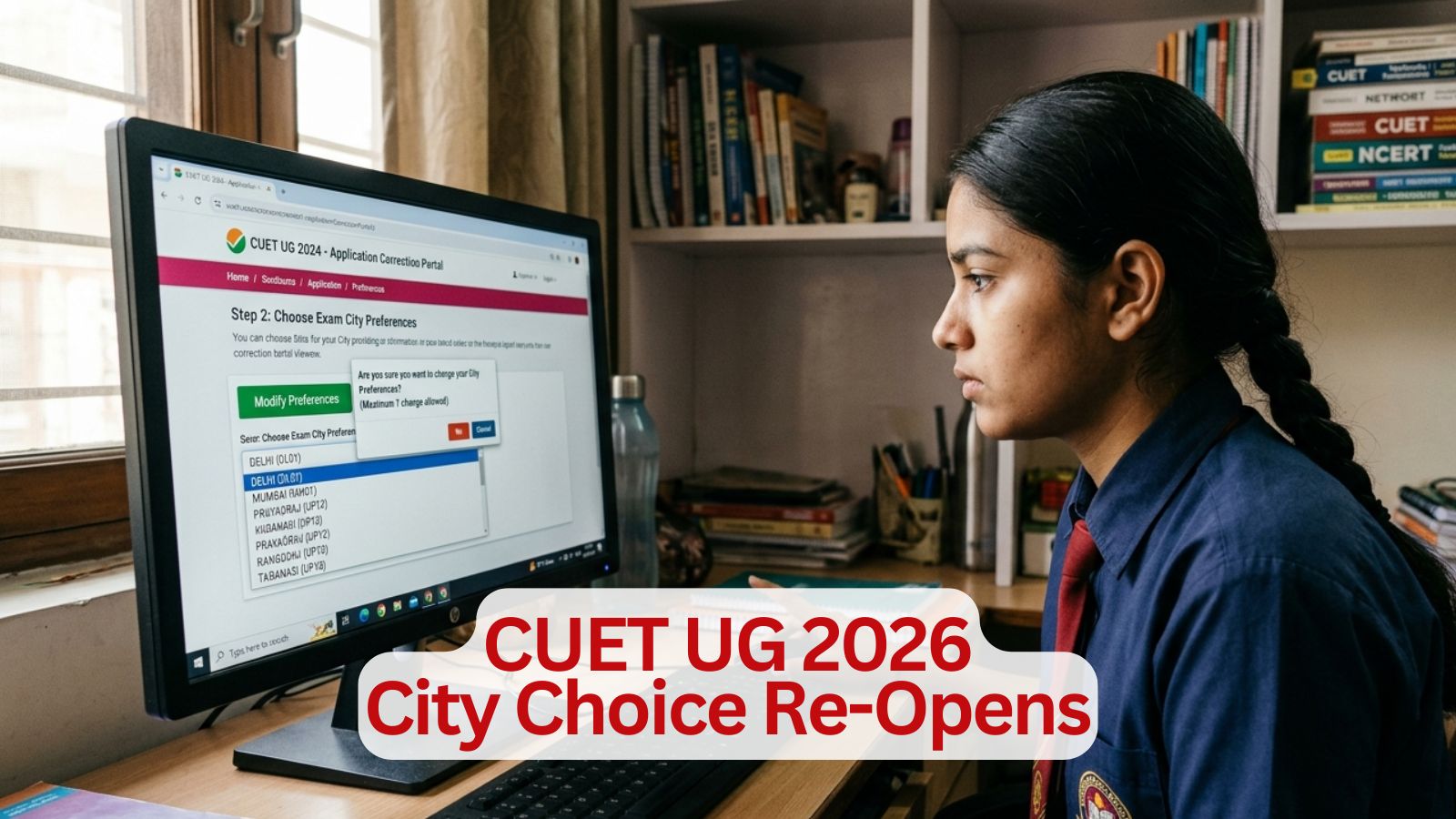
For the remaining candidates, the agency has reopened the city re-allocation window. Those who were allotted centres outside their preferences can now log in to the official portal and select from available vacant slots in alternate cities. The facility is being offered on a first-come-first-serve basis, and candidates have been advised to act early.

What candidates should do now
NTA has instructed candidates to verify details mentioned on their CUET UG admit cards, including exam city, centre, date, and shift. Those opting for re-allocation should complete the process promptly, as availability depends on real-time vacant slots.
Candidates are also advised to plan travel and accommodation in advance and report at the centre well before the scheduled time.
This year for CUET UG 15,68,866 candidates registered for the exam. The test design allows candidates to opt for up to five subjects, resulting in approximately 67.5 lakh test instances overall.
On average, candidates have opted for 4.31 subjects, with the largest group — over 8.6 lakh candidates — choosing five subjects. In total, 12,906 unique subject combinations have been recorded, reflecting wide variability in candidate preferences.
To manage this complexity, the examination is being conducted across 35 shifts nationwide. NTA said the allocation process must simultaneously account for a candidate’s chosen city, subject combination, and the specific shift in which those subjects are scheduled.
Story continues below this ad
A significant share of registrations NTA says, about 43%, comes from Uttar Pradesh, Bihar, and Delhi alone. This concentration has placed pressure on the available computer-based testing infrastructure in high-demand cities.
Why some candidates were allotted outside preference
NTA noted that when demand for a particular city–subject–shift combination exceeds capacity, candidates may be allotted centres in nearby or alternate locations. Additional constraints such as availability of secure test centres and trained staff also influence final allocations.
The agency said it has now identified vacant slots in certain cities for specific subject combinations and dates, enabling the reopening of the re-allocation window for affected candidates.
