As Uttar Pradesh accelerates toward its ambitious $1 trillion economy target by 2030, the role of environmental governance has come into sharp focus.
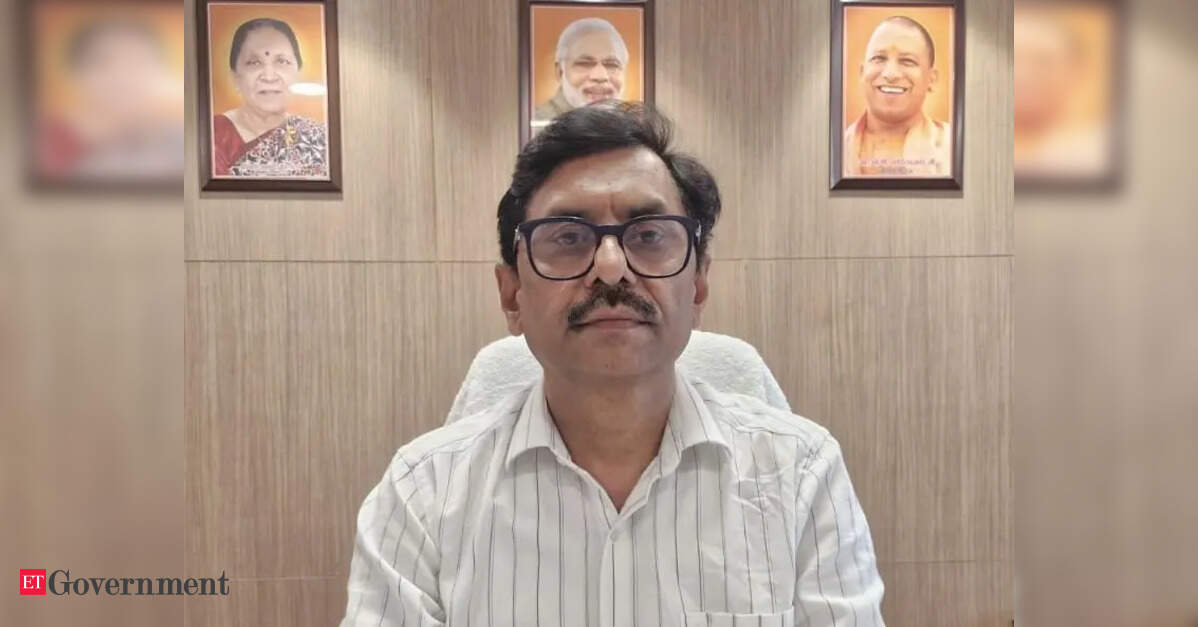
Our policies and enforcement strategies are aligned with sustainable development. We are promoting awareness, adopting new technologies, and engaging with both industries and citizens to improve quality of life while ensuring growth, said Dr. Ravindra Pratap Singh, Chairman of the Uttar Pradesh Pollution Control Board (UPPCB).
In conversation with ETGovernment’s Arpit Gupta, Singh outlines how the regulator is shifting from a perception of red tape to a facilitator of sustainable industrial growth leveraging technology, tightening compliance and driving awareness at scale.
Edited excerpts:
Uttar Pradesh has set a target of becoming a $1 trillion economy by 2030. Where do you see UPPCB’s role in achieving this?
In any industrialisation journey, the role of a regulatory authority like the Pollution Control Board is critical. Our responsibility begins with issuing No Objection Certificates (NOCs) at the pre-construction stage and continues with Consent to Operate (CTO) after commissioning. We are focused on timely approvals. Earlier, large industries took up to 120 days for NOCs. We are bringing that down to around 60 days, a reduction of nearly 50%. This directly supports ease of doing business while ensuring environmental safeguards.How is technology helping improve efficiency and transparency in these processes?
Technology is central to our reforms. The state government has implemented a single-window system through the Nivesh Mitra portal, where industries can submit all applications. These are automatically routed to relevant departments and monitored at every level. On the compliance side, we are already using software tools and mobile applications. The next step is AI-based monitoring systems, which will significantly enhance regulatory efficiency and transparency.
What digital tools and monitoring systems are currently in place?
We use Online Consent Management & Monitoring System (OCMMS) to track industrial emissions in real time. Additionally, we have introduced the Dust Portal, where construction projects, especially those above 500 square metres in NCR must register and upload compliance data. We are also enforcing the installation of air pollution control devices in industries, particularly large-scale units. This ensures continuous monitoring and reduction of emissions.
Sectors like leather and sugar are vital to UP’s economy but are also pollution-intensive. What is your roadmap for making them sustainable?
Cluster-based interventions are key. In Kanpur’s leather clusters, modern Common Effluent Treatment Plants (CETPs) have been installed, with over 50% of tanneries already connected. Full integration is expected soon. These facilities include advanced chromium recovery systems. Similarly, CETPs in other industrial clusters are being upgraded and will be fully operational within the next few months. These initiatives ensure that industries remain globally competitive while meeting environmental standards.
You have been advocating circular economy practices. How scalable are these, and what incentives exist?
The circular economy is gaining strong momentum. Take the sugar industry – waste like molasses, bagasse and press mud is now being efficiently utilised. Ethanol plants use molasses for fuel blending, while compressed biogas (CBG) is produced from press mud, leaving behind high-quality organic manure. In e-waste recycling, the Extended Producer Responsibility (EPR) framework provides incentives. Valuable materials like nickel, gold, and silver are recovered, making it a viable and growing industry, especially in western Uttar Pradesh.
Is UPPCB evolving beyond a regulatory body into a facilitator of sustainable development?
Sustainability is no longer optional, it’s a necessity. Climate change is now a lived reality, visible through extreme weather events. Our policies and enforcement strategies are aligned with sustainable development. We are promoting awareness, adopting new technologies, and engaging with both industries and citizens to improve quality of life while ensuring growth.
What are the biggest challenges you face in driving sustainability? How are you addressing the awareness gap?
The biggest challenge is not industry, it is awareness. There is resistance to change and a lack of understanding of environmental practices. If we can educate and motivate people, the transition will become much smoother. We have launched multiple initiatives, active social media outreach, regular publications, workshops and conferences. We are also engaging directly with industry bodies like CII and FICCI. We have introduced a fortnightly bulletin and are collaborating with students and educational institutions. Public participation is crucial, especially in a country of over 1.4 billion people.
How do you balance faster approvals with strict environmental compliance?
Approvals are a one-time process, but compliance is continuous. Our focus is shifting toward ensuring long-term compliance rather than just regulating entry. Industries are increasingly willing to comply. The key is awareness and engagement rather than enforcement alone.
What have been your key achievements in the past year, and your priorities ahead?
Over the past year, we have initiated significant structural reforms within UPPCB. The number of registered units has expanded dramatically from around 8,000 in the 1990s to over 80,000 today, with many more in the pipeline. At the same time, we have taken steps to address manpower shortages by revamping recruitment processes and accelerating the filling of vacancies.
We have also rationalised fee structures for the first time in over a decade. Looking ahead, our priorities are to expand our presence across all districts, introduce third-party certification mechanisms to ease the inspection burden, strengthen research and development as well as innovation capabilities, and scale up awareness initiatives to drive broader environmental compliance.
There is a perception that environmental clearances are complex and time-consuming. What is your message to the industry?
We are actively working to change that perception. Today, our average NOC disposal time is around 20 days, and we aim to reduce it further. Many delays happen due to incomplete applications or lack of awareness. We are guiding industries on proper procedures and maintaining open communication channels. Our message is clear: we are facilitators of growth, not creators of obstacles. With the right approach, approvals can be both fast and compliant.