General N.S. Raja Subramani formally assumed charge as India’s Chief of Defence Staff (CDS) on May 31, succeeding General Anil Chauhan and taking over at a time when the armed forces are pursuing major structural reforms aimed at enhancing jointness, operational integration, and technological modernisation.
The appointment places General Raja Subramani at the centre of India’s ongoing efforts to reshape its higher defence management architecture through integrated theatre commands, indigenous defence manufacturing, and greater coordination among the Army, Navy, and Air Force. As CDS, he will also serve as Secretary of the Department of Military Affairs (DMA), a role that gives him direct responsibility for advancing military reforms and facilitating coordination between the armed forces and the government.
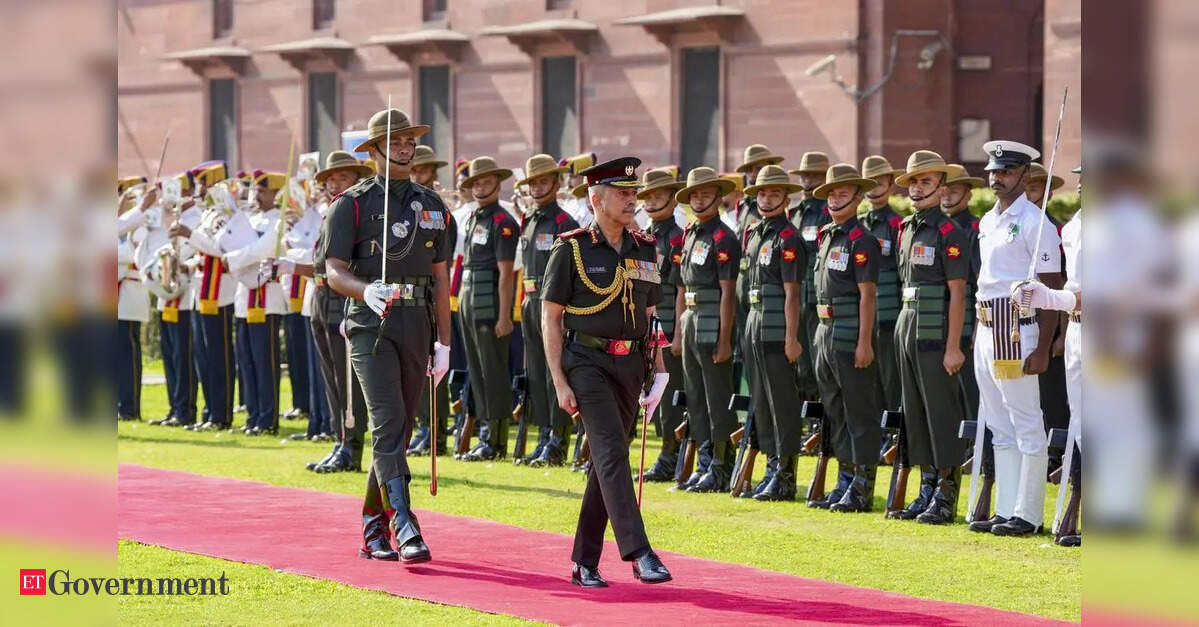
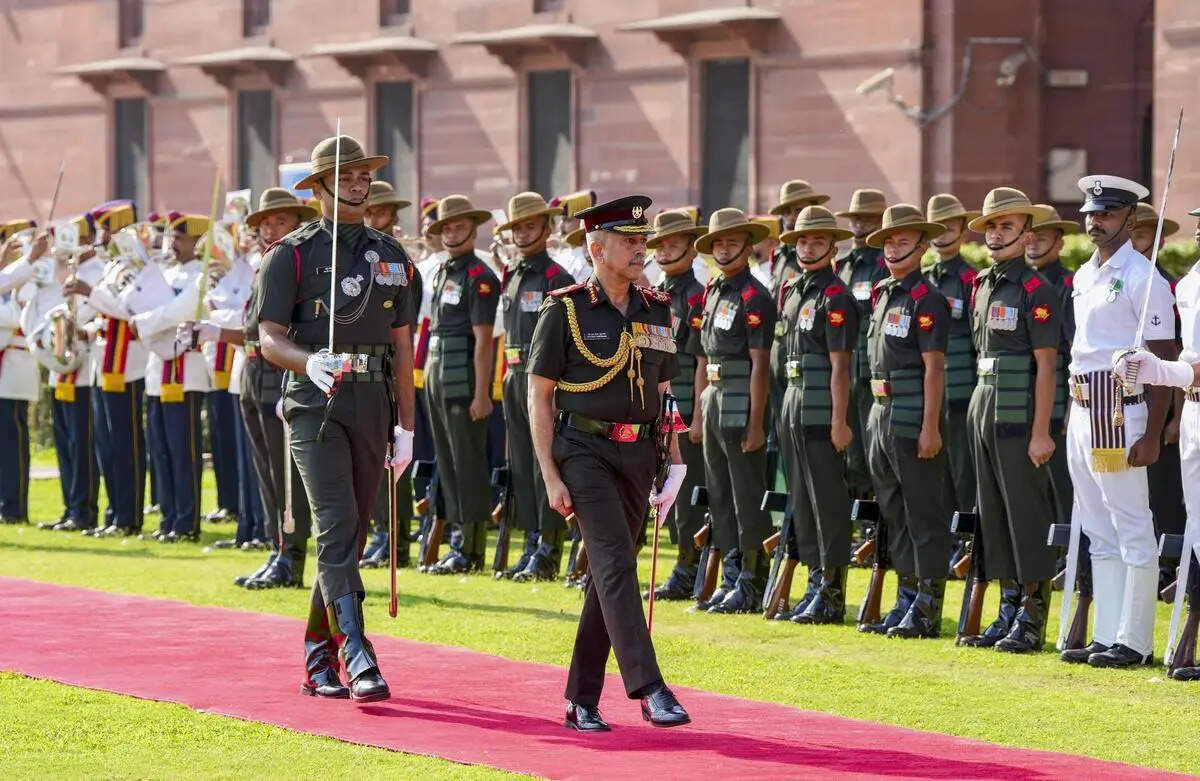
According to the Headquarters Integrated Defence Staff (HQ IDS), General Raja Subramani began his first day in office by laying a wreath at the National War Memorial before receiving a tri-services Guard of Honour at South Block.
In his first public remarks after assuming charge, the new CDS outlined a broad agenda focused on military transformation, technological advancement, and self-reliance in defence production.
“We will accelerate the development, induction and integration of indigenous weapons in our armed forces,” General Raja Subramani said after taking charge.
He also indicated that his tenure would focus on strengthening integration among the three services while promoting innovation and modernisation across the defence ecosystem. In his inaugural address, he emphasised the need for “modernisation, innovation, and enhanced collaboration” to ensure that the armed forces remain prepared for evolving security challenges and technological shifts.
The emphasis on indigenous capability development aligns closely with the government’s broader Aatmanirbhar Bharat agenda in defence. Over the last several years, India has increased investments in domestic defence manufacturing, with greater focus on missiles, artillery systems, drones, naval platforms, aerospace technologies, defence electronics, and emerging technologies such as artificial intelligence and autonomous systems.
Defence observers note that the CDS will play a key role in ensuring that military requirements are increasingly aligned with the country’s growing defence-industrial base. General Raja Subramani is expected to bring considerable experience to this effort, having previously worked on procurement reforms and initiatives aimed at strengthening domestic defence manufacturing during his tenure as Vice Chief of the Army Staff.
Another major priority awaiting the new CDS is the implementation of integrated theatre commands. The long-discussed theatreisation project seeks to reorganise the Army, Navy, and Air Force into unified operational commands designed around specific geographic and strategic responsibilities. The objective is to improve operational efficiency, reduce duplication of resources, and strengthen joint warfighting capabilities.
General Raja Subramani assumes office as the armed forces continue to refine the structure and command architecture of these proposed theatre commands. His appointment comes at what defence officials describe as a crucial phase in the reform process, when institutional concepts are expected to move closer to operational implementation.
The new CDS is also expected to oversee efforts to enhance tri-services synergy in areas such as logistics, procurement, intelligence sharing, communications, cyber operations, and space-based military capabilities. His appointment has been widely viewed within strategic circles as part of a broader effort to maintain momentum behind defence reforms initiated over the past several years.
General Raja Subramani brings more than four decades of military experience to the position. A graduate of the National Defence Academy and the Indian Military Academy, he was commissioned into the 8th Battalion of the Garhwal Rifles in December 1985. During his career, he commanded formations across diverse operational environments, including counter-insurgency operations in Assam, deployments in Jammu and Kashmir, and commands along the northern frontier.
Prior to his appointment as CDS, he served as Military Adviser at the National Security Council Secretariat (NSCS). Earlier assignments included Vice Chief of the Army Staff, General Officer Commanding-in-Chief of Central Command, and Chief of Staff of the Northern Command.
His elevation also reflects a degree of continuity within India’s higher defence structure. Like his predecessor General Anil Chauhan, General Raja Subramani moved to the CDS position after serving as Military Adviser at the NSCS. The government’s decision is seen as ensuring continuity in the ongoing reform agenda while bringing an officer with extensive operational and organisational experience into the country’s highest military appointment.
General Anil Chauhan, who completed his tenure on May 30, had overseen significant progress in tri-services integration and military restructuring. Reflecting on his tenure, he described it as “very satisfying and excellent,” while highlighting advances made in strengthening coordination among the three services.
The transition comes amid a rapidly evolving strategic environment marked by continuing security challenges along India’s borders, growing geopolitical competition in the Indo-Pacific, and the increasing role of emerging technologies in warfare. Consequently, the responsibilities before the new CDS extend beyond organisational reform to preparing the armed forces for future conflict scenarios shaped by cyber warfare, artificial intelligence, autonomous systems, space capabilities, and precision-guided weapons.
General Raja Subramani’s initial statements suggest that these themes will remain central to his tenure. His focus on indigenous capability development, military modernisation, innovation, and jointness indicates that the next phase of India’s defence transformation will seek to combine structural reforms with technological advancement and greater self-reliance.
As he begins his tenure, the pace of theatre command implementation, the expansion of indigenous defence capabilities, and the strengthening of tri-services integration are likely to emerge as the principal benchmarks against which his tenure as CDS will be assessed.