As India seeks to diversify its international partnerships amid a rapidly changing geopolitical and economic landscape, Iceland is emerging as a country of growing relevance.
The recently concluded Trade and Economic Partnership Agreement (TEPA) between India and the European Free Trade Association (EFTA) countries—which includes Iceland—has injected fresh momentum into bilateral ties. Beyond reducing trade barriers, the agreement is expected to catalyse investments, technology transfers, and industrial partnerships, creating new opportunities for both economies. At the same time, Iceland’s globally recognised expertise in geothermal energy, carbon capture technologies, sustainable fisheries management, and green innovation aligns closely with India’s developmental priorities and its transition towards a cleaner and more resilient economy.
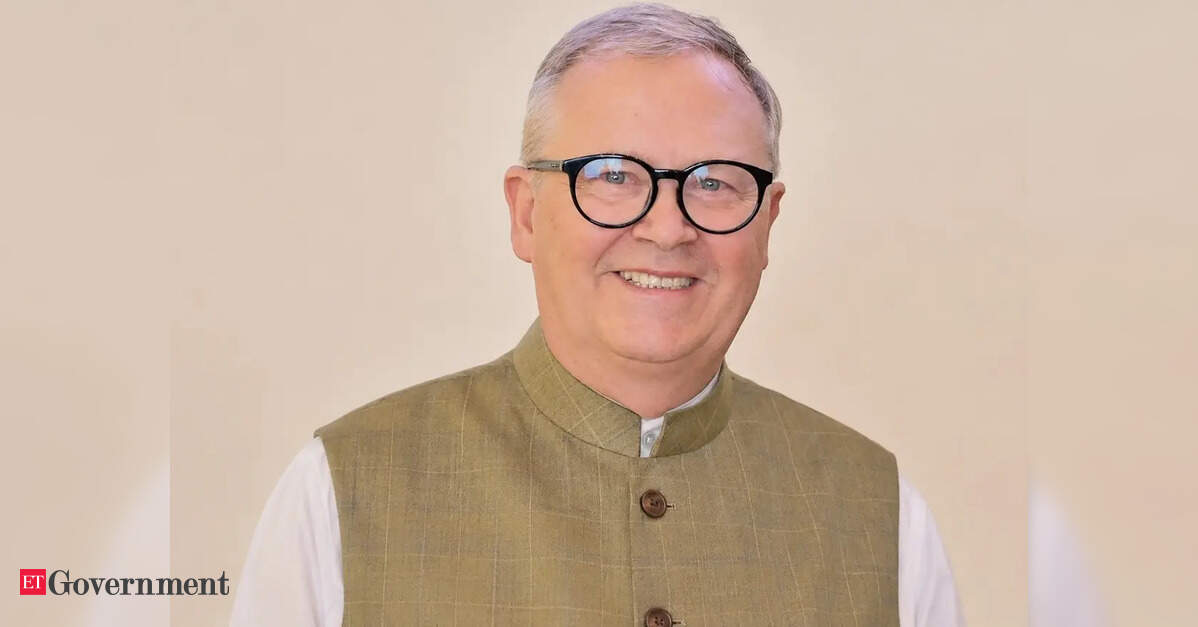
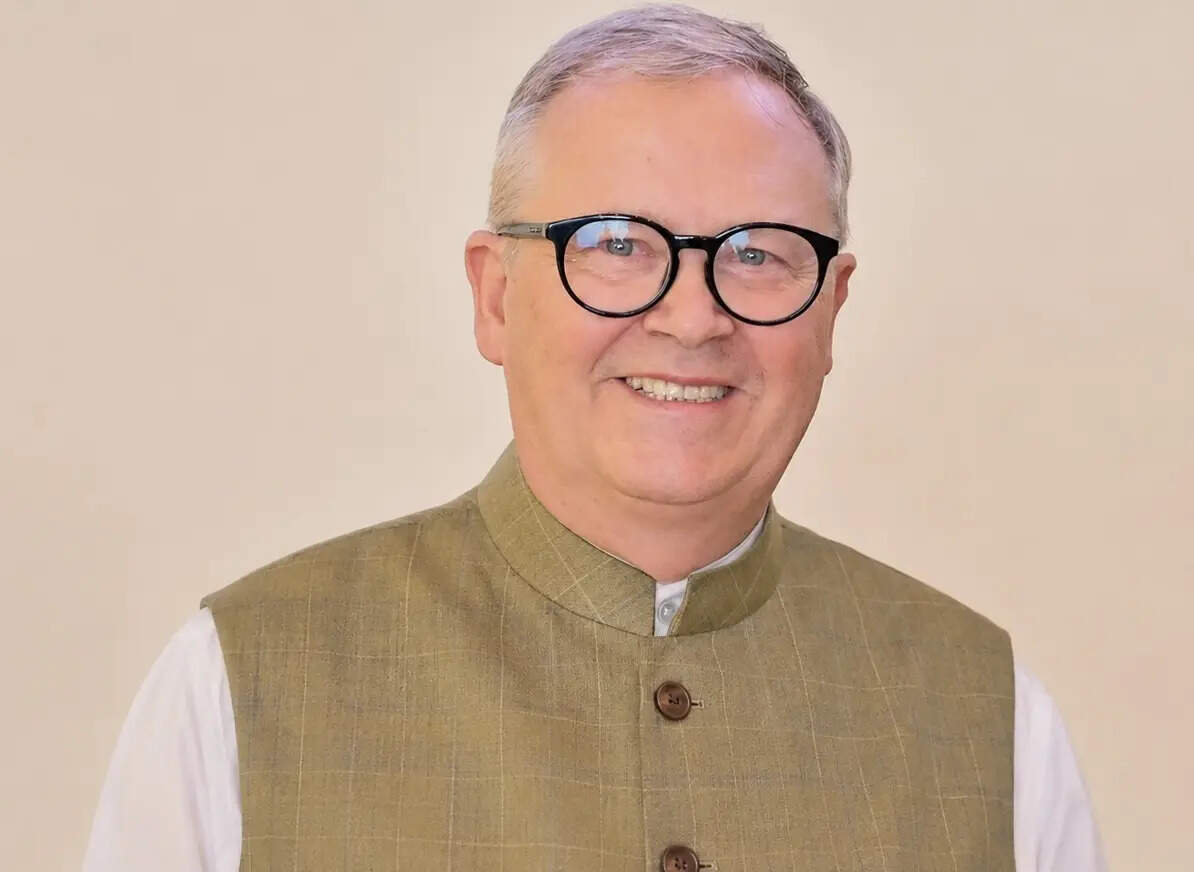
In this conversation with Anoop Verma, Benedikt Höskuldsson, Ambassador of Iceland to India, discusses the transformative potential of TEPA, Iceland’s growing economic engagement with India, cooperation in clean energy and climate technologies, the strategic significance of the Arctic, and the opportunities for expanding people-to-people ties. He also shares his perspectives on India’s rising role in global affairs, the future of multilateral institutions, and how the two countries can work together to address the challenges and opportunities of an increasingly interconnected world.
Edited excerpts:
India and Iceland have maintained cordial diplomatic relations for decades, but the economic relationship still remains relatively modest. In your view, which sectors offer the greatest untapped potential for expanding bilateral trade and investment between the two countries over the next decade?
The trade volume between the two countries is indeed modest, but I would caution against judging the relationship solely through official trade statistics. As an economist by training, I believe the actual economic relationship is far deeper and more valuable than what import-export figures alone suggest. Today, global business operates through complex networks of subsidiaries and multinational structures. An Icelandic company may export products through a European subsidiary, and therefore the trade may not appear directly in Iceland-India statistics. What matters more is the value being created through investments, research collaborations, and employment generation.
Take the example of Alvotech, an Icelandic biopharmaceutical company that operates a research office in Bengaluru. Around 60 scientists are engaged in advanced research work there for the company’s headquarters in Reykjavík. That represents significant intellectual and economic value.
Another example is Hampiðjan, one of the global leaders in fishing and netting technologies. The company acquired a majority stake in an Indian net manufacturer in Maharashtra and is now expanding the operation substantially. India is becoming a manufacturing hub for the combined enterprise, with plans to increase employment from around 700 people to more than 2,000. These are the kinds of developments that truly reflect the depth of our economic relationship.
The Trade and Economic Partnership Agreement (TEPA) between India and the EFTA countries is particularly significant because it is not merely a trade agreement. It includes commitments for substantial investments over the coming years and the creation of large numbers of jobs. That represents a much deeper form of economic integration.
TEPA also opens opportunities in sectors such as seafood, renewable energy, climate technologies, and geothermal energy. Iceland has long been a global leader in seafood exports, and we see strong potential to introduce new products and technologies into the Indian market through partnerships and joint ventures.
Fisheries remain a highly sensitive and protected sector in India. Does that create challenges for greater Icelandic participation in this area?
We fully understand those sensitivities. Iceland itself once had a heavily subsidised and relatively uncompetitive fishing sector. Over time, however, we transformed it into one of the most technologically advanced and profitable fisheries industries in the world. I am not suggesting that India should simply replicate Iceland’s model. The two countries have different ecosystems, species, and socio-economic realities. However, Iceland’s experience demonstrates that fisheries can be managed sustainably and profitably while protecting resources for future generations.
What Iceland can offer is expertise in stock management, sustainability policies, quota systems, processing technologies, and value creation. We have successfully built an industry that now operates without government subsidies and is driven by innovation, efficiency, and responsible resource management. Many parts of India’s fisheries sector still operate using traditional methods. There is significant scope for introducing technology and modern management practices while ensuring that local communities benefit. We believe there is considerable room for cooperation in this area.
Iceland is a global leader in geothermal energy, sustainable fisheries, and Arctic innovation. How can India and Iceland deepen cooperation in these sectors as India pursues energy transition, climate resilience, and sustainable development?
We are already witnessing encouraging developments in geothermal cooperation. For example, ONGC is working with Icelandic partners on geothermal projects in Ladakh. We are also seeing initiatives in Himachal Pradesh, where Icelandic expertise is being applied to low-temperature geothermal utilisation for agricultural purposes.
Geothermal energy will never be a single solution to India’s vast energy needs, but it can play a critical role in specific regions. The northwestern parts of India possess significant geothermal resources. For remote and mountainous areas, geothermal energy offers a reliable, localised source of clean power available 24 hours a day, 365 days a year.
The energy security benefits are substantial. Instead of transporting conventional fuels over difficult terrain, geothermal energy can provide a stable baseload source generated locally. What was once theoretical is now becoming a reality through concrete projects on the ground.
India is investing heavily in renewable energy, green hydrogen, and clean technologies. Do you see opportunities for Icelandic companies and research institutions to contribute to India’s green transformation?
One particularly promising area is carbon capture, utilisation, and storage. During the Nordic-India Summit, Icelandic company Carbon Recycling International entered into a partnership involving JSW Steel and an Indian company to explore carbon capture technologies that convert carbon dioxide into e-methanol.
This is highly significant because e-methanol is expected to become an important clean fuel for aviation and other hard-to-abate sectors. Icelandic companies have been working on these technologies for more than two decades, and they are now proven and commercially viable.
Green hydrogen is another area where Iceland possesses valuable experience. We have long explored hydrogen-based transportation and energy systems using renewable electricity. Producing green hydrogen requires water and clean electricity—resources that Iceland possesses in abundance. While large-scale production is still evolving, we believe Iceland can become an important contributor to the future hydrogen economy and a valuable partner for India as it advances its own ambitious green hydrogen programme.
Iceland is not a member of the European Union but participates in the EU single market through the European Economic Area. How do you assess the potential impact of the proposed India-EU Free Trade Agreement on Iceland’s engagement with India?
I see the India-EU FTA as complementary to TEPA rather than competing with it.
Iceland’s economy is deeply integrated with Europe through the European Economic Area. Europe remains our largest trading partner. As India and the European Union move closer through a trade agreement, new opportunities will emerge for European companies operating in India. In many cases, Icelandic technologies, expertise, and businesses are integrated into those European value chains.
At the same time, TEPA offers unique advantages because of its strong emphasis on investment and long-term economic integration. I often tell Icelandic companies that India should not merely be viewed as a market from which value is extracted. Rather, it is a market that should be developed through partnerships with Indian businesses and stakeholders. That is the spirit of TEPA, and I believe the India-EU FTA will reinforce that approach.
How does Iceland view India’s growing geopolitical role in the Indo-Pacific and the broader emerging multipolar world order?
Iceland views India as one of the major rising powers of Asia, both economically and geopolitically. For us, maintaining a strong partnership with India is increasingly important. One area where we see considerable potential for cooperation is maritime security. Iceland is a maritime nation, and so is India. The security of global shipping routes has become an increasingly important issue, and ensuring a rules-based maritime order is in the interest of both our countries. We believe there is scope for deeper collaboration aimed at strengthening international norms and maintaining secure and open sea lanes. Both Iceland and India are committed to a rules-based international order, and maritime cooperation is a natural area where our interests converge.
As an Arctic nation, how does Iceland view India’s growing interest in Arctic affairs and scientific cooperation in the region?
We welcome India’s growing engagement in the Arctic and consider it both legitimate and important. What happens in the Arctic does not stay in the Arctic. Climate change in the region has global consequences. Likewise, environmental changes in the Himalayan region affect the wider world. This creates a strong rationale for scientific cooperation and shared research.
India has been an observer in the Arctic Council for many years and has established research activities in the region. These are significant contributions. As climate change opens new shipping routes through the Arctic, connections between the North Atlantic and the Indo-Pacific will become increasingly important. In that context, partnerships with countries such as India become strategically valuable. We see India as an important stakeholder in future Arctic discussions, particularly in the areas of research, climate science, and sustainable development.
Tourism and people-to-people ties between India and Iceland have grown considerably in recent years. What initiatives are being undertaken to further strengthen cultural exchanges, tourism flows, and educational cooperation?
Connectivity is the key. Last year, Air India and Icelandair signed a codeshare agreement that now allows travellers to reach Iceland through multiple European gateways with a single stop. This represents a major improvement.
Our embassy is actively promoting Iceland as a destination for Indian tourists. Iceland offers unique natural experiences—from the Northern Lights to volcanic landscapes, glaciers, wildlife, and the phenomenon of the midnight sun. At the same time, we emphasise sustainable tourism. Iceland’s natural environment is fragile, and preserving it is essential. Therefore, part of our effort involves educating visitors about responsible travel practices.
I would like to see the number of Indian visitors to Iceland more than double over the next 18 months. The combination of improved connectivity and targeted promotion gives us reason to be optimistic.
How can Iceland position itself as a partner for Indian startups, technology firms, and academic institutions seeking advanced technologies and innovation partnerships?
Iceland is a small country, but it has a remarkably strong culture of entrepreneurship and innovation. In many ways, Iceland functions as a laboratory where new ideas can be tested rapidly. What India offers is scale. Once a technology or business model has been proven, India provides unparalleled opportunities for expansion and commercialisation.
Iceland has world-class expertise in areas such as biosimilars, food processing technologies, renewable energy, and other advanced industrial sectors. We have systems that encourage innovation and support entrepreneurs. Partnerships between Icelandic innovators and Indian companies can therefore be highly complementary—combining Icelandic innovation with India’s scale, talent, and market opportunities.
In a world facing growing geopolitical uncertainty, what role can India and Iceland play in strengthening international cooperation and multilateral institutions?
Both countries share a strong interest in strengthening the multilateral system and preserving a rules-based international order. The world has changed significantly since many international institutions were created, and there is a growing recognition that these institutions must evolve to reflect contemporary realities. Iceland supports reforms that would make global governance structures more representative and effective.
In particular, we support a greater role for India in international decision-making. India’s voice is essential in discussions about the future of global governance, and we have consistently supported India’s aspirations for a permanent seat on the United Nations Security Council.
The challenges facing the world today—from security tensions to climate change—require stronger international cooperation, not less. Countries such as India and Iceland can work together to ensure that global institutions remain relevant, effective, and representative of today’s world.