Global student mobility is being reshaped by shifting geopolitical realities, evolving visa policies, talent shortages and growing competition among destination countries. As traditional study destinations tighten immigration pathways and new education hubs emerge, international students are re-evaluating where they choose to study, research and build careers.
Germany has emerged as one of the key beneficiaries of this transformation. The country now hosts nearly 60,000 Indian students, making India the largest source of international students in Germany. At the same time, changing student flows from China, increased interest from researchers seeking alternatives to the United States, and growing investments in future-focused fields such as artificial intelligence and quantum technologies are redefining the global higher education landscape.
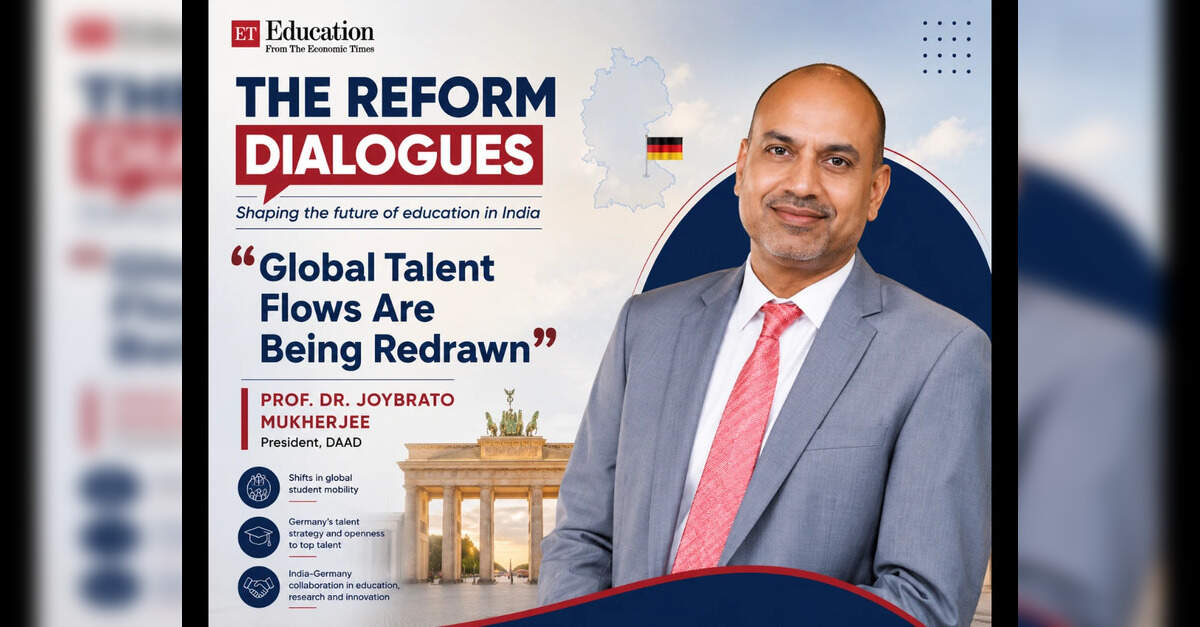
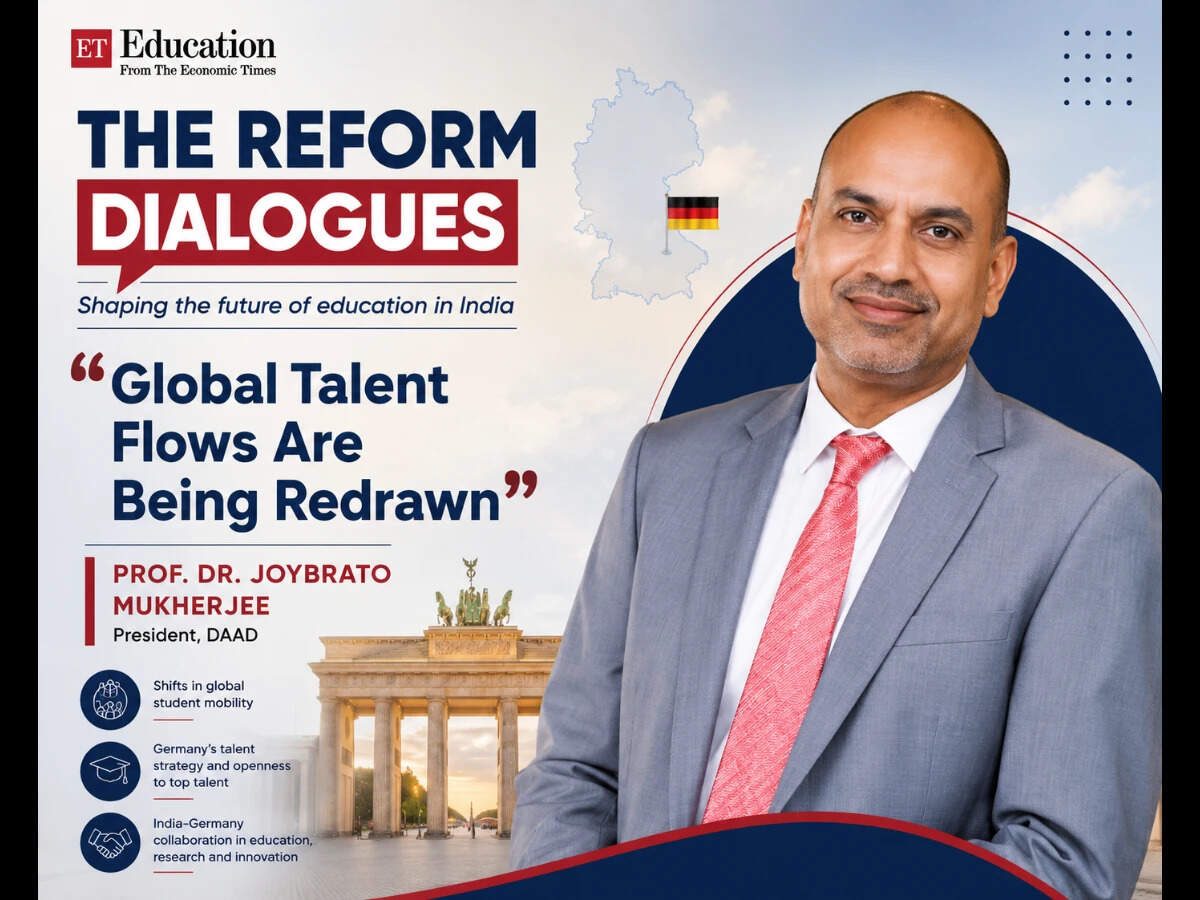
In this edition of Reform Dialogue, Prof Joybrato Mukherjee, President of the German Academic Exchange Service (DAAD), discusses the changing dynamics of international student mobility, Germany’s talent strategy, the rise of Indian students in German universities, concerns around unethical recruitment agents, and the future of India-Germany collaboration in research, innovation and higher education. Edited excerpts below:
Q. How has the international student landscape evolved in recent years, and what trends is Germany observing today?
Prof Joybrato Mukherjee: On one level, things have returned to normal and the pandemic no longer plays a significant role. However, what we are witnessing today is a broader transformation of international student and researcher mobility.
Germany currently hosts around 410,000 international students and remains one of the world’s leading study destinations. What is changing is the direction of student flows. We see fewer students coming from China, partly because China is increasingly becoming a destination country itself rather than only a source country.
At the same time, developments in the United States, including visa policies and migration restrictions, are influencing student decisions. Researchers and students who might previously have chosen the US are now looking at alternatives, including Germany. Similar shifts are visible across many parts of the world.
Q. At a time when countries such as Canada, the UK and Australia are tightening certain student immigration policies, how is Germany positioning itself as a destination for global talent?
Prof Joybrato Mukherjee: Germany has become more attractive partly because some other destinations are introducing tighter restrictions. However, there is also a deliberate policy approach from the German government.
Our coalition government has made it clear that Germany intends to remain open to international talent. One example is the recently launched Global Minds Initiative, a €600 million programme aimed at attracting top researchers and academics from around the world through more than 1,000 new professorships.
Germany sees international students and researchers as an important part of its innovation and economic ecosystem.
Q. Indian students now form the largest international student cohort in Germany. What explains this remarkable growth?
Prof Joybrato Mukherjee: When I was in India in 2013, there were around 6,000 Indian students in Germany. Today, there are nearly 60,000.
This growth is the result of sustained efforts by both countries over more than a decade. Germany and India are strategic partners, and there has been a conscious effort to strengthen academic links and student mobility. Indian students are particularly successful in Germany. A significant proportion enter the German workforce after graduation, especially in STEM-related sectors where Germany faces skill shortages.
Q. Beyond traditional engineering and automotive programmes, which emerging fields are attracting attention in Germany?
Prof Joybrato Mukherjee: STEM remains the most popular choice among Indian students, and that continues to benefit both countries.
At the same time, Germany is investing heavily in areas such as artificial intelligence, quantum technologies and other frontier technologies. The Federal Government’s High-Tech Agenda outlines significant investments in these sectors and identifies key research institutions that will drive future innovation.
Q. There have been concerns about certain recruitment agents and private institutions targeting international students. What advice would you give prospective students?
Prof Joybrato Mukherjee: This is an issue we take very seriously.
While it affects only a small number of students, some private institutions and recruitment agencies create unrealistic expectations and may not provide the quality of education students anticipate.
Our advice is simple: conduct thorough research, rely on official information sources and engage directly with organisations such as DAAD. Students should carefully verify institutions, accreditation status and programme quality before making decisions.
Education is a major life investment and should never be based solely on promises made by intermediaries.
Q. How important is learning German today, especially when many Master’s programmes are offered in English?
Prof Joybrato Mukherjee: English-medium programmes have expanded significantly and have helped make Germany more accessible to international students.
However, if students wish to build long-term careers and integrate fully into German society, learning German remains important. Within universities and research environments, English is often sufficient, but everyday life and many professional settings still require German language skills.
Q. How do you assess the current state of India-Germany collaboration in higher education and research?
Prof Joybrato Mukherjee: Collaboration between Indian and German institutions has expanded significantly.
Many German universities maintain strategic partnerships with institutions such as IITs and JNU. We have also supported joint research programmes for many years and continue to invest in new initiatives. The most exciting development today is the growing focus on innovation, entrepreneurship and deep-tech start-ups. Increasingly, both countries are looking at how research can be translated into real-world solutions and commercial opportunities.
Q. India is opening its higher education sector to foreign universities. How are German institutions responding to this opportunity?
Prof Joybrato Mukherjee: German universities are certainly exploring developments in India, but it is important to understand that the German higher education model differs significantly from those in countries such as the UK, Australia or the United States.
Most German public universities do not charge tuition fees. Higher education in Germany is viewed primarily as a public good and a public service rather than a business model. As a result, German universities do not typically establish overseas campuses to generate tuition revenue.
Instead, German institutions tend to participate in what we call transnational education projects. Examples include the German University in Cairo and the German Jordanian University. These initiatives are usually developed through partnerships involving universities and governments on both sides, with institutions contributing academic expertise, faculty and research capabilities to create joint programmes and collaborative research initiatives.
This collaborative model remains the preferred approach for most German universities when engaging internationally.
Q. Germany is widely known for tuition-free public higher education. How should international students understand the costs of studying in Germany today?
Prof Joybrato Mukherjee: Most public universities in Germany continue to operate without tuition fees, which remains a defining characteristic of the German higher education system. However, students should recognise that living expenses can be significant depending on the city and region. In addition, Germany does have private universities that charge tuition fees.
There are also some developments within the public sector. Germany’s higher education system is administered by individual states, and Bavaria has introduced legislation allowing universities to charge tuition fees for international students. The Technical University of Munich, for example, has implemented tuition fees ranging from approximately €5,000 to €7,000 annually, depending on the programme.
This is currently being watched closely across Germany. Policymakers and institutions will assess over time whether such measures affect international student demand and whether they achieve their intended objectives.
That said, in most German states, public universities continue to operate without tuition fees, and this remains the dominant policy approach. Previous attempts to introduce tuition fees in several states were later reversed following public and political debate.