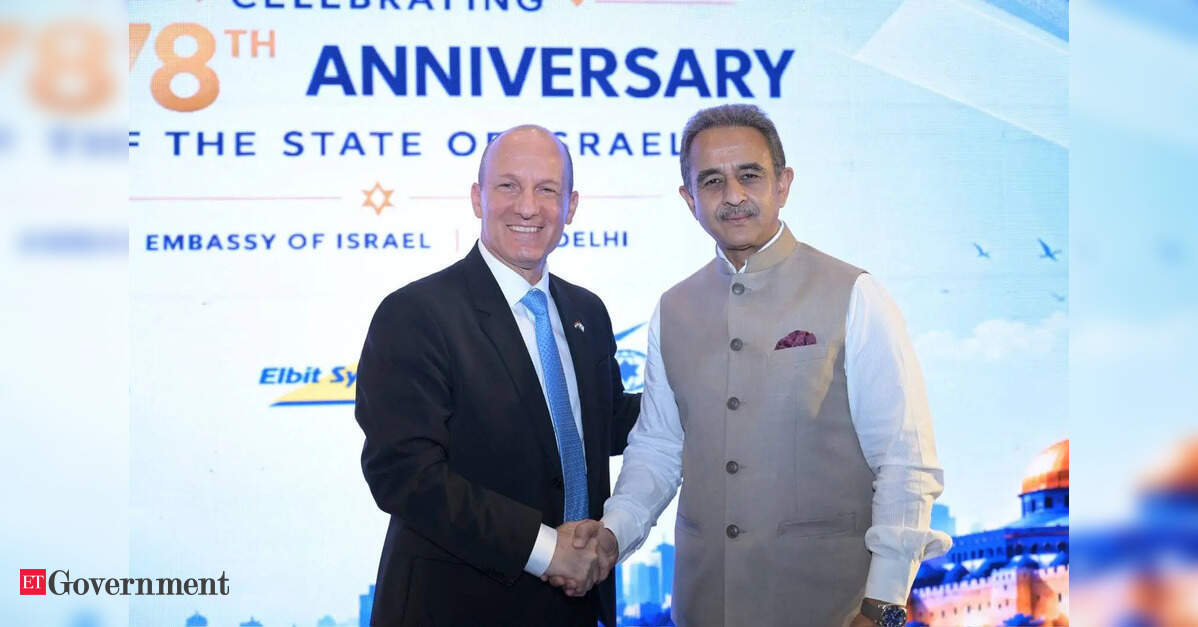
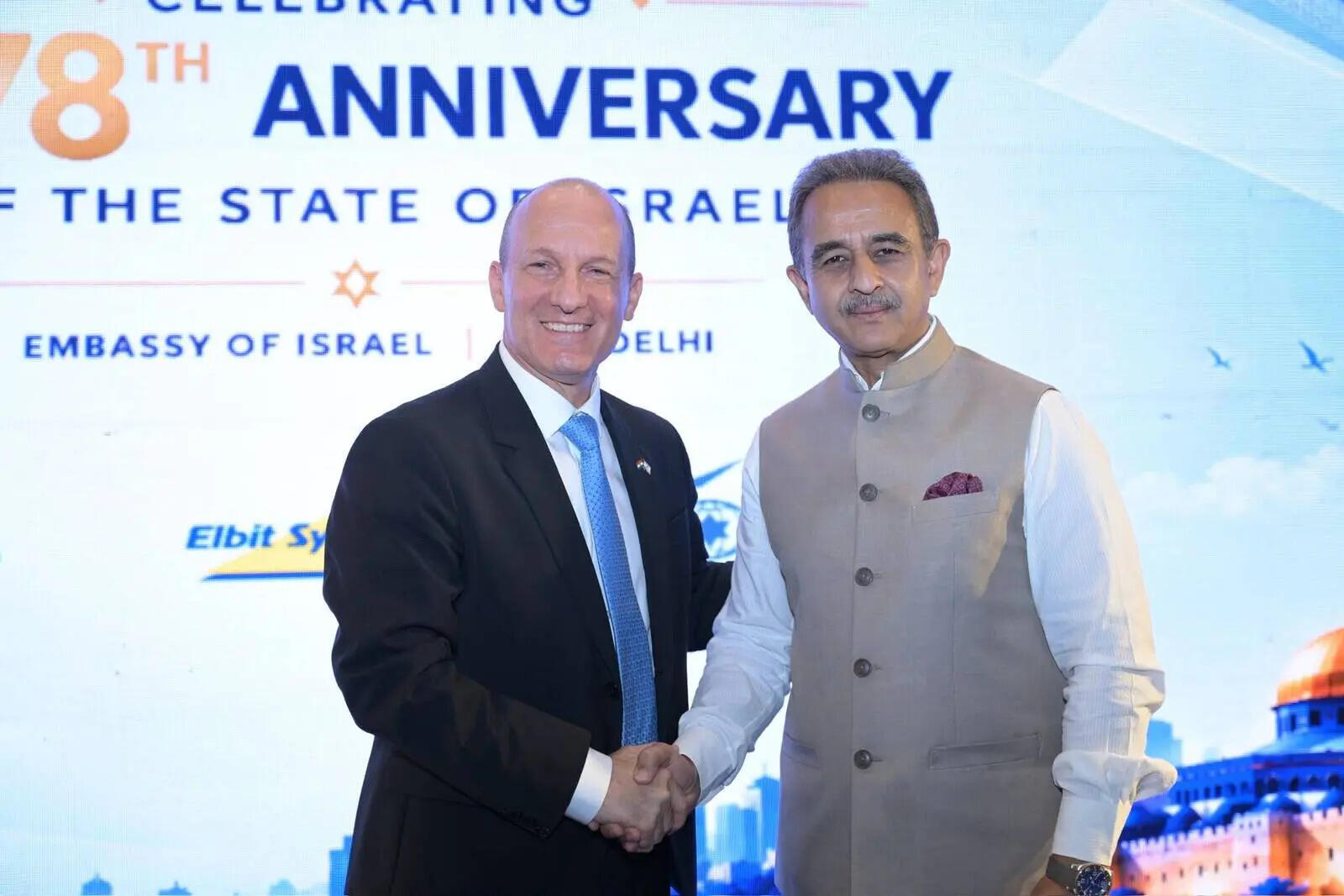
Against the backdrop of a turbulent regional security environment and continuing geopolitical uncertainty in West Asia, the Embassy of Israel in New Delhi marked the 78th Independence Day of the State of Israel with a diplomatic reception that highlighted Israel’s resilience, technological achievements, and deepening strategic partnership with India.
The event, on June 9, brought together political leaders, senior government officials, ambassadors, defence attachés, industry leaders, investors, strategic experts and members of the diplomatic community. The chief guest was Kirti Vardhan Singh, Union Minister of State for External Affairs, while the reception was hosted by Reuven Azar, Ambassador of Israel to India.
The celebration commemorated Israel’s Declaration of Independence on May 14, 1948, an event that marked the establishment of the modern State of Israel. This year’s observance carried particular significance as Israel continues to navigate a complex security environment while seeking to maintain economic growth, technological leadership and international partnerships.
Israel’s “Finest Hour”
In a speech that combined reflections on Israel’s security challenges with confidence about its future, Ambassador Reuven Azar portrayed the current period as a defining moment in the country’s history.
“This is our finest hour,” Azar said, arguing that Israel’s strength stems from both its military preparedness and the resilience of its society.
“Israel prevails because our brave warriors are systematically removing military threats, while our citizens are making our economy fly,” he remarked.
Highlighting the country’s economic performance despite wartime conditions, Azar noted that Israel has emerged as one of the world’s leading innovation-driven economies.
“Israel is becoming more powerful. A nation of just about ten million people has become one of the world’s leading technological powerhouses and is now among the countries with the highest per-capita incomes globally,” he said.
The Ambassador emphasised that economic success and technological innovation have remained central to Israel’s national story despite persistent security challenges.
“This miracle would not happen without the amazing resilience of Israelis and without the support we receive from friends around the world,” he said.
India and Israel: Civilisational Partners
A significant portion of Azar’s address focused on the growing convergence between India and Israel. He described both countries as ancient civilisations undergoing national renewal while confronting similar security and developmental challenges.
“India and Israel share much more than strategic interests. We are ancient Asian civilisations pursuing national revival. We both struggle against radicalism and terrorism, and we both strive for inclusive and sustainable development,” he said.
Recalling the landmark visit of Prime Minister Narendra Modi to Israel in 2026, Azar described it as a watershed moment in bilateral relations.
“Prime Minister Modi’s visit touched the hearts of Israelis. He spoke about our common heritage and the natural affection between our peoples,” Azar said.
He noted that bilateral ties were elevated to a strategic partnership during that period and have continued to expand.
“Despite difficult political circumstances in our region, India-Israel cooperation continues to deepen, moving beyond defence into critical infrastructure, innovation and emerging technologies,” he observed.
Celebrating Israel’s Journey
Addressing the gathering, Kirti Vardhan Singh congratulated the people and government of Israel on the country’s 78th Independence Day and highlighted the remarkable transformation Israel has achieved since its founding.
“Since its establishment in 1948, Israel has demonstrated extraordinary determination, innovation and resilience,” Singh said.
He praised Israel’s globally recognised achievements in technology, agriculture, water management and innovation-driven development.
“Israel’s accomplishments in technology, research, innovation and resource management have earned global recognition and continue to inspire countries around the world,” he noted.
The Minister also underlined the strength of India-Israel relations, describing them as a partnership built on mutual trust, shared democratic values and expanding cooperation.
Expanding Strategic Cooperation
The reception reflected the evolution of India-Israel ties from a largely defence-focused relationship into a multidimensional strategic partnership.
Over the past decade, cooperation has expanded into areas such as agriculture, water conservation, cybersecurity, artificial intelligence, semiconductors, innovation ecosystems, critical technologies, renewable energy and advanced manufacturing.
India and Israel today work closely on agricultural Centres of Excellence across multiple Indian states, while technology partnerships between startups, research institutions and private enterprises continue to grow.
The two countries have also strengthened collaboration in homeland security, defence technologies and counter-terrorism, areas that both governments regard as strategically important.
A Relationship Shaped by Shared Challenges
Several dignitaries and guests noted that India and Israel increasingly find common ground in addressing challenges related to security, economic modernisation and technological self-reliance.
Azar suggested that both nations have demonstrated how democratic societies can pursue rapid economic development while confronting security threats. “Our friendship is based on shared values, mutual trust and a belief that innovation can improve people’s lives,” he said.
As guests gathered to celebrate Israel’s national day, the reception served not merely as a diplomatic occasion but as a reminder of how relations between New Delhi and Jerusalem have evolved into one of the most dynamic partnerships in contemporary international affairs.
At a time of geopolitical uncertainty and shifting global alignments, the messages delivered by both Ambassador Azar and Minister Singh pointed to a common theme: resilience in the face of adversity, confidence in innovation-driven growth, and a determination to deepen cooperation between two countries that increasingly view each other as trusted strategic partners.