For decades, India occupied an unquestioned lead over Pakistan in the space domain. While India steadily built launch capability, remote sensing networks, navigation systems and increasingly sophisticated military applications, Pakistan’s space ambitions advanced at a modest pace and remained largely peripheral to the regional military balance.
That equation is beginning to change. Quietly but deliberately, Pakistan has accelerated its Earth observation programme in a manner that deserves far greater attention in New Delhi than it currently receives.
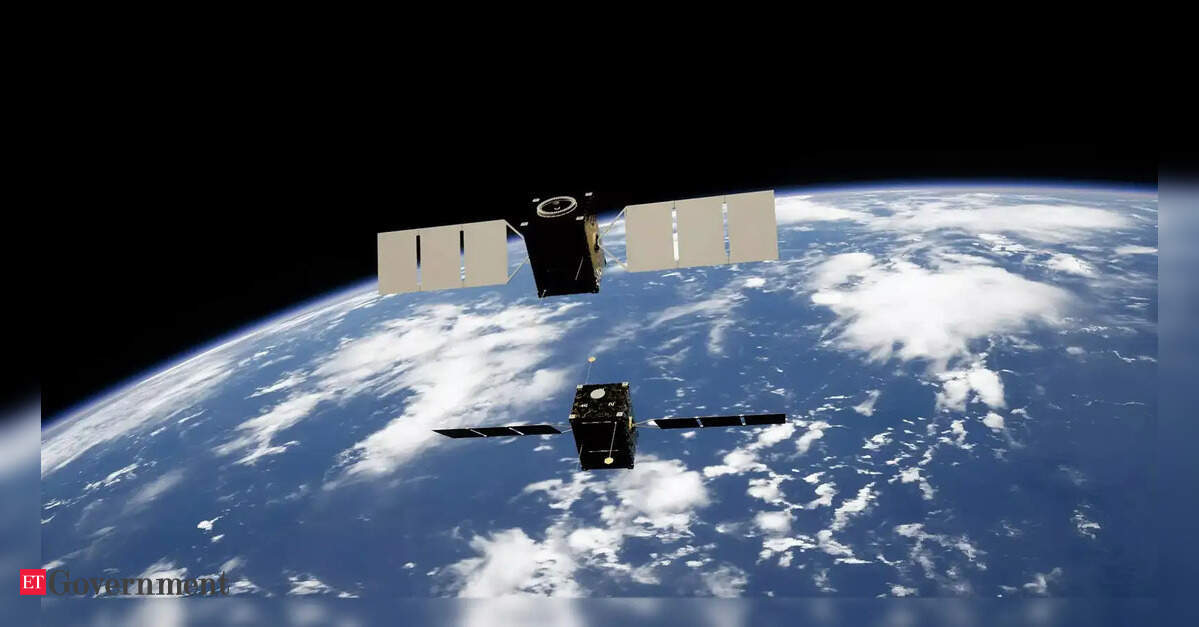
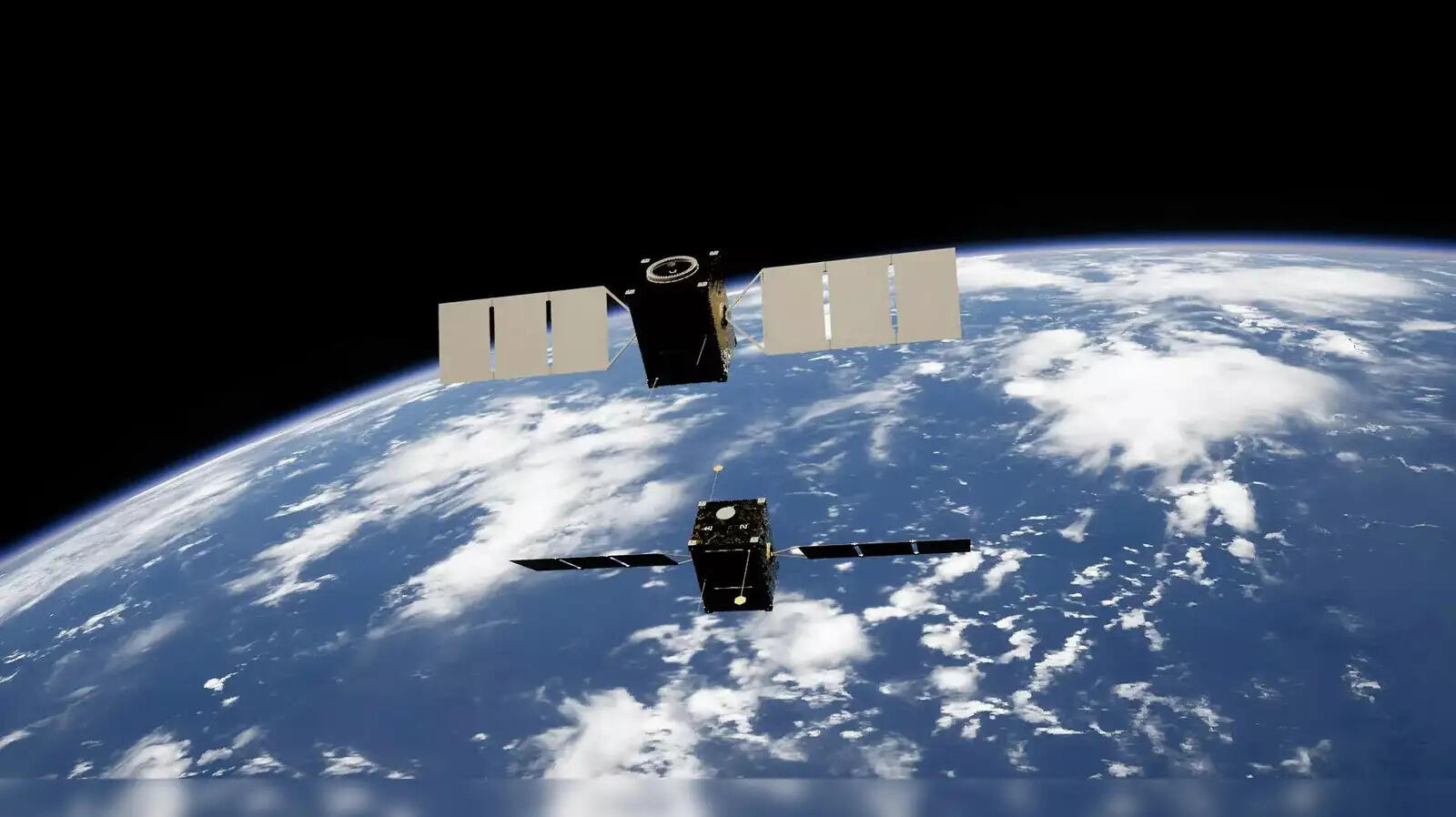
Over roughly sixteen months, Pakistan has placed six Earth observation satellites into orbit. Officially, these platforms have been presented as instruments for agriculture, environmental monitoring and disaster management. That explanation is neither unusual nor necessarily inaccurate, as most modern Earth observation programmes are inherently dual-use.
The distinction between civilian and military utility in space has become increasingly blurred. A sensor capable of tracking crop conditions can also identify unusual movement patterns. Terrain analysis intended for development planning can equally support military assessment.
This is what gives the recent expansion strategic significance.
The issue is not that Pakistan suddenly possesses a transformative military space capability. The issue is that it appears to be building a more persistent intelligence, surveillance and reconnaissance architecture than at any point in its history.
Higher resolution imaging, improved revisit cycles, and increasingly automated data processing reduce the gap between observation and action. Information that once required substantial time to collect and interpret can now move into operational decision making much faster.
In contemporary conflict, that shift matters.
Modern warfare increasingly rewards the side that identifies changes earlier, tracks activity more consistently and converts information into decisions more rapidly. Surveillance from space does not win wars by itself, but it shapes readiness, influences deterrence and narrows uncertainty.
Repeated observation allows patterns to emerge. Mobilisation becomes easier to detect. Infrastructure expansion becomes easier to monitor. Military planners gain greater confidence in assessing what an adversary is doing and where pressure points may exist.
For India, geography makes this especially relevant.
A satellite constellation that repeatedly observes sectors across northern and western India can contribute to monitoring military infrastructure, troop concentrations, logistical movement and broader patterns of activity. During periods of heightened tension, quicker access to information can affect both strategic signalling and operational planning. Even when such capability remains limited, the perception of improved visibility can influence decision making.
The design of Pakistan’s recent launches has also attracted attention among defence observers. Most satellites are reported to operate in sun-synchronous orbits, a standard choice for Earth observation because they enable repeated imaging under similar lighting conditions.
Consistency improves long-term comparisons and enhances the utility of surveillance. Reports suggesting that one satellite follows a different orbital profile optimised for regional observation naturally invite interest because orbital choices often reflect intended priorities.
This should not be interpreted as evidence of imminent military superiority. Every space-capable nation designs missions around strategic requirements. What makes Pakistan’s trajectory noteworthy is the speed of expansion and the ecosystem supporting it.
China remains central to that story.
Several Pakistani launches have relied on Chinese support and cooperation. More important than launch services, however, is access to technical expertise, infrastructure and the broader ecosystem that China has built across remote sensing, navigation and data integration.
China’s space capabilities have developed over decades and now span civilian and military applications at scale. Any sustained transfer of experience or access dramatically reduces the time required for Pakistan to improve its own capabilities.
Viewed in that context, recent developments appear less like isolated satellite launches and more like accelerated capacity building through strategic partnership.
History reinforces the significance of this shift. Pakistan’s space programme evolved gradually for decades and remained limited in scale compared with regional competitors. The concentration of launches over a short period stands out, suggesting a departure from past patterns. When capability growth becomes compressed rather than incremental, defence establishments cannot assume it is temporary.
India therefore should respond with seriousness but not alarm.
India retains substantial advantages across the space domain. Its industrial base is broader, its institutional experience deeper and its launch capability considerably more mature. India has developed a strong remote sensing infrastructure, operational navigation systems, and demonstrated counter-space capabilities. It possesses the foundations required to remain ahead.
However, strategic advantage depends less on accumulated capability and more on the ability to adapt.
Recent challenges in some Indian space programmes underscore the importance of resilience and execution. Technical delays are part of every major space programme, but sustained delays become more consequential when competitors accelerate.
Maintaining leadership requires continuity of investment and faster conversion of technological capacity into operational outcomes. A more resilient IRNSS, greater demand for launch capability, a joint force capability in space, and better revisit time over our key strategic security concerns are critical.
The answer is not numerical competition.
India does not need to mirror Pakistan’s satellite-for-satellite. It requires a coherent military space architecture that integrates surveillance, secure communications, navigation resilience, rapid launch capability and early warning systems into a unified framework.
Distributed constellations, greater redundancy and faster replacement cycles may ultimately prove more valuable than dependence on a limited number of strategic assets.
Integration across institutions will be equally important. Space generated intelligence must move quickly into military planning and theatre level operations. Sensors alone do not create advantage. The ability to process information, make decisions and act faster remains decisive.
India should also deepen investments in space domain awareness, electronic protection and defensive cum offensive counter space capabilities designed to preserve operational freedom while maintaining strategic stability. At the diplomatic level, India has an opportunity to shape international conversations around responsible military behaviour in space while strengthening cooperation with countries that share similar concerns.
Pakistan’s satellite expansion also carries a political message. It projects ambition and signals technological confidence to both domestic and international audiences. That signalling should not be ignored, but neither should it be overstated.
India enters this phase of competition with considerable strengths and a far stronger long term foundation. The real challenge is not catching up. It is avoiding complacency at a moment when strategic competition is expanding into new domains.
Space is no longer a supporting theatre. It increasingly underpins how military power is observed, organised and applied. Pakistan’s recent acceleration may not alter the regional balance overnight, but it does underline an important reality. Strategic advantages endure only when they are continually renewed.
India has the capability to remain ahead. The question is whether it acts with the urgency that the changing environment now demands.
(The author is a Lt. General (Retd.); Views expressed are personal)