The world’s geopolitical attention has largely remained focused on the wars in Europe and West Asia, the growing rivalry between the United States and China, and the economic uncertainty facing major economies.
Yet, another strategic theatre is quietly reshaping global power equations—the Indian Ocean. Home to some of the world’s busiest shipping lanes, critical energy routes and emerging maritime partnerships, the region has become central to the strategic calculations of every major power.
Against this backdrop, Prime Minister Narendra Modi’s State Visit to Seychelles from June 27 to 29 assumes significance well beyond ceremonial diplomacy. His participation as the Guest of Honour at Seychelles’ Golden Jubilee National Day celebrations is not merely a tribute to fifty years of bilateral relations.
It reflects India’s determination to strengthen its leadership role in the Indian Ocean and deepen partnerships with countries that occupy strategically important positions along global maritime routes.
The visit also comes at a time when New Delhi is transforming its maritime outreach. What was once primarily a security-focused engagement has evolved into a broader strategy encompassing defence cooperation, sustainable development, climate resilience, digital governance, economic connectivity and the blue economy.
In many ways, Seychelles has become one of the first countries where this comprehensive approach is expected to take concrete shape.
A Partnership Built on Trust
India and Seychelles have shared diplomatic relations since 1976, but the partnership has acquired unprecedented momentum over the past decade. Political exchanges have become more frequent, defence cooperation has expanded significantly, and India’s development assistance has emerged as one of the defining features of the bilateral relationship.
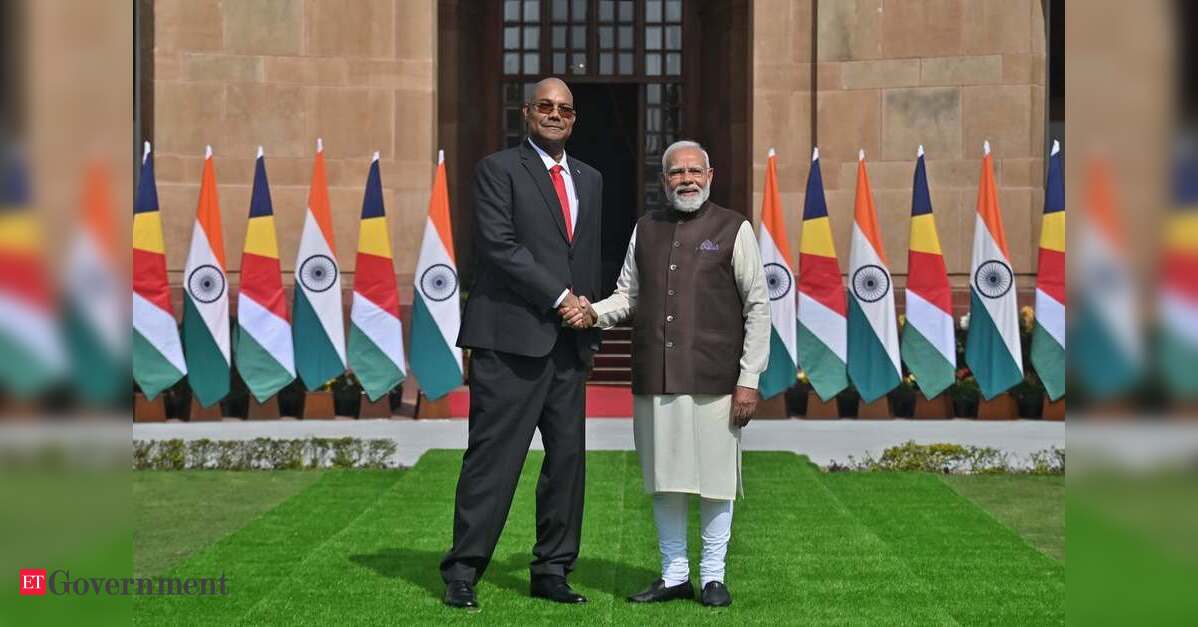
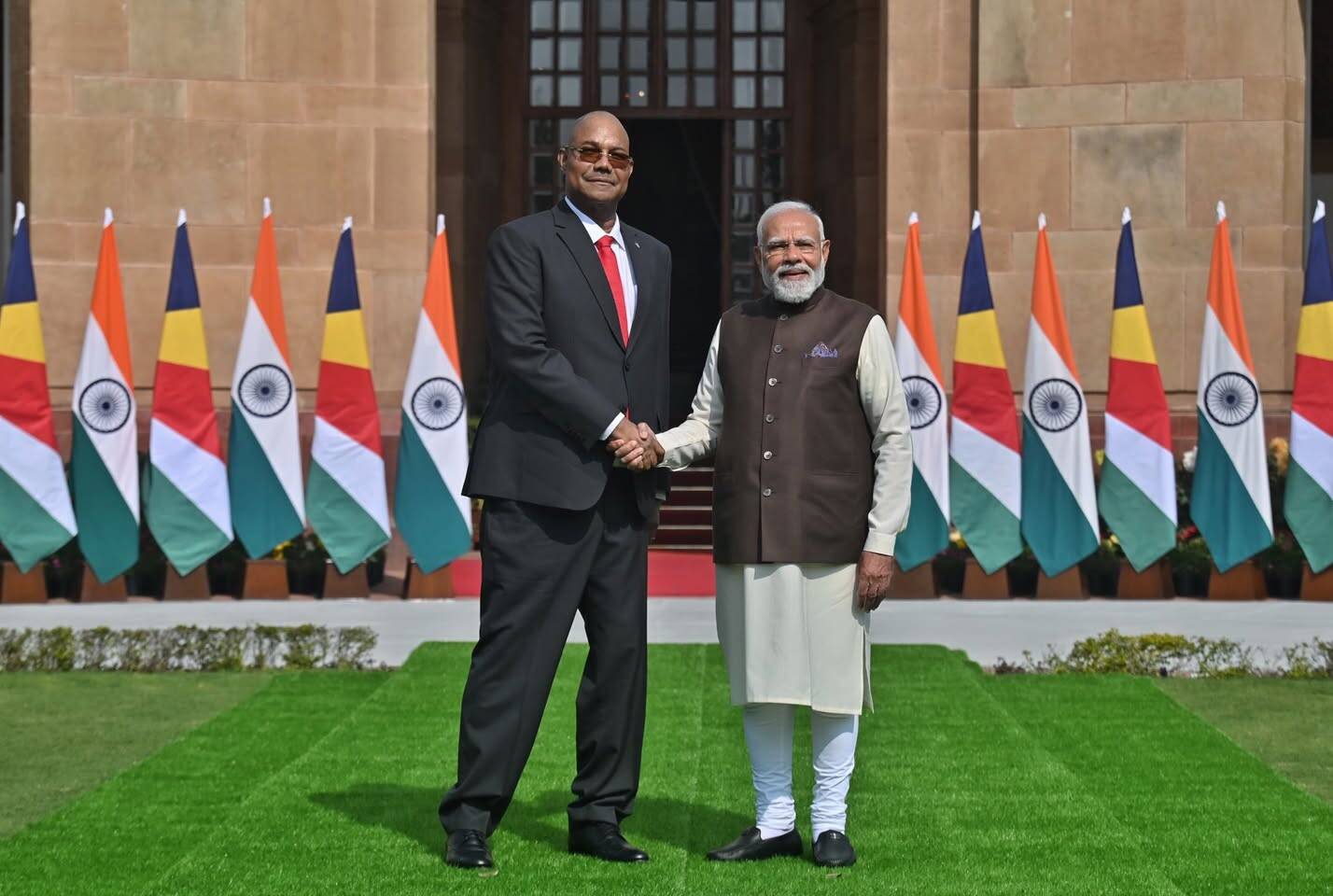
Prime Minister Modi’s visit follows Seychelles President Patrick Herminie’s State Visit to India earlier this year, during which the two countries unveiled the India-Seychelles Joint Vision for Sustainability, Economic Growth and Security through Enhanced Linkages (SESEL).
More than a routine joint declaration, the document provides a long-term roadmap covering maritime security, economic development, climate resilience, digital transformation, healthcare, education and institutional cooperation.
The Ministry of External Affairs has described the Prime Minister’s visit as an opportunity to further strengthen the close partnership between the two countries and advance the implementation of the ambitious vision adopted during President Herminie’s visit.
Prime Minister Modi had underlined the importance of the relationship during the February summit, stating, “Seychelles is an important maritime partner in India’s Vision MAHASAGAR.” He reiterated India’s commitment to supporting Seychelles’ development priorities while working together to promote peace, stability and prosperity across the Indian Ocean.
Why Seychelles Holds Strategic Importance
Measured by geography or population, Seychelles may appear to be a small island nation. Strategically, however, it occupies an extraordinarily important position in the western Indian Ocean.
Located near major international shipping routes linking Asia, Africa and Europe, Seychelles lies close to sea lanes through which a substantial portion of global trade and energy supplies pass. These waters have gained renewed strategic relevance following disruptions in the Red Sea, instability in parts of West Asia, concerns over maritime piracy and the increasing deployment of naval assets by major powers.
For India, maintaining maritime stability in this region is directly linked to national security and economic resilience. The country’s growing dependence on overseas trade and imported energy makes secure sea lines of communication an essential strategic priority.
Consequently, Seychelles has evolved into one of India’s closest maritime partners, playing an important role in enhancing maritime domain awareness, supporting anti-piracy operations and strengthening regional security cooperation.
From SAGAR to MAHASAGAR
One of the most significant expectations from Prime Minister Modi’s visit is the operationalisation of India’s evolving maritime doctrine.
When Prime Minister Modi introduced the SAGAR doctrine—Security and Growth for All in the Region—in 2015, the emphasis was primarily on collective maritime security and regional cooperation. Over the past decade, however, the strategic environment has become considerably more complex.
Today, India is expanding that framework through MAHASAGAR—Mutual and Holistic Advancement for Security and Growth Across Regions. The new vision recognises that maritime security can no longer be separated from economic development, climate resilience, digital connectivity, resilient supply chains and sustainable growth.
The partnership with Seychelles perfectly illustrates this evolution. The bilateral agenda now extends far beyond defence cooperation to include renewable energy, digital public infrastructure, healthcare, disaster resilience, tourism, fisheries, education and technology partnerships.
Maritime Security Remains Central
While the relationship has broadened considerably, maritime security continues to form its foundation.
India has consistently supported Seychelles through defence training, hydrographic surveys, coastal surveillance systems, naval platforms, maritime patrol assets and capacity-building programmes for the Seychelles Defence Forces.
The SESEL Joint Vision further deepens this cooperation by committing both countries to enhanced maritime domain awareness, intelligence sharing, coordinated maritime operations and stronger collaboration in maintaining a free, open and rules-based Indian Ocean.
This assumes greater significance at a time when strategic competition in the region is intensifying. China has steadily expanded its economic and maritime footprint across the Indian Ocean through infrastructure investments, port development and increased naval deployments. While neither India nor Seychelles publicly frames their partnership in terms of strategic competition, the broader geopolitical context inevitably shapes regional diplomacy.
Unlike infrastructure-led geopolitical competition, India’s approach has focused on capacity building, institutional partnerships and development assistance. Rather than creating dependency, New Delhi has consistently positioned itself as a trusted partner supporting local priorities and national ownership.
Development Partnership Beyond Traditional Aid
India’s development partnership with Seychelles has evolved into one of the most comprehensive among India’s engagements with Small Island Developing States.
During President Herminie’s visit to India, Prime Minister Modi announced a Special Economic Package worth USD 175 million, comprising a USD 125 million Line of Credit denominated in Indian Rupees and USD 50 million in grant assistance. The package is expected to support infrastructure development, institutional strengthening, community projects, maritime security and broader capacity-building initiatives.
Prime Minister Modi had emphasised that India would remain “a pivotal and reliable partner in Seychelles’ national development agenda.” That statement reflects New Delhi’s broader diplomatic philosophy of combining strategic cooperation with tangible developmental outcomes.
Observers expect the visit to review the progress of these initiatives while identifying new projects that can accelerate implementation of the SESEL framework.
Digital Diplomacy Takes Centre Stage
One of the emerging dimensions of the India-Seychelles partnership is digital transformation.
India’s success in developing Digital Public Infrastructure through platforms such as Aadhaar, Unified Payments Interface (UPI) and DigiLocker has attracted considerable international interest. Increasingly, New Delhi is positioning these platforms as global public goods that can support inclusive governance and digital service delivery in partner countries.
The SESEL vision identifies digital governance as an important area of future cooperation, opening possibilities for collaboration in digital identity, electronic payments, e-governance, cybersecurity and capacity building.
For India, exporting Digital Public Infrastructure has become an important pillar of its development diplomacy, complementing traditional infrastructure financing and technical assistance.
Blue Economy and Climate Cooperation
Climate change has become an existential challenge for Small Island Developing States, making environmental cooperation an increasingly important component of bilateral relations. Seychelles has emerged as one of the world’s leading advocates of the blue economy, promoting sustainable utilisation of marine resources while protecting fragile ocean ecosystems.
Recognising these priorities, India and Seychelles have committed themselves to expanding cooperation in renewable energy, marine conservation, climate adaptation, disaster resilience, sustainable fisheries and resilient infrastructure.
The two countries have also agreed to strengthen collaboration in disaster preparedness and climate-resilient development, reflecting the growing convergence between India’s climate diplomacy and the developmental priorities of island nations.
For New Delhi, these initiatives reinforce its broader commitment to becoming a leading partner for climate-resilient development across the Global South.
Expanding Economic Opportunities
Economic engagement is expected to feature prominently during the visit.
Although bilateral trade remains relatively modest, both countries recognise the considerable potential for expanding investment cooperation. Seychelles has encouraged greater Indian participation in sectors such as tourism, fisheries, financial services, renewable energy, digital technology, artificial intelligence and infrastructure development.
Industry representatives have also expressed optimism that the Prime Minister’s visit will generate renewed investor confidence and create fresh opportunities for business partnerships between the two countries. Greater connectivity, improved logistics and stronger institutional linkages are expected to facilitate higher levels of commercial engagement in the coming years.
More Than Strategic Interests
One of the enduring strengths of India-Seychelles relations lies in their human dimension.
The Indian diaspora has made significant contributions to Seychelles’ economy and society for generations. Indian doctors, teachers, professionals and technical experts continue to play an important role in the country’s development. Educational exchanges, healthcare cooperation, scholarships and cultural partnerships have created a reservoir of goodwill that distinguishes the relationship from purely strategic partnerships.
This strong people-to-people connect provides a durable foundation upon which both governments continue to expand cooperation in new sectors.
Looking Beyond Symbolism
Prime Minister Modi’s visit is expected to produce tangible outcomes rather than merely reaffirm existing commitments. Progress on implementing the SESEL Joint Vision, expansion of maritime cooperation, new development projects, digital partnerships and enhanced climate collaboration are likely to dominate discussions. Equally important is the larger geopolitical message.
As global strategic competition increasingly shifts towards the Indo-Pacific and the western Indian Ocean, India is steadily positioning itself as a reliable development partner capable of combining security cooperation with sustainable growth. Its engagement with Seychelles demonstrates an approach that seeks to build resilient institutions, strengthen local capacities and promote inclusive development rather than pursue narrowly defined geopolitical objectives.
The Road Ahead
Prime Minister Narendra Modi’s visit to Seychelles represents the next chapter in a relationship that has steadily evolved from traditional diplomatic engagement into a comprehensive strategic partnership.
The significance of the visit lies not only in commemorating fifty years of diplomatic relations but also in defining the agenda for the next fifty. If the commitments outlined in the SESEL Joint Vision are implemented effectively, the partnership could emerge as a model for India’s engagement with island nations across the Indian Ocean.
In an era where maritime security, climate resilience, digital transformation and sustainable development are becoming inseparable, the India-Seychelles relationship demonstrates how modern diplomacy is increasingly driven by comprehensive partnerships rather than isolated agreements.
For New Delhi, strengthening ties with Seychelles is not simply about one island nation; it is about reinforcing India’s long-term vision for a stable, secure and prosperous Indian Ocean that remains central to the country’s global strategic ambitions.