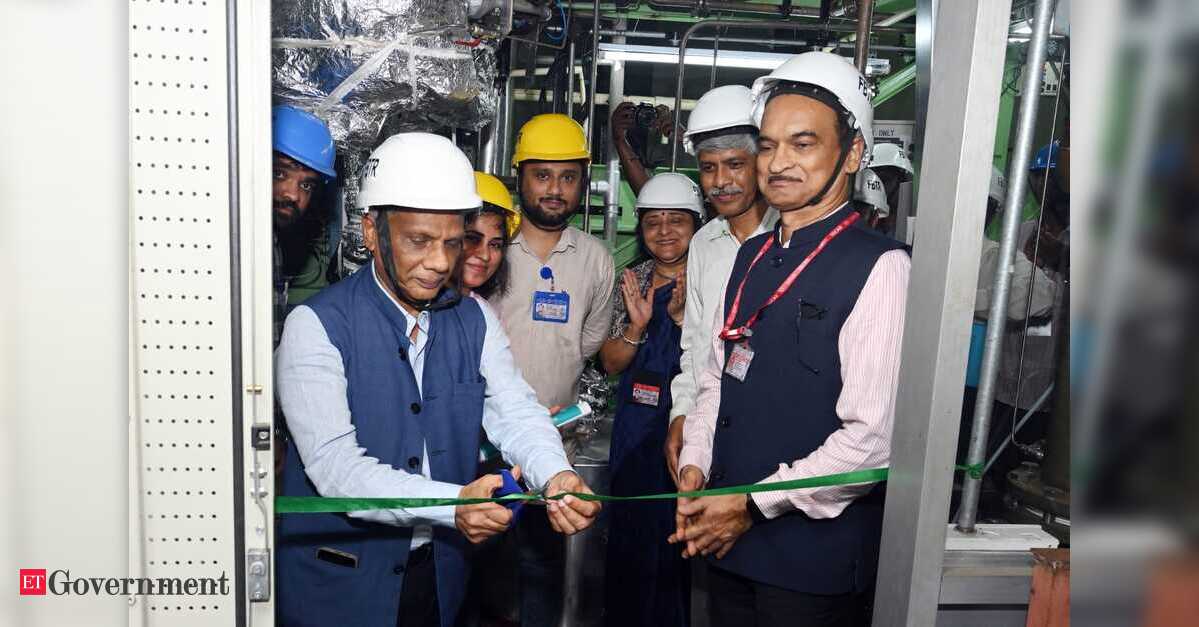
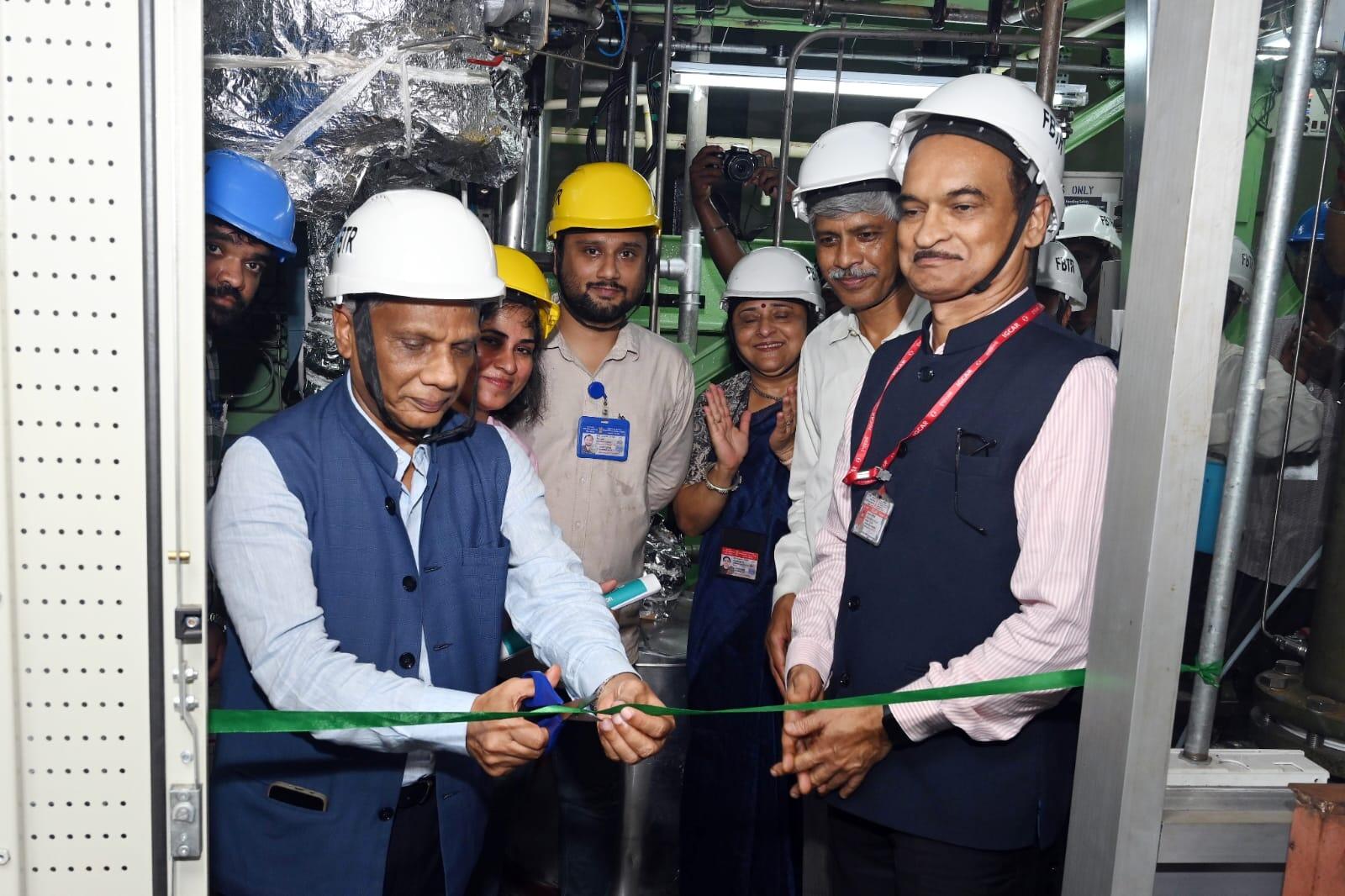
India has achieved a landmark milestone in clean energy and advanced nuclear technology. The Department of Atomic Energy inaugurated the world’s first hydrogen production facility based on the Copper-Chlorine thermochemical cycle, utilising nuclear process heat generated from the Fast Breeder Test Reactor at the Indira Gandhi Centre for Atomic Research in Kalpakkam, Tamil Nadu.
While the announcement has attracted attention for its “world’s first” status, its real importance lies in what it demonstrates: nuclear reactors may no longer be viewed merely as electricity producers, but as integrated clean-energy hubs capable of manufacturing one of the world’s most strategic industrial fuels.
For India, the project is much more than a scientific experiment. It represents the convergence of three national priorities — energy security, technological self-reliance, and decarbonisation. If the technology eventually proves commercially viable, it could fundamentally alter the economics of hydrogen production while expanding the role of India’s indigenous nuclear programme.
Beyond Electricity: A New Role for Nuclear Power
For decades, the debate around nuclear energy has largely focused on electricity generation. Yet electricity accounts for only part of global energy consumption. Heavy industries such as steel, fertilisers, petrochemicals, refining and shipping require enormous quantities of heat and industrial feedstock that renewable electricity alone cannot easily provide.
Hydrogen has emerged as the preferred solution for decarbonising these sectors. However, producing truly “green” hydrogen remains expensive because conventional electrolysis requires large quantities of electricity generated from renewable sources, whose availability fluctuates with weather conditions. The Kalpakkam project explores an entirely different pathway.
Instead of relying primarily on electricity, the plant uses process heat generated by the Fast Breeder Test Reactor to drive the thermochemical reactions involved in splitting water.
Only a comparatively small amount of electricity is needed during the electrochemical stage of the Copper-Chlorine cycle. Because the process operates at a maximum temperature of around 530°C — significantly lower than many competing thermochemical cycles such as sulphur-iodine, which require temperatures above 850°C — it is considered one of the most practical nuclear-assisted hydrogen technologies currently under development.
The Science Behind the Breakthrough
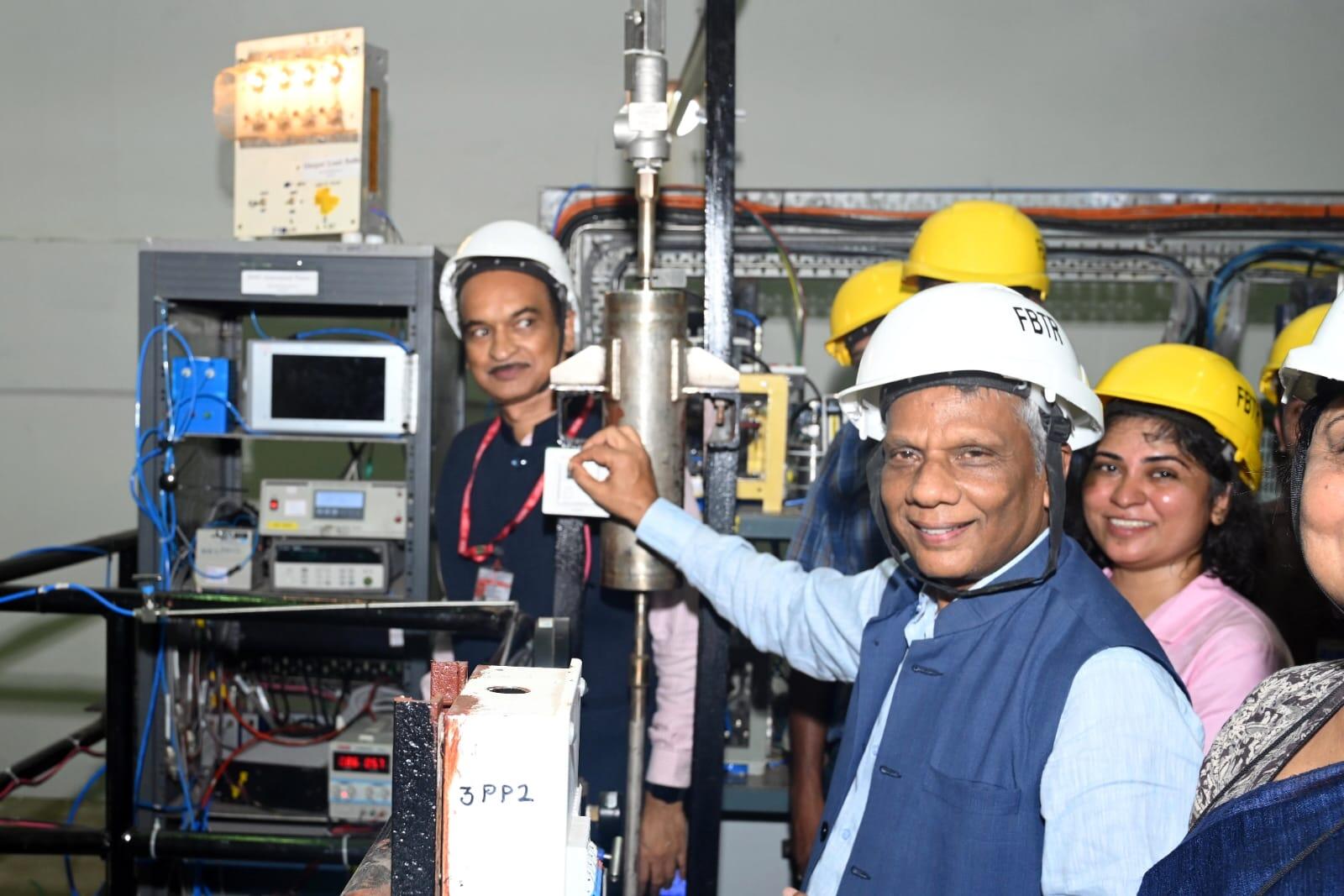
The Copper-Chlorine thermochemical cycle is a hybrid technology because it combines both thermochemical and electrochemical steps. Unlike conventional electrolysis, which depends entirely on electrical energy to split water molecules, the Cu-Cl process employs a series of recyclable copper and chlorine compounds. The net reaction decomposes water into hydrogen and oxygen, with all other chemicals recycled within the closed loop.
One of the biggest technical advantages is the significantly reduced electrical input required compared to conventional electrolysis. The electrochemical step generally operates between 0.6 and 1.0 volts — with the potential to reach 0.5 volts at lower current densities — considerably reducing electricity consumption.
The overall efficiency of the Cu-Cl cycle has been estimated at just over 43%, excluding additional potential gains from utilising waste heat. Because only water is consumed and hydrogen and oxygen emerge as the final products, the process produces virtually no carbon emissions when nuclear heat serves as the energy source.
The Cu-Cl thermochemical process was developed indigenously by the Bhabha Atomic Research Centre in Mumbai, while its integration with the reactor system was carried out jointly by BARC and the Indira Gandhi Centre for Atomic Research.
A Strategic Shift in India’s Energy Policy
India has already committed itself to becoming a major producer and exporter of green hydrogen under the National Green Hydrogen Mission. Much of that strategy currently revolves around renewable-energy-powered electrolysers.
The Kalpakkam demonstrator introduces another dimension. Unlike solar and wind energy, nuclear reactors operate continuously, producing stable high-temperature heat and electricity around the clock. That reliability could significantly improve hydrogen production economics by allowing plants to operate at high utilisation levels throughout the year.
This has implications extending well beyond hydrogen. Future advanced reactors could become integrated energy parks simultaneously producing electricity, hydrogen, industrial steam, desalinated water and synthetic fuels. Such multi-product facilities could substantially improve the economics of nuclear investments while supporting India’s rapidly growing industrial demand.
During the inauguration, Dr Ajit Kumar Mohanty, Secretary of the Department of Atomic Energy and Chairman of the Atomic Energy Commission, underlined precisely this strategic shift, observing that the integration of nuclear energy with emerging clean energy technologies such as hydrogen production represents a strategic pathway towards a sustainable energy future, and that nuclear power’s ability to provide reliable carbon-free electricity alongside high-temperature process heat makes it ideally suited for large-scale hydrogen production.
Strengthening India’s Fast Reactor Programme
The timing of the announcement carries additional significance. India has spent decades developing its three-stage nuclear programme centred on fast breeder reactor technology. The 500 MWe Prototype Fast Breeder Reactor achieved first criticality on 6 April 2026 — a crucial step in the second stage of that programme, though the reactor has not yet begun commercial power generation.
By coupling hydrogen production with the Fast Breeder Test Reactor, India is now demonstrating that advanced reactors can support industrial applications beyond electricity generation.
IGCAR Director Sreekumar G. Pillai described the achievement as the outcome of more than four decades of operational experience and technological excellence gained through the Fast Breeder Test Reactor programme, saying it showcases the versatility of advanced nuclear systems.
Why the World Is Watching
Globally, researchers have investigated thermochemical hydrogen production for several decades. Various cycles — including sulphur-iodine, hybrid sulphur and Copper-Chlorine — have shown theoretical promise but have struggled with engineering complexity, material degradation and commercial scalability.
What makes Kalpakkam unique is not merely that the Cu-Cl cycle works under laboratory conditions, but that it has now been integrated with a functioning nuclear facility, providing engineers with the opportunity to study reactor heat transfer to industrial hydrogen production under continuous operating conditions and to gather operational experience that will facilitate further optimisation and support future scaling efforts.
If successful, India’s experience could become an important global reference point for countries investing simultaneously in advanced nuclear reactors and hydrogen economies.
Challenges Still Lie Ahead
The inauguration marks an important beginning rather than the completion of the journey. Researchers must demonstrate that reactor heat can be transferred efficiently over prolonged operating periods without significant thermal losses.
Solids handling between processes and corrosive working fluids present unique engineering challenges that will need to be resolved under sustained real-world conditions. The economics of integrating chemical plants with nuclear facilities also require detailed evaluation.
Safety considerations will be equally important. Large-scale nuclear-assisted hydrogen production will require comprehensive regulatory frameworks covering chemical process safety, reactor integration, emergency management and water usage. Public confidence in expanding the industrial role of nuclear facilities will also need careful attention.
Perhaps the most important unknown is cost. Hydrogen technologies ultimately compete on economics rather than engineering elegance. The Kalpakkam demonstrator must generate sufficient operational data to estimate levelised hydrogen production costs at commercial scale — numbers that will determine whether nuclear-assisted hydrogen can compete with renewable-powered electrolysis and conventional fossil-based hydrogen with carbon capture.
A Platform for India’s Next Energy Revolution
India’s achievement at Kalpakkam illustrates an increasingly distinctive approach to technological development. Rather than importing mature technologies, Indian scientific institutions are combining indigenous nuclear expertise with home-grown hydrogen research to create entirely new industrial capabilities. The project also reflects the broader philosophy of Atmanirbhar Bharat by leveraging domestic institutions such as BARC and IGCAR to develop technologies with global relevance.
If future operational data confirms high efficiency, durability and competitive costs, Kalpakkam may ultimately be remembered not merely as the world’s first nuclear-assisted hydrogen plant, but as the beginning of a new industrial model in which nuclear reactors become integrated clean-energy factories.
In an era where nations are searching simultaneously for energy security, lower carbon emissions and technological leadership, India’s latest breakthrough offers an important reminder: the future of clean energy will not depend on a single technology, but on the intelligent integration of multiple advanced approaches. Kalpakkam has now placed India at the forefront of that emerging convergence.