

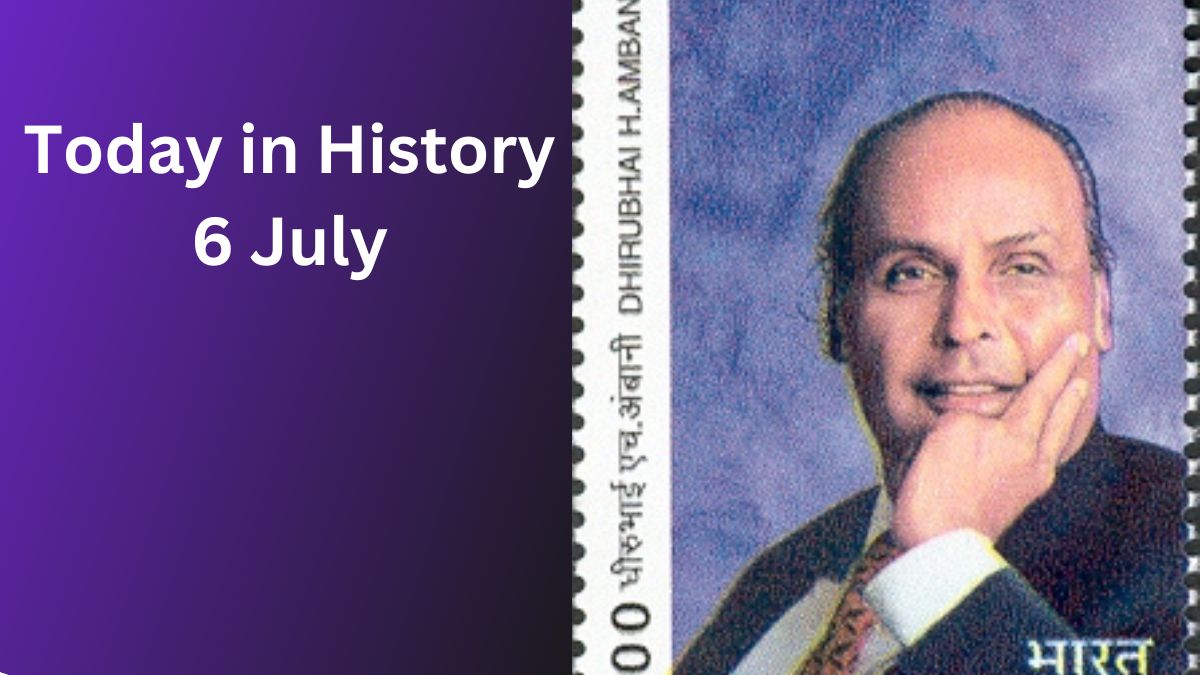
July 6 holds an important place in Indian and world history, marking significant political developments, scientific achievements, cultural milestones, and sporting accomplishments. The day is associated with notable personalities whose contributions have shaped literature, governance, sports, and social reform.

In India, July 6 is remembered for key events in the freedom movement, remarkable achievements in public life, and the birth anniversaries of distinguished individuals who continue to inspire generations.
Global Observances and Indian Celebrations on July 6
World Zoonoses Day
World Zoonoses Day is observed annually on July 6 to commemorate the successful administration of the first rabies vaccine by Louis Pasteur in 1885. The day raises awareness about zoonotic diseases-illnesses that spread between animals and humans-and emphasizes vaccination, disease surveillance, and public health.
Indian Significance
In India, hospitals, veterinary institutions, and public health organizations conduct awareness campaigns on rabies prevention, animal vaccination, hygiene, and responsible pet ownership. The observance also highlights India’s efforts to eliminate rabies and strengthen disease surveillance.
India Historical Events on July 6
1892 – Dadabhai Naoroji Elected to the British Parliament
Dadabhai Naoroji became the first Indian elected to the Parliament of the United Kingdom. Representing the Liberal Party, Naoroji used his position to advocate for Indian rights and famously presented the “Drain Theory,” explaining how British colonial policies economically exploited India.
1999 – Kargil War Operations Continue
During the Kargil War, Indian Armed Forces intensified operations to recapture strategic peaks. The battles fought during early July played a decisive role in India’s victory and remain symbols of courage and sacrifice.
Major World Historical Events on July 6
1885 – First Successful Rabies Vaccination
Louis Pasteur successfully administered the first rabies vaccine to a young boy, marking a milestone in medical science and preventive healthcare.
1942 – Anne Frank Goes into Hiding
Anne Frank and her family went into hiding in Amsterdam during the Second World War. Her diary later became one of the most widely read accounts of the Holocaust.
1957 – Althea Gibson Wins Wimbledon Singles Title
Althea Gibson became the first Black player to win the Wimbledon singles championship, breaking racial barriers in international tennis.
Famous Birthdays on July 6
Frida Kahlo (1907-1954)
Frida Kahlo is celebrated worldwide for her distinctive self-portraits and her influence on modern art and feminist thought.
Sylvester Stallone (1946)
The Hollywood actor, filmmaker, and screenwriter is best known for portraying Rocky Balboa and John Rambo in globally successful film franchises.
Ranveer Singh (1985)
Ranveer Singh is one of India’s leading actors, known for his performances in critically acclaimed and commercially successful Hindi films.
Indian Politicians Associated with July 6
Dadabhai Naoroji
Known as the “Grand Old Man of India,” Dadabhai Naoroji played a pivotal role in India’s freedom movement. As one of the founding members of the Indian National Congress, he inspired future leaders with his advocacy for self-governance and economic justice.
Bal Gangadhar Tilak
Tilak built upon Naoroji’s ideas and became one of the leading voices of the Indian independence movement, emphasizing self-rule and national unity.
Indian Cricketers Associated with July 6
Madan Lal
Early July often recalls the contributions of Madan Lal, a key member of India’s victorious 1983 Cricket World Cup team. His all-round performances played a crucial role in India’s historic triumph.
Indian Cricket Significance
The month of July is associated with India’s overseas tours, Test series, and preparations for major ICC tournaments. Cricket enthusiasts also remember the contributions of several legendary Indian players during this period.
Notable Deaths on July 6
William Faulkner (1897-1962)
The Nobel Prize-winning author passed away on July 6, 1962. His literary works remain influential in world literature.
Louis Armstrong (1901-1971)
One of the greatest jazz musicians of all time, Louis Armstrong transformed modern music with his innovative trumpet playing and unforgettable voice.
Jagjivan Ram (1908-1986)
Jagjivan Ram popularly known as Babuji, was an Indian independence activist and politician who served as a minister with various portfolios for over 30 years, making him the longest-serving Union Cabinet minister in Indian history.
Chetan Ananda (1921-1997)
Chetan Ananda was a Bollywood film producer, screenwriter and director from India, whose first film, Neecha Nagar, was awarded the Grand Prix Prize (now Golden Palm) at the first ever Cannes Film Festival in 1946)
Dhirubhai Ambani (1932-2002)
Dhirubani Ambani was an Indian businessman who founded Reliance Foundation in 1958. Ambani took Reliance public in 1977.
Indian Significance of July 6
For India, July 6 highlights the contributions of Dadabhai Naoroji, whose election to the British Parliament marked a significant moment in India’s struggle for representation and political rights. The day also promotes awareness about public health through World Zoonoses Day and recognizes India’s efforts in disease prevention and vaccination.
Early July additionally recalls the courage of Indian soldiers during the Kargil War and celebrates India’s sporting achievements in cricket and athletics.
Conclusion
July 6 is a day of historical, medical, political, and cultural significance. From Dadabhai Naoroji’s election to the British Parliament and Louis Pasteur’s breakthrough in rabies vaccination to Anne Frank’s story and the observance of World Zoonoses Day, the date represents milestones that have influenced the course of history.
The historical events, global observances, famous births, notable deaths, politicians, and cricketers associated with July 6 continue to inspire people worldwide. Their achievements emphasize the values of courage, public service, scientific innovation, equality, and perseverance, making July 6 an important date in history.
