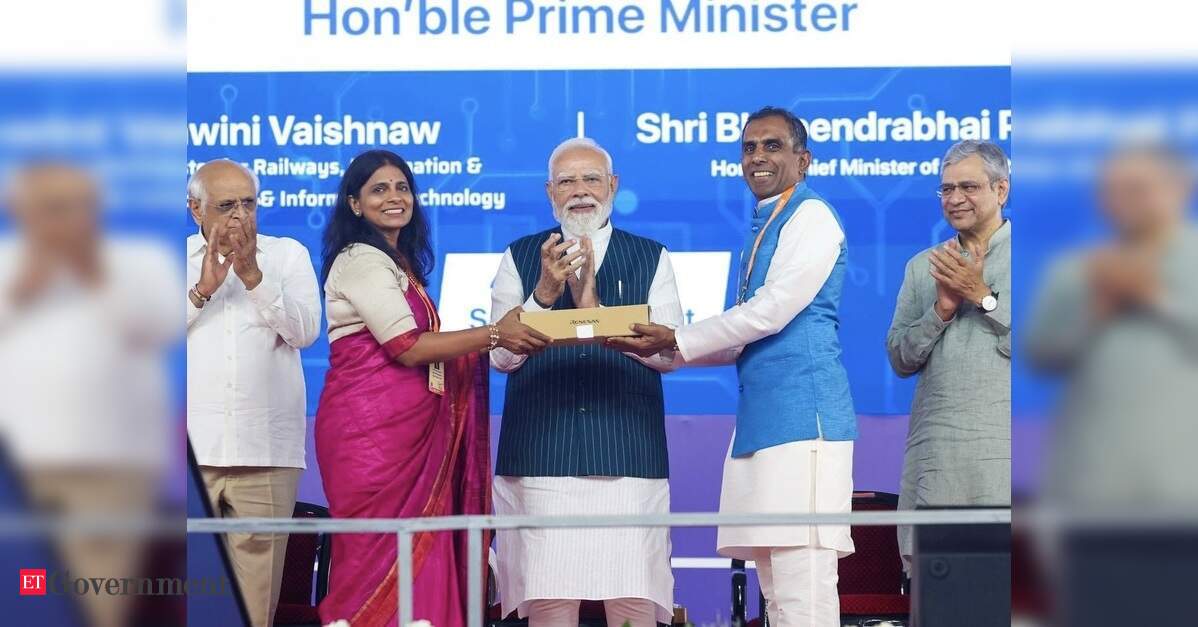
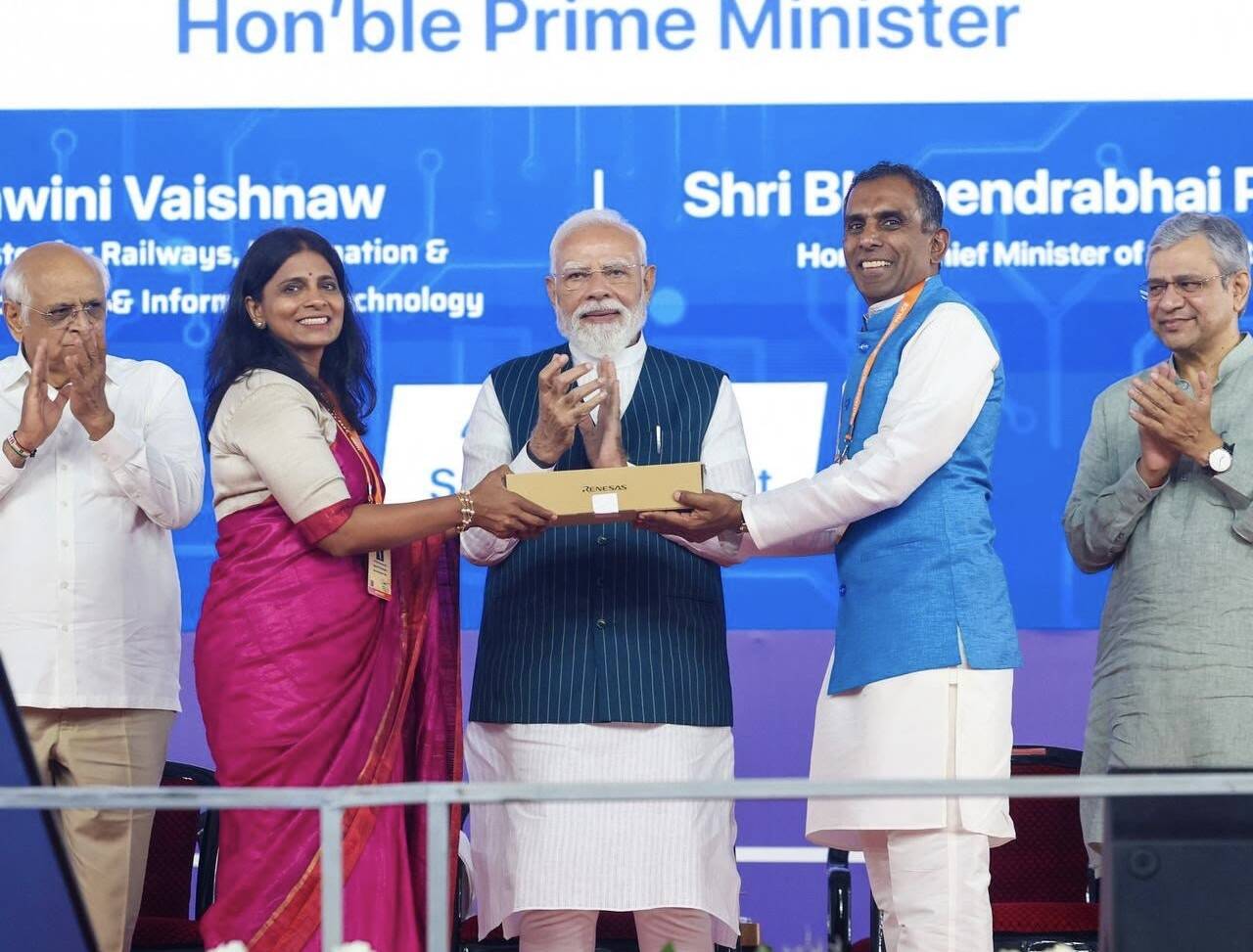
India’s semiconductor mission crossed another important milestone on Friday with the inauguration of the CG Semi Outsourced Semiconductor Assembly and Test (OSAT) facility at Sanand, Gujarat, marking the country’s third semiconductor packaging plant to enter commercial production within six months.For a country that until recently had virtually no domestic semiconductor manufacturing ecosystem, the rapid commissioning of multiple facilities represents a significant transition from policy announcements to industrial execution. It also signals that India’s semiconductor strategy is moving beyond attracting investment proposals to creating manufacturing capacity that can integrate the country into global electronics supply chains.
Inaugurating the facility, Prime Minister Narendra Modi described the development as evidence of India’s ability to convert ambitious commitments into measurable outcomes.
“Today’s program is proof that whatever India resolves to do, India achieves. Five years ago, India pledged to make the nation a semiconductor hub. We moved forward with the mantra of ‘Design in India, Make in India’. And today, commercial production of chip packaging has begun at the country’s third semiconductor plant,” the Prime Minister said.
From Policy to Production
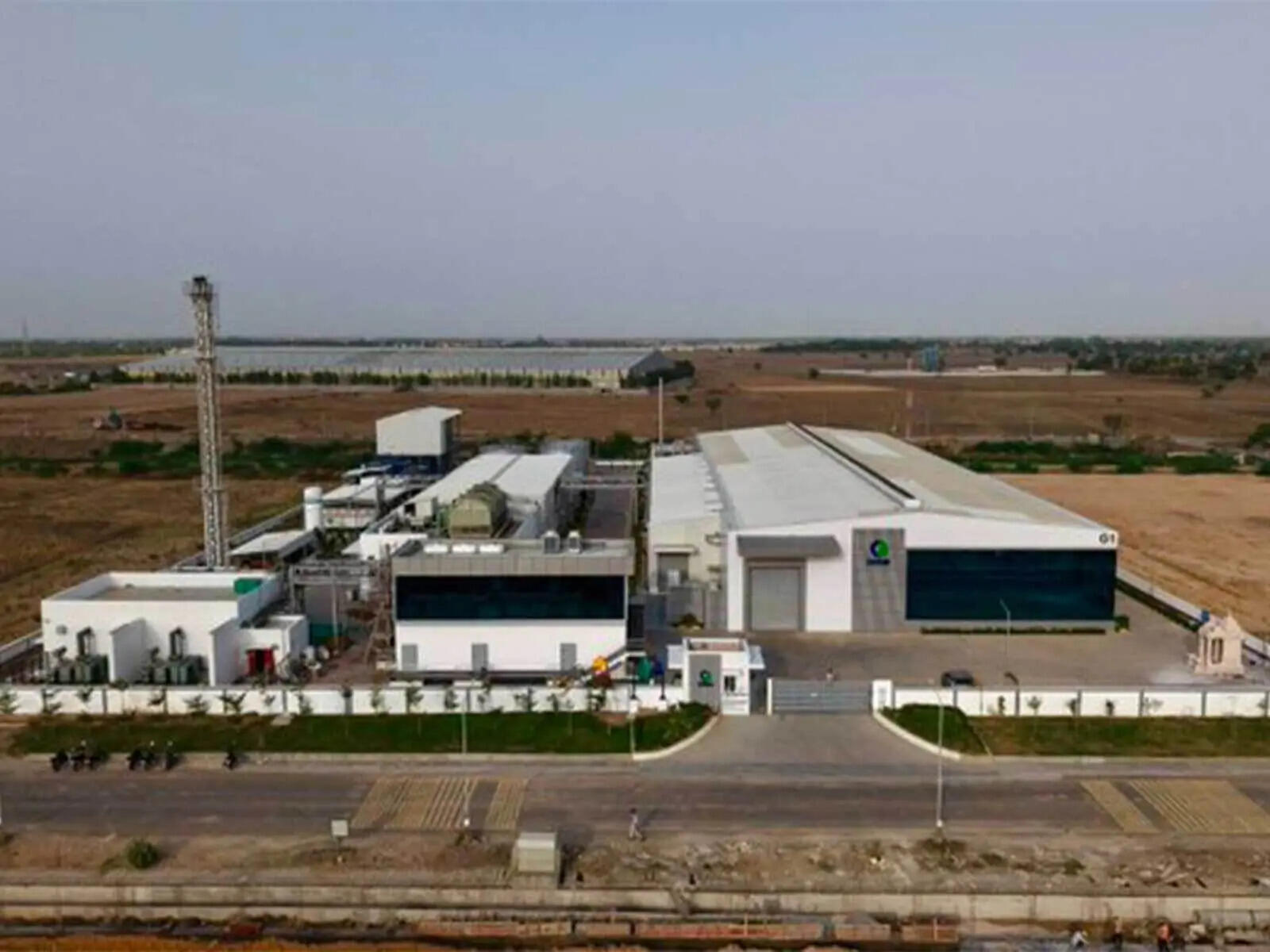 “>
“>The Sanand facility has progressed at an unusually rapid pace. Prime Minister Modi recalled that he had laid the foundation stone for the project in 2024, chip testing had commenced in 2025, and commercial production has now begun.
The speed of execution, he said, demonstrates a new approach to industrial development.
“This shows that today’s India not only sets big goals but also achieves them on time. This is the confidence India gives to the whole world, to every investor. Our policies are stable, our decisions are clear, and our execution is fast,” he said.
The Prime Minister also linked the project to India’s broader economic transformation. “Today’s India is fully committed to ease of doing business. With this commitment, 1.4 billion Indians will make India developed by 2047.”
Five Facilities Instead of Four
One of the most significant announcements during the event was that India’s semiconductor rollout is progressing faster than initially planned.
Referring to his earlier commitment, the Prime Minister said: “At the beginning of this year, I had said that by 2026, four semiconductor facilities would start. And today my minister has said—not four, but five. I am happy that in just six months, production has already begun in three projects.”
The statement reflects the accelerating pace of implementation under the India Semiconductor Mission, which has evolved from approving projects to bringing them into commercial operation.
Building a Complete Semiconductor Ecosystem
Union Minister for Electronics and Information Technology Ashwini Vaishnaw described the inauguration as another major milestone in India’s semiconductor journey.
According to the minister, the country is steadily developing capabilities across the semiconductor value chain—from design to fabrication, assembly, testing and packaging. He noted that India’s semiconductor programme is no longer limited to policy incentives but is beginning to create an industrial ecosystem supported by manufacturing, skilled manpower and research.
Vaishnaw also highlighted that the semiconductor programme has generated strong confidence among global investors, with multiple facilities progressing simultaneously across different states.
Strategic Significance Beyond Manufacturing
Semiconductors today occupy a strategic position similar to what oil represented in the twentieth century. They power virtually every modern technology—from smartphones and automobiles to defence systems, satellites, artificial intelligence infrastructure and advanced telecommunications.
India’s dependence on imported chips became particularly evident during the global semiconductor shortages following the COVID-19 pandemic, when disruptions affected automobile production, consumer electronics and industrial manufacturing worldwide.
By creating domestic assembly and packaging capacity, India is attempting to reduce supply-chain vulnerabilities while positioning itself as a trusted manufacturing destination in an increasingly geopolitically fragmented technology landscape.
Unlike semiconductor fabrication plants, which require extremely large capital investments and long gestation periods, OSAT facilities provide an important entry point into semiconductor manufacturing. They undertake assembly, testing and packaging of semiconductor chips before they are integrated into electronic products, making them a critical component of the global semiconductor supply chain.
Investor Confidence
Addressing investors, the Prime Minister reiterated the government’s commitment to maintaining a predictable policy environment.
“I assure the management of CG Semi and other investors—the path of reforms that India has chosen, the Reform Express we have boarded, will only accelerate further.”
The message was aimed not only at existing investors but also at global semiconductor companies evaluating India as an alternative manufacturing destination amid continuing efforts by major economies to diversify technology supply chains.
Employment and Skill Development
Beyond manufacturing capacity, the project is expected to contribute significantly to India’s high-technology workforce.
The Prime Minister referred to interactions with young professionals associated with the project, highlighting how semiconductor manufacturing is creating new career opportunities for Indian engineers and technicians.
“We have set out on the path of development. We are reaching new heights of progress. And in this journey, the semiconductor sector is becoming a great strength, creating new confidence.”
The emphasis on workforce development aligns with the government’s parallel investments in semiconductor design education, chip design startups and specialised skill development programmes.
A Long-Term Industrial Strategy
India’s semiconductor ambitions extend well beyond individual manufacturing facilities. The objective is to establish an integrated ecosystem that combines chip design, manufacturing, advanced packaging, research, equipment, materials and skilled talent.
The commissioning of the Sanand OSAT facility therefore represents more than the inauguration of another factory. It demonstrates that India’s semiconductor policy is beginning to deliver tangible industrial assets within relatively short timelines.
While India still has considerable distance to cover before emerging as a major semiconductor manufacturing hub comparable to established global leaders, the rapid commissioning of multiple facilities indicates that the country’s strategy is entering an implementation phase.
As the Prime Minister concluded: “Move forward with high goals. If we miss the mark, we will see, but we must march ahead.”