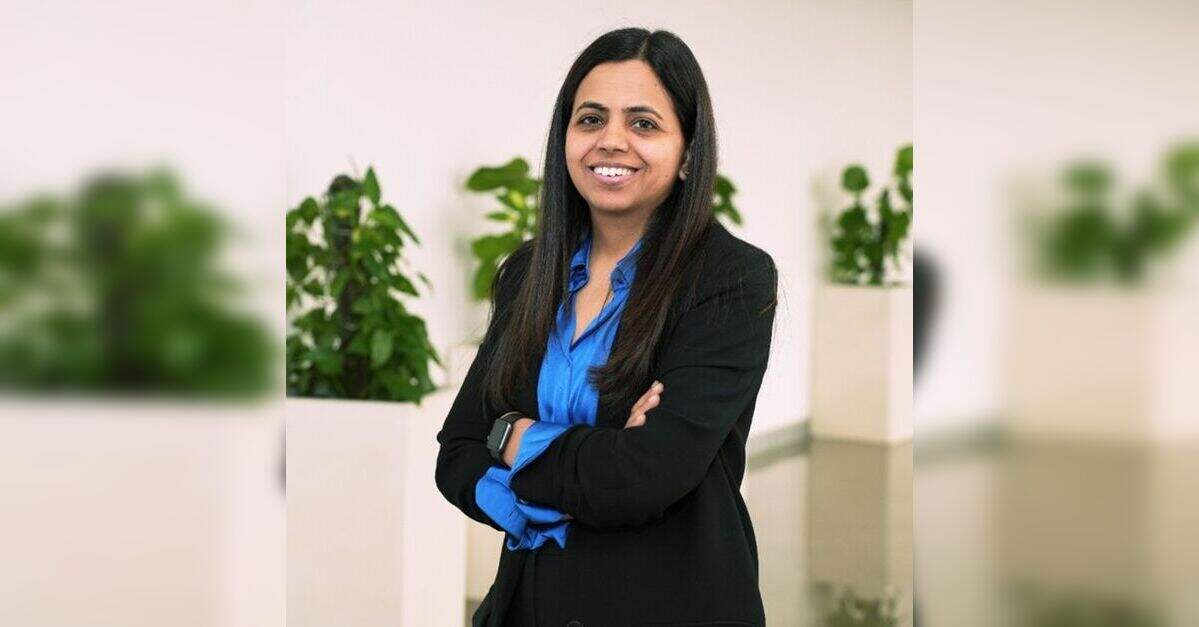
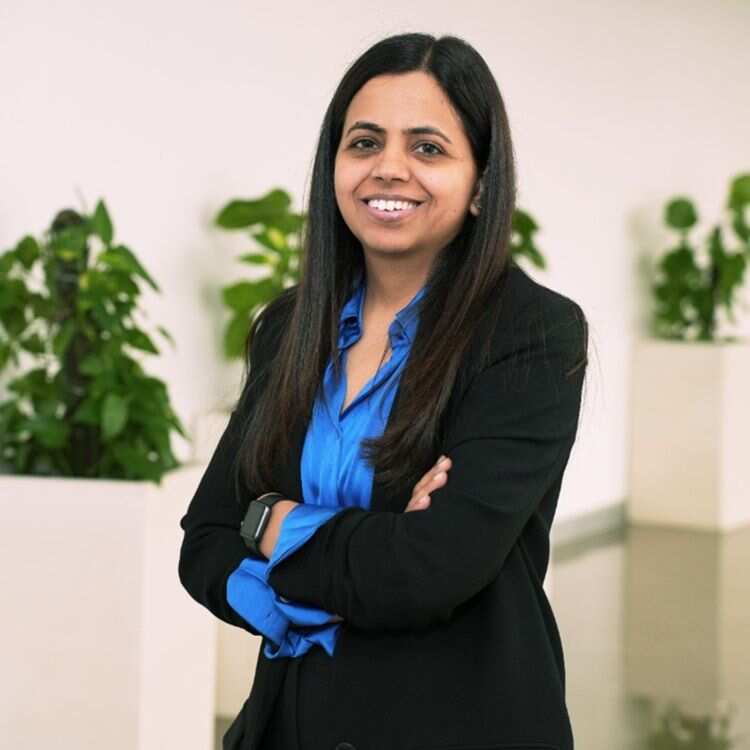
“The illiterate of the 21st century will not be those who cannot read and write, but those who cannot learn, unlearn, and relearn,” futurist Alvin Toffler famously observed decades ago. The statement has never felt more relevant. The children entering classrooms today are likely to work in professions that do not yet exist, solve problems that have not yet emerged, and collaborate with technologies that are still being invented. In an age defined by artificial intelligence, climate uncertainty, and rapidly evolving career pathways, the central question confronting educators is no longer what students should know, but who they need to become.In this exclusive conversation with ETEducation, Arti Dawar, CEO, Shiv Nadar School, reflects on the transformative shifts underway in Indian education from multidisciplinary learning and AI integration to the importance of emotional intelligence and human connection in classrooms. Drawing from her experience of leading one of India’s progressive school ecosystems, she argues that the future of education will depend not on technology alone, but on the ability of schools to nurture confident, compassionate, and future-ready individuals.
Reimagining classrooms for the NEP era
For Dawar, the National Education Policy’s vision of skill-based and multidisciplinary education is rooted in holistic and experiential learning.”The NEP 2020 strongly promotes the ideas of holistic, integrated learning as well as learning by doing,” she says. “By offering a wide range of learning domains, it promotes multidisciplinary learning while encouraging cross-disciplinary integration, particularly through experiential learning.”
She believes the policy aims to nurture a generation of learners who are curious, entrepreneurial, open to taking risks, and confident in their abilities.
To achieve this vision, Indian classrooms, she says, must fundamentally shift their priorities over the next three to five years. “Classrooms will need to prioritise collaboration, inquiry and creation over the mere reception and processing of information.”
This transition, she explains, requires more than curricular reforms. It calls for flexible learning spaces that encourage active participation, a redesign of both digital and non-digital learning resources as tools for discovery, and a rethinking of how schools use time across the academic year. Above all, it requires substantial investments in teacher training to ensure the aspirations of the NEP are translated into meaningful classroom practices.
AI in schools: A tool but not a substitute for thinking
As schools increasingly experiment with artificial intelligence, Dawar believes the biggest challenge is not technological adoption but understanding its appropriate role in education.
“One of the biggest challenges schools face in integrating AI is a lack of understanding of how it can be used and should be used in school spaces,” she says.
Drawing on a compelling analogy, she adds, “The idea should be to have AI handle the dusting and washing, so it can free us up for creative endeavours, rather than outsourcing thinking and creativity to AI, which would undermine learning itself.”
She believes educators must first understand the dimensions and possibilities of AI before integrating it into teaching and learning environments. This, in turn, requires a significant mindset shift among teachers.
“Teachers need to move away from seeing themselves as primary knowledge providers and prepare to be mentors, coaches, and guides.”
Dawar also emphasises the importance of academic honesty in the AI era. While AI can support research and help students refine their ideas, it should never replace original thinking.
“We need to promote academic honesty by valuing a student’s unique voice and vision, rather than mere content accuracy,” she says.
Equally important is helping students move from simply finding correct answers to asking meaningful questions. Viewed through this lens, AI can become a powerful tool for personalised learning and efficiency rather than merely an instrument for automation.
A generation growing up with AI
Students, Dawar observes, adapt to AI-enabled environments with remarkable ease.
“As Homo sapiens, and especially Homo Faber, we are particularly adept with tools, and each new generation tends to acquire the skills required to use new tools and technology as part of their neuro-motor and cognitive development,” she explains.
However, she cautions that, like any new tool, AI must be introduced responsibly.
“It is important to teach both its uses as well as its risks.”
Schools, therefore, have a critical role to play in creating safe environments where students can explore AI under guidance and with clear ethical boundaries.
At present, she notes, many students use AI as a research assistant or for personalised learning, while a significant number still seek greater AI literacy to understand its constructive applications.
Academic dishonesty and AI-generated inaccuracies occasionally surface in student work, but Dawar believes these challenges can be mitigated through process documentation and multimodal assessments that require students to defend their ideas and arguments.
Her greater concern, however, lies elsewhere.
“The concerning trend is the ‘AI friend’, which poses a risk of replacing real friendships and relationships, particularly for emotionally vulnerable children.”
Keeping humanity at the centre of schooling
Even as schools adopt AI-driven tools, Dawar remains convinced that human connection will continue to define meaningful learning experiences.
“As a school, we believe in the ‘high touch high concept’ philosophy,” she says.
Technology can certainly make learning processes more efficient and personalised, but it cannot replace the warmth, empathy, and relationships that help children flourish.
“While AI can help them hone their skills, the teacher, as a mentor, guides them in figuring out who they want to be and how they want to excel.”
She envisions a future where AI handles routine tasks such as creating and evaluating assessments, freeing educators to spend more time listening to students, mentoring them, and offering individual support.
At the same time, schools must intentionally create opportunities for collaboration and relationship-building, helping children learn to trust, appreciate differing perspectives, and form meaningful human connections.
“This is particularly important in a world where social isolation is a reality and relationships have become increasingly fragile through excessive dependence on social media,” she says.
“We need to teach children how to forge meaningful relationships in the real world and maintain them.”
Preparing students for jobs that don’t yet exist
The phrase “preparing students for jobs that do not yet exist” has become commonplace in education conversations, but Dawar believes the underlying capabilities required for such a future are becoming increasingly clear.
“We need to develop higher cognitive skills in our students, enabling them to make ethical and value judgments and engage in complex problem-solving that requires empathy and multiple perspectives.”
Students, she says, must learn to make technology work for them, become AI literate, and develop the ability not just to interpret data but also to ask the right questions of it.
A deeper understanding of sustainability and the ability to make responsible life choices will also be critical.
However, one capability stands above all.
“They need to develop anticipatory capability, which is the ability to see beyond the bend and prepare for the changes to come.”
This requires adaptability, emotional intelligence, curiosity, entrepreneurial thinking, and the willingness to take calculated risks.
Ultimately, she says, the future belongs to lifelong learners who can think on their feet without losing sight of larger goals and possibilities.
Lessons in leading through change
Leading a progressive school ecosystem such as Shiv Nadar School has reinforced Dawar’s belief that innovation in education must always be guided by purpose.
“While technologies and policies evolve rapidly, the role of the school remains constant: to nurture confident, curious, and compassionate learners through a holistic approach to education.”
One of her most significant learnings has been the importance of listening.
“We are a listening school. By listening closely to our students, teachers, and parents, I have learnt that meaningful change comes not from tools alone, but from people who feel heard, trusted, and empowered.”
She believes that investing in educators and learning alongside the broader school community ensures that progress remains thoughtful, responsive, and centred on the child.
The future-ready school leader
In an era shaped simultaneously by policy transformation, technological disruption, and changing societal expectations, Dawar believes school leaders must move beyond preparing students merely for employment.
“Modern school leaders need to move away from preparing students only for careers and instead focus on preparing them for life.”
This demands a shift from stream-based specialisations towards multidisciplinarity, skills-based learning, emotional regulation, and an appetite for risk-taking.
Industry trends support this direction. Citing recent employment reports, Dawar points out that more than 80 per cent of employers adopted skills-based hiring practices in 2024, up from 73 per cent in 2023. The implication for schools is clear: capabilities such as adaptability, collaboration, critical thinking, and problem-solving matter as much as academic credentials.
She advocates developing “deep generalists” among both educators and students and creating learning environments that encourage interdisciplinarity, collaboration, and inquiry-driven learning.
“Projects based on thematic questions or real-world problems are great for this purpose and should be designed with a student’s voice and choice in mind.”
Reflection, she adds, is equally important because it is through reflection that individuals expand their horizons and deepen their learning.
As the world enters an era defined by rapid and continuous change, Dawar sees schools playing an even more critical role in society.
“In the era to come, schools will be the nurseries for our children to blossom into well-adjusted and confident adults, and we need to build the right environment and conditions to allow this blossoming to take place.”
The future remains unwritten. The careers today’s children will pursue, the technologies they will create, and the challenges they will inherit are still beyond the horizon. Yet, if there is one certainty emerging from conversations across education, it is this: the role of schools is no longer simply to prepare students for examinations or even professions, but to help them become lifelong learners and deeply human individuals. In that journey, the most future-ready schools may well be those that teach children not what to think, but how to think, adapt, connect, and continue learning long after they leave the classroom.