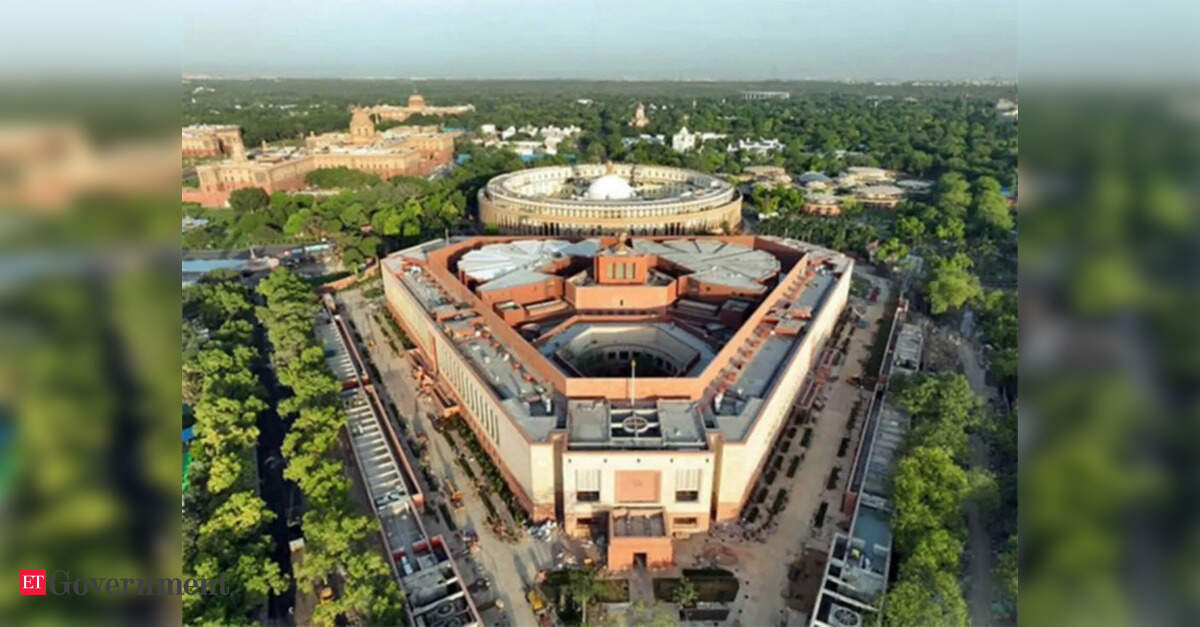
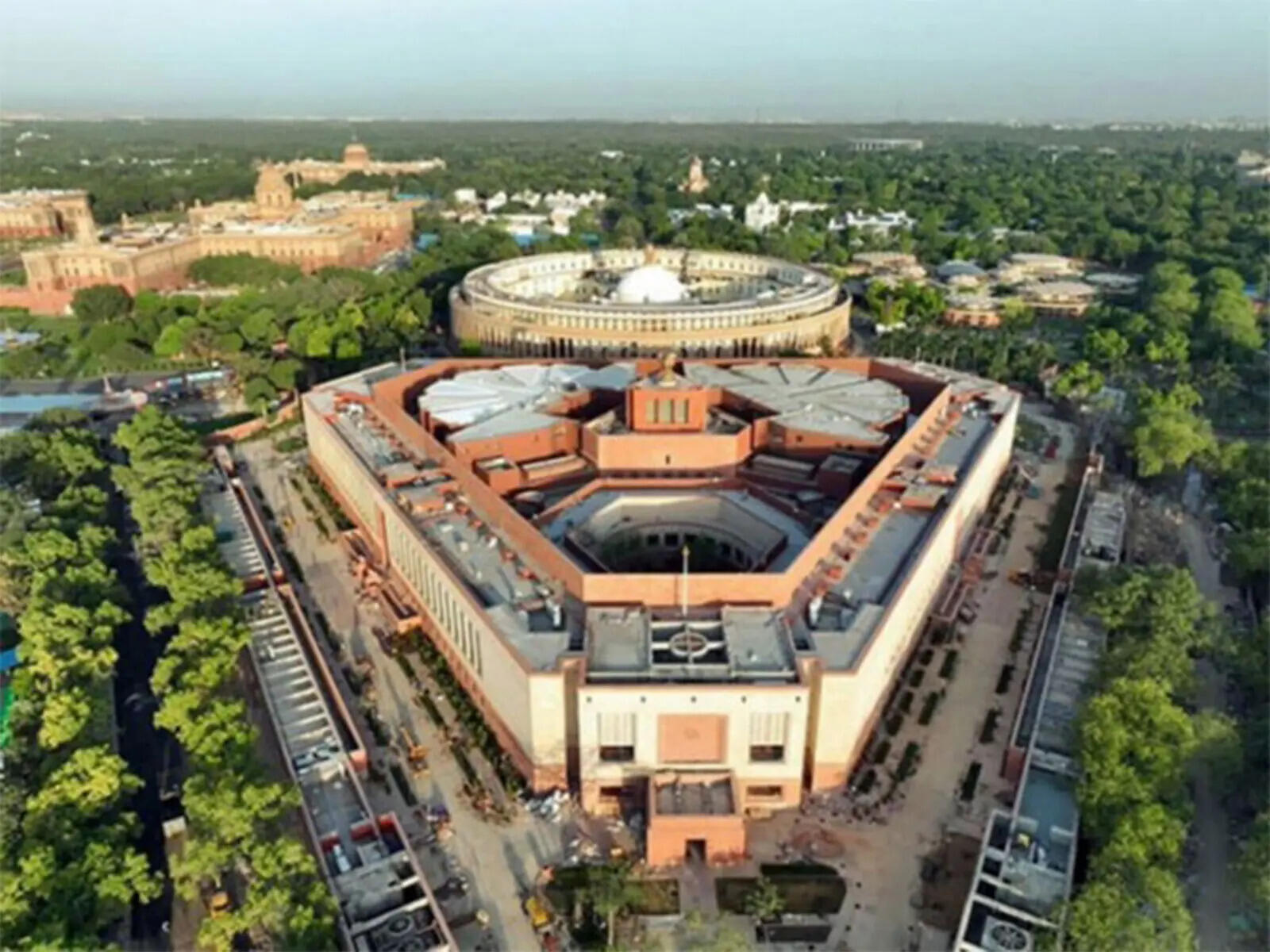
Parliament’s Monsoon Session begins today (July 20) amid an unusually charged combination of legislative ambition, constitutional contestation, student unrest and shifting political equations.
Scheduled to continue until August 13, the session is likely to test not only the government’s ability to advance its legislative programme but also the Opposition’s capacity to remain united and compel sustained debate on issues outside the official agenda.
The government has listed eight Bills for consideration during the session and has appealed to all parties to ensure the smooth functioning of both Houses. The Opposition, however, intends to raise alleged irregularities in the National Eligibility-cum-Entrance Test and other examinations, the handling of activist Sonam Wangchuk’s hunger strike, the controversy over donations to the Ram Temple in Ayodhya, ethanol-blending policy and the possibility of a fresh delimitation initiative.
The result could be a session in which the formal legislative agenda competes continuously with a wider political debate over accountability, federalism and the right to protest.
The political fault lines were visible at the customary all-party meeting chaired by Defence Minister and Deputy Leader of the Lok Sabha Rajnath Singh. Parliamentary Affairs Minister Kiren Rijiju, Leader of the House in the Rajya Sabha J.P. Nadda and representatives of the major parties attended the meeting.
Rijiju urged the Opposition to challenge the government through debate rather than disruption. “By protesting, no one is going to benefit politically,” he said, while appealing to parties to extend “positive support” to the Bills listed for the session. He maintained that the public wanted Parliament to function smoothly and without turmoil.
That appeal is unlikely to prevent confrontation. The Opposition’s central argument is that Parliament cannot restrict itself to government-selected legislation when politically and socially sensitive questions are demanding institutional scrutiny.
Congress deputy leader in the Lok Sabha Gaurav Gogoi said the Opposition had sought discussions on the alleged misappropriation of Ram Temple donations, examination irregularities, student concerns and ethanol blending. “The government should express its sensitivity” over the temple donation issue, he said, warning that avoiding a debate could carry political costs.
The government will seek to distinguish between allowing discussion and permitting the Opposition to dictate the timetable of the House. Much will therefore depend on whether the presiding officers admit adjournment motions, short-duration discussions or other procedural devices through which the Opposition can raise its concerns.
Delimitation remains the largest constitutional question
Although the government’s announced legislative programme is comparatively limited, political attention is concentrated on whether it will introduce a delimitation measure linked to the implementation of women’s reservation in Parliament and state legislatures.
The Constitution (One Hundred and Sixth Amendment) Act, which provides 33 per cent reservation for women in the Lok Sabha and state assemblies, ties its implementation to a delimitation exercise conducted after the publication of the first Census following the amendment.
This makes delimitation more than a technical redrawing of constituency boundaries: it has become a debate over representation, demographic change and the balance of political power among states.
The concern among several southern parties is that a redistribution based primarily on population could reduce the relative influence of states that recorded lower population growth after successfully implementing family-planning policies. Northern states with larger populations could, by contrast, gain a greater share of parliamentary seats.
Prime Minister Narendra Modi has sought to address such apprehensions. Speaking earlier on the subject, he said, “The proportion of seats will not change; the increase will be in the same proportion,” offering an assurance that the existing balance among states would be protected if the overall strength of the Lok Sabha were increased.
The precise design of any proposal will nevertheless be decisive. Increasing seats without reducing any state’s existing representation may soften resistance, but it will not automatically resolve questions about the formula for allocating new constituencies. It could also reopen debates over federal balance, the size of the Lok Sabha and the institutional capacity of the new Parliament building.
For the government, linking delimitation with women’s reservation could broaden the political appeal of the proposal. For the Opposition, however, the two issues can be separated: parties may support an early women’s quota while opposing a population-based redistribution that they believe could disadvantage particular regions.
Samajwadi Party MP Dharmendra Yadav has said his party would oppose any delimitation proposal it regarded as an attempt to impose “dictatorship”. The DMK’s position will be particularly important because it supports women’s reservation but has consistently resisted any exercise that could dilute the parliamentary representation of southern India.
There is, however, no certainty that a delimitation Bill will be introduced in this session. It is not among the eight Bills publicly reported as listed by the government. The suspense may itself serve a political purpose, allowing the government to assess the positions of regional parties while keeping the Opposition occupied with an issue on which its constituents do not necessarily have identical interests.
NEET controversy gives Opposition a common platform
If delimitation exposes differences among Opposition parties, examination irregularities may provide them with a more cohesive platform. The NEET controversy and allegations of repeated paper leaks have placed the integrity of India’s examination system, the pressure faced by students and the accountability of testing institutions at the centre of the session’s expected debates.
The issue has acquired additional momentum from Sonam Wangchuk’s hunger strike and his removal from the protest site at Jantar Mantar to hospital. Opposition parties have criticised the government’s handling of the protest, while the government and the BJP have pointed to administrative and judicial considerations surrounding his hospitalisation.
Leader of the Opposition in the Lok Sabha Rahul Gandhi described Wangchuk’s removal as “wrong” and said that paper leaks, rising education costs and student suicides were “critical issues for India’s future”. He added: “No amount of force can deter India’s students, and those of us who love and believe in them, from raising these issues.”
Nationalist Congress Party (Sharadchandra Pawar) president Sharad Pawar also criticised the government’s approach, calling it “irresponsible” and arguing that the demands raised by students deserved engagement. “The government moved the activist to the hospital as the situation went beyond its control. Despite this, the protest would continue,” he said.
Inside Parliament, the Opposition is likely to demand a detailed statement from the Education Minister, a discussion on the structure and functioning of national testing bodies, stronger safeguards against examination leaks and clarity on responsibility for lapses. The government can be expected to outline the corrective measures already undertaken and resist demands that frame administrative failures as evidence of systemic political culpability.
The course of the debate will depend on whether the issue is handled as a policy discussion or reduced to a contest over ministerial resignation. A substantive parliamentary examination could focus on technological security, the accountability of testing agencies, coordination with states, criminal networks behind leaks and relief for affected candidates. Persistent disruption, on the other hand, could produce political visibility without generating institutional reform.
Government’s Bills likely to receive uneven scrutiny
Among the measures listed is the Supreme Court (Number of Judges) Amendment Bill, intended to increase the sanctioned strength of the apex court. The proposal comes against the background of judicial pendency and growing demands on the Supreme Court. Raising the number of judges could improve its capacity, although the larger problem of delay also involves vacancies, case-management systems, procedural practices and the flow of litigation from lower courts.
The Prevention of Insults to National Honour (Amendment) Bill, 2026, is also expected to come before Parliament. Its provisions are likely to be examined closely because legislation concerning national symbols must balance their protection with constitutional guarantees of speech, expression and legitimate political dissent.
Another measure likely to attract attention is the Corporate Laws (Amendment) Bill, 2026, introduced during the Budget Session and referred to a joint parliamentary committee. The Bill proposes changes to the Companies Act, 2013, and the Limited Liability Partnership Act, 2008. The committee was expected to report during the first week of the Monsoon Session, creating the possibility that the measure could return for consideration.
The relatively modest number of listed Bills gives Parliament an opportunity for closer scrutiny. Whether that opportunity is used will depend on the time allocated for debate, the availability of draft texts and committee reports, and the government’s willingness to accommodate amendments.
Changed numbers could reshape floor strategy
The session is also taking place after defections and political realignments involving Opposition parties, especially the Trinamool Congress and Shiv Sena (UBT). These shifts could strengthen the government’s position in close votes while making Opposition coordination more difficult.
The tension surfaced during the all-party meeting when Opposition parties briefly walked out over the invitation extended to MPs who had broken away from the Trinamool Congress and sought recognition as a separate formation. The Congress, TMC, DMK, Samajwadi Party, Left parties, AAP, JMM, National Conference and Shiv Sena (UBT) objected to the invitation while questions concerning recognition and disqualification remained pending.
Rijiju defended the decision on the ground that the group had formally sought recognition and separate seating and therefore could not simply be ignored. The dispute is significant because it concerns more than seating arrangements. It raises questions about the anti-defection framework, the authority of presiding officers and how parliamentary recognition can affect the political legitimacy of breakaway groups.
For the government, the changed numbers may make the passage of ordinary legislation easier. Constitutional amendments, however, require a special majority and therefore demand broader support. Any major measure connected with delimitation would consequently require negotiation with parties beyond the BJP-led National Democratic Alliance.
For the Opposition, the challenge will be to move from a collection of grievances to a coherent parliamentary strategy. NEET and the Wangchuk protest may encourage unity, but delimitation, regional interests and relations with breakaway factions could expose internal differences.