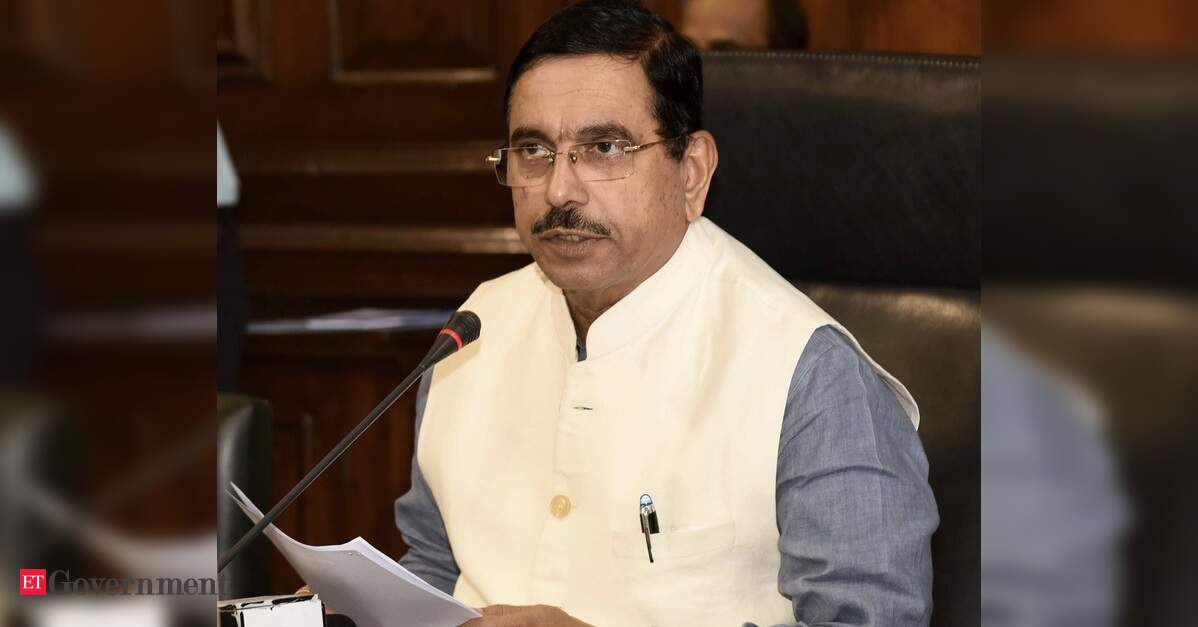
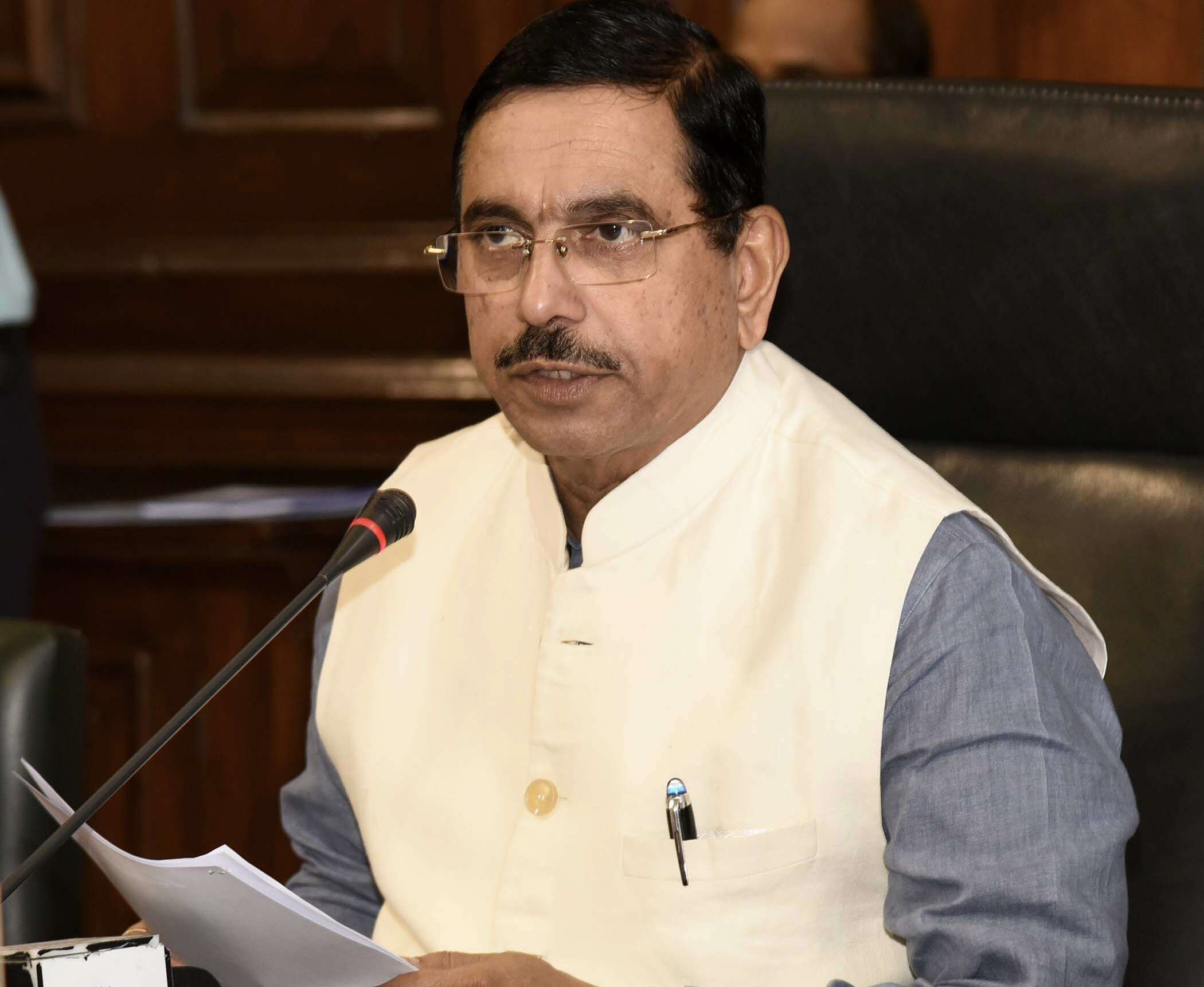
Dharmendra Pradhan’s resignation as Union Education Minister has brought an eventful chapter in Indian education policy to an abrupt close.
His departure, following weeks of protests over examination paper leaks and administrative failures, is both a political response to mounting public pressure and an acknowledgement that confidence in India’s testing system requires urgent restoration. The government has moved quickly to ensure continuity by assigning additional charge of the Education Ministry to Union Minister Pralhad Joshi.
The President accepted Pradhan’s resignation on the advice of the Prime Minister.
The ministerial transition follows a substantial bureaucratic reshuffle. Vineet Joshi, who was serving as Higher Education Secretary and also holding additional charge of the Department of School Education and Literacy, has been transferred to the Ministry of Panchayati Raj. Naresh Pal Gangwar has taken charge as Higher Education Secretary, while T K Anil Kumar has been appointed Secretary, Department of School Education and Literacy.
The changes extend beyond the secretariat. Abhishek Singh was earlier appointed director-general of the National Testing Agency, which conducts examinations including NEET and the Common University Entrance Test. CBSE Chairman Rahul Singh and Secretary Himanshu Gupta were also transferred following controversy over glitches and alleged evaluation errors in the introduction of on-screen marking for Class XII examinations. Lokhande Prashant Sitaram and Varun Bhardwaj were appointed in their places.
Taken together, the appointments represent one of the most consequential administrative resets in the Education Ministry in recent years. Transfers cannot automatically be interpreted as punishment because senior bureaucratic movements frequently form part of wider administrative reorganisations. Their timing, however, leaves little doubt that the government recognises the depth of public dissatisfaction and the need for visibly renewed leadership.
The immediate trigger was the controversy surrounding the NEET-UG examination, in which allegations of a question-paper leak affected approximately two million candidates. The cancellation and reconduct of examinations disrupted academic plans, intensified anxiety among aspirants and imposed additional financial and emotional costs on families. The agitation subsequently expanded to include concerns about CBSE evaluation, recurring recruitment-examination leaks, coaching expenses, student distress and accountability within testing institutions.
The protests were led prominently by the youth-driven Cockroach Janta Party, which used Instagram, videos, satire and online networks to mobilise supporters. What began largely as a social-media movement developed into demonstrations at Jantar Mantar and in several cities. The July 20 march towards Parliament became a turning point after confrontations between protesters and the police, competing allegations of violence, and images of injured demonstrators circulated widely online.
There were legitimate concerns about efforts by ideologically motivated and anti-government groups to appropriate the agitation, broaden its original agenda and convert student anger into a confrontation with the state. Some slogans, political interventions and attempts to defy security restrictions reinforced these apprehensions. Describing the entire movement as anti-national, however, would be neither accurate nor helpful. A large number of participants were genuine students, parents and young professionals demanding examinations that are secure, predictable and fair.
The government eventually chose dialogue over prolonged confrontation. Senior ministers held discussions with protest representatives, Pradhan resigned, and the government agreed to withdraw cases registered against student demonstrators. The protest leadership subsequently announced the withdrawal of the agitation. This outcome demonstrates political responsiveness: the government listened when authentic concerns became impossible to ignore, while preserving institutional continuity through an orderly transition.
Prime Minister Narendra Modi also promised fast-track courts to deal with examination fraud. The government already has the Public Examinations (Prevention of Unfair Means) Act, 2024, which provides stringent punishment for organised cheating and paper-leak networks. Central investigative agencies have acted in examination-related cases, including through arrests. These measures establish that the state possesses both the legal authority and investigative capacity required to confront organised fraud.
The challenge is now implementation. Paper leaks are rarely the work of a single dishonest candidate. They can involve printing facilities, examination centres, transport contractors, coaching networks, technical vendors, intermediaries and corrupt insiders. The enormous value attached to medical, engineering, university and government recruitment examinations has created a profitable criminal economy. Punishing offenders after a leak is necessary, but preventing access to papers is considerably more important.
Testing agencies need secure end-to-end systems covering question preparation, encryption, printing, transportation, centre allocation and post-examination auditing. Digital examination platforms must undergo independent stress tests before being deployed at national scale. Vendors should be selected through transparent processes, subjected to security certification and held financially liable for preventable failures. Unusual candidate-performance patterns should trigger automated scrutiny without delaying results for millions of unaffected students.
Institutional accountability must also become clearer. The NTA conducts high-stakes examinations for extraordinarily large candidate populations, but operational responsibility is distributed across the agency, ministries, states, contractors and examination centres. When responsibility is fragmented, accountability becomes elusive. The new leadership should establish a command structure identifying who is answerable at every stage and publish time-bound post-incident reports whenever serious irregularities occur.
Communication is another persistent weakness. Students often learn about postponements, revised centres or changed procedures through hurried notices and social-media speculation. This vacuum fuels rumours and allows political actors and online influencers to shape the narrative. A permanent crisis-communication mechanism should provide verified updates, answer frequently asked questions and offer candidates a clearly defined grievance and compensation process.
India must simultaneously confront the deeper pressures surrounding examinations. A limited number of quality institutions and formal jobs forces millions of candidates into a narrow funnel of high-stakes tests. Families spend heavily on coaching, sometimes for years, while students face intense psychological pressure. Even a technically flawless examination system cannot resolve the mismatch between aspirations, institutional capacity and employment opportunities.
Expanding medical and higher-education capacity, improving state universities and strengthening vocational pathways are therefore integral to examination reform. Admissions should gradually employ more reliable and diversified indicators where practicable, reducing dependence on a single test conducted on one day. Schools must focus on conceptual learning rather than preparation for objective examinations, while counselling and mental-health support should become readily accessible.
Pralhad Joshi and the new secretaries inherited a ministry with substantial achievements, including the implementation of the National Education Policy, expansion of digital learning and efforts to increase institutional access. They also inherit a serious deficit of trust. Their immediate responsibility is to stabilise the examination calendar, investigate failures transparently and demonstrate that accountability extends beyond transfers.
The government’s course correction should not be portrayed simply as capitulation to street pressure. It reflects democratic responsiveness combined with administrative renewal. Its lasting value, however, will depend on whether the leadership changes produce structural reform. India’s students do not merely need new officeholders; they need an examination system in which integrity is designed into every stage, failures are acknowledged promptly and merit is never compromised.