Uttar Pradesh is stepping up its push to build a deep-tech and innovation ecosystem, with the state Cabinet approving the establishment of two U-Hubs in Lucknow and Noida. Backed by an initial ₹100 crore provision for 2026-27, the initiative seeks to bring startups, academia, investors and industry together while creating specialised capabilities in artificial intelligence, quantum computing, semiconductors, robotics and advanced biotechnology.
The two hubs will follow a complementary model. Noida will focus on quantum and advanced computing, semiconductor design and OSAT, physical AI, robotics, defence technology and advanced biotechnology, while Lucknow will concentrate on application-led AI, including GovTech, industrial and healthcare applications, AI-enabled diagnostics and agri-biotechnology.
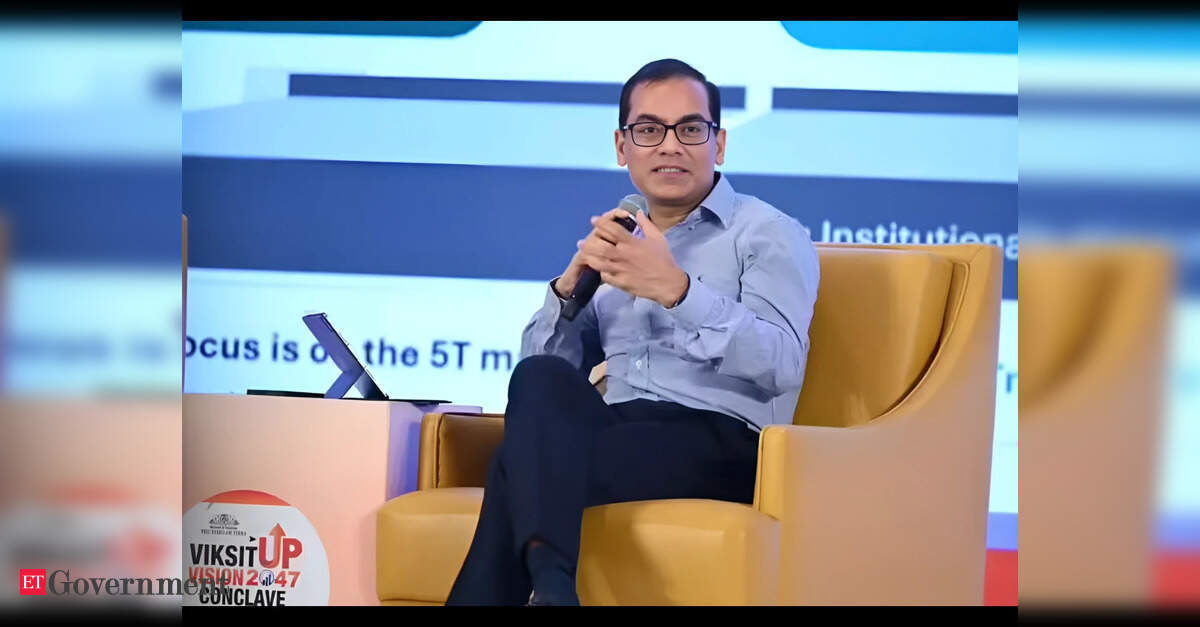
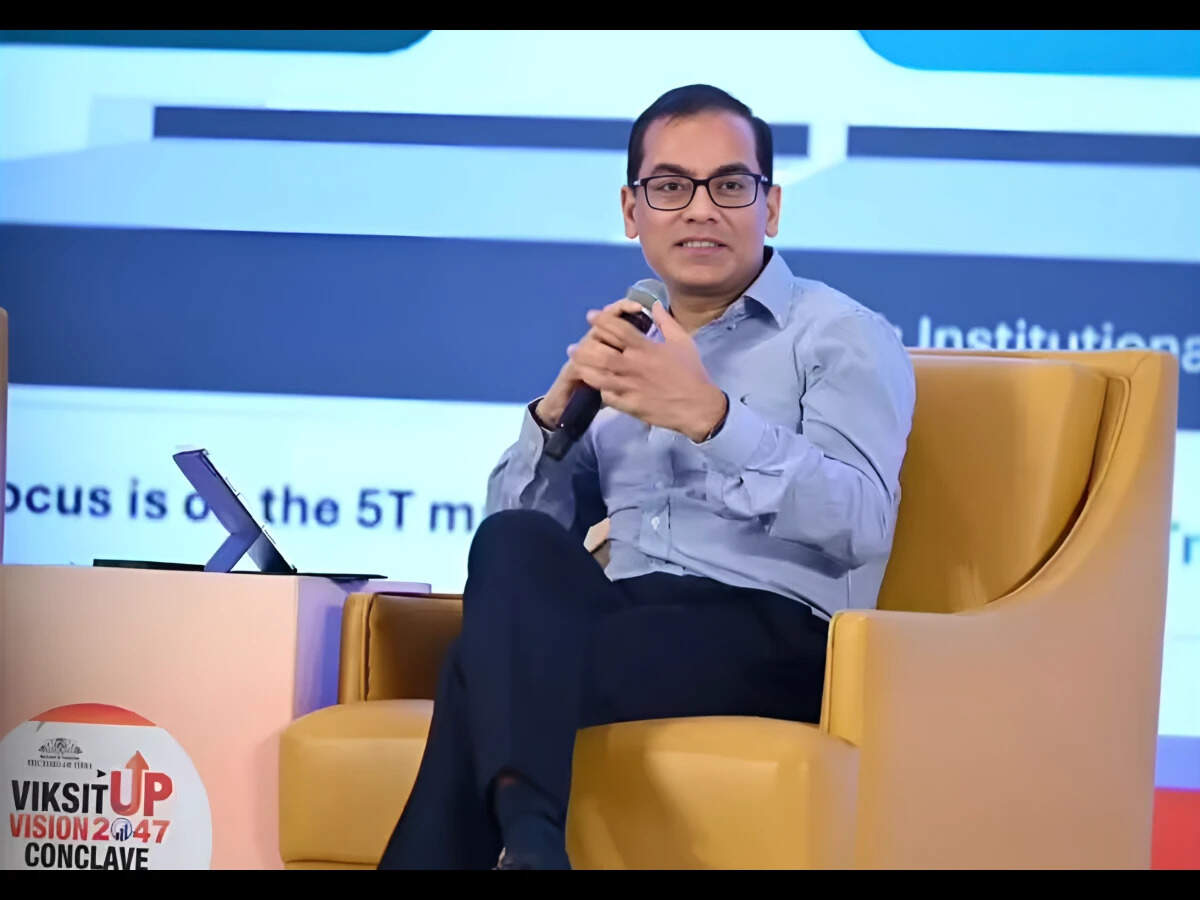
In an interview with ETGovernment’s Arpit Gupta, Alok Kumar, Principal Secretary, IT & Electronics, Government of Uttar Pradesh, discusses the vision behind U-Hub, the role of private capital and industry, and the state’s ambition to build a globally competitive deep-tech ecosystem.
Edited excerpts:
Uttar Pradesh is now looking to establish a dedicated Deep-Tech Hub. What is the larger vision behind U-Hub?
Uttar Pradesh is preparing to emerge not only as a major industrial and services centre, but also as a significant hub for advanced technology and innovation. U-Hub is an important part of this transition.
Our objective is to create an integrated platform that brings together deep-tech startups, research institutions, industry, investors and policymakers. The ecosystem will provide access to infrastructure, research capabilities, capital, industry partnerships and academic expertise.
The state has made an initial provision of ₹100 crore in 2026-27 for establishing two deep-tech hubs, in Noida and Lucknow. Of this, ₹70 crore is proposed for capital expenditure and ₹30 crore for operational expenditure. The allocation is an initial provision and can be increased depending on the project’s requirements as the initiative progresses.
Why was a two-city model chosen, and how will the two centres differ?
The two-city model allows us to build on the strengths and ecosystems already present in Noida and Lucknow, while creating complementary areas of specialisation. Noida will focus on quantum and advanced computing, semiconductor design and OSAT, physical AI and robotics, defence technology, and advanced biotechnology, including advanced therapeutics, precision medicine and genomics.
Lucknow will have a stronger application-oriented focus, including Applied AI for GovTech, industrial and healthcare applications, as well as AI-enabled diagnostics and agri-biotechnology. So, the two centres will have distinct areas of focus but will operate as part of one larger U-Hub ecosystem.
How is U-Hub different from a conventional incubator or technology park?
U-Hub is being designed as an ecosystem rather than simply an incubation or office facility. Deep-tech companies need specialised infrastructure, research capabilities, patient capital, industry partnerships and access to highly skilled talent. U-Hub is intended to bring these elements together.
The proposed infrastructure will include deep-tech laboratories, office and co-working facilities, ecosystem and community spaces, and dedicated functions for programmes, investor relations and partnerships. The broader objective is to help technologies move from research and prototyping towards commercialisation and scale.
What role will private capital and industry play in the model?
Private capital and industry participation will be critical to building a sustainable deep-tech ecosystem. The proposed governance structure includes both early-stage and late-stage investors on the Board, alongside senior representatives from industry. This is important because deep-tech startups often require capital across multiple stages of development.
The financial plan also envisages that the initial state contribution can be complemented by central government co-financing, CSR and industry partnerships, particularly for larger capital requirements.
Academia-industry collaboration appears central to U-Hub. How will you make that work?
Deep-tech innovation cannot be built in isolation. It requires sustained interaction between academic research, entrepreneurs, investors, industry and government. The proposed 11-member Board reflects this approach. It will be chaired by the Director of IIT Kanpur and will include the Directors of IIM Lucknow and IIIT Lucknow, vice chancellor of AKTU, an international academic expert, representatives from government, early- and late-stage investors, and senior industry representatives.
The idea is to create stronger pathways between research and commercialisation, while giving startups access to the expertise, partnerships and capital required to grow.
What is the physical roadmap for U-Hub?
We are taking a phased approach. The first phase envisages approximately 25,000 square feet across the two locations, with capacity for around 20-30 startups, along with co-working and basic incubation facilities. The permanent campuses are proposed on two acres in Noida and four acres in Lucknow. The proposed built-up areas are around four lakh square feet in Noida and two lakh square feet in Lucknow, including offices, deep-tech labs, ecosystem infrastructure and community spaces. The overall long-term target is approximately six lakh square feet across the two centres.
What kind of leadership and talent will U-Hub require?
The ambition requires professional, technology-focused management. The proposed structure provides for one CEO for both centres, supported by a Project Director, vice presidents for programmes, investor relations, finance and operations, site leads, programme and cohort teams, and dedicated functions covering partnerships, HR, legal, facilities, operations and IT.
The CEO is expected to have 15-20 years of relevant experience in deep-tech or AI leadership, startups, investment and technology commercialisation. The proposed tenure is three years, extendable, with the CEO reporting to the Board.
What would success look like for U-Hub three to five years from now?
The real measure of success will be whether we can build a deep-tech ecosystem that is capable of generating and scaling high-quality innovation. We want U-Hub to become a platform where startups can access research and infrastructure, investors can identify promising technologies, industry can find new solutions and partnerships, and academic research can move towards commercialisation.
For Uttar Pradesh, this is about building capabilities in technologies that will shape the next generation of industry. U-Hub is intended to provide the institutional and physical infrastructure to support that transition and establish the state as a serious destination for deep-tech innovation, investment and technology-led entrepreneurship.