As India and the European Union move into a new phase of economic engagement following the conclusion of their long-awaited Free Trade Agreement, Austria is looking to significantly expand its footprint in the Indian market.
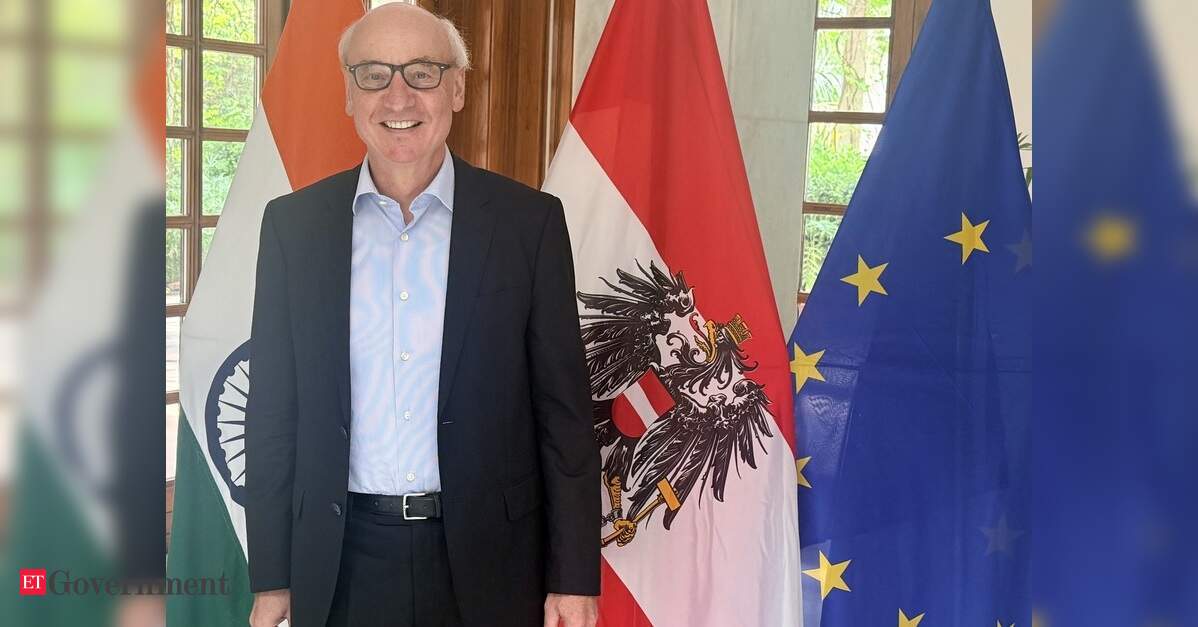
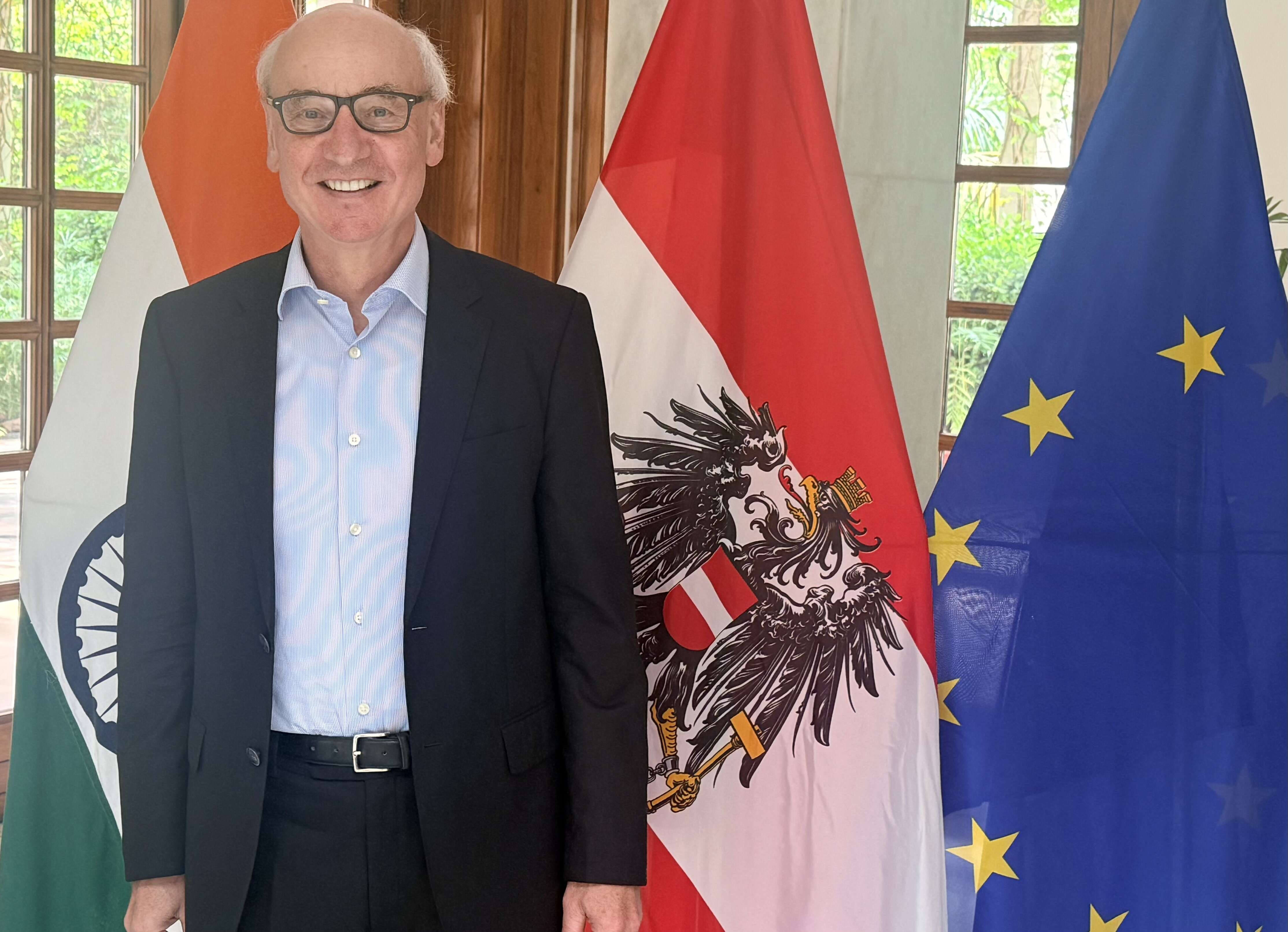
Dr. Robert Zischg, Ambassador of Austria to India, sees considerable potential for stronger trade, investment and manufacturing ties, with Austrian companies increasingly viewing India as a major source of future growth.
In conversation with Anoop Verma, Zischg discusses the opportunities emerging from the India–EU FTA, Austria’s plans to double exports and investment, Make in India, skilled mobility and education, while also offering Austria’s perspective on the wars in Ukraine and the Middle East and the changing global geopolitical order.
Edited excerpts:
India and the European Union have concluded the long-awaited Free Trade Agreement after nearly two decades of negotiations. From Austria’s perspective, how transformative could this agreement be for India–EU economic relations?
The India–EU Free Trade Agreement has been called the “mother of all deals”. I am not entirely sure whether that is the appropriate description, but it is certainly a very important agreement, both for India and the European Union.
The first major impact will be the reduction of tariffs, which are currently very high in several areas. Many of these tariffs will eventually come down to zero or to very low levels. However, I believe the more important issue from a practical perspective is the removal of non-tariff barriers. Red tape can be a significant obstacle to bilateral trade in both directions. If these barriers are progressively reduced, it will make it easier for Indian and European companies to trade and invest in each other’s markets.
The impact of tariff reductions will vary from sector to sector. Some industries will benefit immediately, while in others the gains will emerge over the medium and long term. But reducing non-tariff barriers could ultimately be even more important because it can facilitate a sustained increase in bilateral trade and investment.
Which sectors do you believe will see the earliest and most significant benefits from the FTA?
The automotive industry is an obvious example of a sector that should have an immediate boost with the reduction in tariffs. Another sector that is very dear to my heart—and to many Austrians—is wine and spirits. At present, tariffs are extremely high, reaching around 150% in some cases. These are expected to come down substantially, to around 20–30%.
I have spoken to Austrian winemakers who were in India at the end of March for a trade fair, and they see considerable potential here. They believe India could emerge as an important export market for Austrian wine. Austria is a relatively small wine producer, but the Indian market is enormous. Even if only a small percentage of Indian consumers develop a taste for Austrian wine, it could make a significant difference for our producers.
Machinery and equipment is another important sector. This already constitutes a major part of Austrian exports to India. Austrian companies are highly competitive internationally, and many are global market leaders in specialised niches. Infrastructure is another area with significant potential, including railways, roads and tolling systems. In all these sectors, we expect the FTA to have a positive impact.
Chancellor Christian Stocker visited India in April with a large business delegation, and the two countries launched a bilateral Fast-Track Mechanism for investment facilitation. What concrete outcomes do you expect from this initiative?
The Fast-Track Mechanism is a very useful initiative. As I mentioned in the context of the India–EU FTA, removing non-tariff barriers, including issues surrounding quality control orders and other regulatory requirements, will be important for boosting trade and investment.
We have already received concerns from a number of Austrian companies operating in India that have encountered obstacles in doing business here. Under the new mechanism, these concerns can be brought to the Embassy, and we forward them to the designated contact point in India’s Ministry of Commerce. The Ministry can then coordinate with the relevant line ministries to examine and address these issues.
The Embassy has forwarded a number of requests, which are often quite detailed, so naturally it takes time to receive responses. But the objective is to resolve problems more quickly than would be possible through lengthy administrative procedures or litigation. Expectations among Austrian companies are high. Signing an agreement is one thing; what matters to companies is how it translates into practice.
Modern regulatory systems are extremely complex, involving different ministries, agencies and regulations, and internal coordination is not always easy. Therefore, resolving individual cases may take time. Nevertheless, the Fast-Track Mechanism is potentially a very useful instrument for identifying problems and reducing red tape.
Austria has considerable strengths in advanced engineering, railways, green technologies, environmental solutions and specialised manufacturing. India, meanwhile, offers scale, an expanding industrial base and a large talent pool. How can Austrian companies become more deeply involved in Make in India?
This is something that I see developing increasingly in the future. Normally, companies first begin by exporting to a market. If those exports grow substantially and the market proves attractive, investment and local manufacturing follow.
We already have more than 160 Austrian companies with subsidiaries in India, and around 65 of them are manufacturing here. A few months ago, for instance, I attended the opening of an Austrian manufacturing facility in Baramati. This illustrates how our companies generally approach a market. Initially, they export their products. Once the volume reaches a certain level, it begins to make economic sense to manufacture locally.
Interest in India is growing, and given the sheer size of the market, I expect more Austrian companies to consider manufacturing here. Local production can also be advantageous for them, particularly when they work with Indian partners and become embedded in the local industrial ecosystem. Geographical distance is another consideration. If you have a sufficiently large market in India, it simply makes sense to produce here. Almost everything required for manufacturing is available locally.
The ease of doing business is therefore critical. As a government or an embassy, we cannot tell companies where they must invest. Companies make those decisions themselves. What governments can do is create an environment in which companies find it attractive and manageable to operate.
This is particularly important for Austria because most Austrian companies are small and medium-sized enterprises. An SME does not have unlimited resources to deal with complicated regulatory procedures in a market as large as India. If doing business is relatively straightforward, companies will come, trade and eventually invest. If it becomes excessively complicated, smaller companies may simply not have the capacity to enter the market.
So, in the medium and long term, I expect—and certainly hope—to see many more Austrian companies manufacturing in India.
The war in Ukraine continues to reshape Europe’s security and economic landscape. As a militarily neutral country in the heart of Europe, how does Austria view the prospects for ending the conflict and establishing a sustainable European security framework?
Russian aggression against Ukraine is among the most important foreign policy and security challenges facing Europe and Austria. The Ukrainian border is only about a five-hour drive east of Vienna. This is not a distant war without consequences for us; geographically and politically, it is very close.
Austria is a small country, and we remain committed to an international rules-based order founded on international law. We do not want to return to the old world of power politics, where larger and more powerful countries impose their will on smaller and medium-sized states. The Charter of the United Nations was a fundamental change in international relations after the Second World War. Article 2(4), concerning the prohibition on the threat or use of force, remains central to the international system.
Ukraine has been attacked and is defending itself, while the European Union is assisting Ukraine in exercising its right to self-defence under Article 51 of the UN Charter. Austria also has a particular historical perspective. After the Second World War, Austria, like Germany, was occupied by the four Allied powers between 1945 and 1955. Eastern Austria was occupied by Soviet troops. Austria was fortunate that Soviet forces ultimately withdrew and that we remained outside the communist bloc. The Iron Curtain was only around 30 kilometres east of Vienna.
We do not want to see history repeat itself. Every war eventually has to end through some form of negotiation or agreement. But any settlement must be acceptable to Ukraine and cannot simply be imposed upon a country that has been attacked. This is what makes the idea of a compromise so difficult. If one country invades another and occupies part of its territory, what exactly constitutes a compromise? Either the aggressor withdraws, or the attacked country is asked to surrender territory. The latter could be seen as rewarding the use of force.
Many countries around the world have border disputes. Such disputes should be resolved through peaceful negotiations, not through invasion or occupation. If both sides voluntarily agree on a settlement, that is obviously the preferred outcome. The implications of the Ukraine war therefore go far beyond Europe. If territorial disputes can once again be settled through force, it would open a Pandora’s box in many regions of the world.
For Austria, the fundamental principle is clear: the use of force must not again become an accepted instrument of international relations.
Another major conflict is unfolding in the Middle East, involving Israel, Iran, the United States and other regional actors, with consequences for energy markets, shipping and global supply chains. How does Austria assess the risks from continuing instability in the region?
The Middle East has unfortunately been a region of conflict for many decades. There are multiple dimensions, multiple actors and external powers with their own interests. The developments involving Iran and the Strait of Hormuz represent another serious escalation of already deeply rooted tensions.
As with the war in Ukraine, ultimately these conflicts can only be resolved through negotiations. But we all know that this is extraordinarily difficult in the Middle East because there are so many actors with very different agendas. Iran is a particularly important country. It is an ancient civilisation, a large and powerful state, and it is central to any durable regional settlement.
Europe has not simply stayed out of these issues. Austria, for example, was strongly supportive of the JCPOA—the nuclear agreement reached in 2015. At the time, it provided a framework for containing one of the most serious sources of tension. The nuclear question remains particularly important. The international community has long been concerned about whether Iran’s nuclear programme is exclusively civilian. This issue has been discussed at the International Atomic Energy Agency for many years.
Nuclear weapons remain the most destructive weapons ever created. Hiroshima and Nagasaki demonstrated their devastating consequences, and the anniversaries of those events have just been commemorated on August 6 and 9. The possibility of Iran developing a military nuclear capability would have major consequences for an already fragile region. It could also encourage other countries to pursue nuclear weapons, triggering a regional proliferation race.
Nuclear non-proliferation and disarmament are important pillars of Austrian foreign policy. Austria continues to support the objective of a world free of nuclear weapons. This is why international verification of Iran’s nuclear programme is so important. The IAEA has developed a sophisticated verification and inspection system, and the JCPOA provided for enhanced monitoring. Restoring effective oversight of Iran’s nuclear activities should therefore be part of any comprehensive settlement.
The Strait of Hormuz is obviously critical as well. Disruption there affects international trade, pushes up energy prices and contributes to inflation around the world. But the broader nuclear issue is even more consequential from a long-term security perspective.
Negotiating with Iran is not easy. The Iranians are highly experienced negotiators and very good at playing their cards. Any negotiation therefore has to examine the details very carefully. A sustainable agreement cannot deal only with reopening the Strait of Hormuz; it has to address the wider set of security issues, including the nuclear programme.
The situation is difficult, but one should never give up hope. We have seen in the past that circumstances can change very quickly. Ultimately, countries cannot change geography. Neighbours remain neighbours, and sooner or later they have to sit across the negotiating table and find ways of living together peacefully.
At a time when geopolitical tensions, tariffs and supply-chain disruptions are challenging globalisation, India and the EU are moving in the opposite direction by deepening trade and strategic cooperation. Could the India–EU partnership emerge as a stabilising force in an increasingly fragmented global order?
The India–EU FTA brings together markets representing around two billion people—roughly a quarter of humanity. That alone gives the relationship enormous economic significance. But again, I would emphasise implementation. Signing a free trade agreement is important, but implementing it properly is what will determine whether it succeeds. Both sides will have to work hard to remove non-tariff barriers and progressively open their markets as envisaged under the agreement.
Europe, including Austria, increasingly sees India as a major trading and investment partner because of the sheer scale of the Indian market and the rapid pace of India’s development. India wants to become a developed country by 2047. That is only about two decades away. It is an enormous challenge, but given the pace of development I have seen over the past five to ten years, I believe it is achievable. If India achieves that objective, it will represent an extraordinary market for European goods and investment.
From Austria’s perspective, we are an export-oriented economy located in the middle of Europe. Our immediate European neighbourhood remains important, but we have to ask: where will future growth come from? The United States is currently a more difficult market to predict, and Austrian exports there have faced considerable challenges. Russia, with which Austria previously had strong economic relations, is no longer the market it once was and is unlikely to be so for the foreseeable future. China is also a challenging market.
When we look at where growth can come from, India clearly stands out. There is also a strong case from the Indian perspective. The European Union may sometimes appear complicated because of its institutional structures and regulatory procedures, but it is one of the most reliable economic and political partners any country can have. Europe offers stability and a long-term perspective.
There is also a political dimension that is sometimes overlooked. India is the world’s most populous country and its largest democracy. The members of the European Union are democracies as well. At a time when democracy cannot simply be taken for granted globally, cooperation among democracies has strategic significance.
Political stability is also extremely important for companies making long-term investments. In many countries, businesses have to consider substantial political risks. India offers a much greater degree of political and institutional stability. From a broader Indo-Pacific perspective, India is also an anchor of stability in a volatile region. Europe sometimes looks at the world through an excessively Eurocentric lens, but when you examine global peace and security strategically, India’s importance becomes very clear.
The frequency of high-level exchanges demonstrates this growing relationship. Prime Minister Narendra Modi visited Austria in the summer of 2024, and our Chancellor’s visit to India marked the first such visit in 42 years. There have also been numerous exchanges between India and European countries at the presidential, prime ministerial and foreign minister levels. I am therefore very optimistic about the future of India–EU relations. A strong political relationship creates the long-term confidence within which economic relations can flourish.