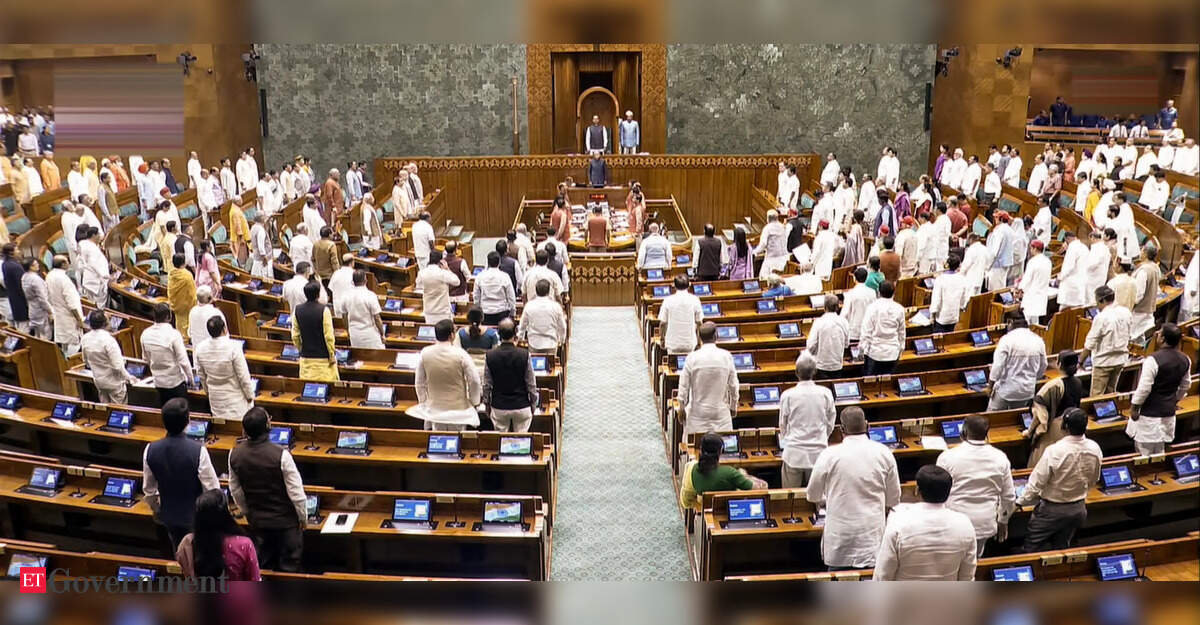
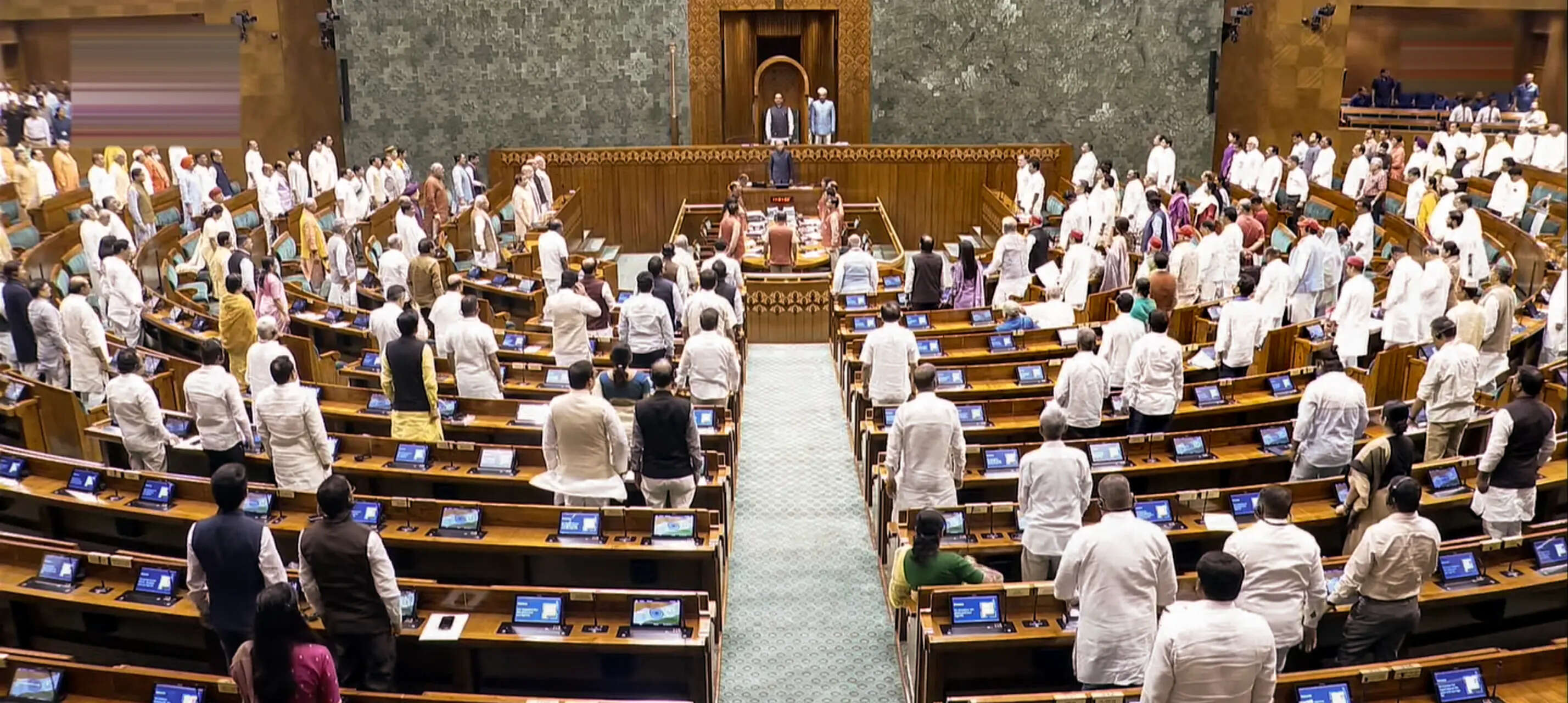
The Monsoon Session of Parliament ended on August 13 with a striking paradox. Despite repeated disruptions, sharp political confrontation and exceptionally low productivity, Parliament completed a substantial legislative agenda, with 12 Bills passed by both Houses.
Yet the limited time devoted to discussion on several important laws has revived a larger question about the functioning of parliamentary democracy: legislative output is important, but should the effectiveness of Parliament be measured by the number of laws enacted or also by the quality of deliberation that precedes them?
The session, which began on July 20, had 19 sittings spread across 25 days. According to the Ministry of Parliamentary Affairs, 11 Bills were introduced in the Lok Sabha and two in the Rajya Sabha, while 12 Bills were passed by each House. Twelve Bills ultimately cleared both Houses. The productivity figures, however, were considerably less impressive: approximately 19 per cent for the Lok Sabha and 39 per cent for the Rajya Sabha.
The outcome was far removed from the expectation articulated by Prime Minister Narendra Modi at the beginning of the session. Drawing a parallel between the weather and parliamentary proceedings, Modi had said: “We pray that the monsoon remains proactive, and the Monsoon Session also remains productive.” Productivity ultimately became the session’s central weakness.
Repeated confrontations between the government and the Opposition consumed much of the available parliamentary time. Opposition parties raised several contentious issues, including the NEET controversy, police action against protesting students in Delhi and allegations concerning donations to the Ram temple in Ayodhya. The political confrontation intensified towards the end of the session, with the Opposition demanding accountability from Union Home Minister Amit Shah.
The government maintained that it was prepared for discussion. Shah said he was ready to respond to questions raised by Opposition members and requested that time be allocated for a debate on the student protests. The Opposition, however, subsequently demanded his resignation, and the deadlock persisted.
This confrontation illustrates a structural challenge increasingly visible in Indian parliamentary politics. Disruption has become a political instrument for Opposition parties seeking to force attention on issues they believe the government is reluctant to address. Governments, meanwhile, argue that persistent disruption prevents Parliament from exercising precisely the accountability function demanded by the Opposition.
Parliamentary Affairs Minister Kiren Rijiju has articulated this argument particularly forcefully. Speaking earlier about parliamentary disruptions, he observed: “The government can be held accountable in Parliament. When the House runs, ministers face tough questions. When it adjourns within minutes, those questions don’t even get raised.” He further argued that those who obstruct proceedings may believe they are hurting the government, but are in reality weakening their own democratic role.
The Monsoon Session demonstrated that disruption does not necessarily prevent legislation from being enacted. Indeed, the government managed to advance a broad legislative programme despite the political deadlock.
One of the most consequential measures was the Public Examinations (Prevention of Unfair Means) Amendment Bill, 2026. The legislation seeks to strengthen the legal architecture governing examination malpractice through faster investigation and prosecution. It provides for investigations to be completed within two months and trials within three months, while enabling states and Union Territories to designate special fast-track courts and appoint special public prosecutors.
The legislation also provides for Special Task Forces where necessary and a time-bound appellate mechanism before a Division Bench of the High Court. The Bill cleared Parliament and subsequently received presidential assent.
Unlike most other legislation during the session, the public examinations measure received substantial discussion in the Lok Sabha. NDTV reported that around 11 hours were devoted to debating the legislation. By contrast, several other Bills were passed within minutes amid Opposition protests and sloganeering.
Among the important economic measures was the Mines and Minerals (Development and Regulation) Amendment Bill, 2026. The government says the measure is intended to bring greater certainty, stability and predictability to the fiscal regime governing minerals. Its significance extends beyond mining regulation. At a time when critical minerals are increasingly central to energy security, electronics, electric mobility, advanced manufacturing and defence technologies, regulatory predictability in the mineral sector has acquired strategic importance.
Another significant reform was the MSME Development Amendment Bill. It provides for a national digital platform for free and voluntary registration of MSMEs, seeks improved access to finance and faster adjudication of delayed-payment disputes, and replaces conviction-based fines for certain contraventions with a graded penalty architecture. For millions of small enterprises, delayed payments and access to formal finance remain structural constraints; implementation will therefore determine whether the legislation produces meaningful improvements in the business environment.
The Bankers’ Books Evidence Bill, 2026 reflects another dimension of legislative modernisation. It expands the legal definition of banking records to encompass electronic, digital, virtual and cloud-based records and creates a technology-neutral framework for their authentication and production. The reform reflects the broader transition of India’s financial architecture from paper-based documentation towards digital systems.
Parliament also approved legislation establishing a National Tribunals Commission and seeking greater uniformity in appointments, service conditions and administration of tribunals. The Kerala (Alteration of Name) Bill provides for changing the state’s name from “Kerala” to “Keralam”, while amendments relating to the National Co-operative Development Corporation seek to modernise its statutory framework and expand its operational flexibility.
Another politically significant measure extended legal protection under the Prevention of Insults to National Honour Act to Vande Mataram. The legislation makes intentionally preventing the singing of the National Song, or deliberately disturbing an assembly engaged in singing it, punishable under the law.
The Foreign Contribution (Regulation) Amendment Bill, meanwhile, was referred to a Joint Committee of Parliament rather than pushed through immediately. Opposition parties objected to provisions of the proposed legislation, while the government rejected allegations that the measure was directed against minorities or non-government organisations. Referral to a parliamentary committee provides an opportunity for more detailed scrutiny away from the confrontation on the floor of the House.
The broader concern arising from the session is therefore not an absence of legislative activity but the imbalance between legislation and deliberation. Some Bills with significant institutional, economic and administrative consequences were cleared extremely quickly. According to reported parliamentary proceedings, several measures were passed in the Lok Sabha in three to 14 minutes amid protests.
That matters because Parliament performs functions extending well beyond approving legislation. It scrutinises the executive, examines expenditure, enables MPs to raise constituency and national issues, and creates a public record of arguments for and against policy choices. Debate can expose unintended consequences in legislation and compel ministers to explain the reasoning behind government policy.
Rajya Sabha Chairman C.P. Radhakrishnan also expressed concern about frequent disruptions as the session ended, pointing to the Upper House’s 39 per cent productivity and urging members to uphold parliamentary dignity and participate constructively in proceedings.
The Monsoon Session consequently leaves behind a mixed institutional record. The government demonstrated that it could move an ambitious legislative programme through Parliament even amid persistent political confrontation. Several laws passed during the session address substantive governance challenges ranging from examination integrity and MSME reform to mining, banking records and tribunal administration.
But Parliament cannot ultimately be evaluated through legislative throughput alone. A law passed is an output; a law examined, challenged, defended and improved through debate represents the fuller parliamentary process.
The experience of the Monsoon Session therefore points towards a responsibility shared across the political spectrum. The government must provide adequate opportunities for debate and accommodate legitimate demands for scrutiny, while the Opposition must recognise that sustained disruption can weaken the very mechanisms through which the executive is held accountable.
India’s increasingly complex economy and expanding global role will require Parliament to consider legislation involving artificial intelligence, digital regulation, energy security, critical minerals, defence technologies, taxation and rapidly changing financial systems. Such laws will require not less parliamentary debate, but more sophisticated debate.
The Monsoon Session showed that Parliament can continue legislating even when politics becomes intensely confrontational. The more important challenge ahead is ensuring that India’s Parliament remains not merely a place where laws are passed, but the country’s principal forum for democratic deliberation, executive accountability and informed national debate.